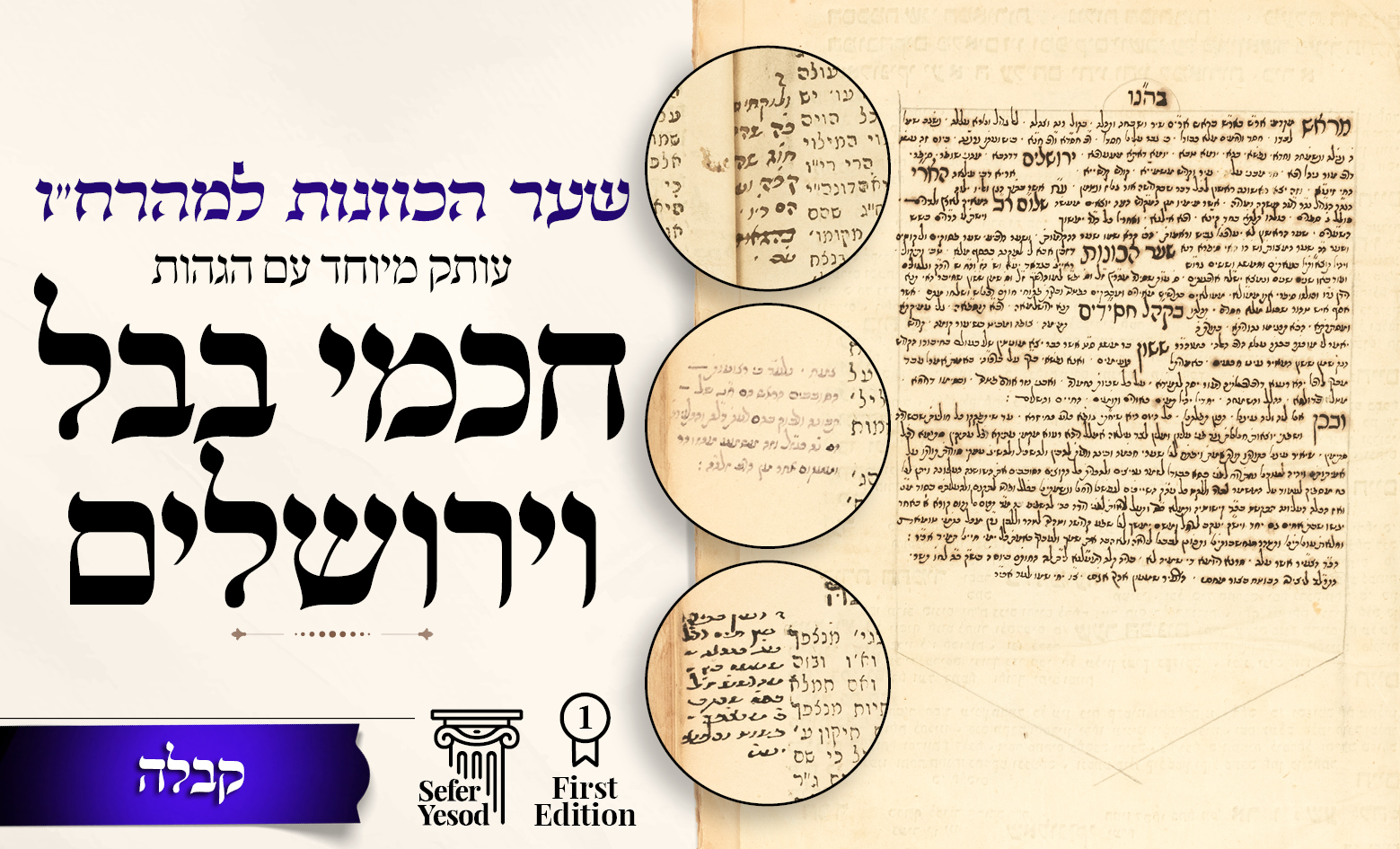
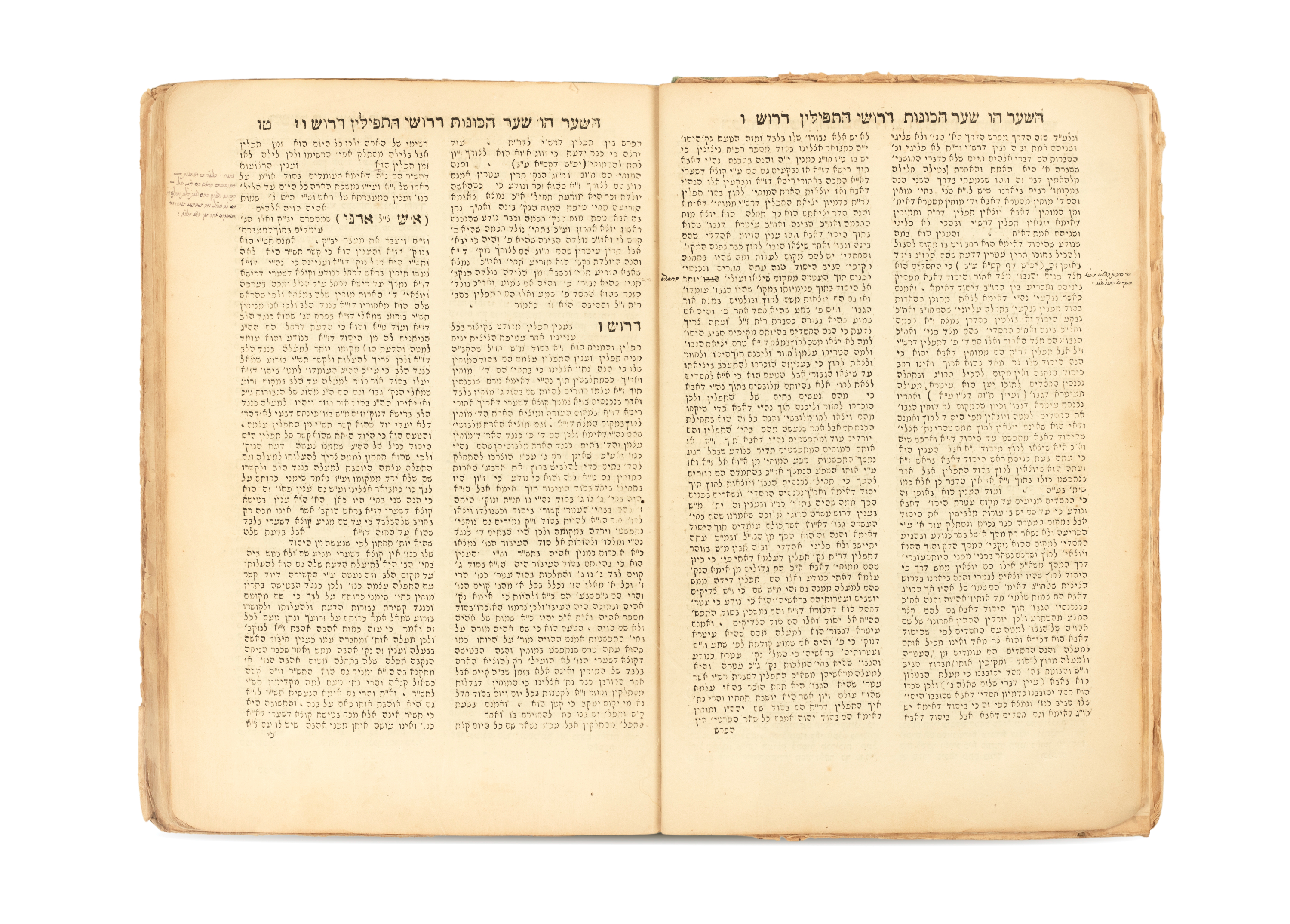
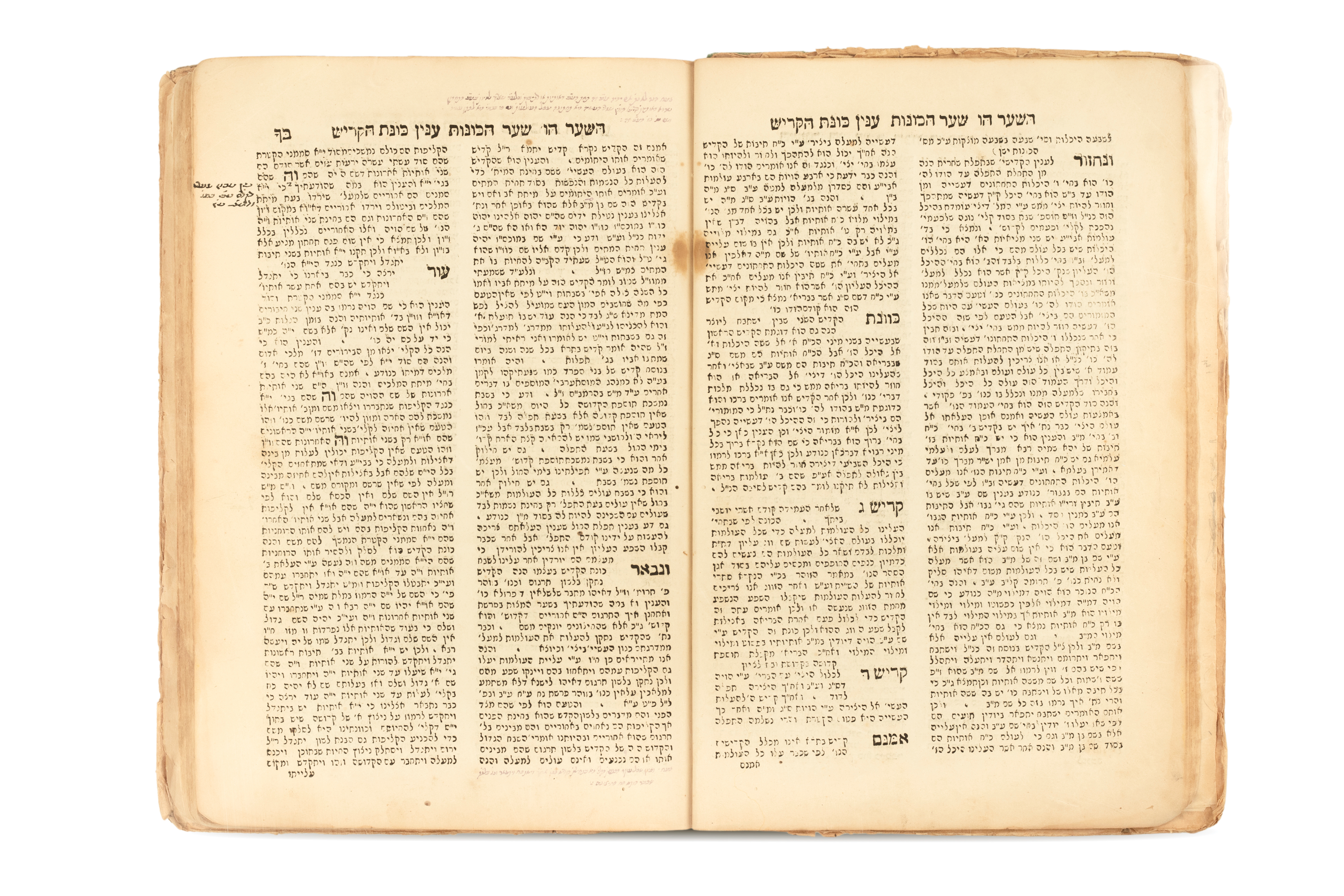
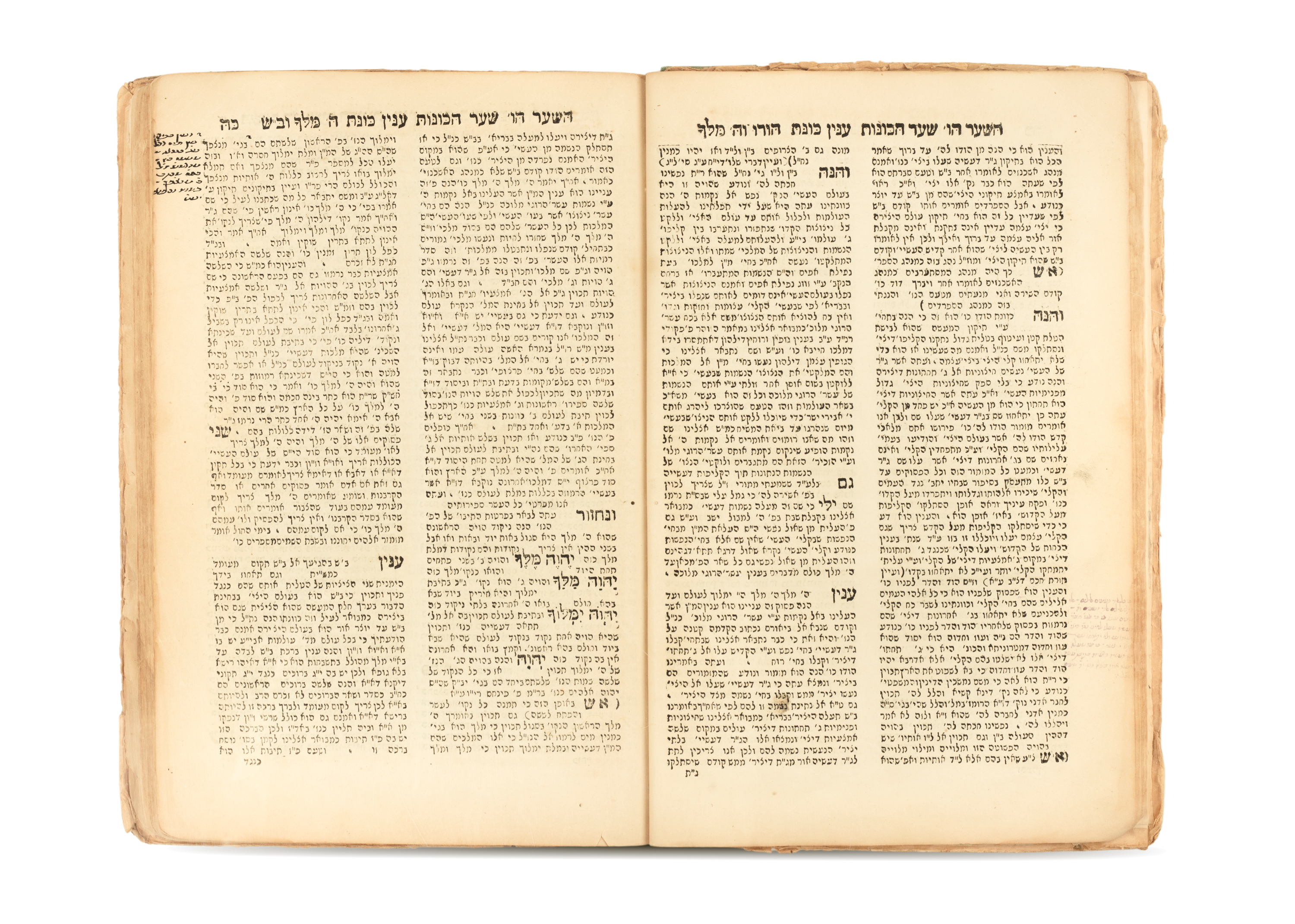
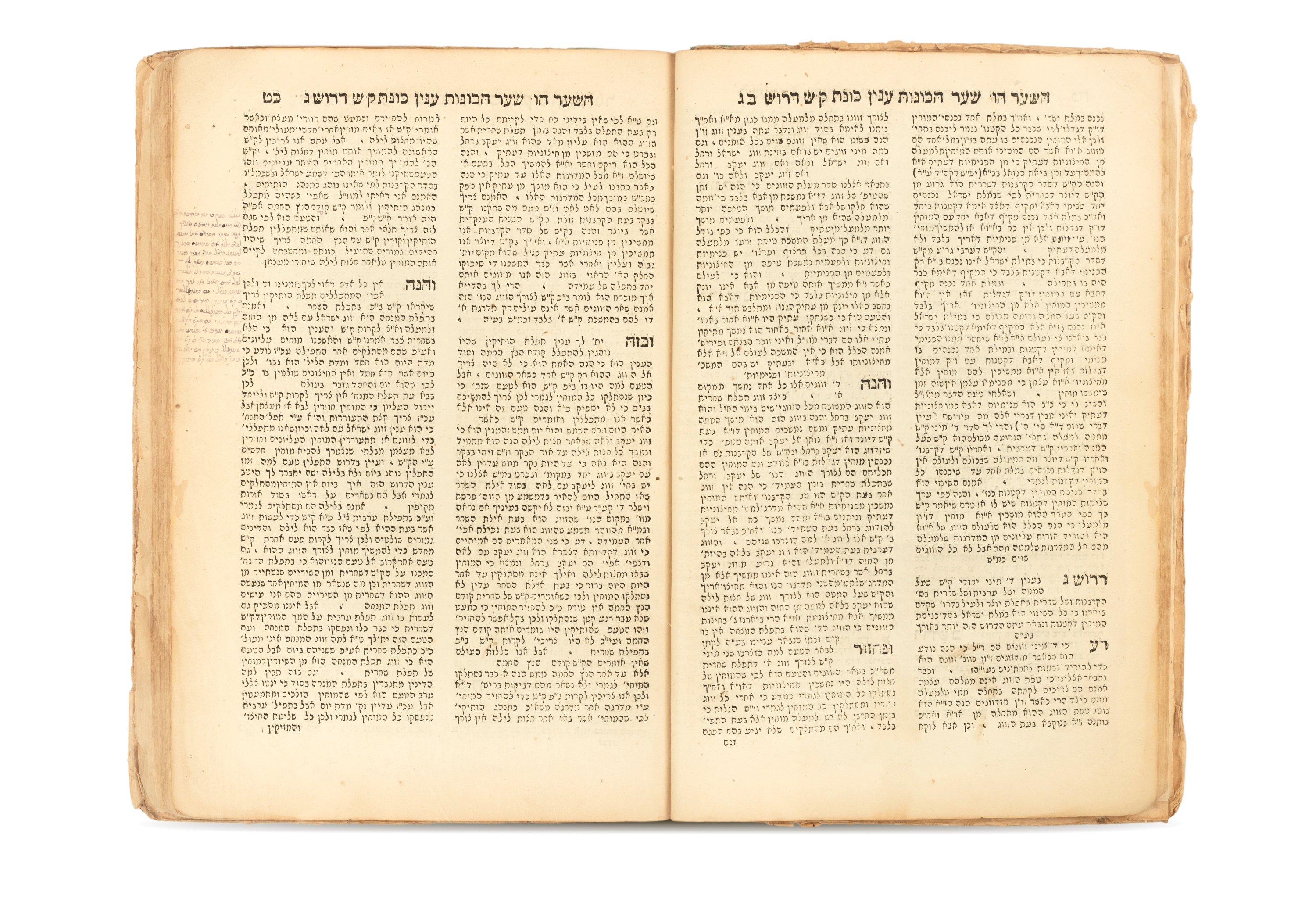
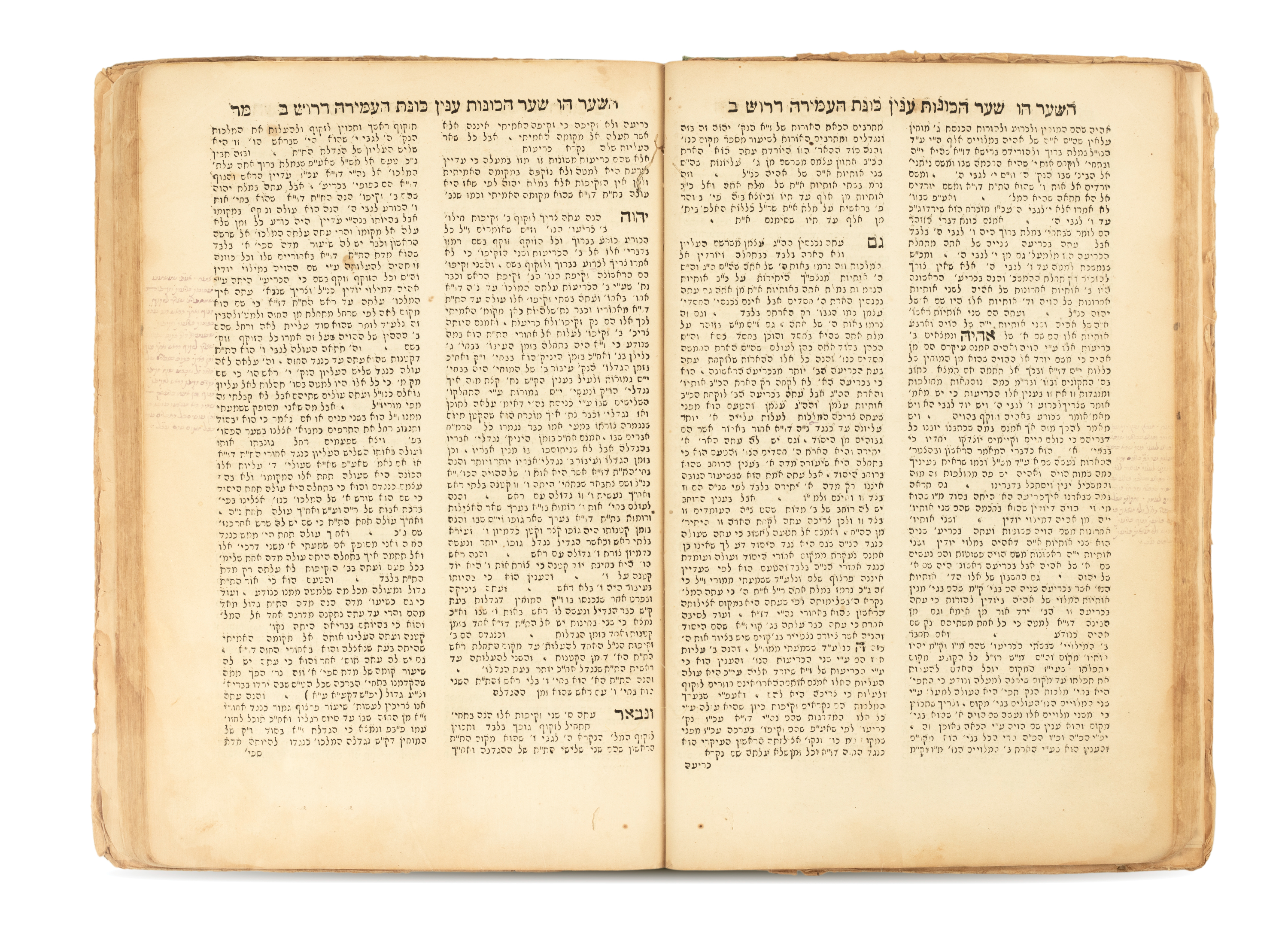
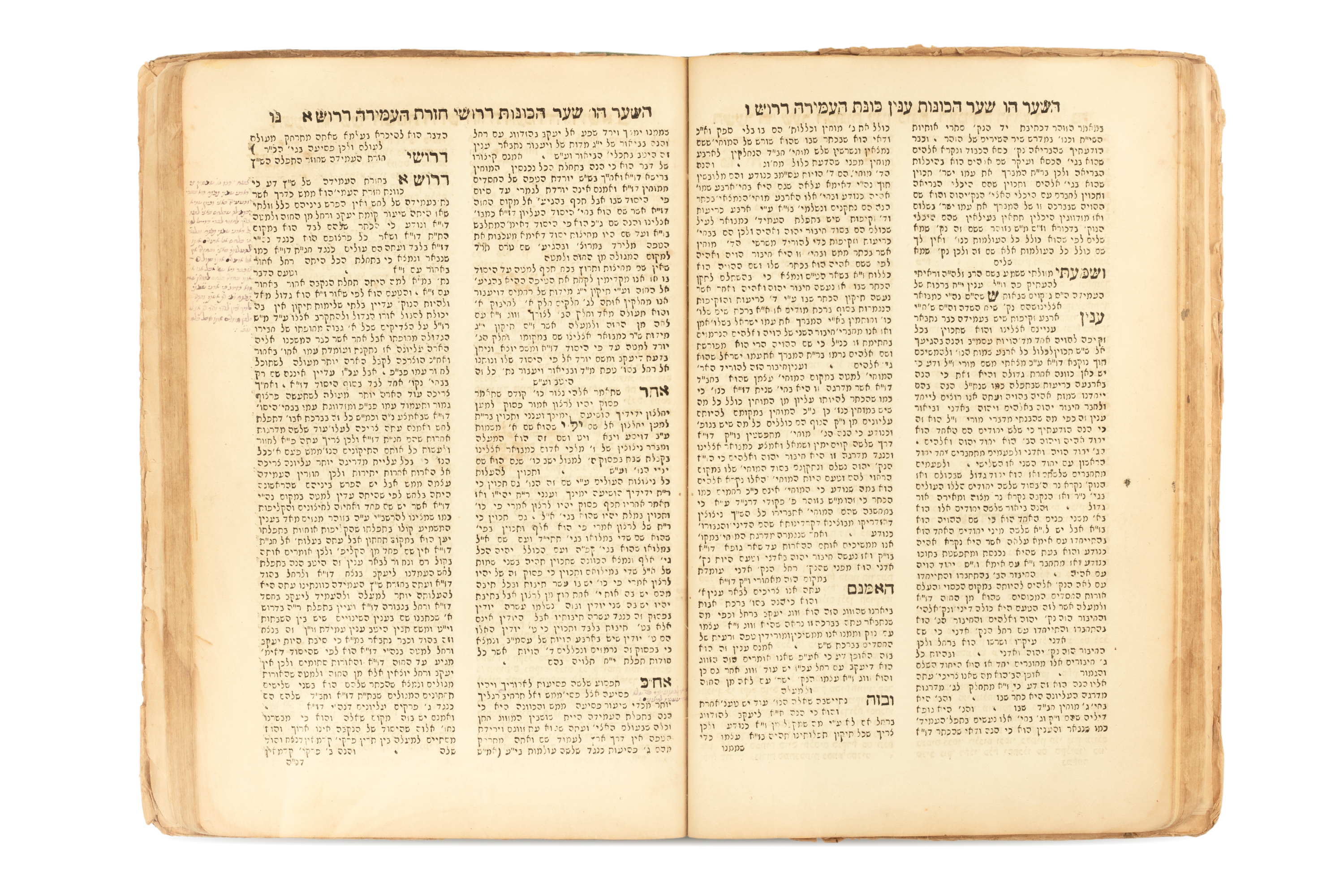
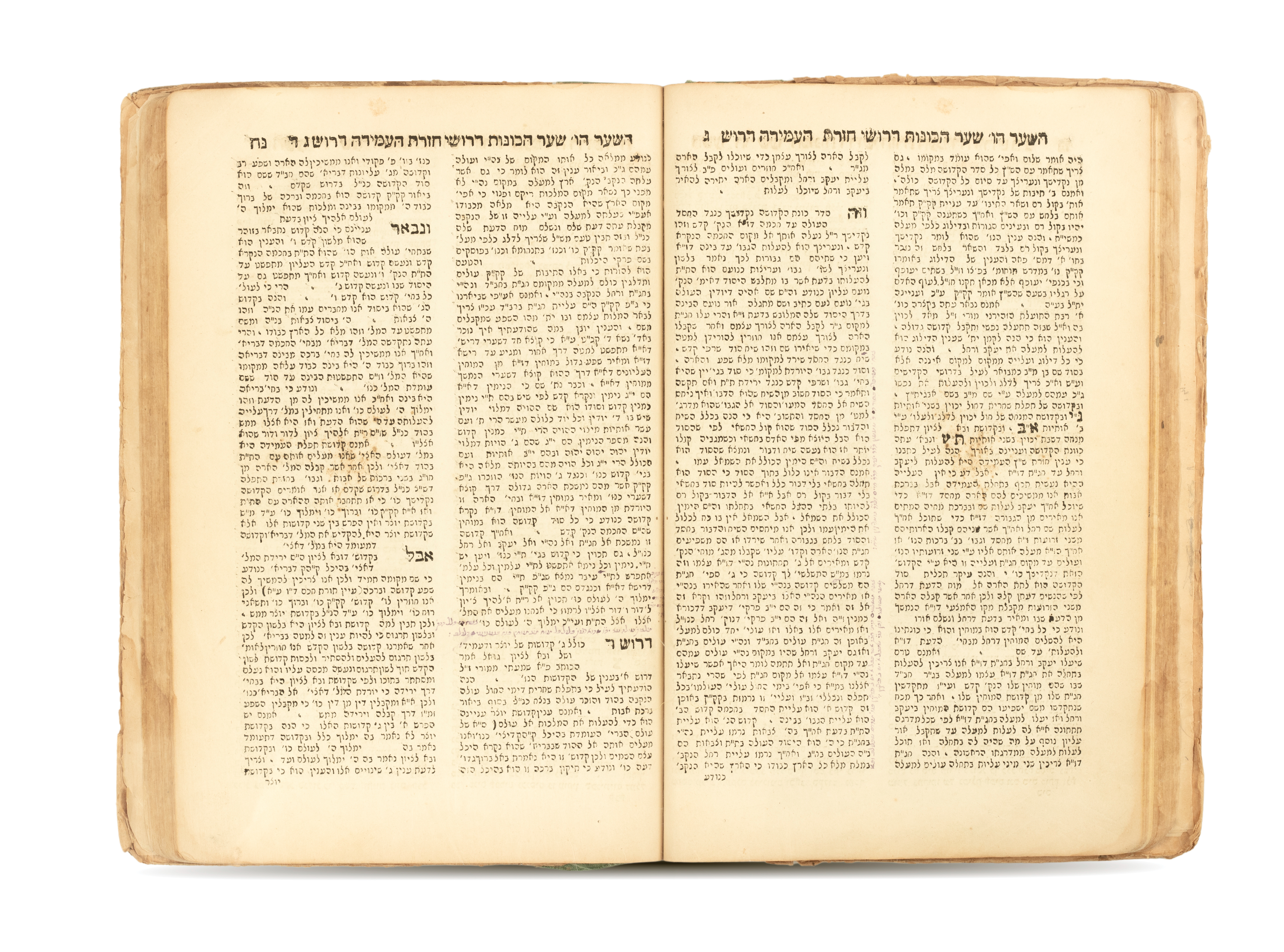
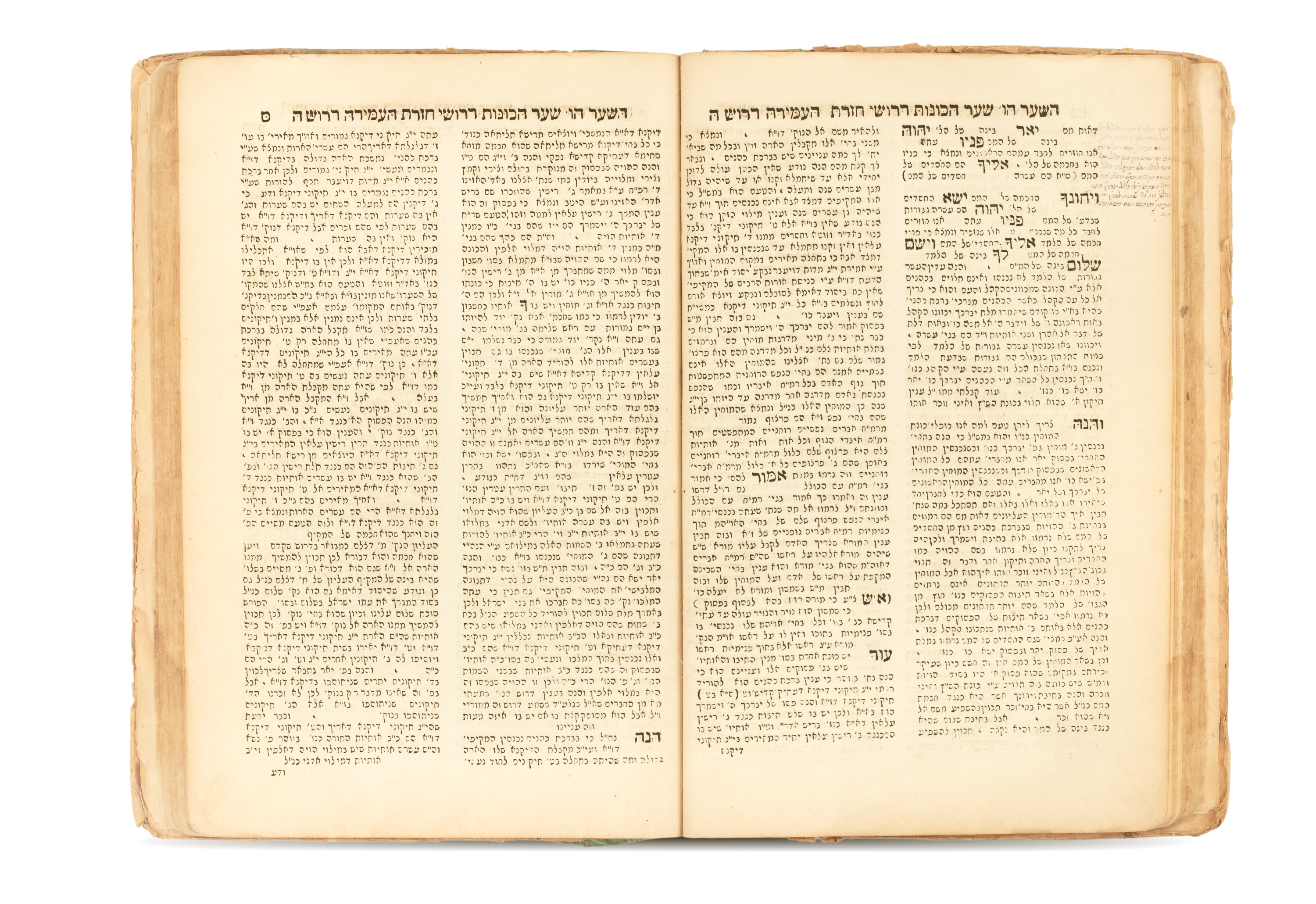
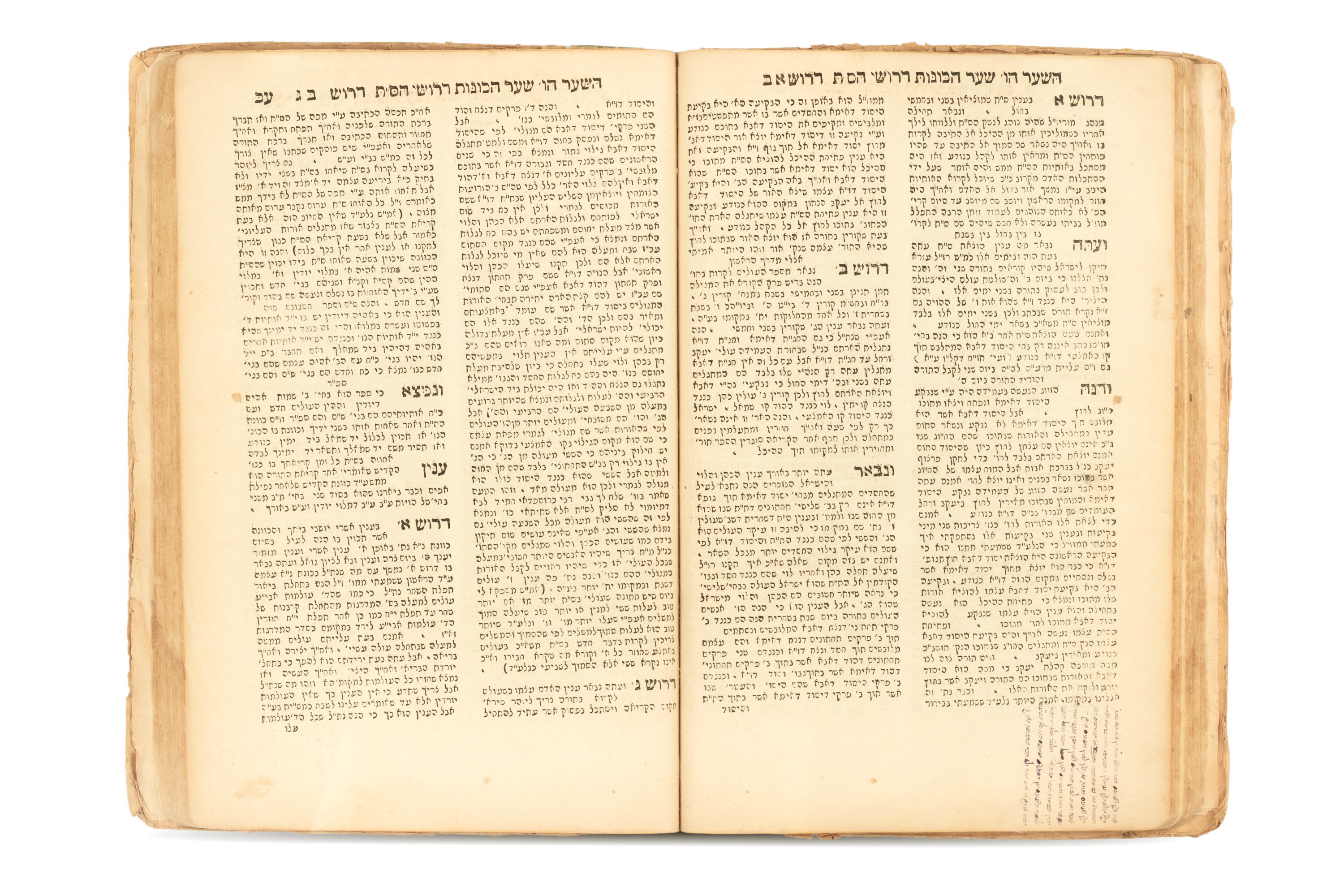
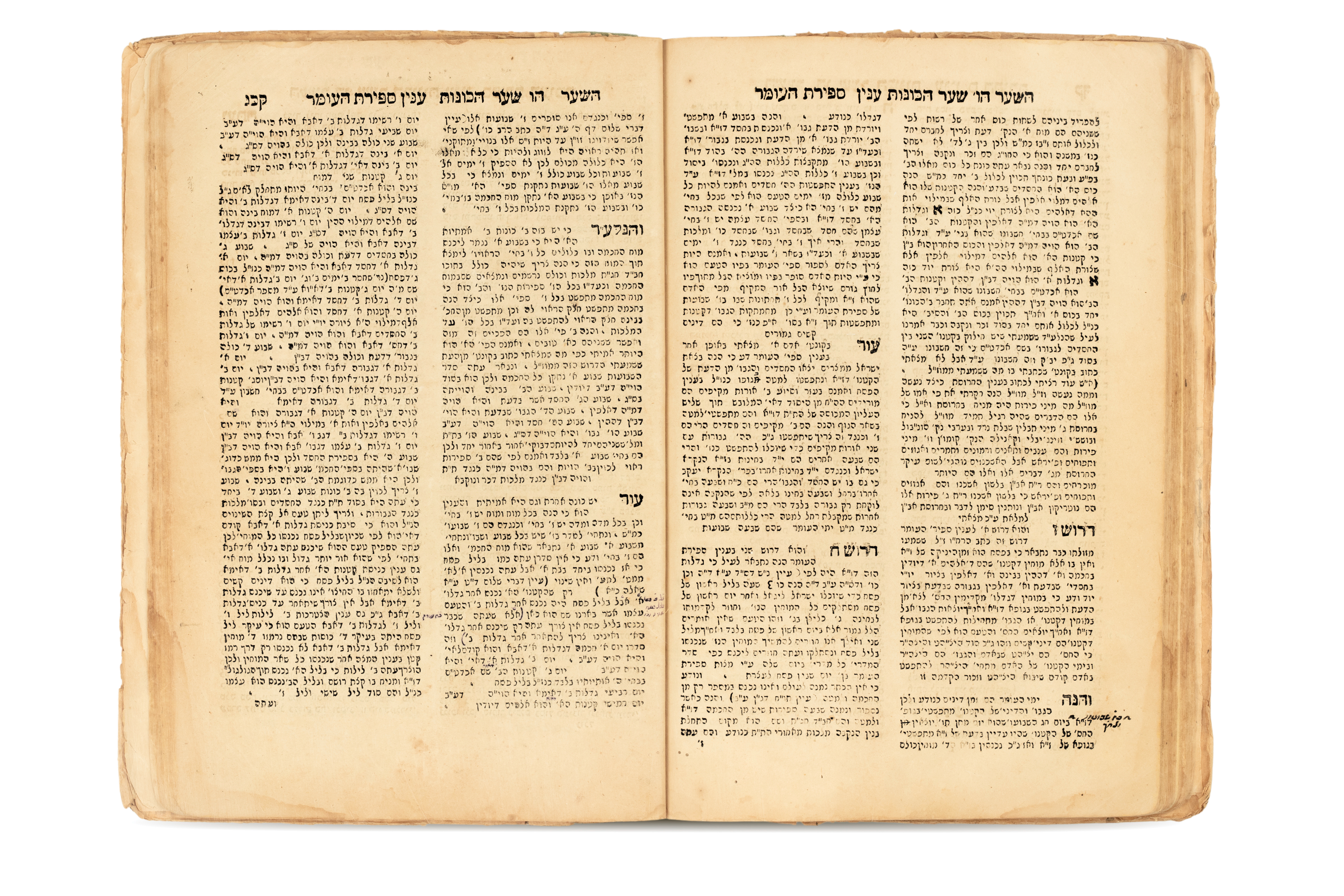
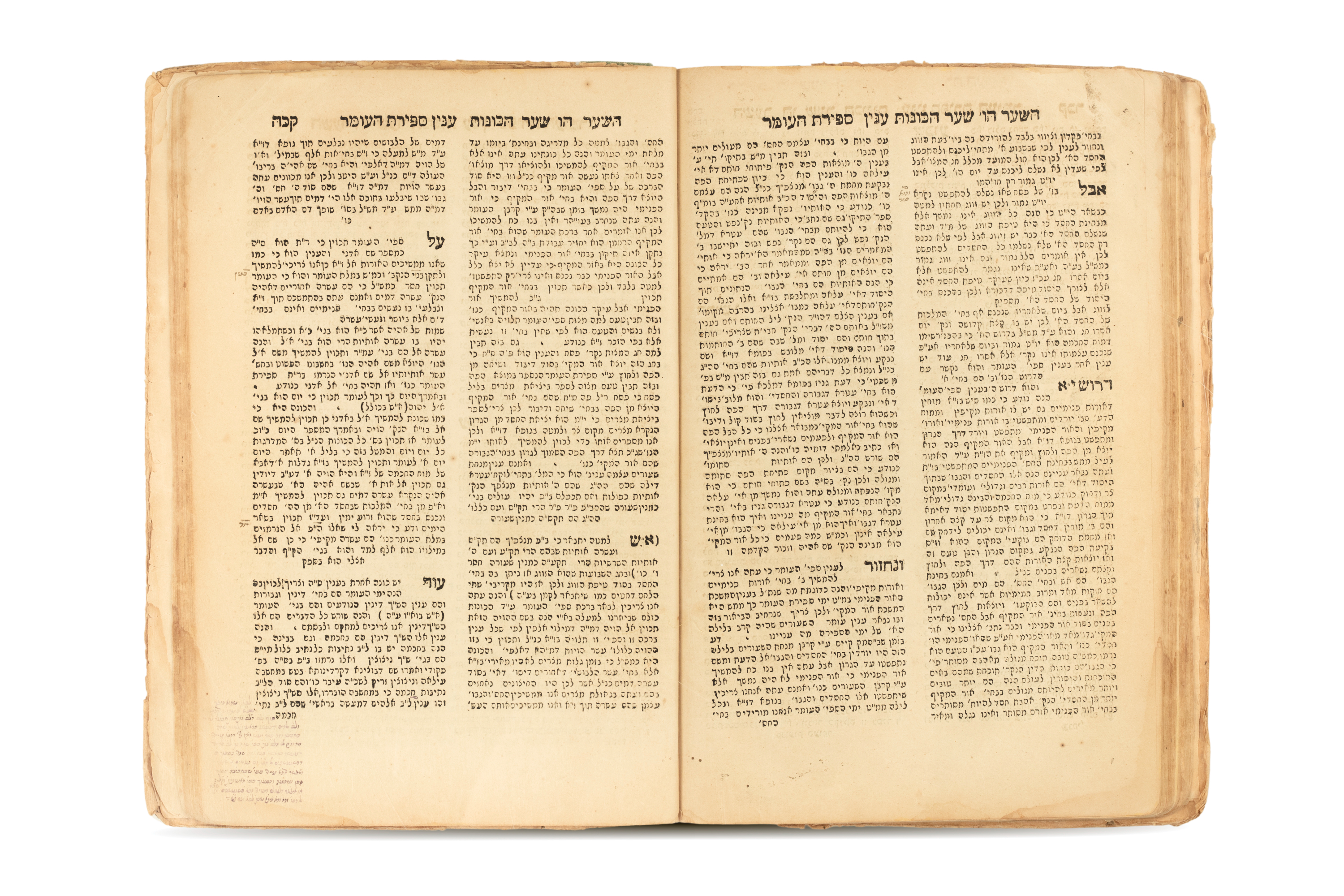
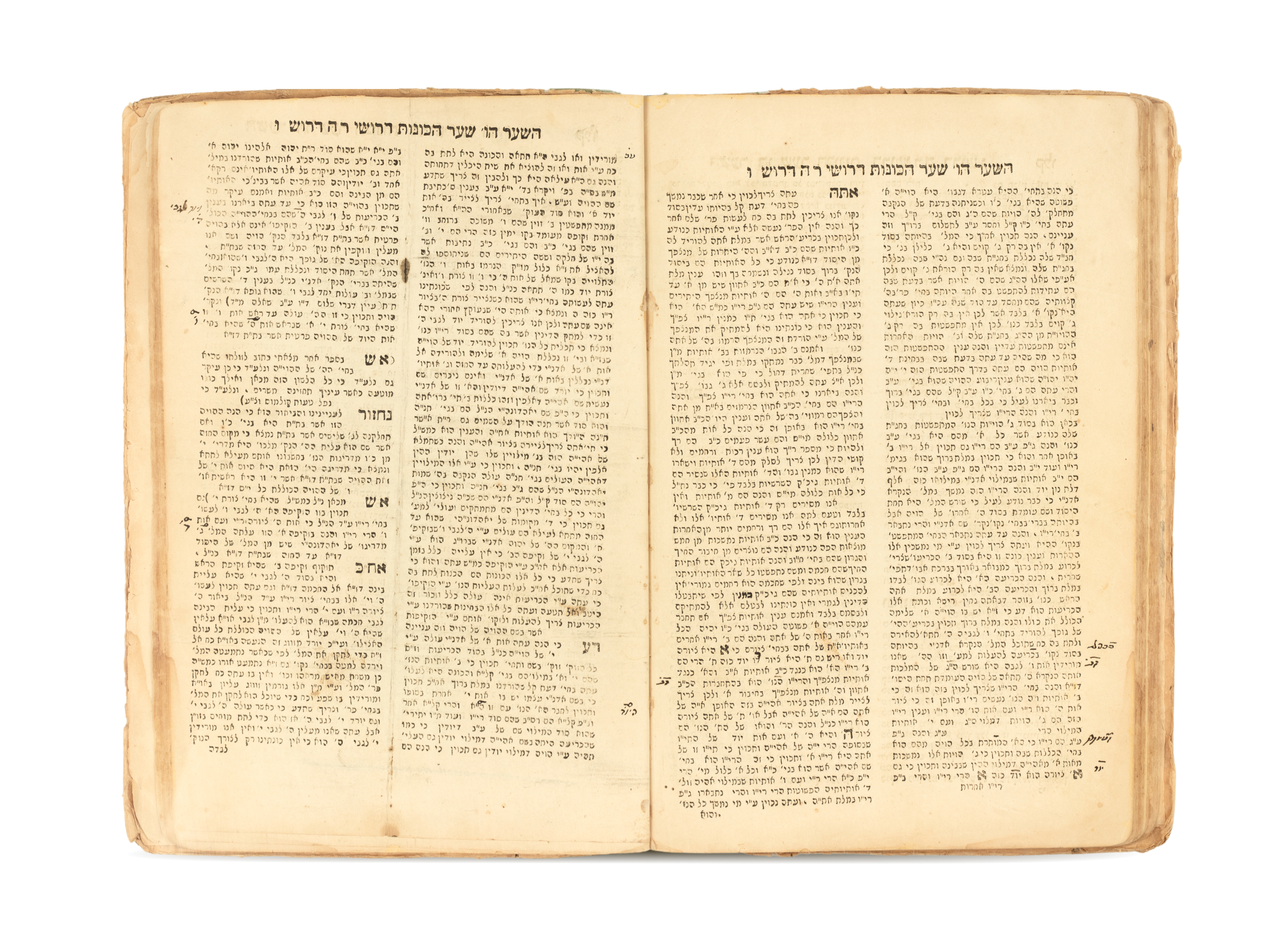
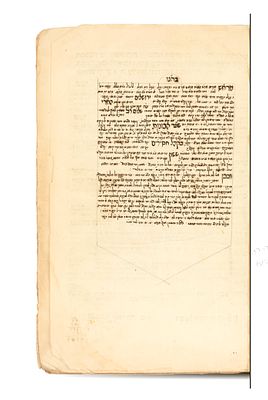
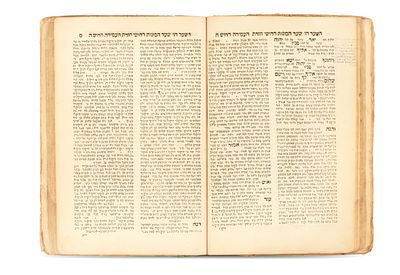
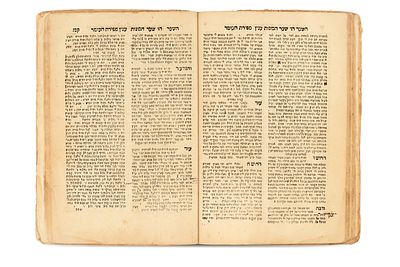
Sha’ar HaKavanos of Rabbi Chaim Vital – Unique Copy with Glosses of the Leading Kabbalists: Rabbi Shimon Aharon Agassi of Baghdad, the Chassid Rabbi Shem Tov HaKohen, Rabbi Aharon Moshe Ferreira, and Rabbi Nissim Ani.
Salonika, 1852. First Edition.
One of the foundational works of the Arizal’s Kabbalah: Sha’ar HaKavanos, the sixth section of the sefer Shemoneh She’arim by the Arizal, as recorded by his foremost disciple, Rabbi Chaim Vital, together with additional material by him and his colleagues. It was edited by Rabbi Shmuel Vital (Maharshu), son of Rabbi Chaim Vital.
This section contains the Arizal’s kabbalistic intentions (kavanos), the names of angels, and the sacred mystical combinations to be contemplated during the prayers of weekdays, Shabbos, the festivals and the Yamim Nora’im. These meditations have been used by the greatest kabbalists throughout the generations in their prayers, as they poured out their hearts and opened the gates of Heaven.
– – – – – – –
An exceptionally important and valuable copy, sent by the saintly kabbalist Rabbi Sasson ben Rabbi Moshe Peresiado, head of the Beis El yeshiva of kabbalists in Jerusalem, to Baghdad in 1873, to the young kabbalist Rabbi Shimon Aharon Agassi, author of Bnei Aharon, a close friend of Rabbi Yehuda Fatiya, who would later become one of the leading kabbalists of his generation.
Rabbi Yehuda Fatiya said of the two great kabbalists of Baghdad — the Ben Ish Chai and Rabbi Shimon Aharon Agassi — that “through their merit and righteousness they protected the city” (see below for further discussion).
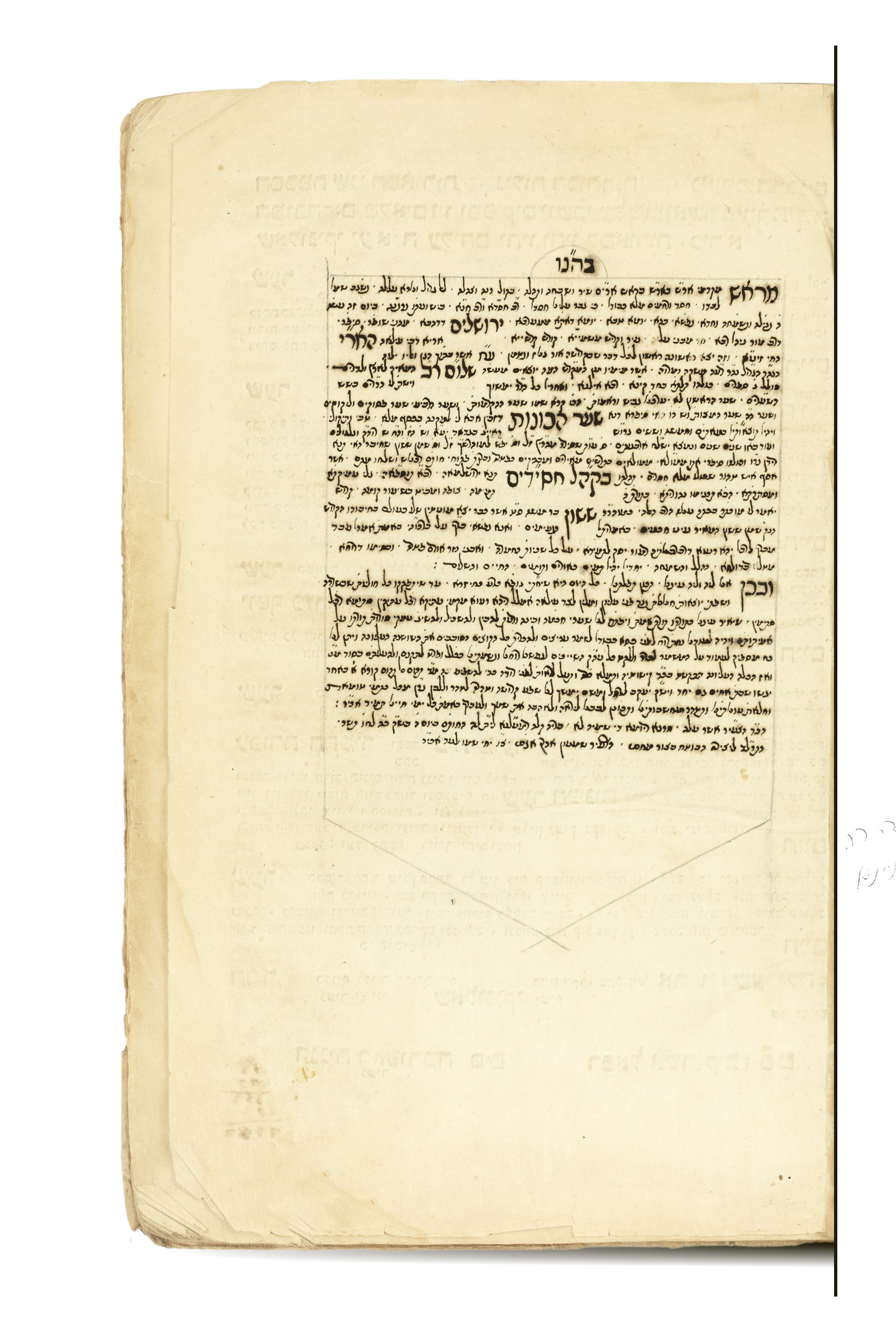
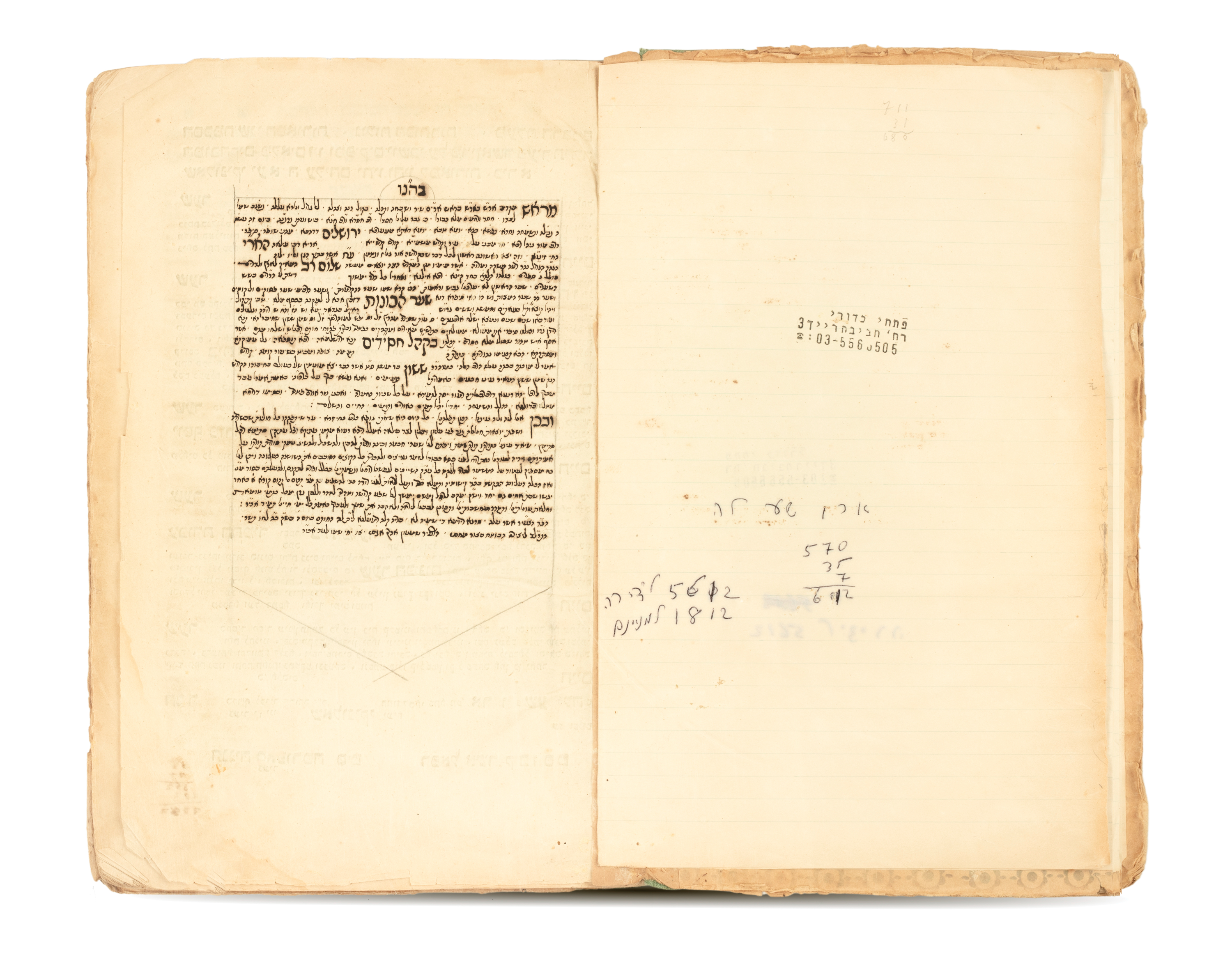
Rabbi Shimon Aharon was only about twenty-two years old when he received this sefer, and he was so excited that he composed an enthusiastic and heartfelt inscription of no fewer than twenty-nine lines, which he wrote on the opening page:
“My soul rejoices on this blessed day, the day on which these precious sefarim arrived from the West, from Jerusalem of Gold… the sacred works of our master… the lion of the Heavenly Academy, our master and king, the holy Arizal…”
In this inscription, Rabbi Shimon Aharon describes several sefarim of Kabbalah that he received from Jerusalem from Rabbi Sasson ben Rabbi Moshe, “whose name is already known worldwide through his holy work entitled Shemen Sasson.”
He then offers a heartfelt prayer that Hashem should “illuminate our eyes with the Torah of Truth [the Torah of Kabbalah], and open for us the gates of wisdom, understanding, and knowledge, enabling us to comprehend and grasp the profound depths of the secrets of His Torah in their true meaning…” He continues with a kabbalistic prayer and concludes:
“These are the words of the young one… signed on Thursday of Shabbos Kodesh, the 25th day of Tishrei, 1873, who trusts in my Rock and refuge, the young Shimon Aharon Agassi, may he live, and may his name endure forever, Amen.”
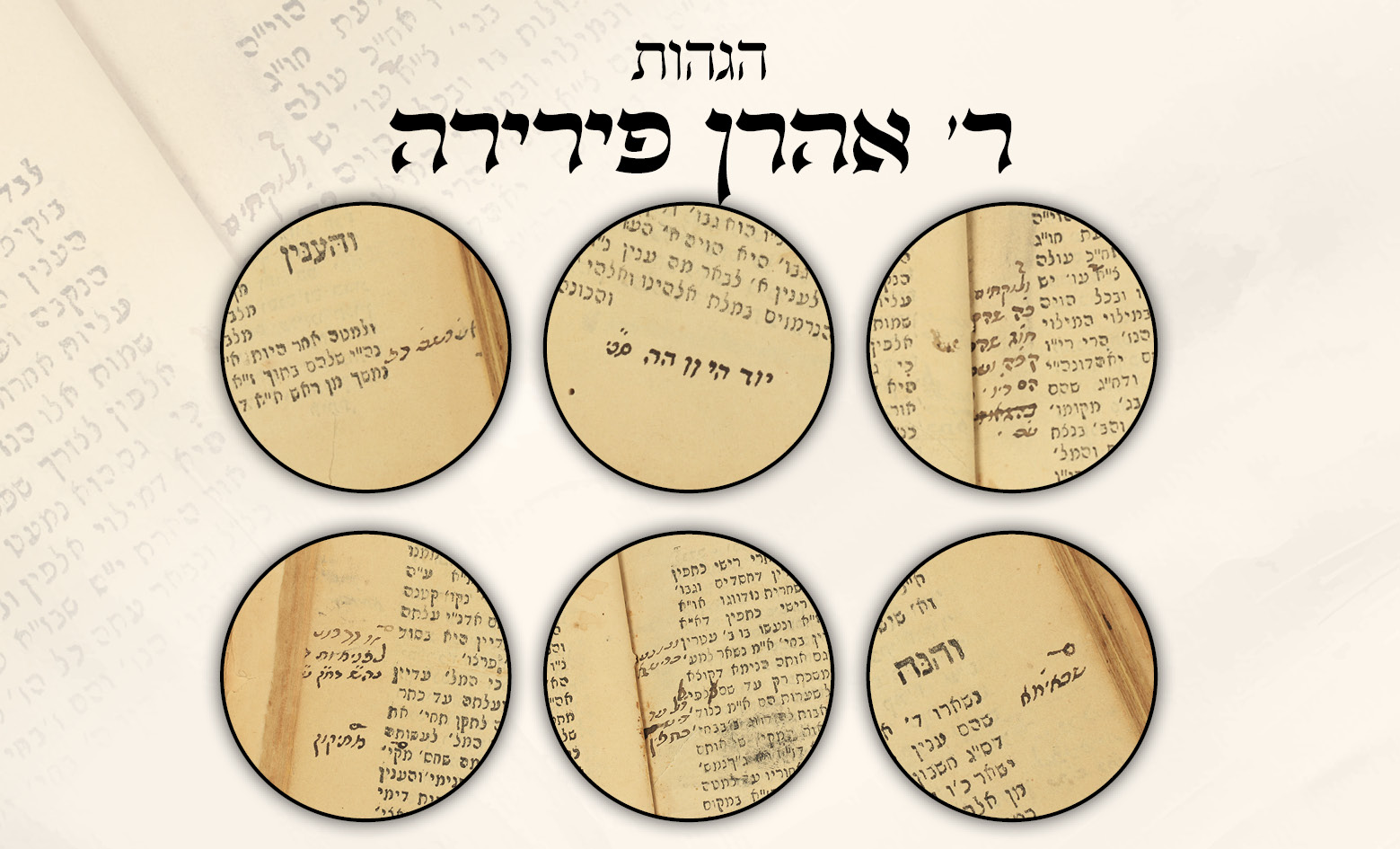
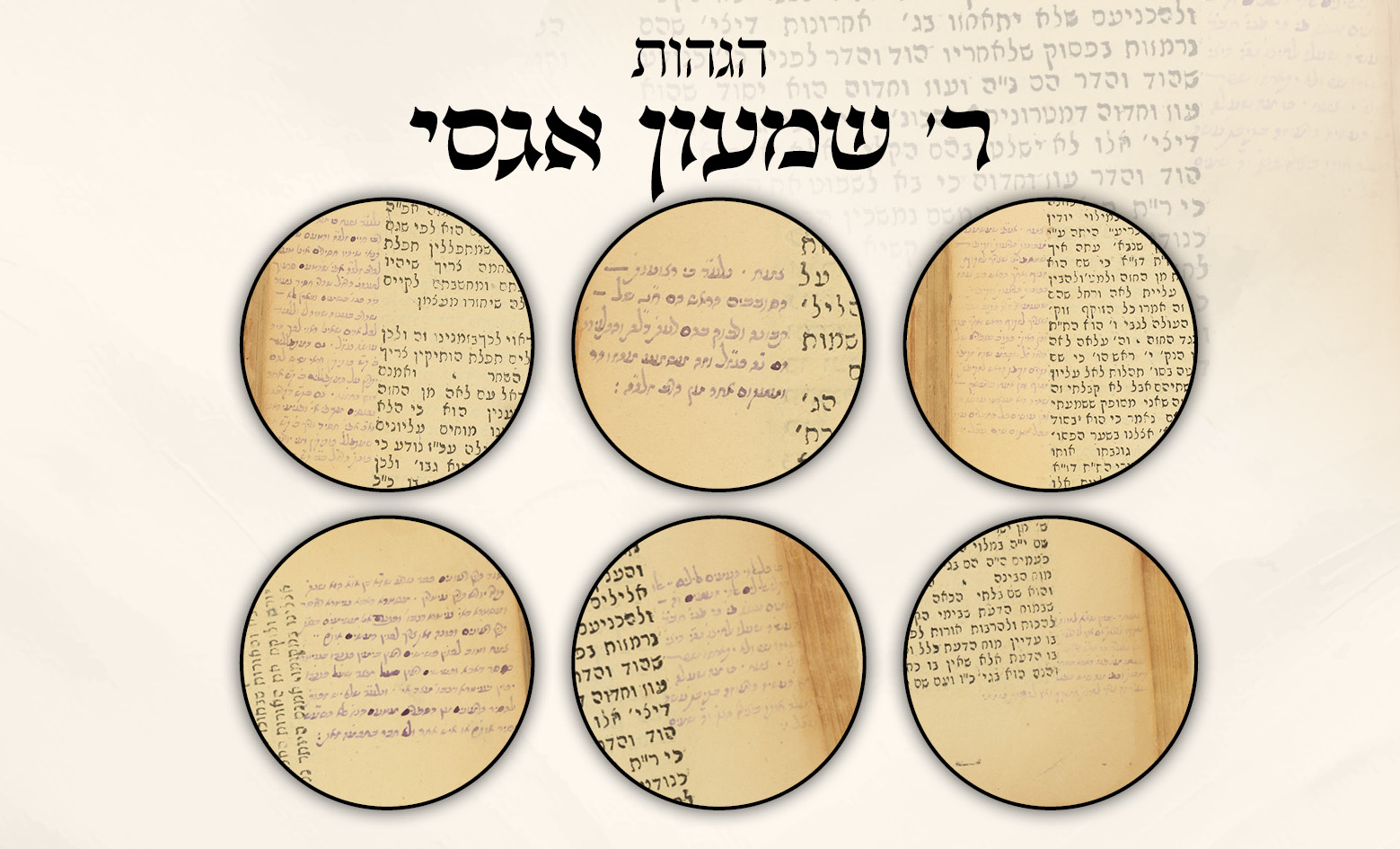
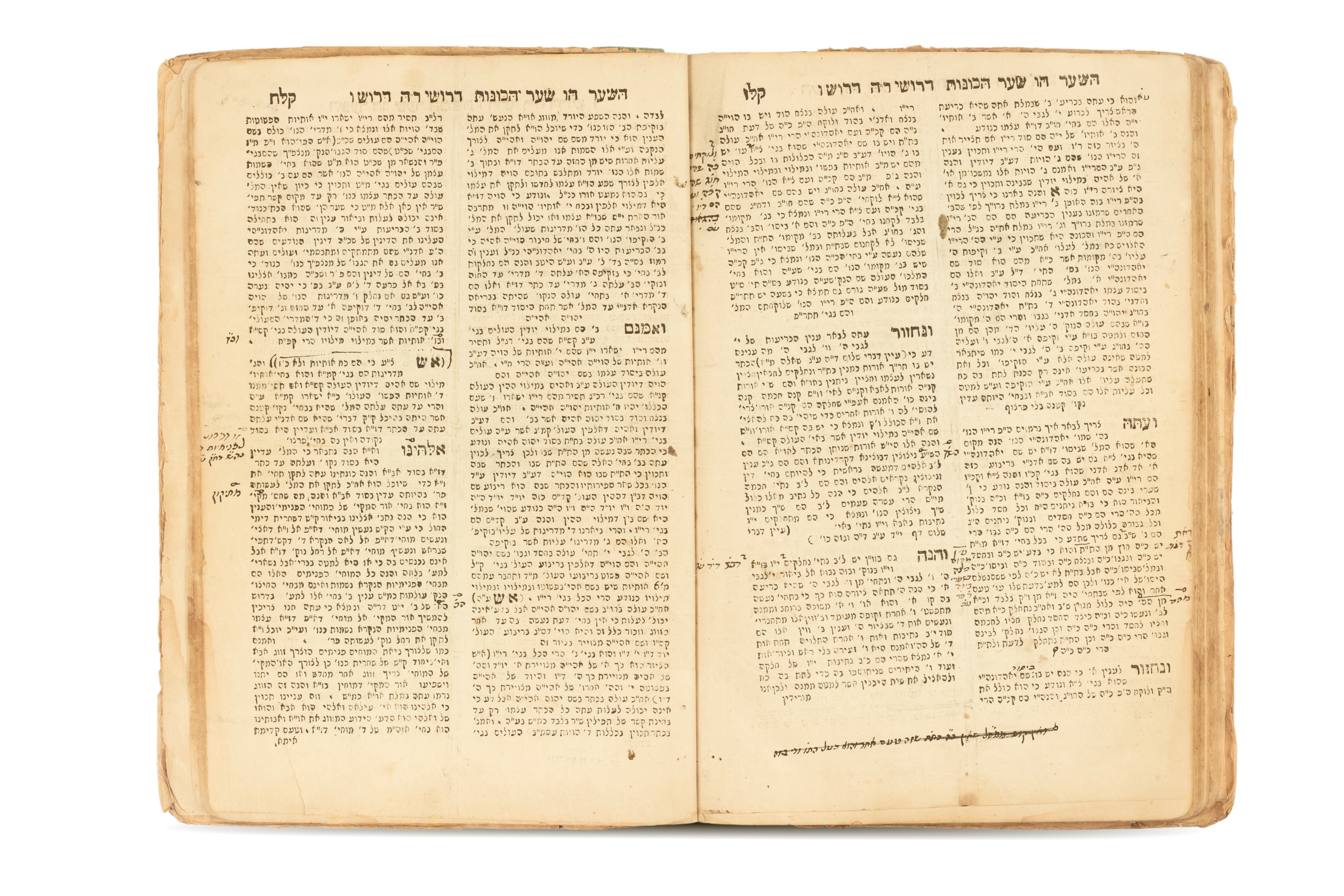
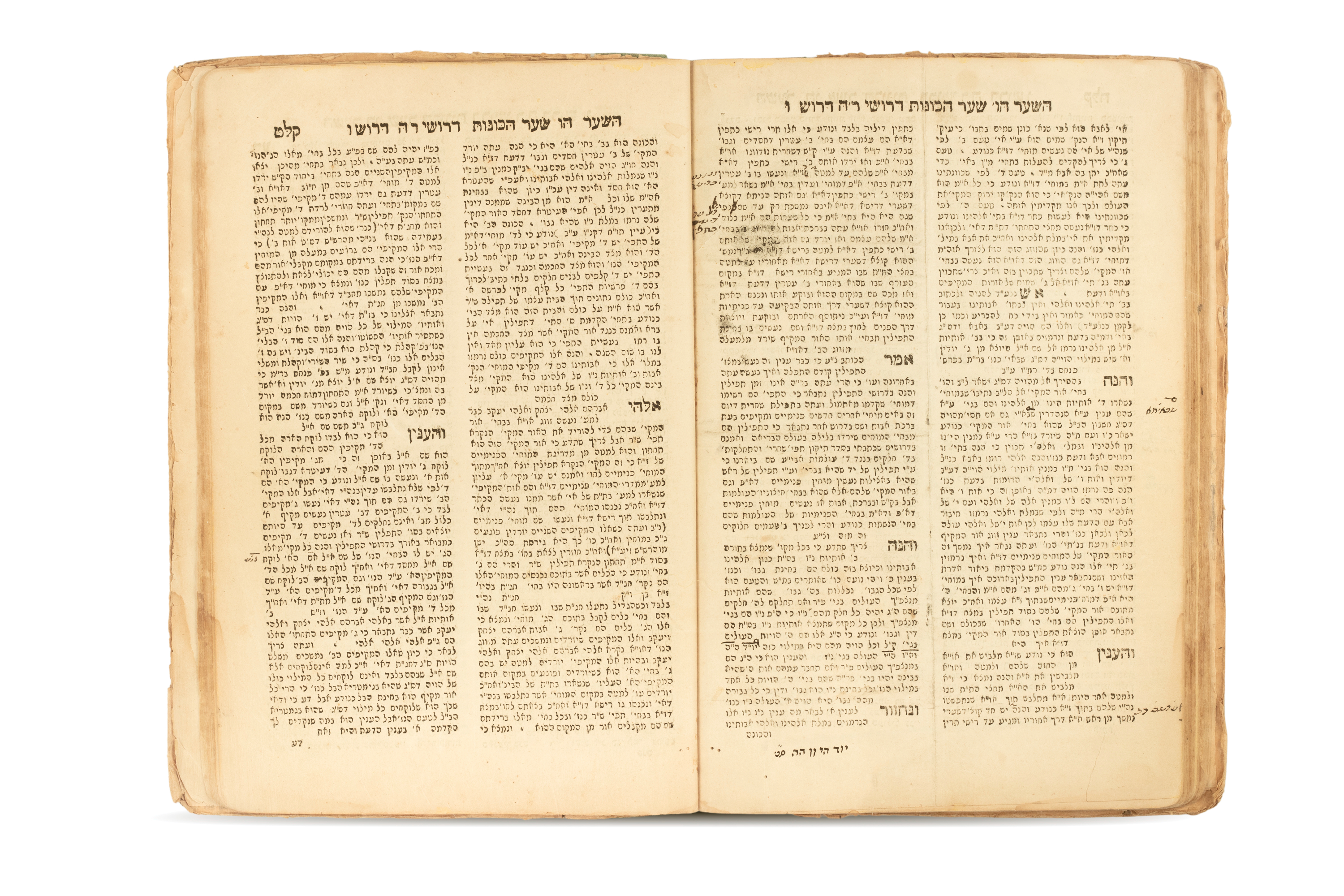
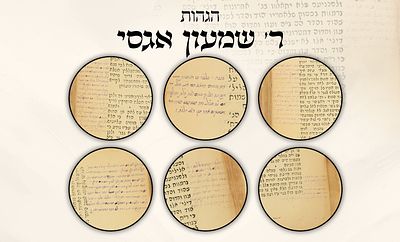
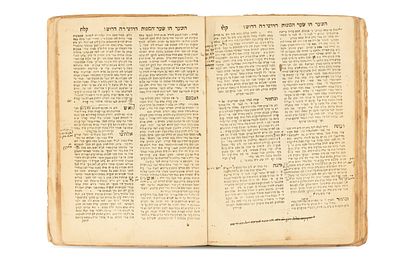
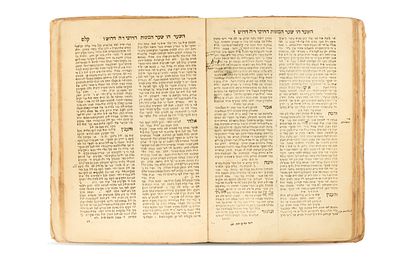
Throughout the sefer there are more than thirty glosses in Rabbi Shimon Aharon’s distinctive fine handwriting. One gloss is signed: “S.B.A. [Shimon ben Aharon], may Hashem protect and sustain him” (leaf 125a).
Some of his glosses are excerpts copied from the notes of Rabbi Yaakov Tzemach on the siddur. (In a sample comparison, we found these notes printed in Siddur Kavanos HaTefillah BiKtzarah (Jerusalem, 1986), where they are noted as appearing there for the first time from manuscript.)
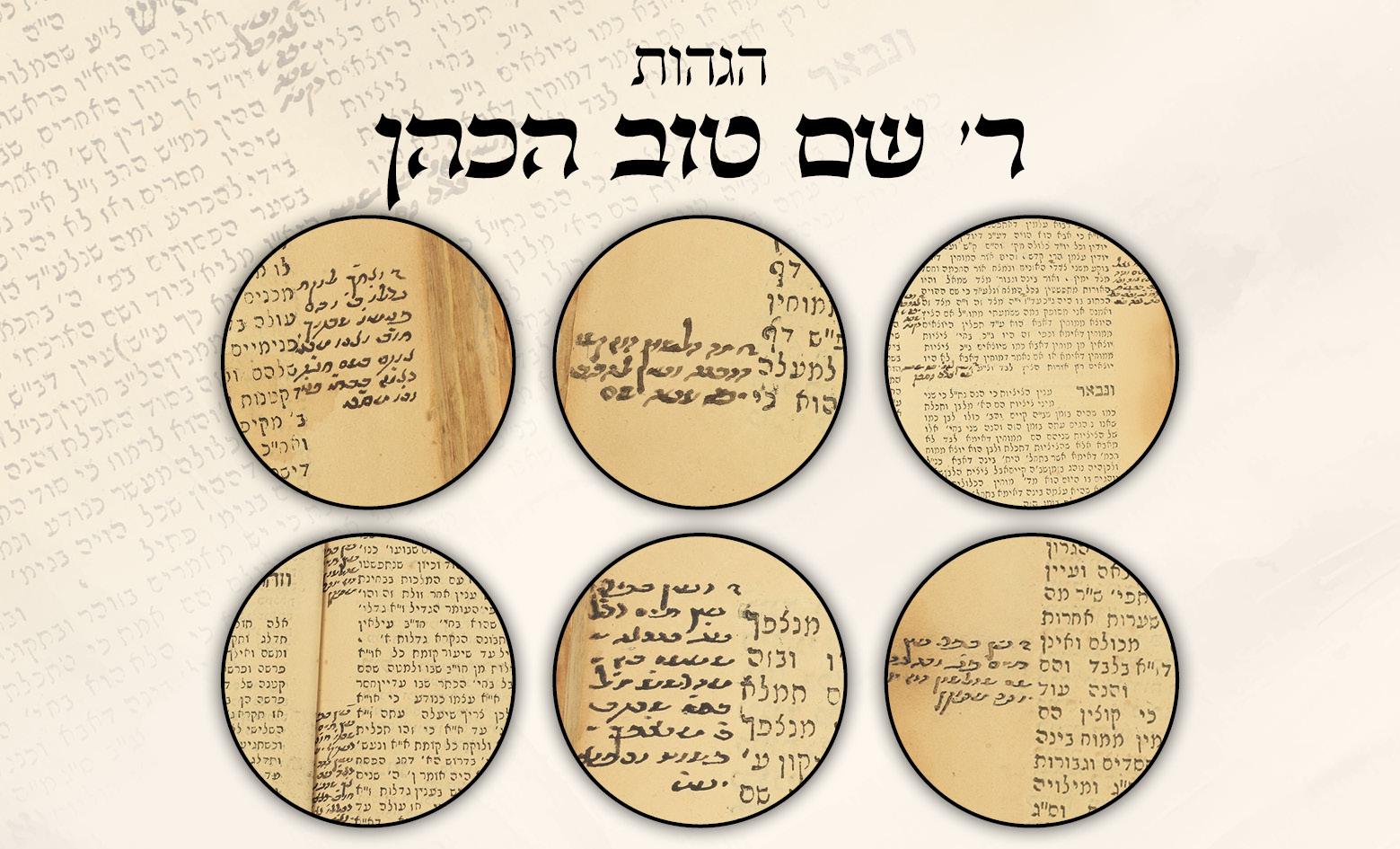
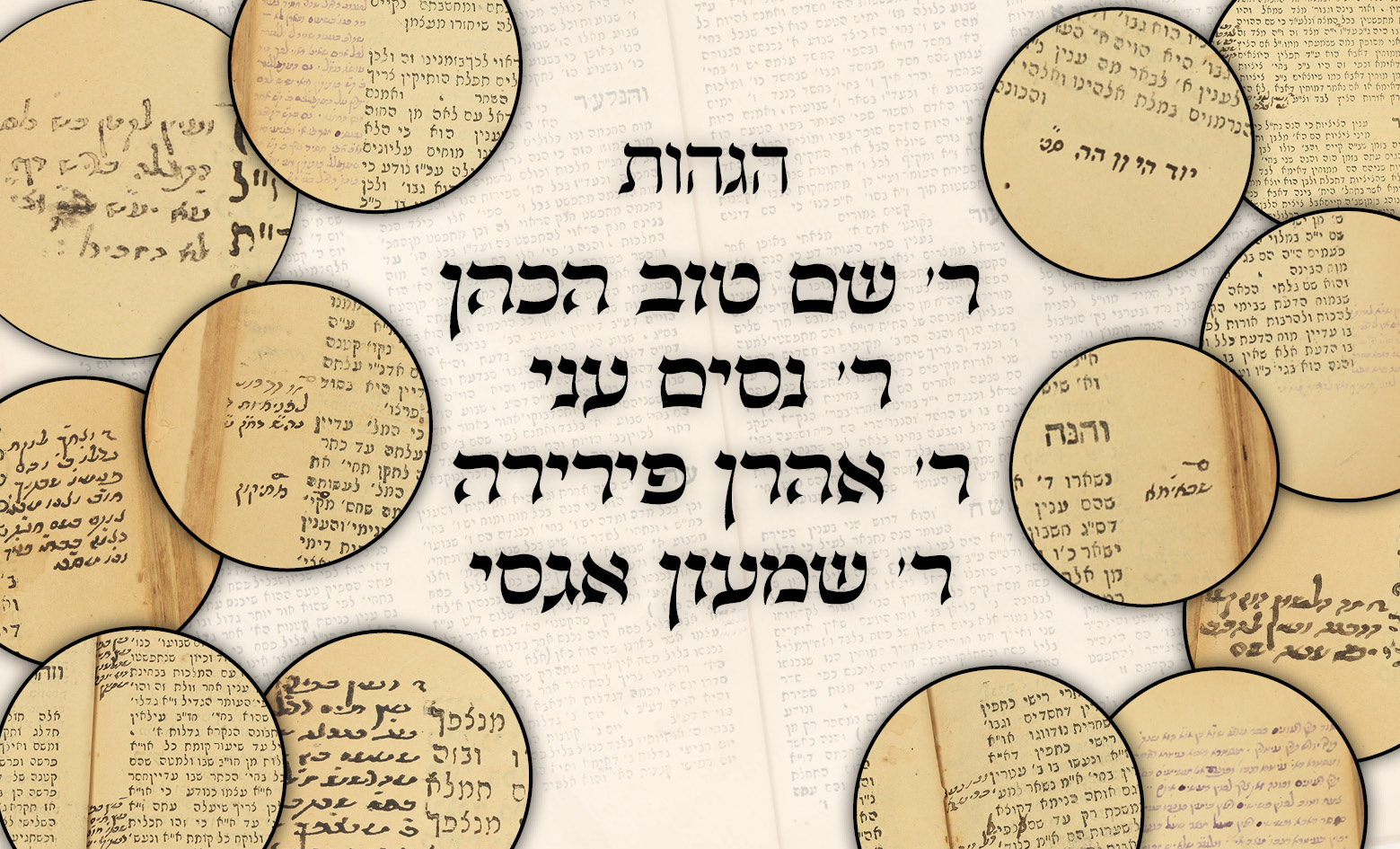
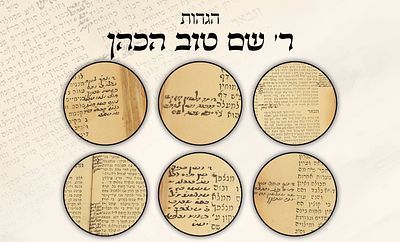
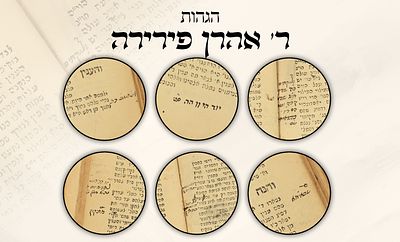
In addition to Rabbi Shimon Aharon’s glosses, the sefer contains additional glosses in the handwriting of several of Jerusalem’s leading scholars of Kabbalah and Roshei Yeshiva of the renowned Beis El yeshiva of Kabbalists in Jerusalem, who apparently studied from this sefer before it was sent to Baghdad:
- Rabbi Shem Tov HaKohen – More than 10 glosses. Known as “the Chassid, ” he was one of the kabbalists of Salonika and later one of the Roshei Yeshiva of the Beis El Yeshiva of Kabbalists. He passed away in 1888. For more information about him, see: Min HaGenazim, vol. 12, pp. 400–401.
- Rabbi Aharon Moshe Ferreira – Several brief glosses on leaves 137–138. Author of Toldos Aharon U’Moshe and other sefarim. He too was one of the kabbalists of Salonika. In 1848, he immigrated to Eretz Yisrael, where he was recognized as one of the members of the circle of kabbalists. He passed away in 1887.
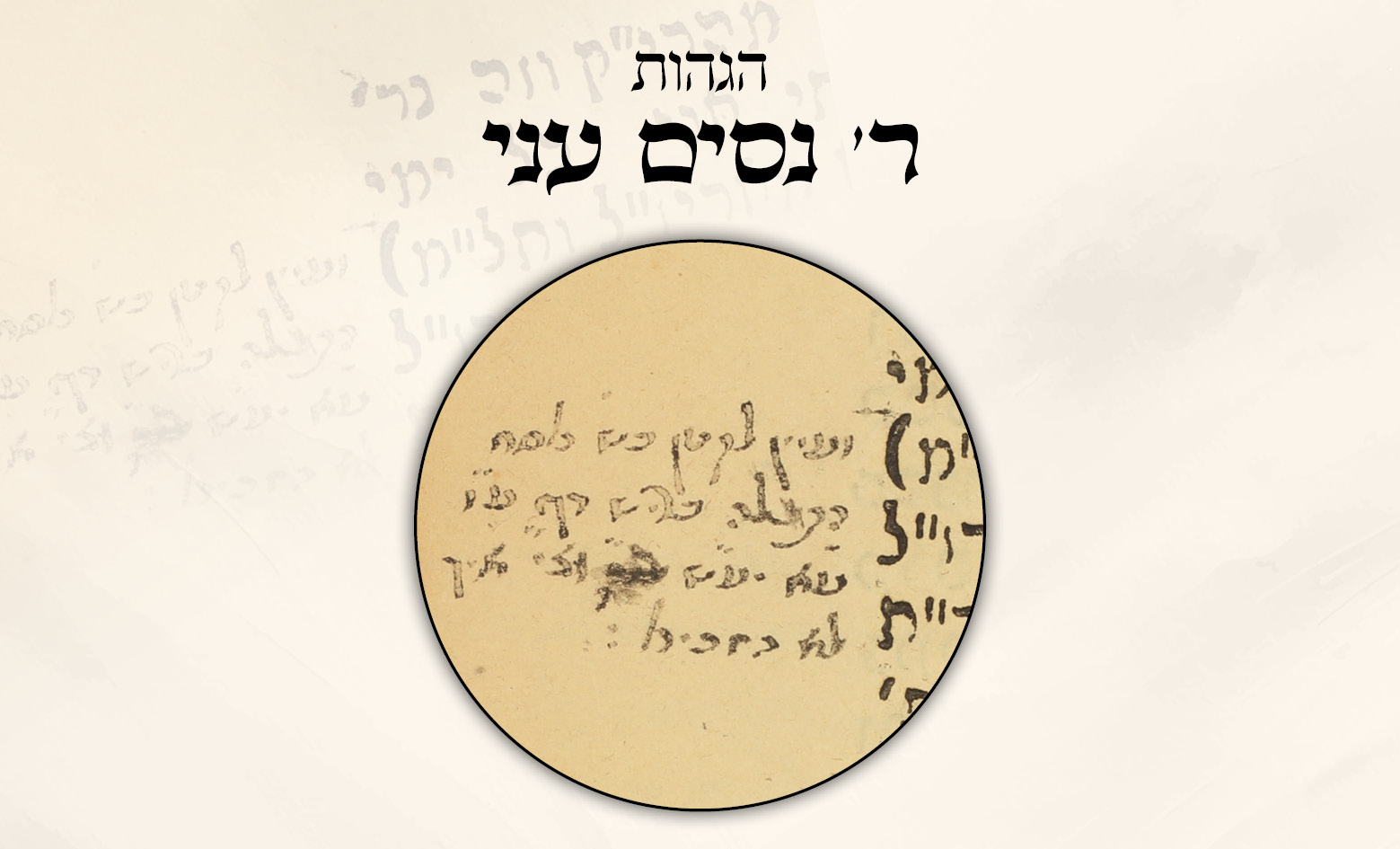
- Rabbi Nissim Ani – A gloss on leaf 15a. A disciple of Rabbi Abdallah Somech and a childhood friend of Rabbi Eliyahu Mani, Av Beis Din of Chevron, with whom he delved into the secrets of Kabbalah. He traveled with him from Baghdad to Jerusalem in 1857 and became one of the leading scholars of the renowned Beis El beis medrash of kabbalists. He prepared for publication the sefer Divrei Shalom by the grandson of the Rashash and also wrote numerous glosses on works of Kabbalah. He passed away in 1900.
The saintly kabbalist Rabbi Shimon Aharon Agassi, author of Bnei Aharon (1852–1913), was one of the leading kabbalists of the Sephardi world in the previous century. He was the primary disciple of Rabbi Yitzchak Mordechai Sasson, grandson of Chacham Sasson Shanduch. He was held in exceptionally high esteem by the Ben Ish Chai, who referred to him as “our beloved, the all-encompassing Rav” (Shnei Eliyahu, Part I, Drasha 9). From an unusually young age, he devoted himself to the study of Kabbalah and became especially renowned for his close friendship with Rabbi Yehuda Fatiya, who was likewise then a young kabbalist.
He authored several kabbalistic works, foremost among them the sefer Bnei Aharon on Sha’ar HaGilgulim, which he wrote over the course of nearly a decade. He named it after his son, who passed away when he was young, shortly before his wedding, and distributed the work free of charge to every scholar.
Rabbi Yehuda Fatiya pays extraordinary tribute to his esteemed friend Rabbi Shimon Aharon, mentioning him in the same breath as the Ben Ish Chai:
“In our city of Baghdad, we were blessed with two ‘golden kruvim’ watching over the city from within and without. They were our wall and refuge in times of trouble… These two righteous men alone devoted themselves primarily to the study of Etz Chaim and the Shemoneh Shearim, each studying alone in seclusion in his own room. Through their merit and righteousness, they protected the city, each standing guard from his own side.” (See the introduction to Imrei Shalom, Ahavas Shalom edition, in the biographical chapter on the author.)
The saintly kabbalist Rabbi Sasson ben Rabbi Moshe (1825–1903) was one of the greatest of the kabbalists among the Achronim. He served for approximately twenty years as shaliach tzibbur and the main kabbalist who practiced the Arizal’s prayer meditations at the Beis El yeshiva. He authored comprehensive commentaries on nearly the entire corpus of Rabbi Chaim Vital’s writings, on a scale unparalleled in kabbalistic literature. His sefarim are foundational works for understanding the writings of Rabbi Chaim Vital and the Rashash.
Salonika, 1852. First edition. Page Count: [1], 120, 123–163 leaves. Lacking the title page.
Size: 29.6 cm.
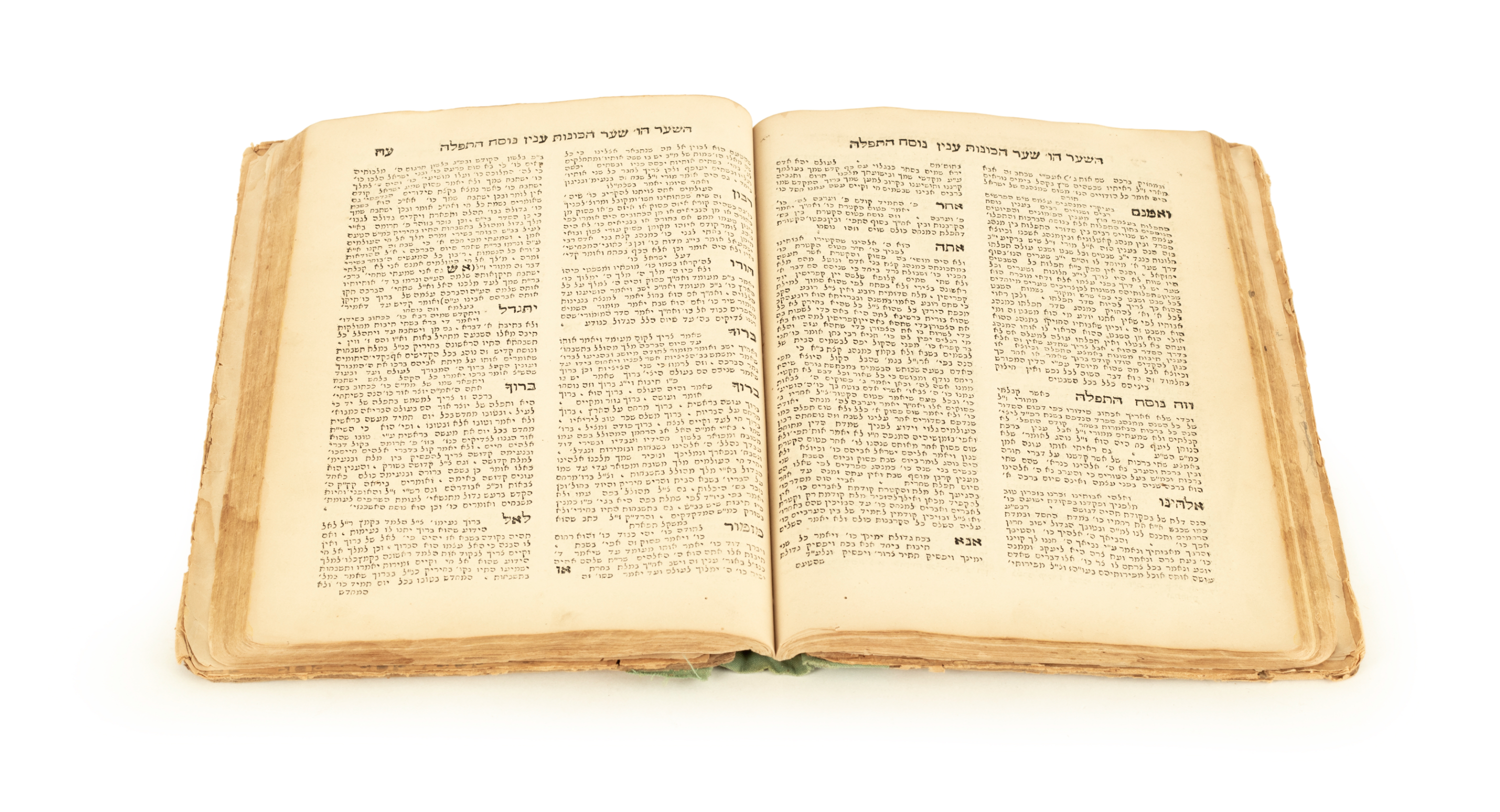
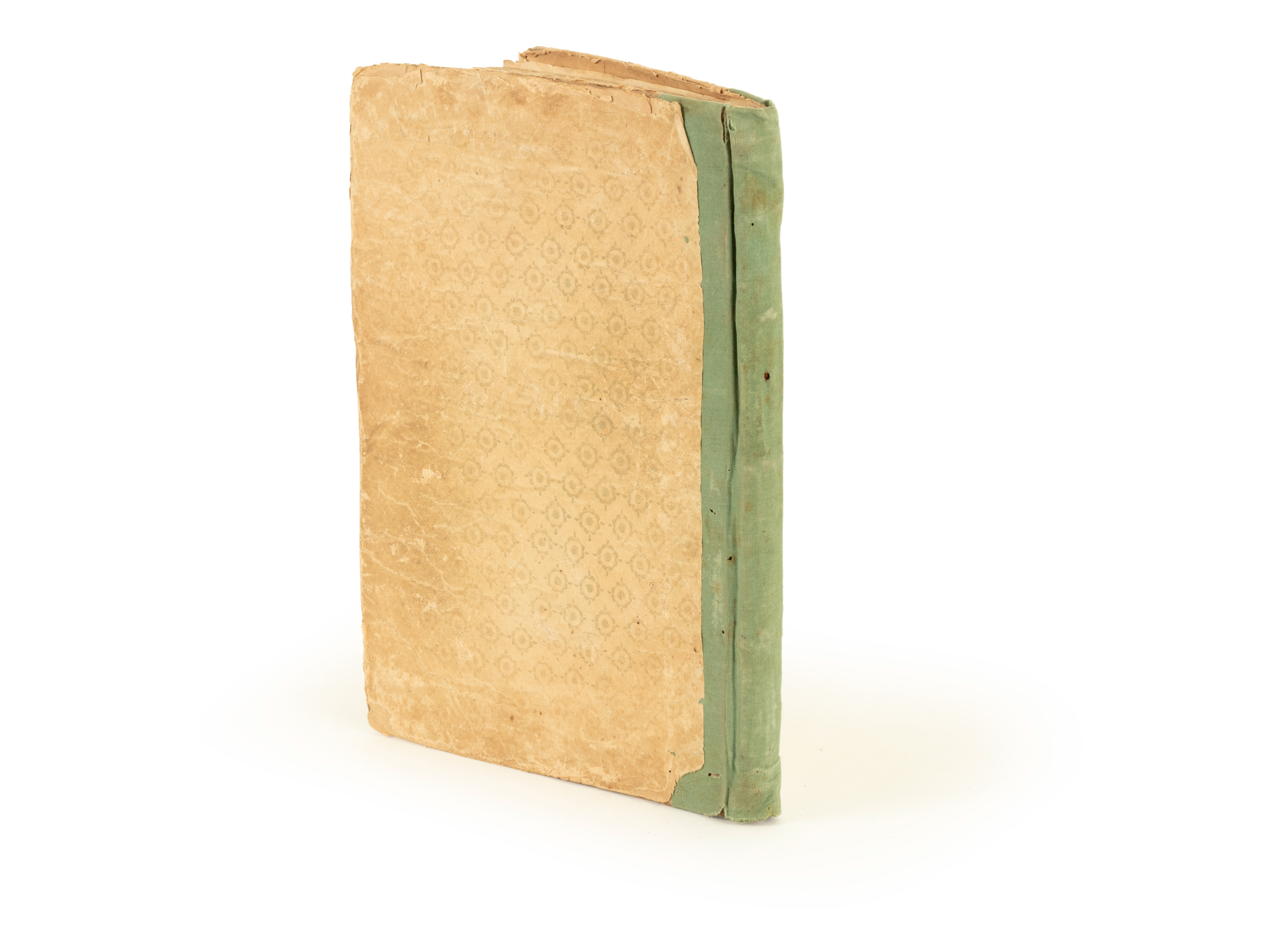
Condition: Fair to fair-good. Signs of use by the kabbalists who studied from the sefer. Several holes throughout many leaves. Leaf 137 is bound upside down. Old plain binding.
Printed at the end of the sefer are the indexes prepared by the Maharshu for the present Sha’ar HaKavanos and for Sha’ar HaMitzvos (the latter was printed in Salonika in the same year, in a small format).
Bibliography: Stefansky, Sifrei Yesod, no. 353; Rabbi Yosef Avivi, Kabbalos HaAri, vol. II, pp. 691–695.
The sefer is incomplete and its condition is not particularly good. It is offered for sale because of the importance of its ownership.
Please examine the photographs before placing a bid. Additional photographs are available upon request from our office.
– – – – – – –
The Unique Inscription of Rabbi Shimon Aharon Agassi in His Own Copy
Today, three sefarim are known to have survived from the group of sefarim sent to Rabbi Shimon Aharon Agassi from Jerusalem, and all bear this remarkable inscription, with virtually identical wording. The only variations are the title of each sefer and their purchase price.
The first is Sha’ar HaHakdamos, where he notes that it cost him 125 grush (see Zahav Sheba, Ahavas Shalom edition, p. 374, where the date is mistakenly recorded as the 25th of Cheshvan, 1873).
The second is Sha’ar HaPesukim, where he records a price of 180 grush (Winner’s Auction 113, Lot 117).
The third, presented here for the first time, is Sha’ar HaKavanos, for which he records the considerably higher price of 265 grush!
– – – – – – –
The Importance of Shemoneh Shearim Edited by Rabbi Shmuel Vital
The source of the teachings printed in this volume and the other seven sections are Rabbi Chaim Vital’s famous sefer Etz Chaim.
Here, however, his son, Rabbi Shmuel Vital, reorganized the material for the first time into an entirely different structure, and they contain “many new teachings, ” in the words of the Leshem (Hakdamos u’Shearim, p. 59).
As is known, Rabbi Chaim Vital’s manuscripts underwent many stages of transmission and exist in numerous textual versions. The nusach arranged by Rabbi Shmuel Vital is regarded as the best and most accurate of them all. As the Chida writes:
“The Shemoneh Shearim arranged by the son of Rabbi Chaim Vital, Rabbi Shmuel, are the version upon which one should rely… Therefore, whoever wishes to study the most accurate texts should study the eight sefarim arranged by Rabbi Shmuel.”