
Lot : 115
Group of Rare Midrashim and Aggados – Exceptionally Important Sifrei Yesod – Incomplete and Damaged Copies
Constantinople, Salonika, and Venice, 1512–1546
Group of Rare Midrashim and Aggados – Exceptionally Important Sifrei Yesod – Incomplete and Damaged Copies
Constantinople, Salonika, and Venice, 1512–1546
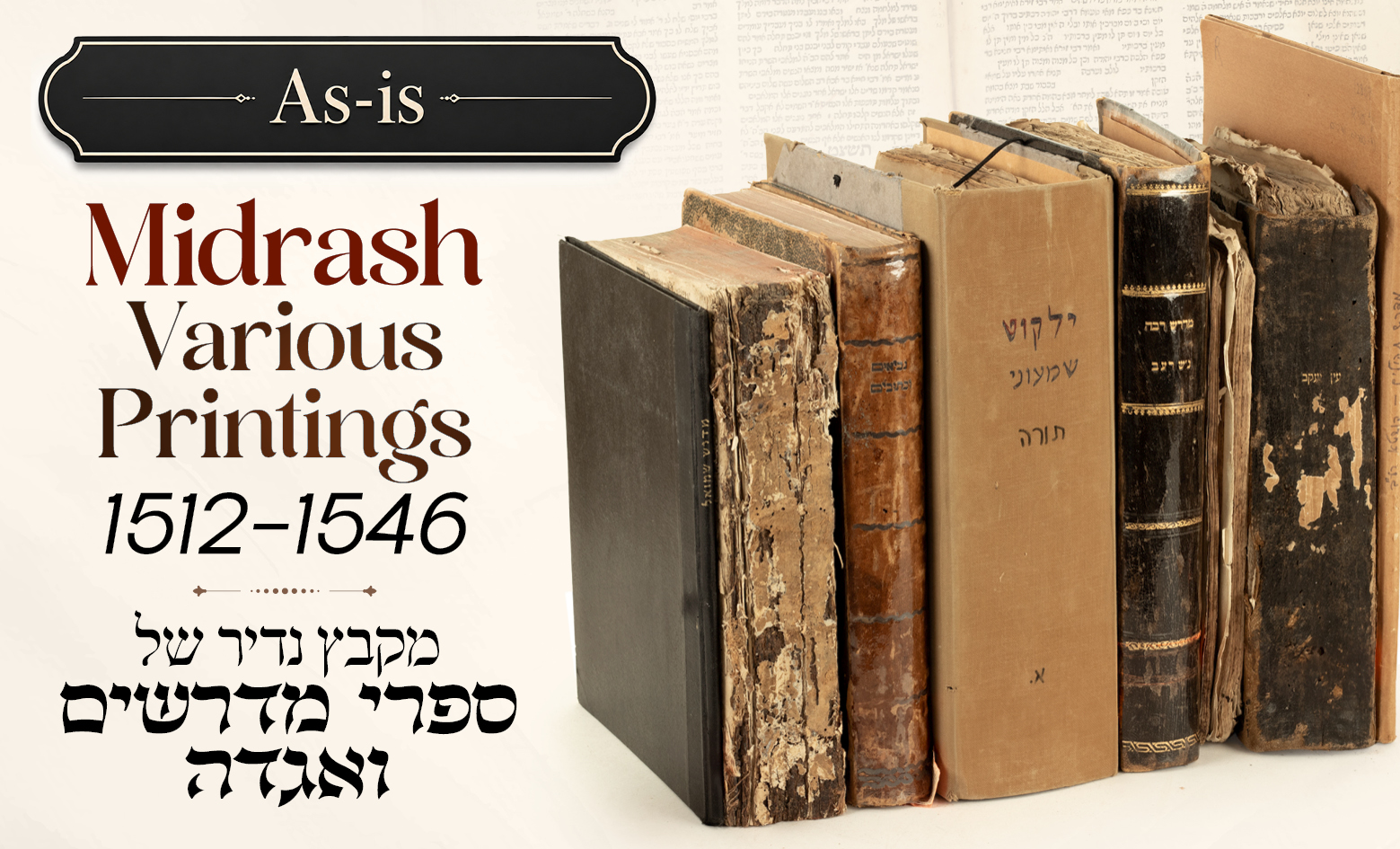
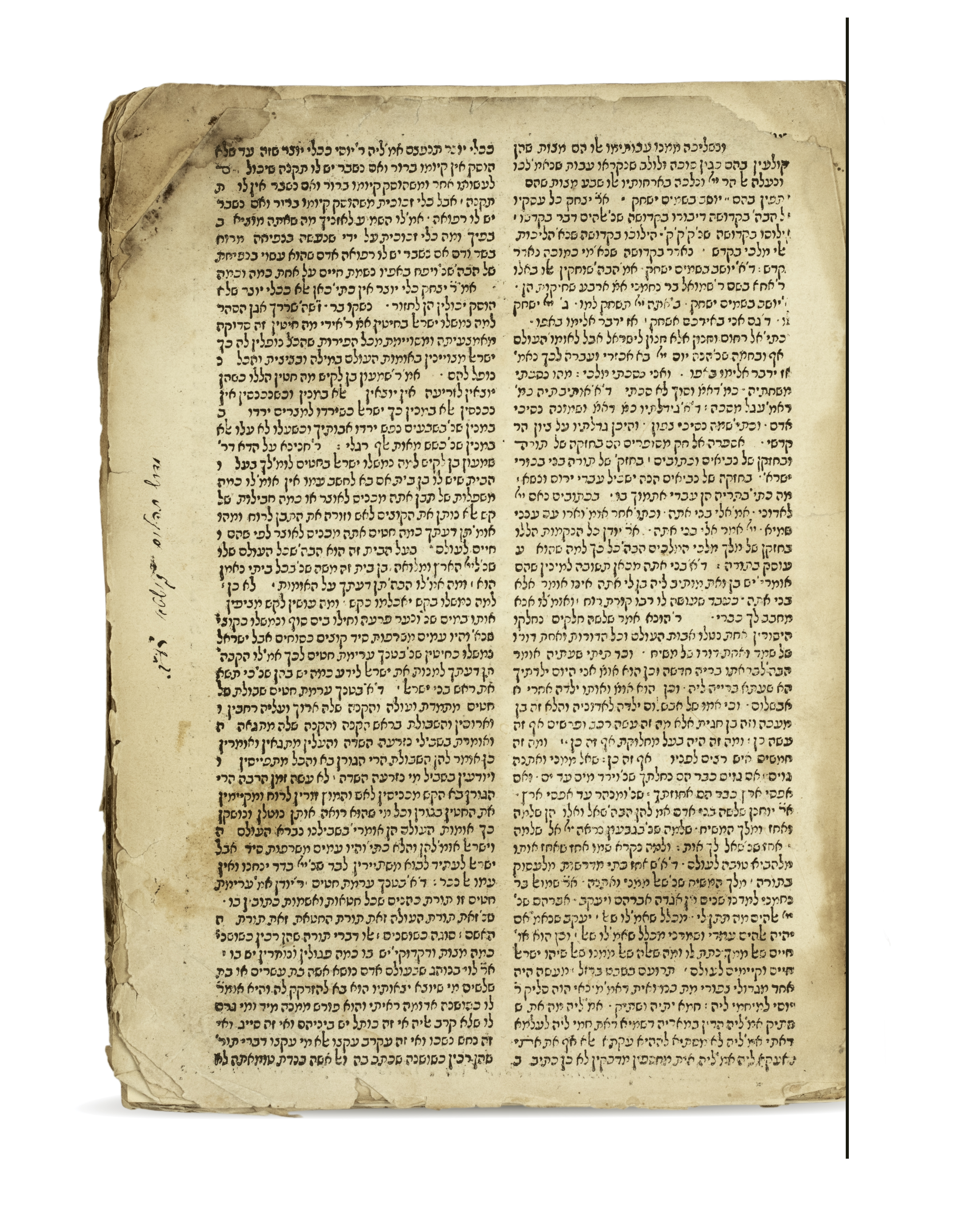
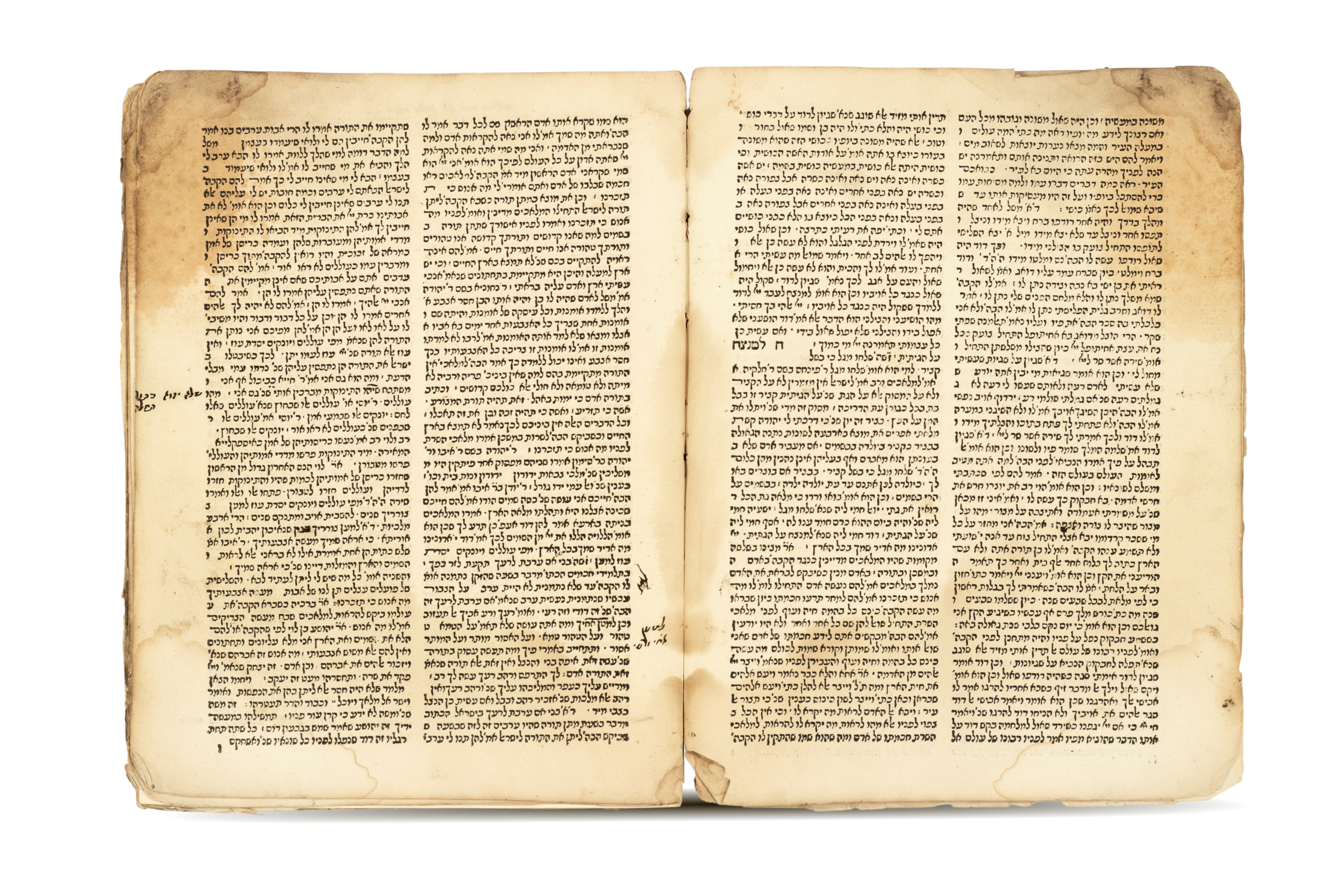
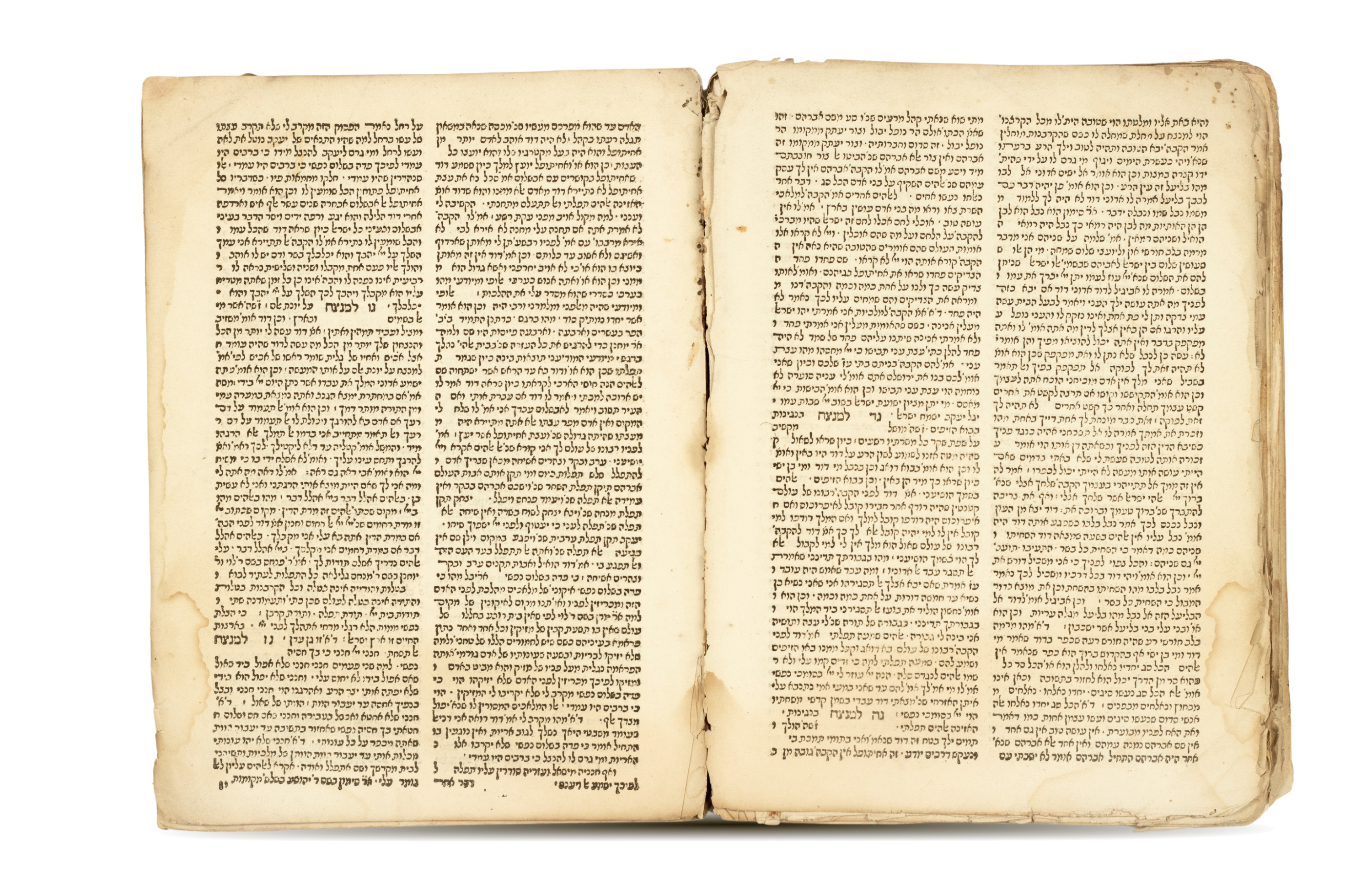
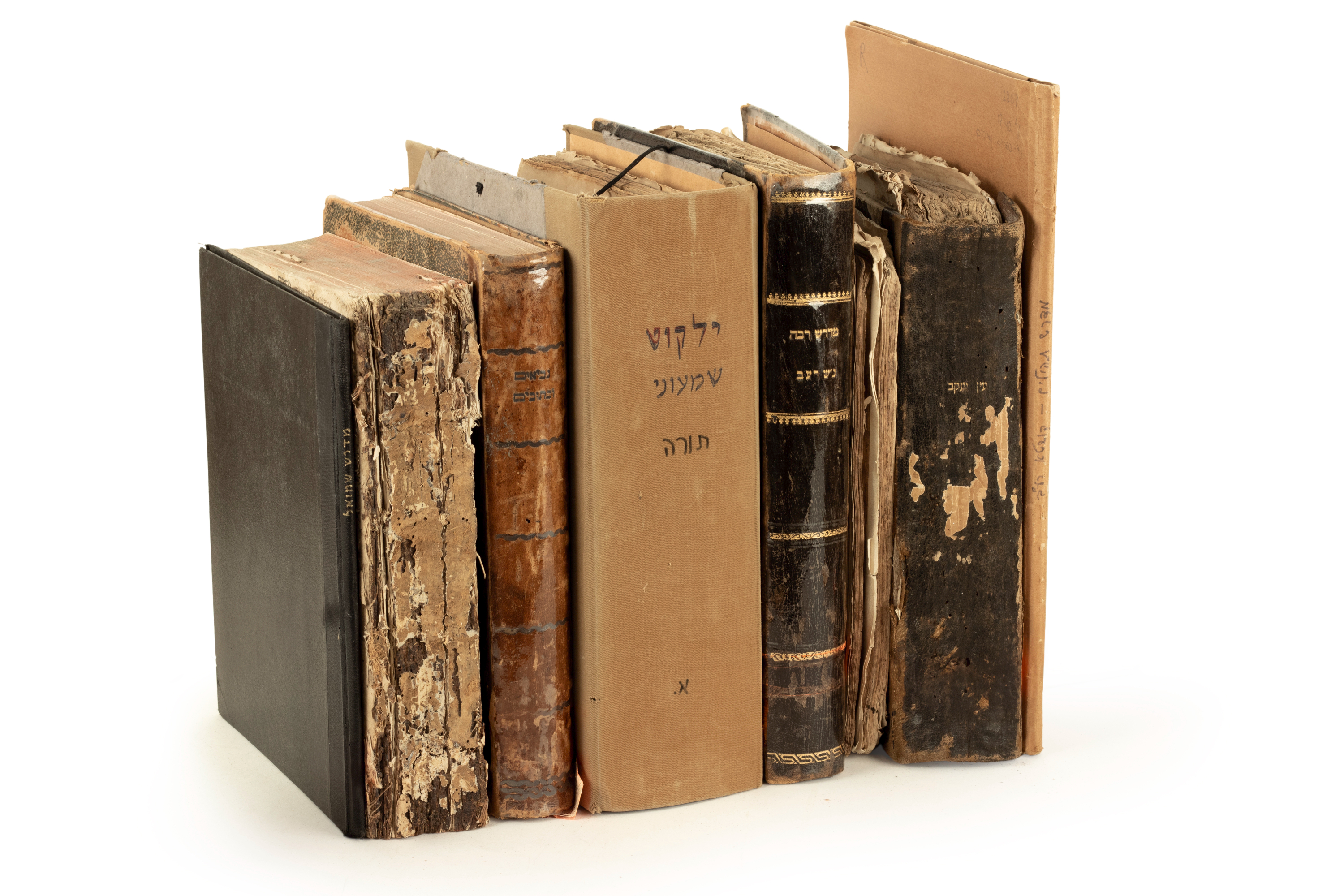
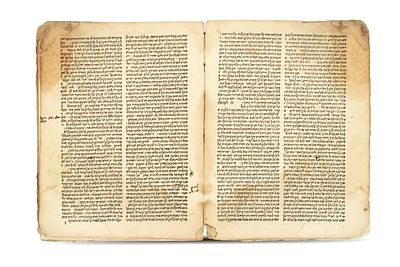
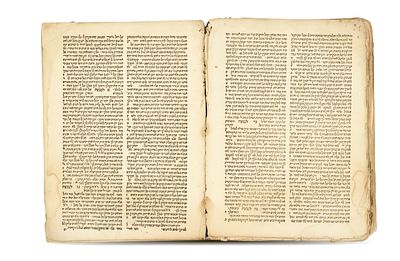
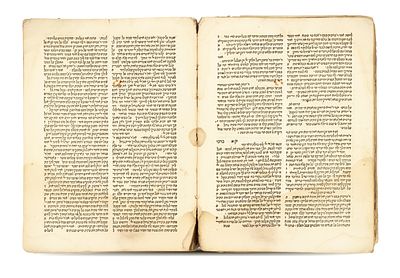
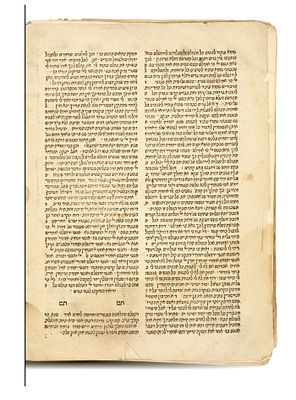
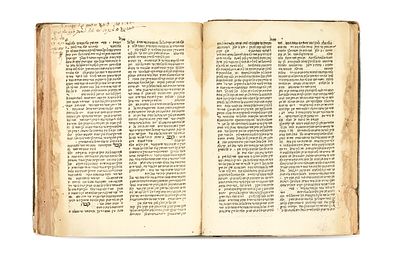
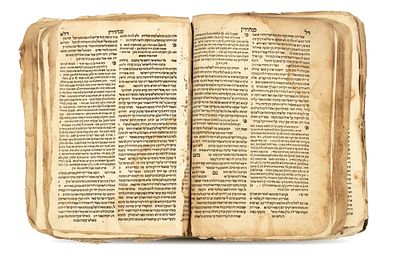
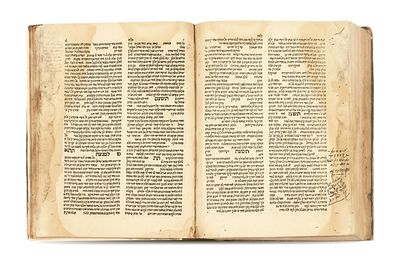
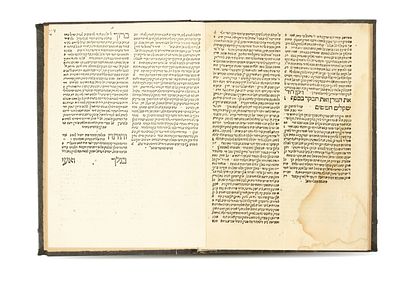
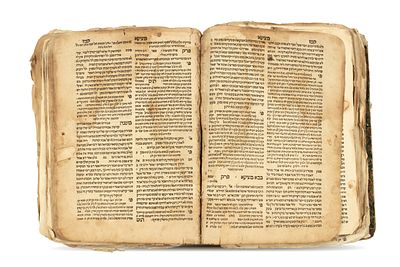
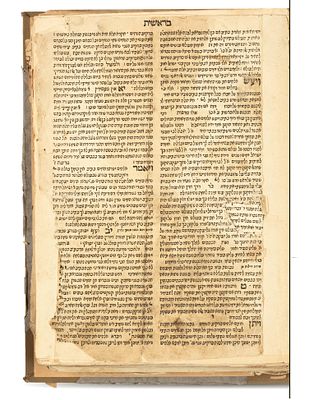
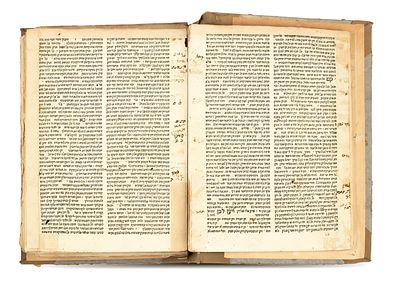
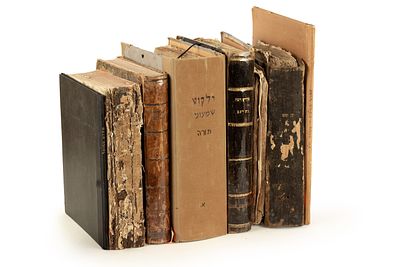
A collection of seven of the most foundational Midrashic and Aggadic works of Chazal, most of them extremely rare first editions.
The copies are incomplete and damaged, and have therefore been grouped as a single lot.
Most of the works in this collection, when complete and in good condition, are worth a fortune and are exceptionally difficult to obtain because of their great importance and rarity. A truly unique opportunity.
To illustrate the significance of these works, it is worth noting that the Stefansky Sifrei Yesod catalog lists only twelve titles under the category of Midrashei Aggadah — and no fewer than five of them are included in the present collection!
The collection includes:
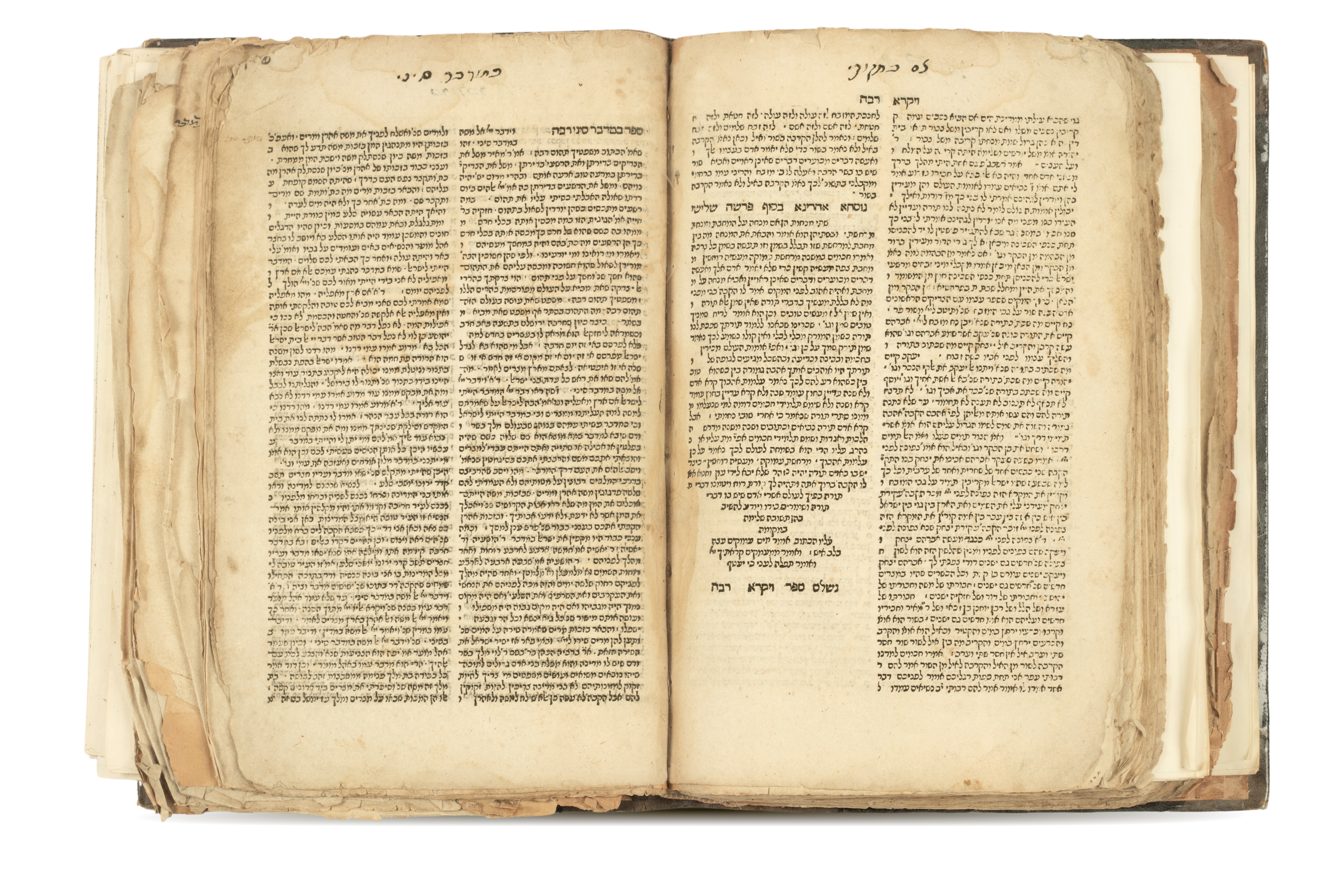
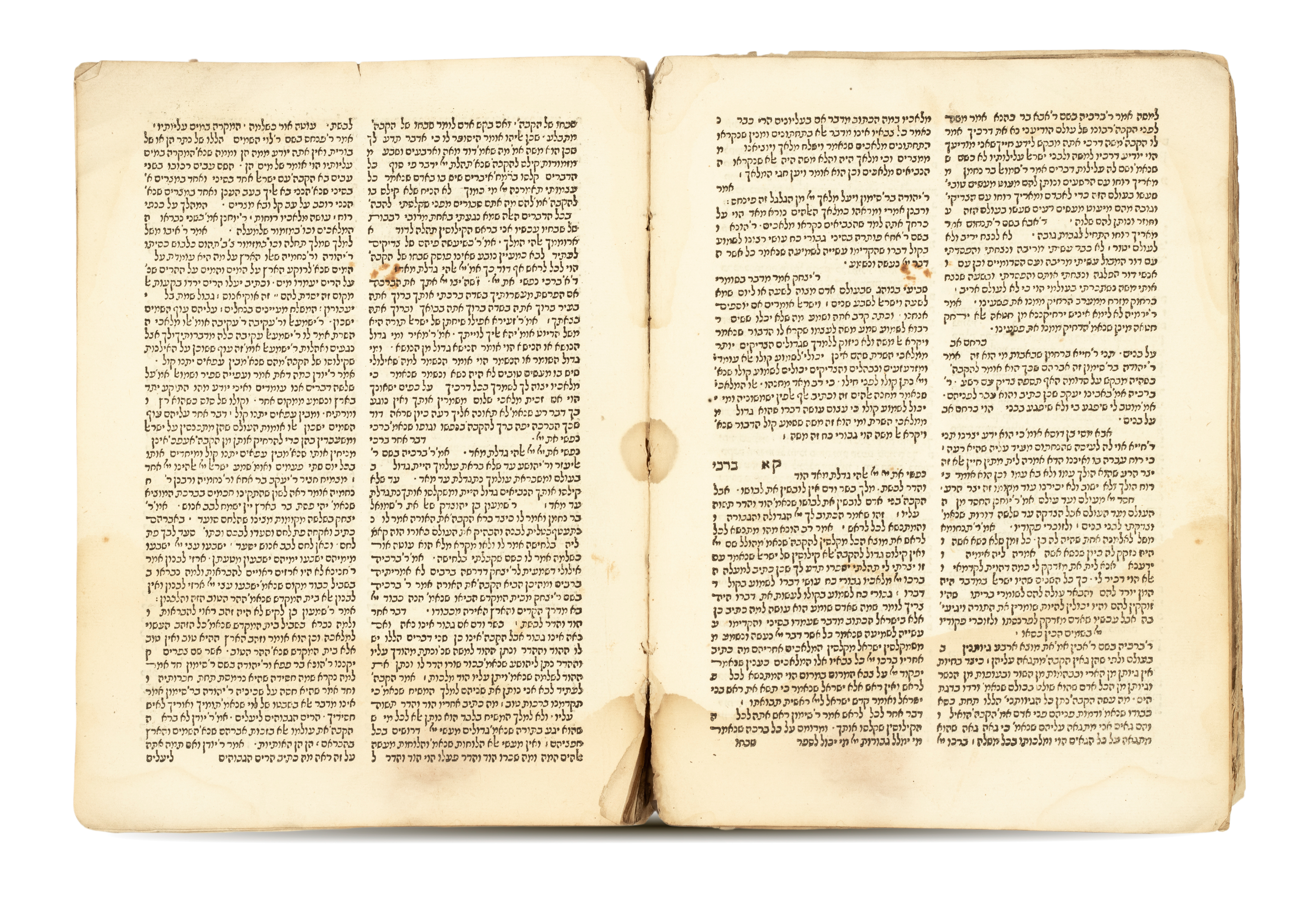
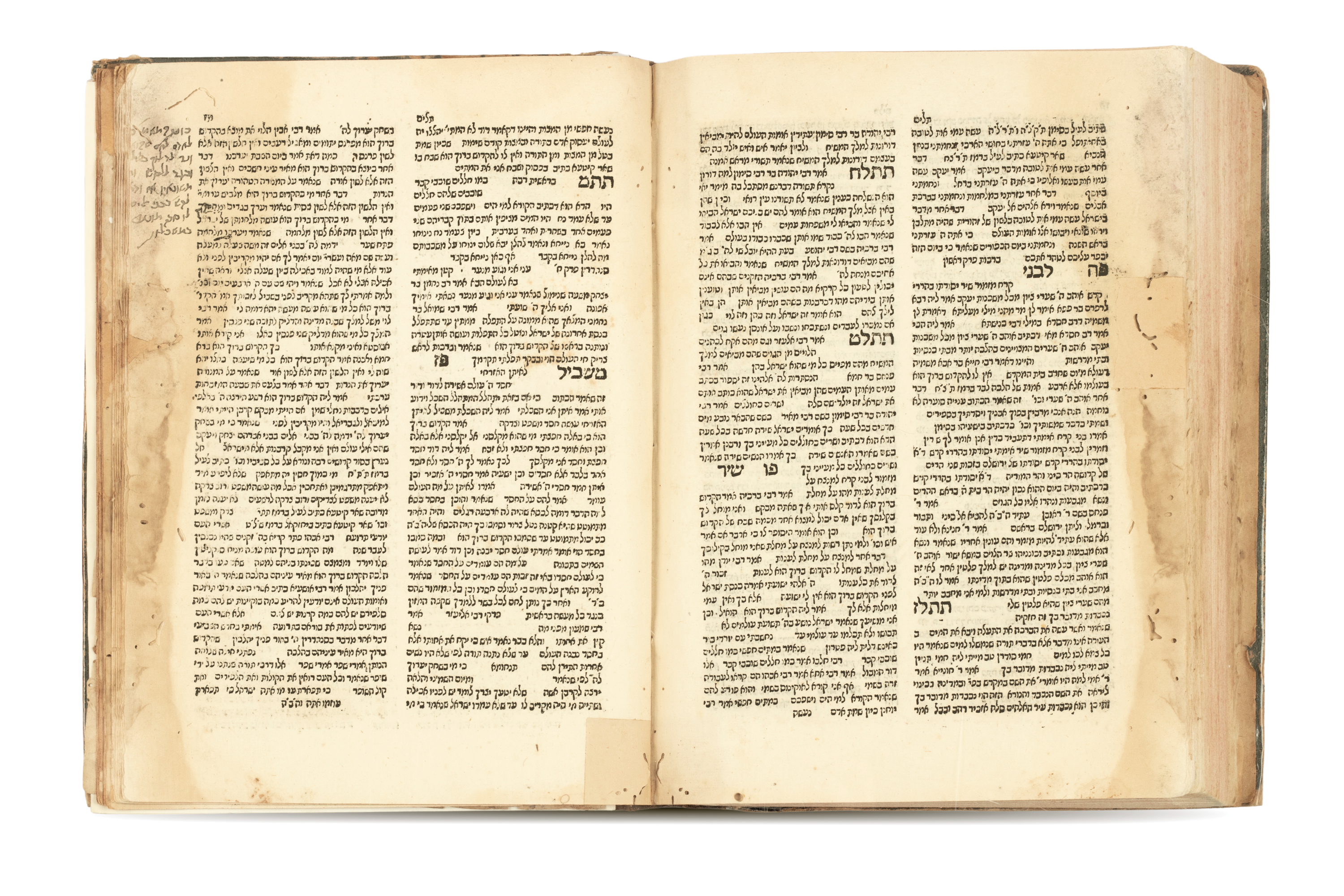
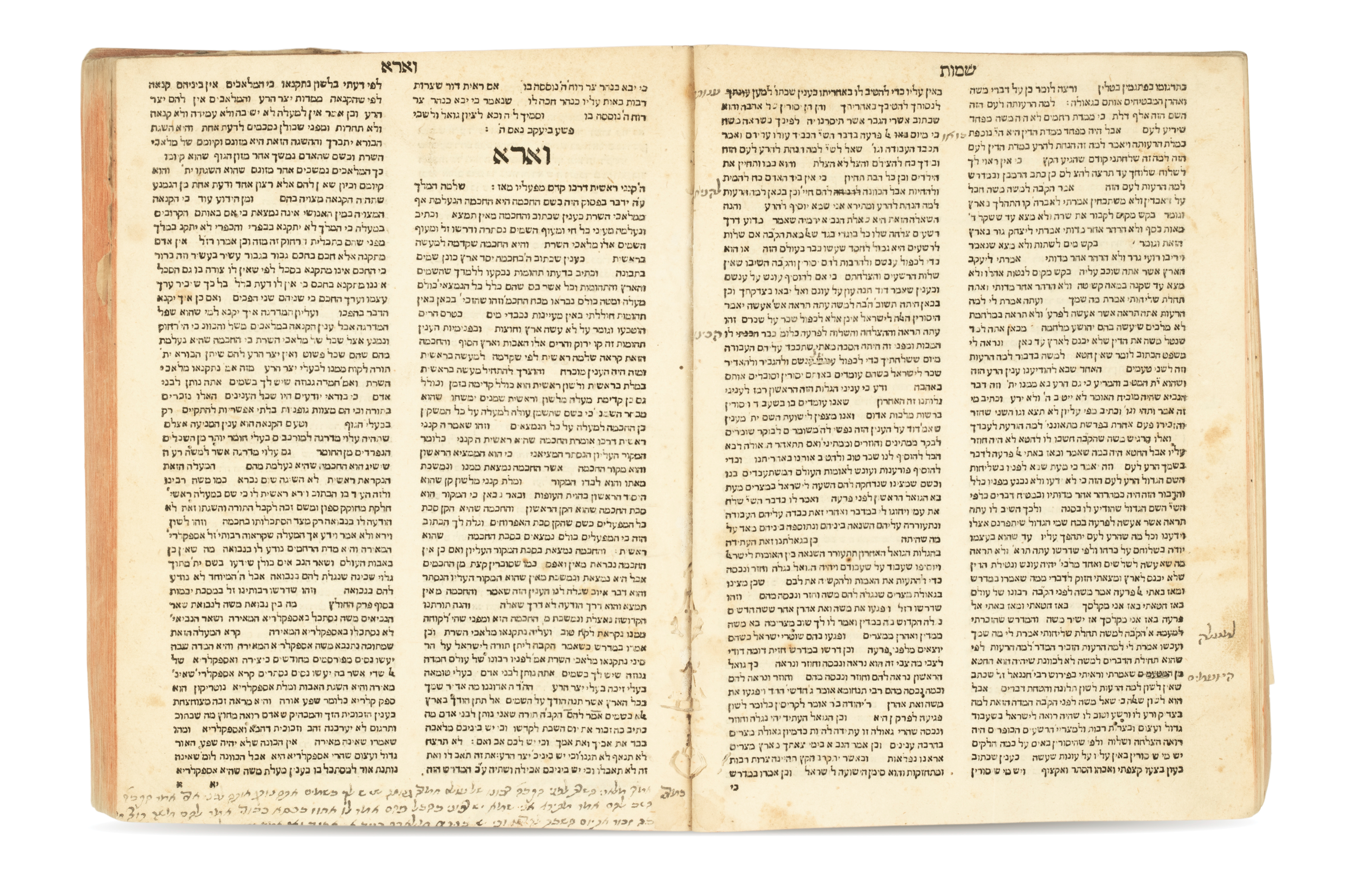
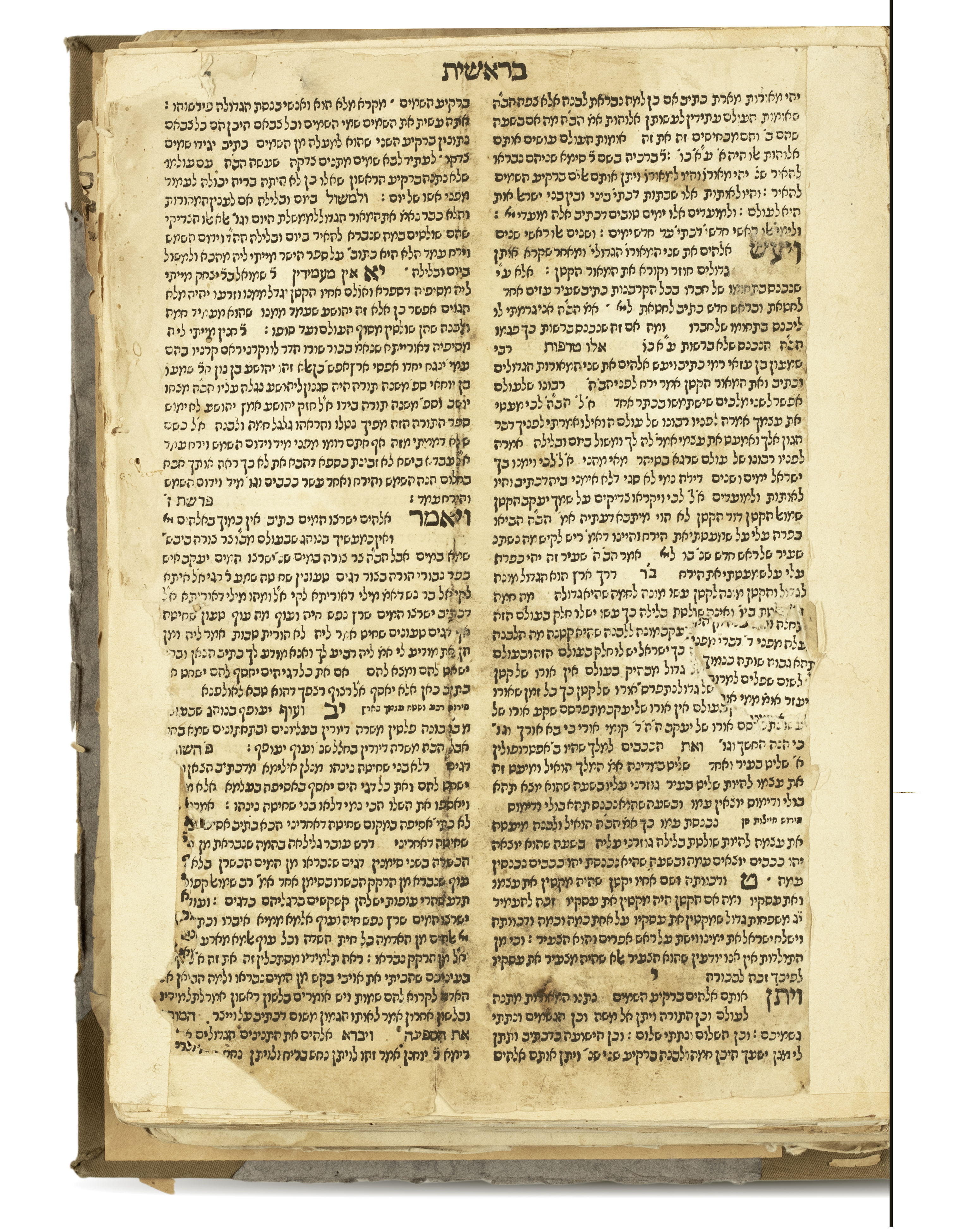
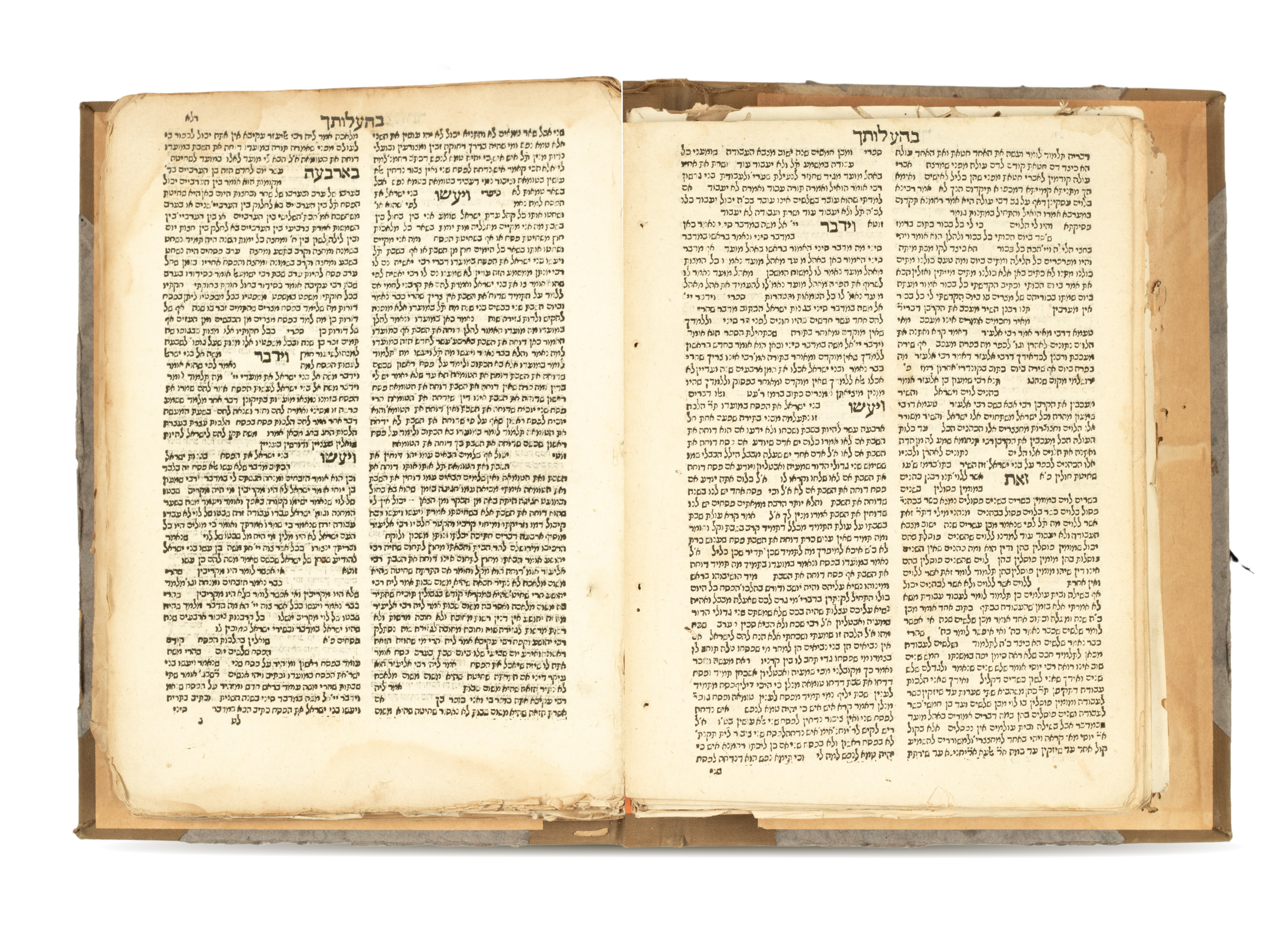
A. Midrash Rabbah on the Five Chumashim, Constantinople, 1512.
A sefer yesod. First edition.
Incomplete copy, containing [195] leaves out of [230] in the original.
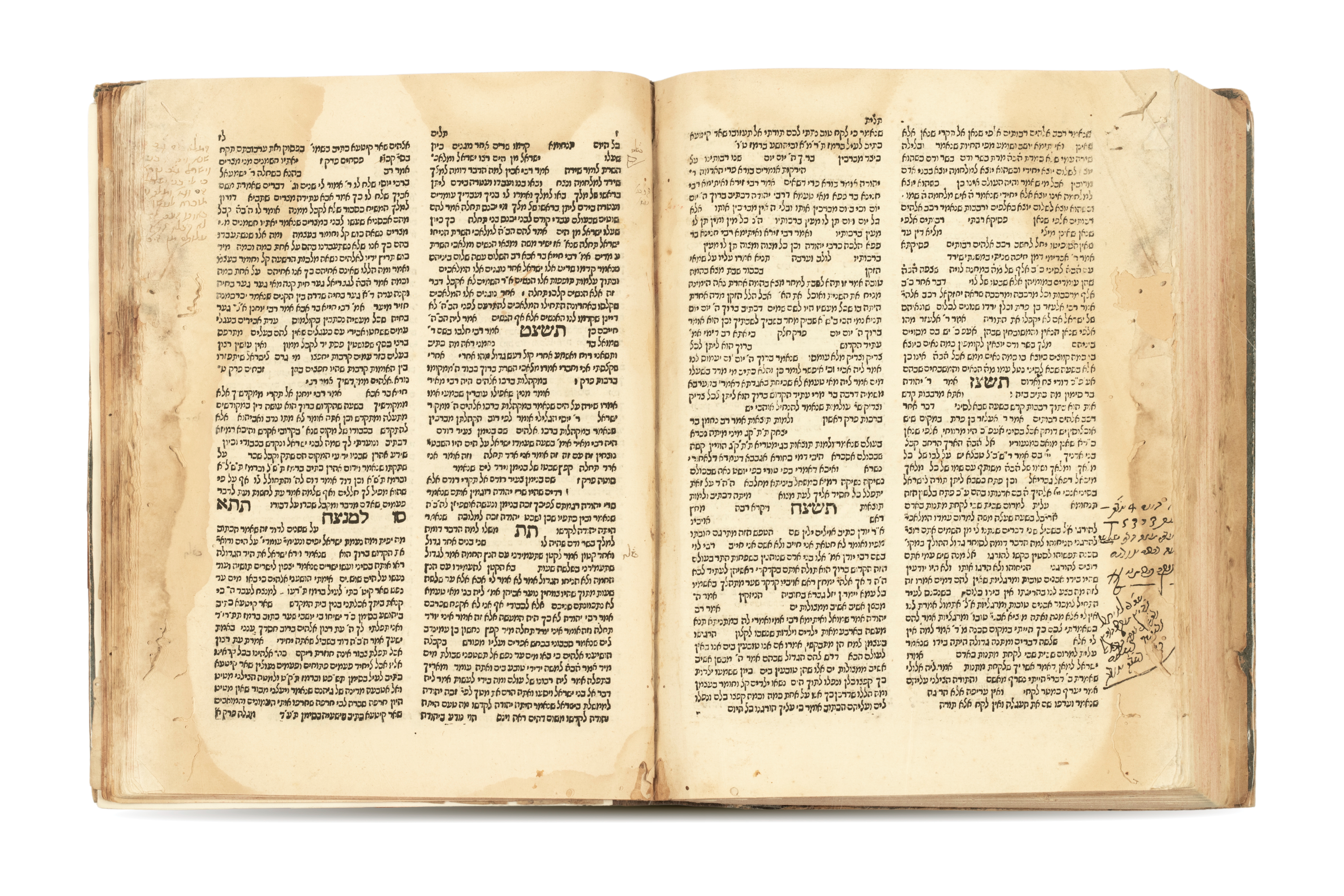
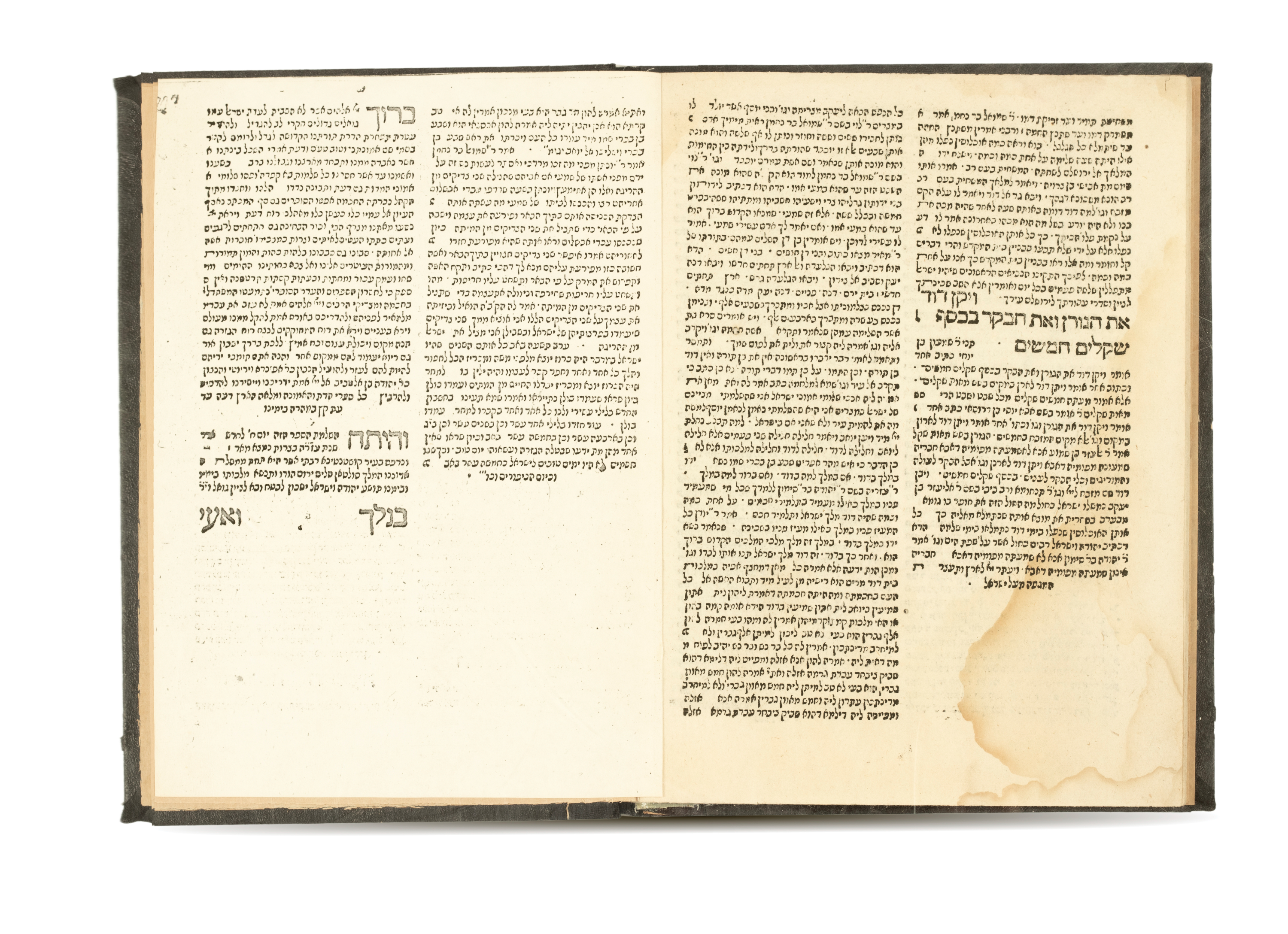
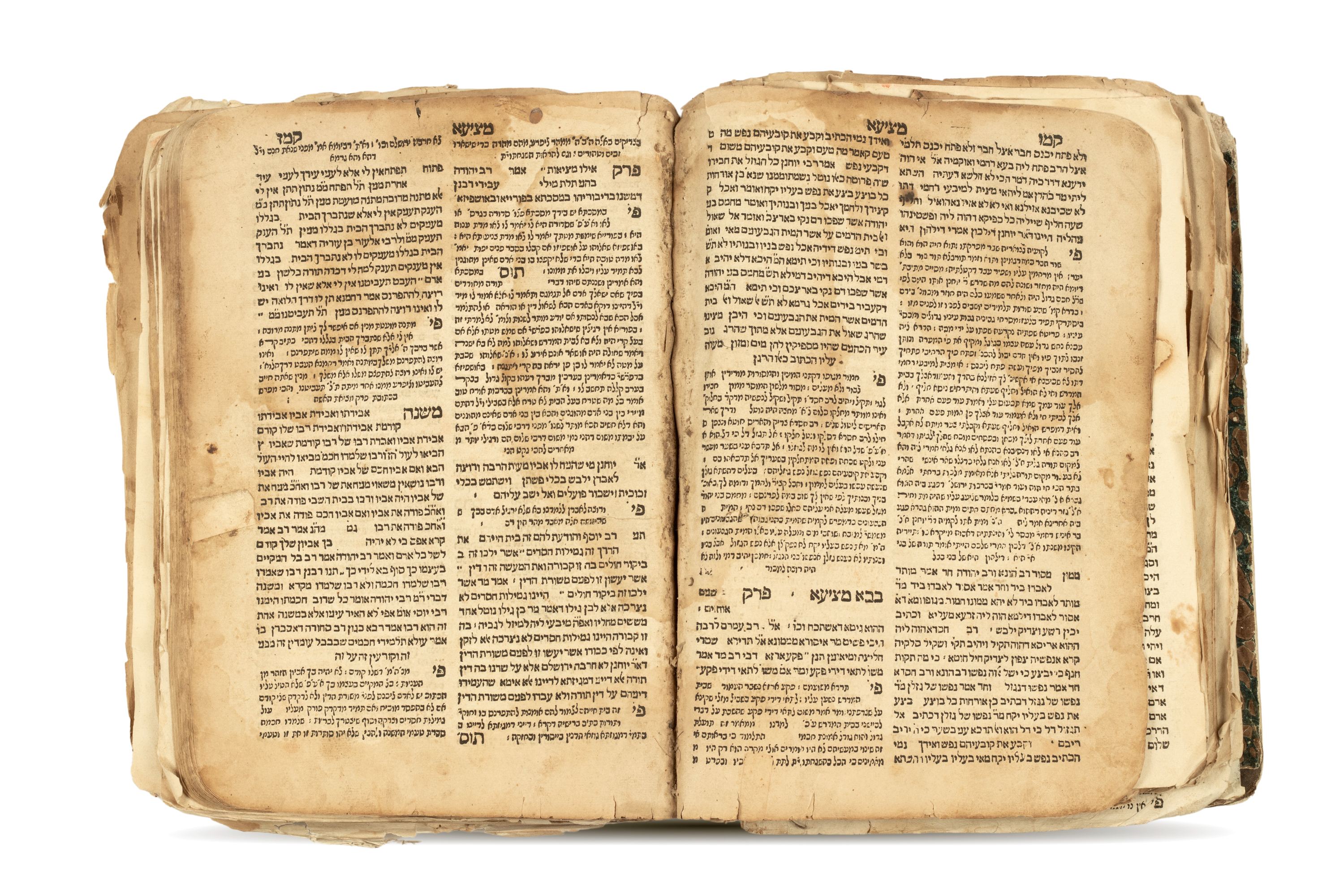
B. Midrash Tehillim (Midrash Shocher Tov), Constantinople, 1512.
A sefer yesod. First edition.
Incomplete copy, containing [48] leaves out of [52] in the original, including the final leaf.
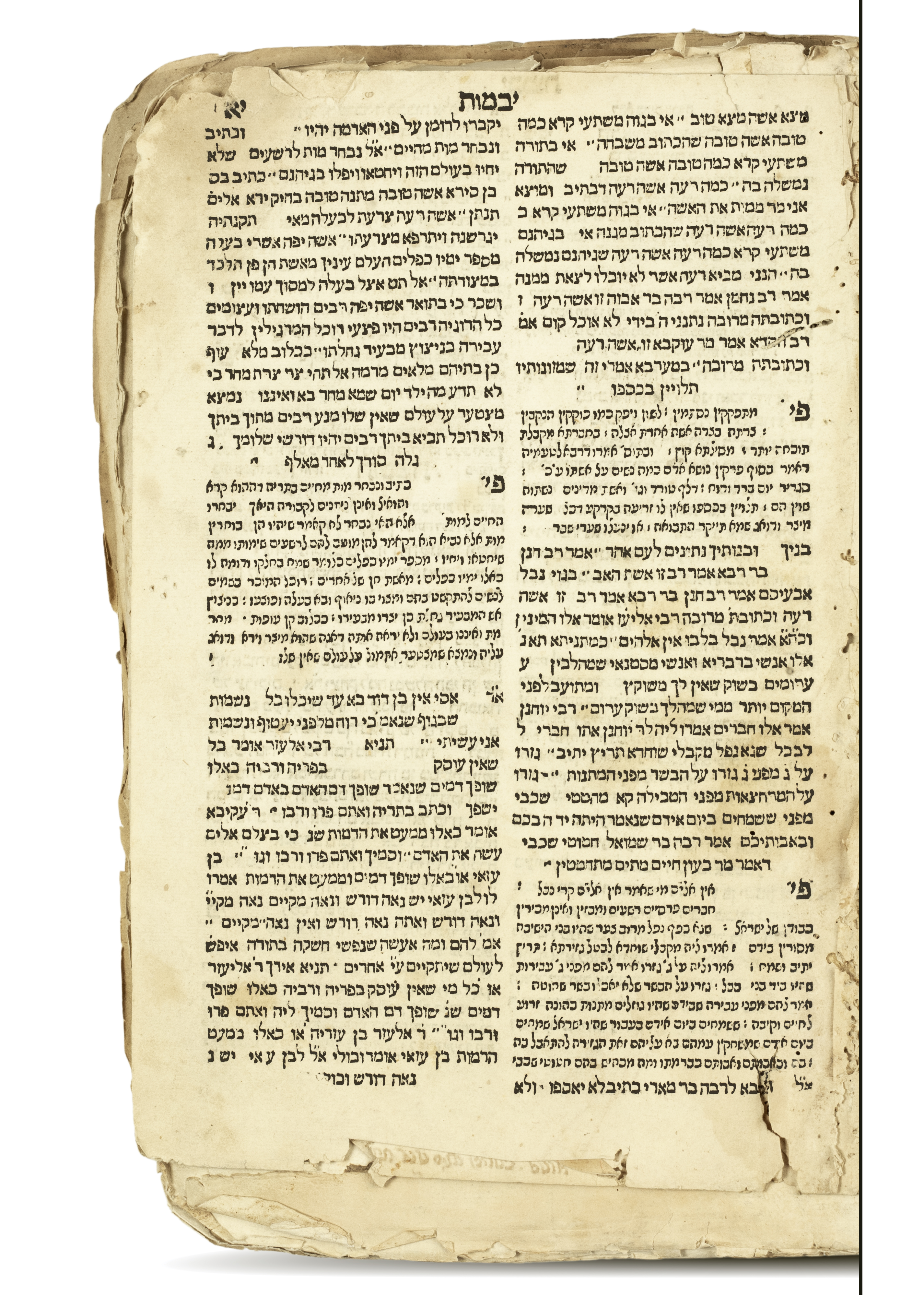
C. Ein Yaakov, two parts, Salonika, 1516–1522.
A sefer yesod. First edition.
Incomplete copy, containing approximately [301] leaves out of approximately [437] in the original.
D. Rabbeinu Bachya on the Torah, Pesaro, 1514.
A sefer yesod.
Incomplete copy, containing [262] leaves out of [274] in the original, including the final leaf.
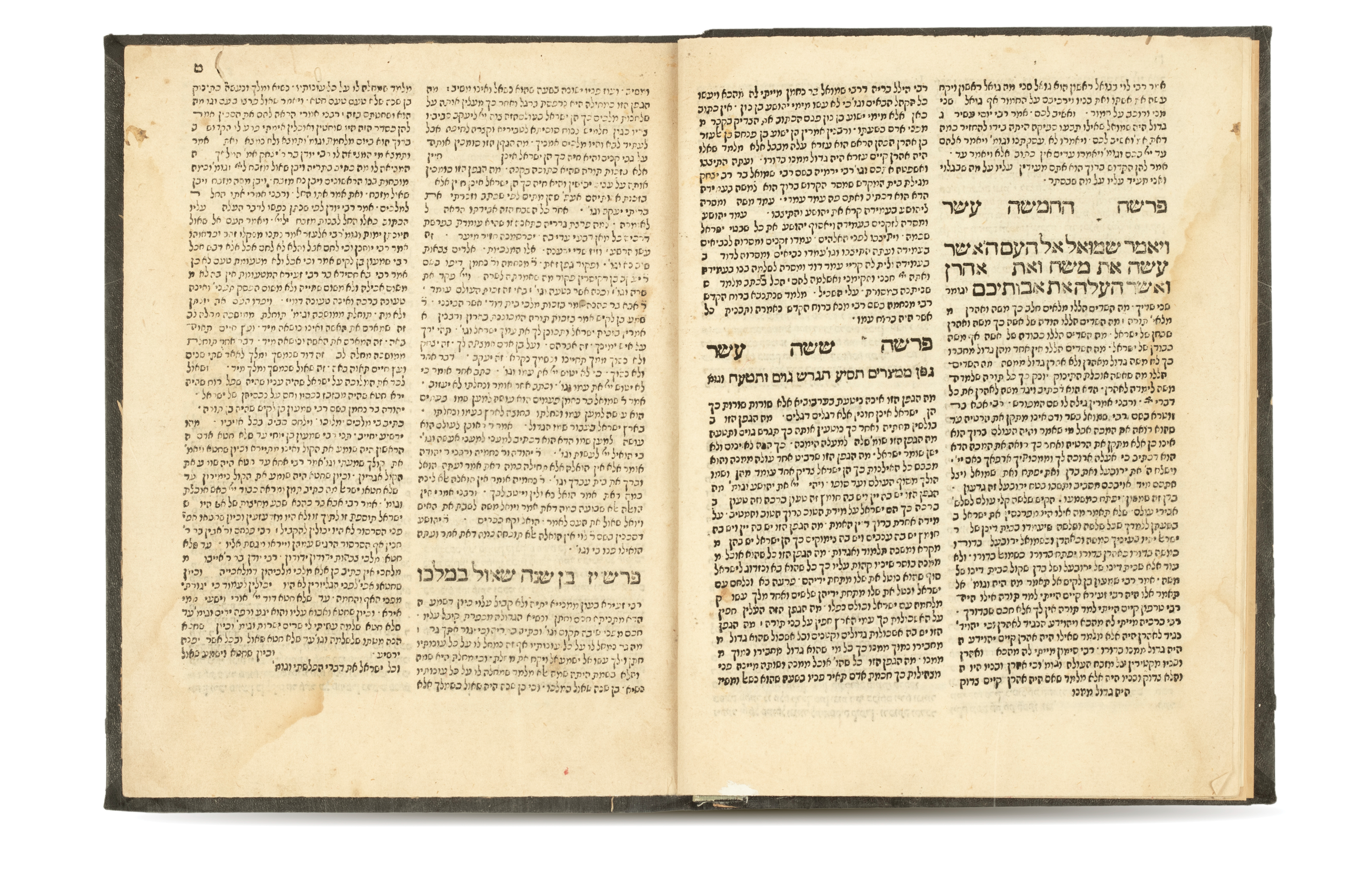
E. Midrash Shmuel, Constantinople, 1517.
A sefer yesod. First edition.
Incomplete copy, containing [12] leaves out of [16] in the original.
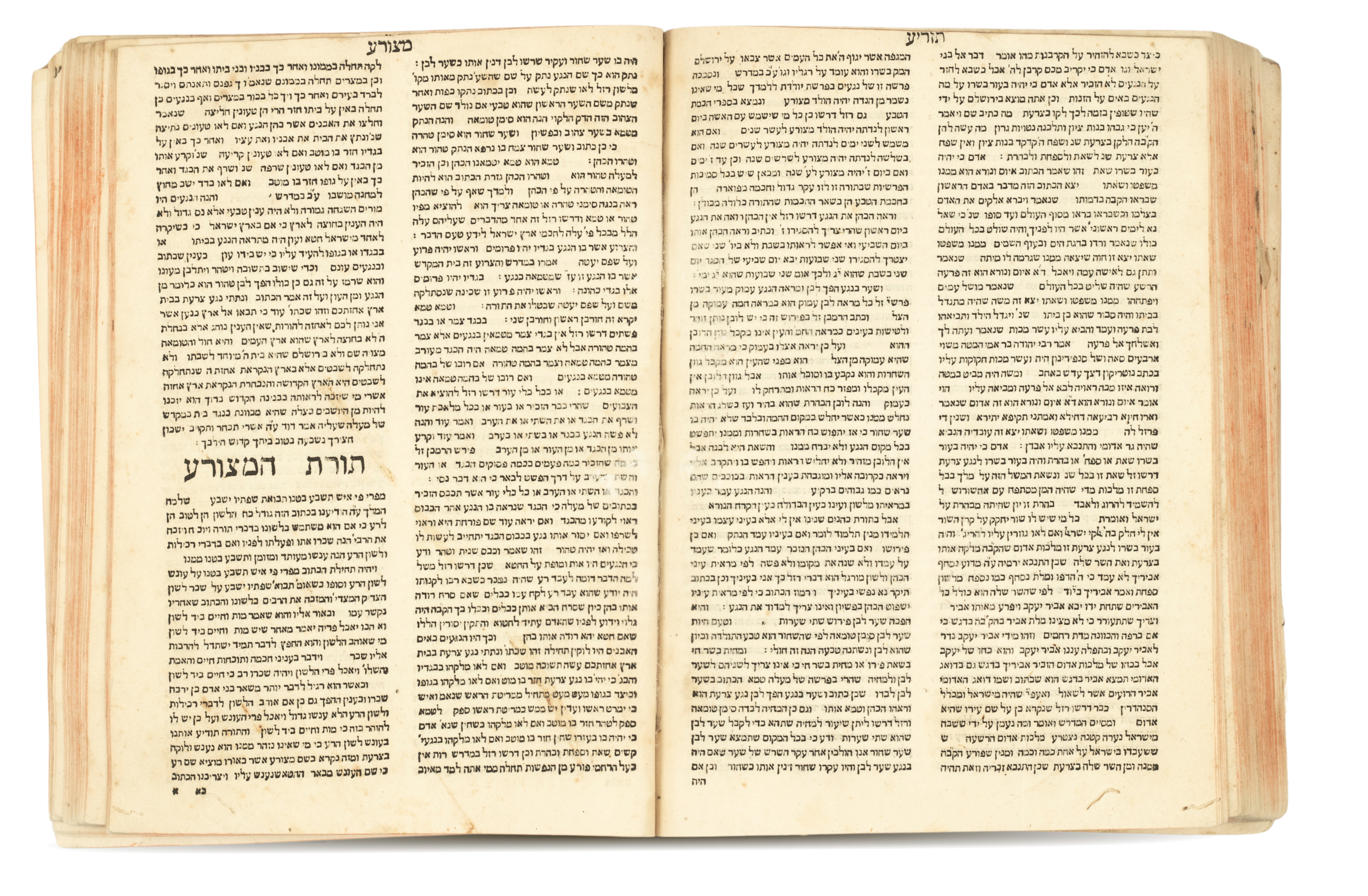
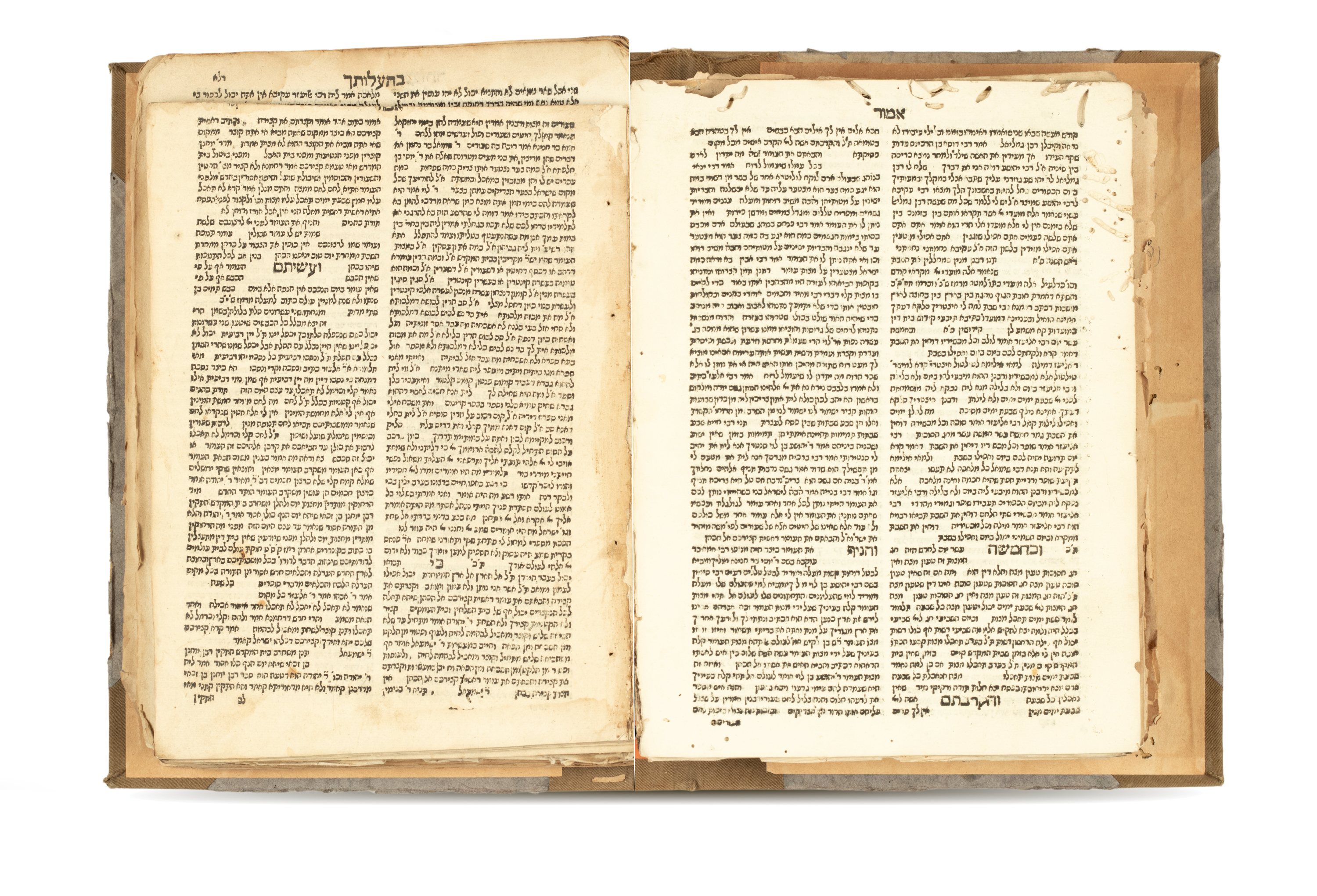
F. Yalkut Shimoni, two parts, Salonika, 1521–1527.
A foundational sefer. First edition.
Incomplete copy, containing approximately [618] leaves out of approximately [747] in the original, including the final leaf of Part I.
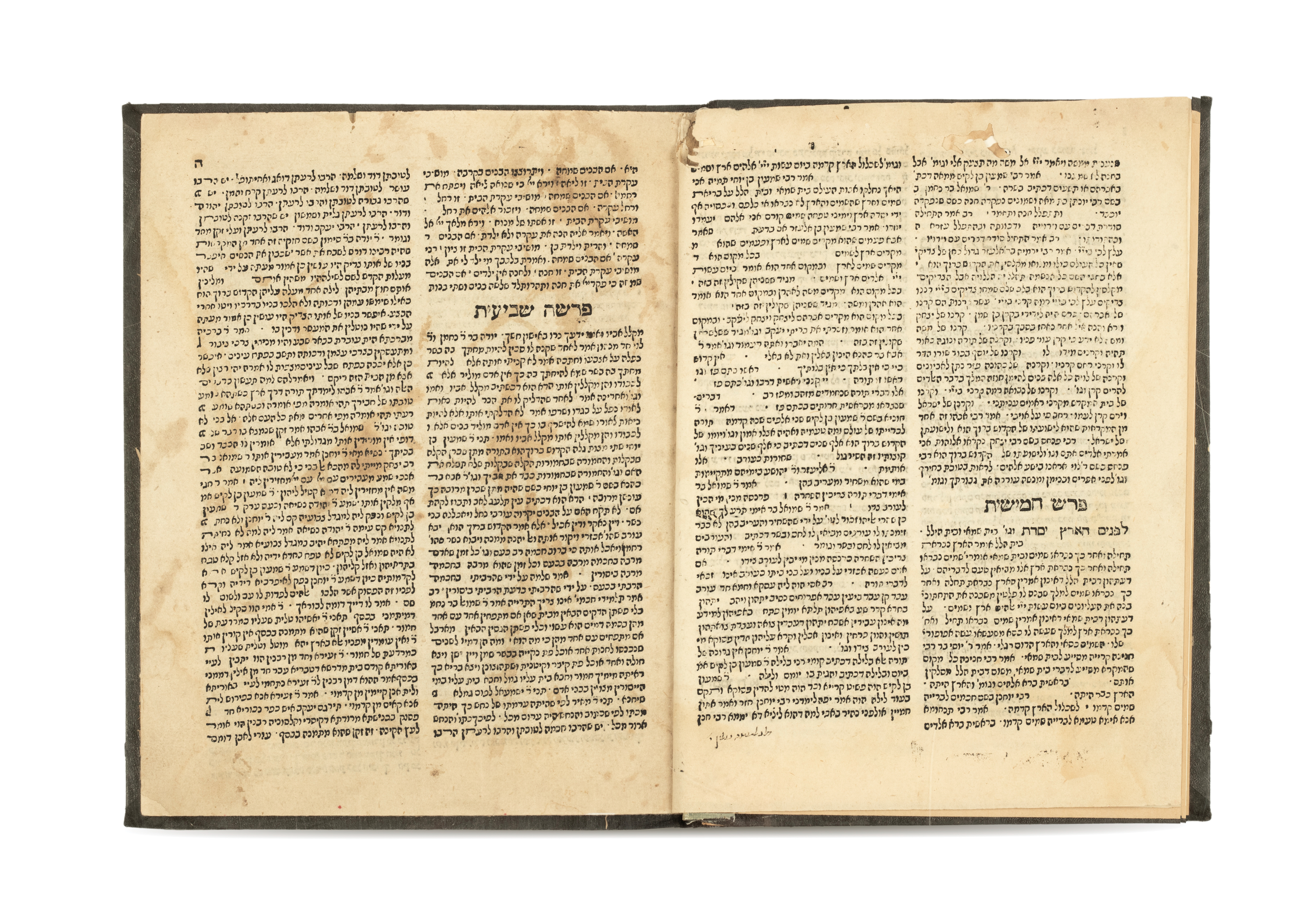
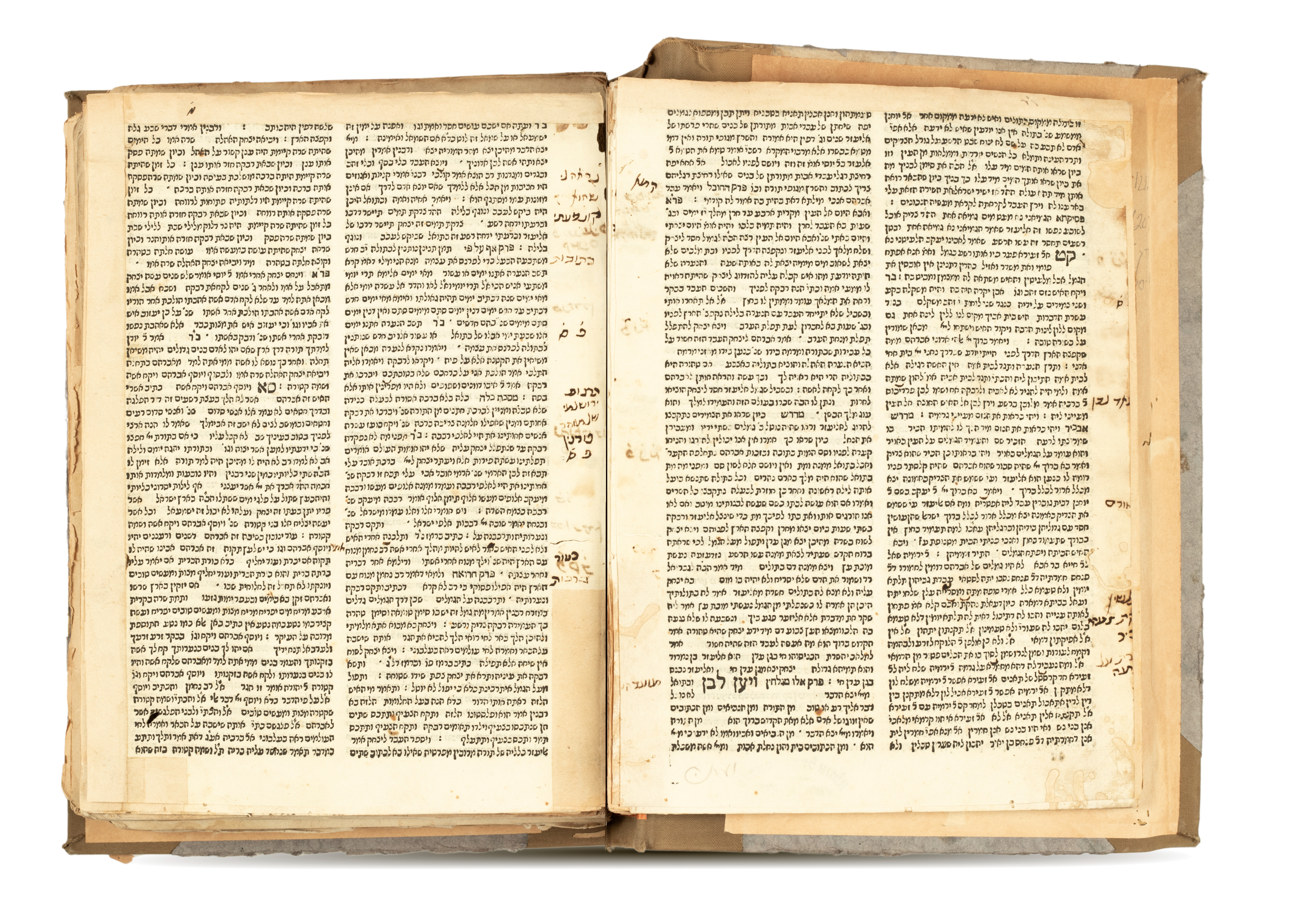
G. Pesikta Zutrata (Midrash Lekach Tov), Venice, 1546.
A sefer yesod. First edition.
Complete copy, but damaged.
See below for a detailed description of each volume and its condition.
Constantinople, Salonika, and Venice, 1512–1546.
Seven titles in total, six of them first editions. Various sizes and conditions.
Please review the detailed description and photographs before placing a bid. Additional photographs are available upon request from our office.
Please note: As is typical of early Hebrew printing, most of these sefarim do not have a regular printed page count, making an exact continuous leaf count difficult. Minor discrepancies in the total leaf count are therefore possible.
If you are interested in purchasing this lot to obtain one or more specific missing leaves, please get in touch with our office beforehand to verify that the leaf number listed here corresponds to the one you require.
– – – – – – – – – – – – – – – – – – – – – – – –
Detailed Description:
A. Midrash Rabbah on the Five Chumashim – The Most Fundamental Midrash on the Torah – First Edition
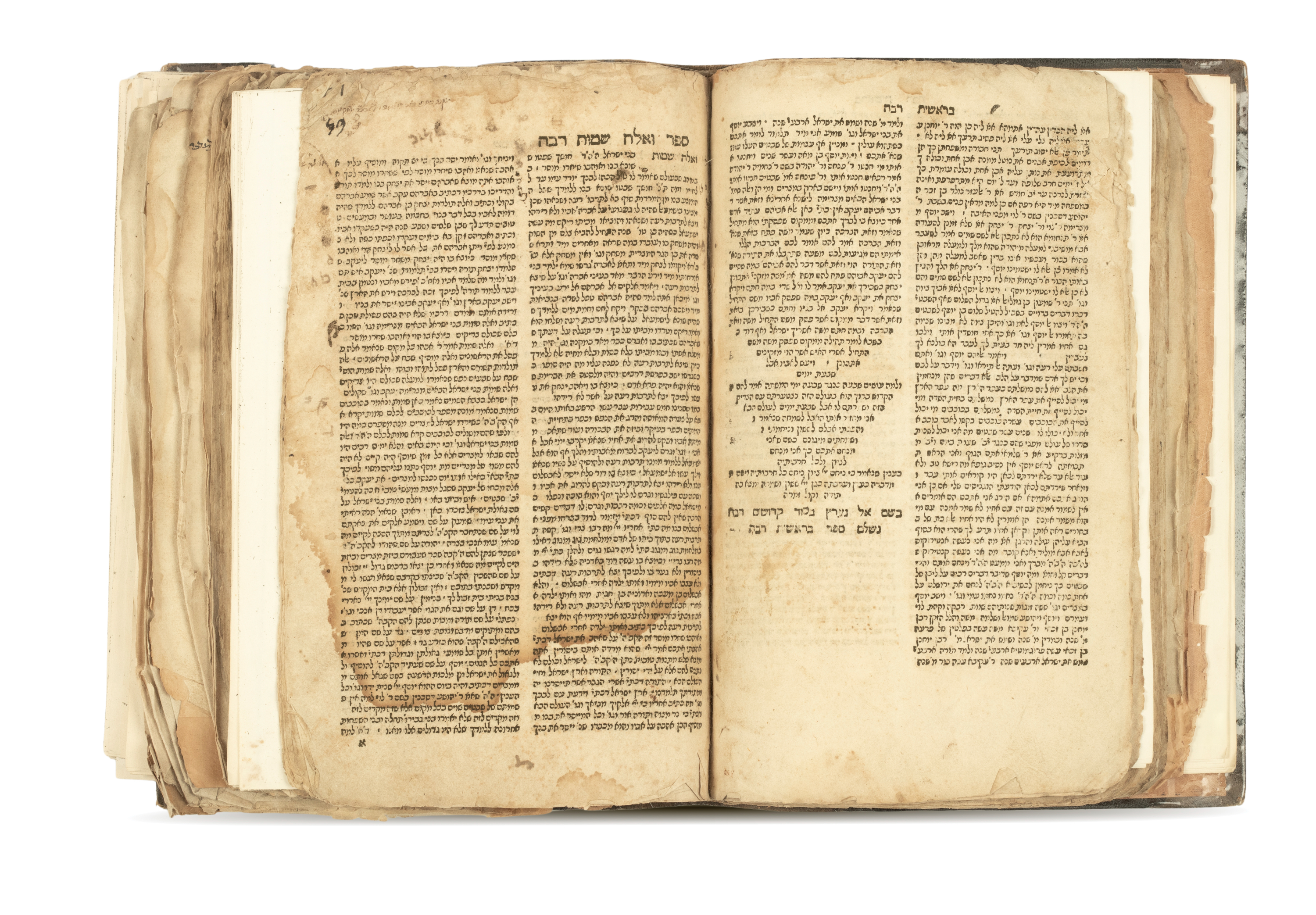
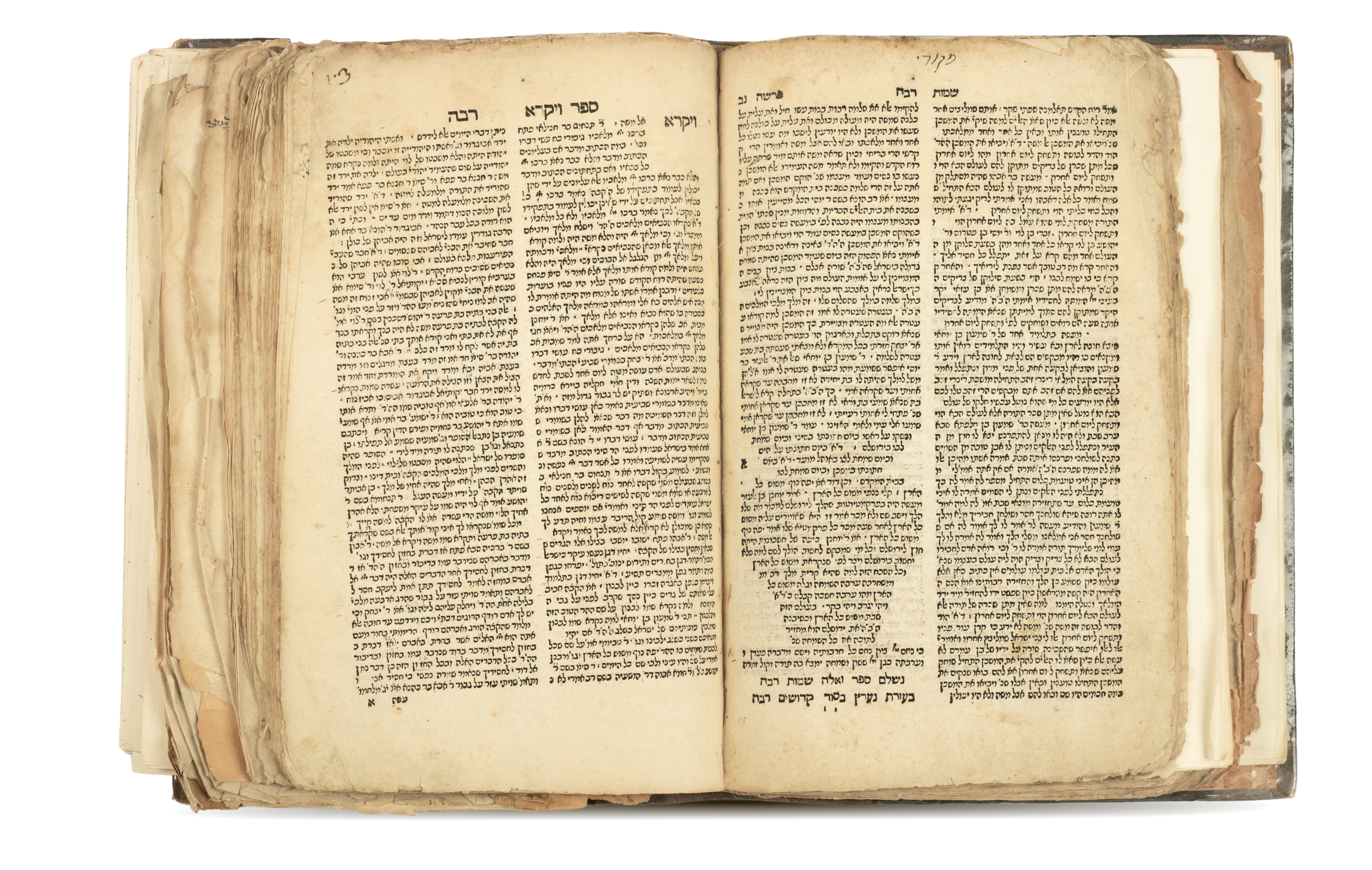
The exceptionally rare first edition of the famous Midrash known as ‘Midrash Rabbah.’
Virtually every darshan and commentator throughout the generations cites Midrash Rabbah. Numerous commentaries have been written on it, including the monumental commentary Yefeh Toar by Rabbi Shmuel Yaffe Ashkenazi of Constantinople.
This first edition served as the basis for the vast majority of subsequent editions.
Page Count:
Bereishis Rabbah: Leaves [8–59, 62–68]. Missing [9] leaves: [1–7, 60–61]. Originally [68] leaves.
Shemos Rabbah: Leaves [1–15, 20–44]. Missing [4] leaves: [16–19]. Originally [44] leaves.
Vayikrah Rabbah: [34] leaves.
Bamidbar Rabbah: Leaves [1–23, 26–39, 45, 48–55, 58–59, 61–64, 66–68]. Missing [13] leaves: [24–25, 40–44, 46–47, 56–57, 60, 65]. Originally [68] leaves (see Y. Haker’s note in Areshet V).
Devarim Rabbah: Leaves [1–7, 14]. Missing [8] leaves: [8–13, 15–16]. Originally [16] leaves.
Altogether, the present copy contains [195] leaves out of the original [230].
Height: Approximately 29.5 cm.
Condition: Fair. Noticeable wear to the margins. Many leaves detached, with repairs. Stains.
Bibliography:
Stefansky, Sifrei Yesod, no. 127.
Yaari, HaDefus HaIvri BeKushta, no. 19.
– – – – – – – – – – – – – – – – – – – – – – – –
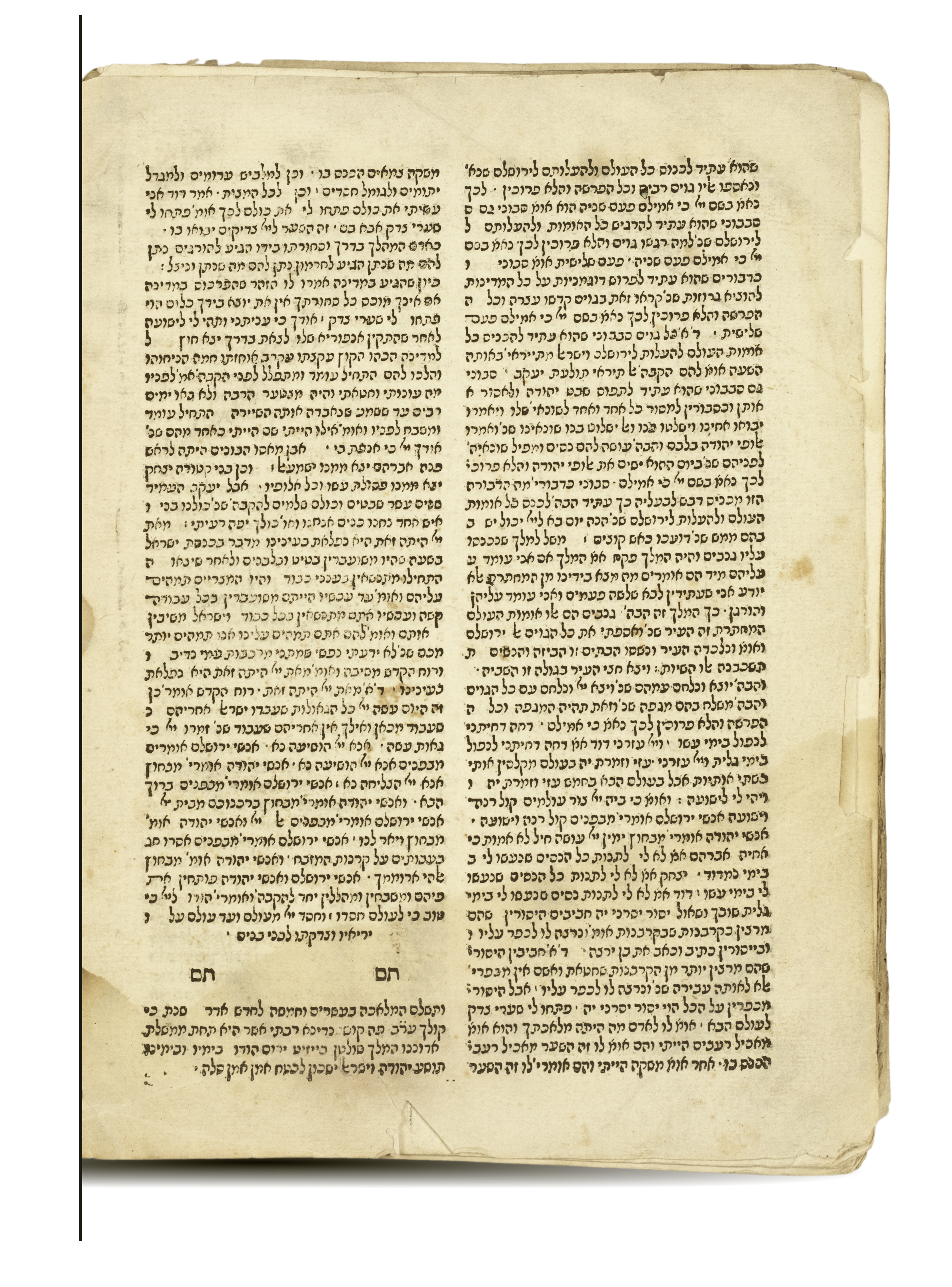
B. Midrash Tehillim (Midrash Shocher Tov) – Sefer Yesod – First Edition
An early Midrash of Chazal on Sefer Tehillim, covering chapters 1–118.
The work is referred to by the Rishonim as ‘Midrash Shocher Tov, ’ after its opening verse, “Shocher tov yevakesh ratzon.”
An exceptionally rare work. The great scholar of Midrashic literature, Rabbi Shlomo Buber, wrote in the introduction to his edition of Midrash Tehillim that the sefer is “exceedingly rare.”
The present copy includes the final leaf, bearing the colophon:
“The work was completed on the twenty-fifth day of Adar, in the year 1512, here in the great city of Constantinople, under the rule of our master Sultan Bayezid, may his glory be exalted. In his days and in ours may Yehudah be saved and Yisrael dwell in security. Amen, Selah.”
Constantinople, 1512. First edition.
Page Count: Leaves [4–17, 19–52]. Missing [4] leaves: [1–3, 18]. Originally [52] leaves.
Height: 25.5 cm.
Condition: Fair. Noticeable stains. Wear and tear to the margins. Leaves detached, without binding.
Early Sephardic handwritten glosses on the opening leaves.
Bibliography:
Stefansky, Sifrei Yesod, no. 130.
Yaari, HaDefus HaIvri BeKushta, no. 20.
– – – – – – – – – – – – – – – – – – – – – – – –
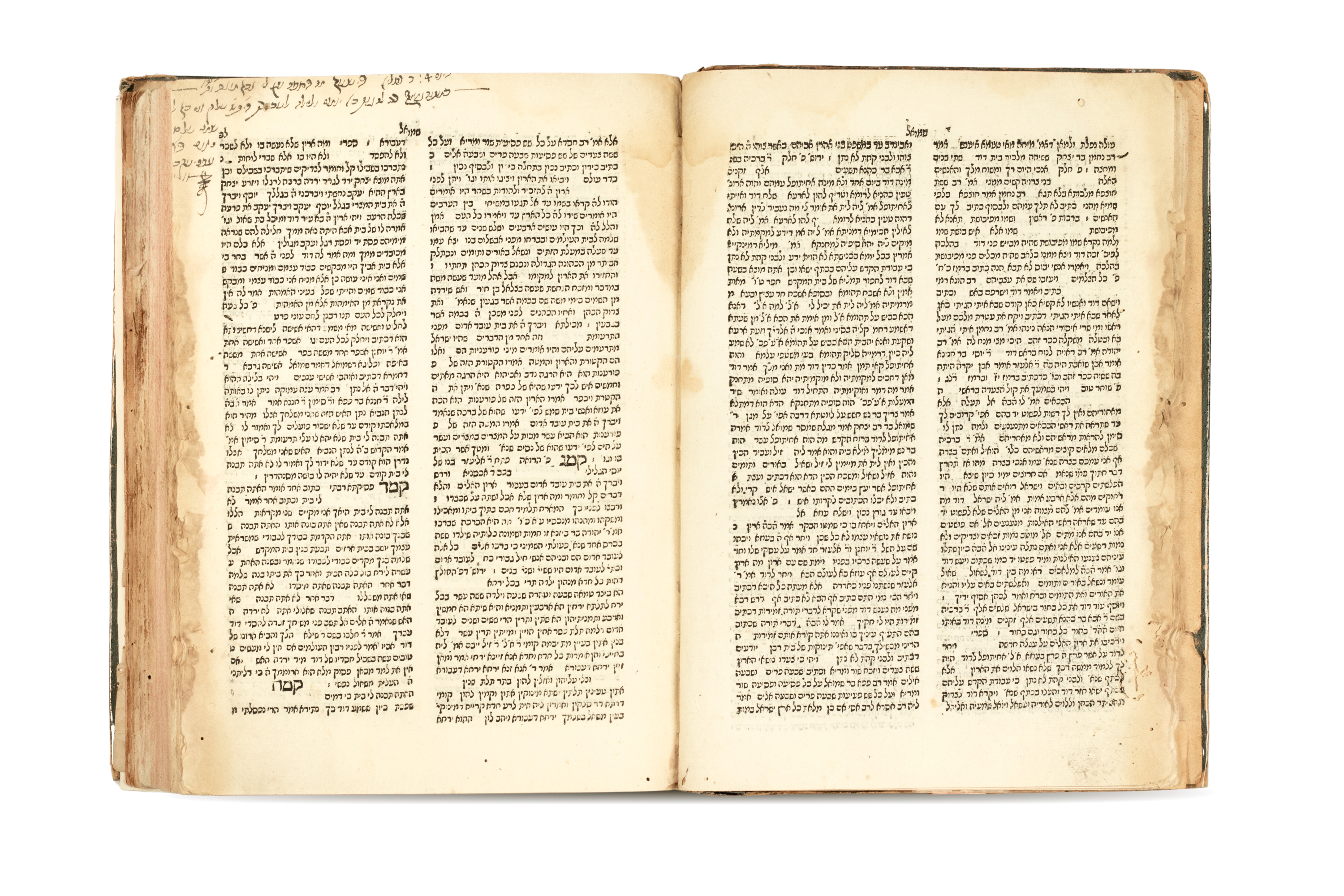
C. Ein Yaakov, Two Parts – The Sefer Yesod of the Aggados of Chazal – First Edition
A compilation of the Aggadic passages from the Talmud Bavli, together with a small selection from the Talmud Yerushalmi, accompanied by commentaries gathered from the leading Rishonim, as well as by its author, the gaon Rabbi Yaakov ibn Chaviv.
From the time of its publication, Ein Yaakov was enthusiastically embraced throughout the Jewish world and became the foundational work for the Aggadic teachings of Chazal. For generations, it served as one of the primary sources through which Jews of every background absorbed the foundations of Jewish faith and ethical teachings.
The first edition of Ein Yaakov is among the rarest of all Hebrew books — not only because early Salonika printings are themselves exceptionally scarce, but primarily because it was one of the most heavily used sefarim, studied constantly by both Torah scholars and laymen.
Beyond the importance of its content, the first edition holds exceptional bibliographical significance, as it contains passages of the Talmud that appeared here in print for the first time (!), even before the publication of the Bomberg Talmud (for tractates that had not been printed during the incunabula period).
One of the most important sources for the lost Sephardic text of the Talmud is Ein Yaakov, whose author was a Sephardic sage who had access to sifrei Talmud reflecting the authentic Sephardic recension of the Talmud.
This original Sephardic text was preserved in the first edition of Ein Yaakov. In later editions, however, many passages were altered to conform to the French Talmud, causing the original Sephardic text preserved in the present edition to disappear almost entirely.
The author of Dikdukei Sofrim already emphasized this point in his introduction to Maseches Brachos:
“I also had before me the first Ein Yaakov, printed by the author himself in Salonika around the year 1516. It differs greatly from the editions commonly found today. In the Giustiniani edition of 1546, most of its text was altered to match the standard Talmud text, and much was thereby lost.”
The author himself printed the first volume and contains numerous notes by him. The second volume was printed after his passing by his son, the gaon Rabbi Levi ibn Chaviv (the Ralbach).
Rabbi Yaakov ibn Chaviv (c. 1450–1516), one of the leading sages of Sephardic Jewry, fled Spain with his family following the Expulsion of 1492 and eventually settled in Salonika. He taught Torah both in Spain and in Salonika, and authored a commentary on the Tur cited several times by the Beis Yosef, but he is best remembered for his work Ein Yaakov, which he composed in his later years to strengthen the Jewish people in the principles of faith and refined character.
As noted, the sefer Ein Yaakov became very popular throughout the Jewish world and appeared in well over one hundred editions. Torah scholars and laymen alike established regular study sessions in it, and daily Ein Yaakov study groups were once a common feature of Jewish communities.
Many of the Gedolei Yisrael strongly encouraged its study. Rabbi Menachem di Lonzano, a leading kabbalist of the following generation, wrote:
“Among all the sifrei chassidim, Ein Yaakov stands foremost, for it contains the Midrashim of our Sages and the Aggados of the Gemara” (Shtei Yados, Venice, 1618, leaf 122b).
The Alter Rebbe, Rabbi Shneur Zalman of Liadi, instructed his chassidim to study Ein Yaakov daily (Iggeres HaKodesh, Epistle 29), as did Rabbi Mordechai of Chernobyl (Hanhagos HaTzaddikim, p. 508), Rabbi Chaim of Volozhin (Keser Rosh, sec. 59), and many other Gedolei Yisrael.
Salonika, 1516–1522. Two parts. First edition.
Page Count:
Part I: Leaves 79–80, 84, 100, 102–131, 133–138, 140–144, 146–198; pages 392–394, 385–390, 401–403, 394–401.
Leaves 161–162 appear twice.
Approximately [111] leaves are missing: leaves 1–57, [2], 58–78, 81–83, 85–99, 101, 132, 402–405, [18] pages.
Originally contains: leaves 1–57, [2], 58–138, 140–144, 146–198, 392–394, 385–390, 401–403, 394–405, [18] pages.
Part II: Leaves 11–30, 37–421, and [6] pages.
Missing a total of [25] leaves: pages 1–10, 31–36, page [7] (printed on one side only), [16] leaves.
Originally contains: leaf 421, [7] pages, [16] leaves.
Pages 37–38, 207–208, and 219–220 appear twice.
Height: Approximately 26.5 cm.
Condition: Fair to poor. Heavy wear throughout. Numerous detached leaves. Some leaves supplied from other copies. Several leaves have tears with loss of text.
Bibliography:
Stefansky, Sifrei Yesod, no. 136.
– – – – – – – – – – – – – – – – – – – – – – – –
D. Rabbeinu Bachya on the Torah – A Post-Incunabula Edition
Rabbeinu Bachya’s commentary on the Torah is one of the most well-known Torah commentaries and is mentioned in the same breath as those of Rashi, the Ramban, and Ibn Ezra.
Rabbi Avraham Zacuto already testified in Sefer Yuchasin that “this sefer became famous throughout the world, ” while the Tosfos Yom Tov writes:
“Many righteous scholars customarily read and study Rabbeinu Bachya every Shabbos” (introduction to Megillas Eichah).
Indeed, virtually every later Torah commentator drew from his explanations.
His commentary is built upon all four levels of Torah interpretation — Pshat, Remez, Drush, and Sod (Pardes) — and in many places elaborates upon the Ramban’s teachings in Kabbalah.
The work was first printed during the incunabula period and was subsequently reprinted numerous times. The present copy is a post-incunabula edition.
The present copy contains the final leaf, bearing the colophon:
“Here ends the commentary of Rabbeinu Bachya… printed in the land of Italy by the humblest of scholars and the least of students, who resides in the city of Pesaro, in the year 1514.”
Pesaro, 1514. Printed by Gershom Soncino.
Page Count: [262] leaves.
Missing [12] leaves in total: the first [11] leaves and leaf [70].
Originally contains: [274] leaves.
Height: Approximately 25.5 cm.
Condition: Poor. Numerous holes. Tears (some with loss of text) and heavy creasing throughout dozens of the opening and closing leaves. Two interior leaves have tears with loss. Margins trimmed on some leaves, affecting portions of the upper or lower lines. Stains. Unbound.
Bibliography:
Stefansky, Sifrei Yesod, no. 5 (note).
– – – – – – – – – – – – – – – – – – – – – – – –
E. Midrash Shmuel, with Rav Saadia Gaon’s Teshuvos on the Resurrection of the Dead – Sefer Yesod – First Edition
An Aggadic Midrash of Chazal on Sefer Shmuel, printed here for the first time from a manuscript.
Rav Saadia Gaon’s teshuvos on the resurrection of the dead are printed at the end. This is the first time that Torah writings of Rav Saadia Gaon appeared in print!
The teshuvos address ten fascinating questions posed to him by his students regarding the resurrection, including:
Will those who are resurrected eventually die again, or will they live forever? What will their lifespan be? Will there be free choice after the resurrection? Will those already alive when the resurrection occurs live forever? How will the world accommodate everyone who returns to life?
These issues are the most fundamental classical discussions of the resurrection of the dead, and virtually every later authority addressing the subject cites them.
Originally, the volume concluded with the following colophon (missing from this copy and supplied in facsimile):
“This sefer was completed on the eighth day of Adar in the year 1517… and printed in the great city of Constantinople under the rule of our master Sultan Suleiman Selim, may his glory be exalted…”
Rabbi Shlomo Buber praised the Constantinople edition in the introduction to his own edition of Midrash Shmuel, noting that its readings were even more accurate than the manuscript available to him, and he adopted it as the textual basis for his edition.
Constantinople, 1517. First edition.
Page Count: Leaves 2–3, 5–12, [2] leaves. Incomplete copy.
Missing [4] leaves: 1, 4, and the final [2] unnumbered leaves.
Originally contains: 12, [4] leaves.
Height: 24.5 cm. The first leaf is shorter.
Condition: Fair. Holes affecting the text.
Bibliography:
Stefansky, Sifrei Yesod, no. 131.
Yaari, HaDefus HaIvri BeKushta, no. 54.
– – – – – – – – – – – – – – – – – – – – – – – –
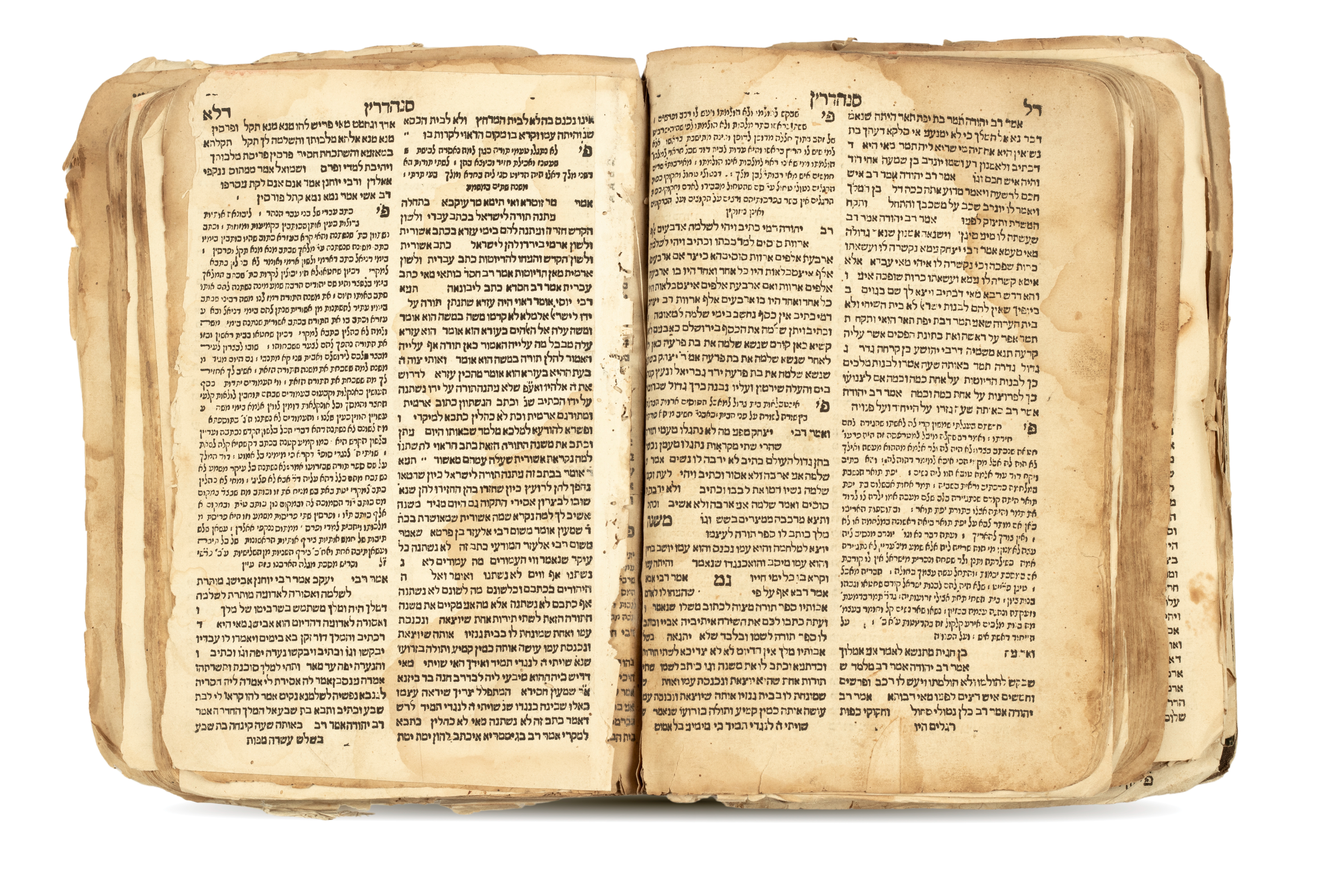
F. Yalkut Shimoni, Two Parts – Sefer Yesod – First Edition
Yalkut Shimoni, an important foundational Midrash on the Torah and Nach, attributed to Rabbeinu Shimon, the foremost darshan of Frankfurt.
Although compiled during the era of the Rishonim, its exact date of composition is unknown. Nevertheless, it is “very early, ” as described by the Chida in his sefer Shem HaGedolim.
Beyond being a comprehensive commentary on Tanach, Yalkut Shimoni also preserves passages and references from otherwise lost Midrashim, making it exceptionally important.
It was printed in two parts: The first part, on the Torah, was printed in 1526–1527. The second part, on Nevi’im and Kesuvim, was printed before then, in 1521 (without a title page).
It includes the final leaf of Part I, bearing the colophon:
“…This was completed here in the renowned city of Salonika… by the humble printer, Moshe Soncino, in the year 1527, on the twelfth day of Elul.”
The first edition contains more than two thousand alphabetical reference markers (known as “remazim”) throughout the text. For generations, their purpose was not understood, and later editions mistakenly treated them as section headings, reproducing them incorrectly. In reality, they form an ingenious internal cross-reference system directing the reader to parallel passages elsewhere in the Yalkut.
The true function of these “remazim” was explained by Rabbi Chaim Zev Fink in an article published in Moriah (Year 7, issues 80–82, Kislev 1977), where he notes that in the first Salonika edition, the markers almost always appear in the middle or at the end of passages, precisely as required by this cross-reference system.
Salonika, 1521–1527. First edition.
Page Count:
Part I – Torah: Leaves 4, 7–65; 1–354, 356–359, 361–374, 377–378.
Missing a total of [9] leaves: 1–3, 5–6, 355, 360, 375–376.
Originally contains: 1–65; 1–378 leaves.
Part II – Nevi’im and Kesuvim: Leaves 18–138 (read: 140), 234; second page count: 1–60 leaves.
Missing a total of [120] leaves: 1–17, 139 (read: 141) –233, 235–236 (from first page count), and 61–67 (read: 68) (from second page count).
Originally contains: 1–236 and 1–67 (read: 68) leaves.
Leaf 68 of Sefer Tehillim is ordinarily bound between leaves 138 (read: 140) and 139 (read: 141) of the first page count.
Height: 27.2 cm.
Condition: Poor to fair. Holes, repairs, and noticeable wear, especially to the margins. Old mold stains. Early signatures and glosses.
Bibliography:
Stefansky, Sifrei Yesod, no. 134.
– – – – – – – – – – – – – – – – – – – – – – – –
G. Pesikta Zutrata (Midrash Lekach Tov), Bomberg Press – Sefer Yesod – First Edition
A compilation of Midrashei Chazal and commentary on Sefer Vayikrah, Bamidbar, and Devarim by Rabbi Tuviah ben Eliezer, a contemporary of Rashi.
Rabbi Tuviah had access to numerous Midrashei Chazal, including Midrashim that have since been lost, making his compilation their only surviving source.
The significance of this work lies not only in the compilation of these Midrashim, but also in its original commentary and the halachic rulings incorporated throughout.
Among Torah scholars, the work is generally known as ‘Lekach Tov, ’ which was likely its original title, as noted by the Chida in Shem HaGedolim. The author, whose name is Rabbi Tuviah, begins his commentary on each parshah with a verse containing the word “tov.”
It was printed by the renowned Daniel Bomberg, whose lasting legacy was the publishing of the first complete editions of the Talmud Bavli, the Talmud Yerushalmi, and numerous works of the Rishonim and Achronim.
The publisher possessed only a partial manuscript containing Vayikrah, Bamidbar, and Devarim. The Chida already records having seen a manuscript of Lekach Tov on Bereishis and Shemos, which was first printed in Vilna only in 1880.
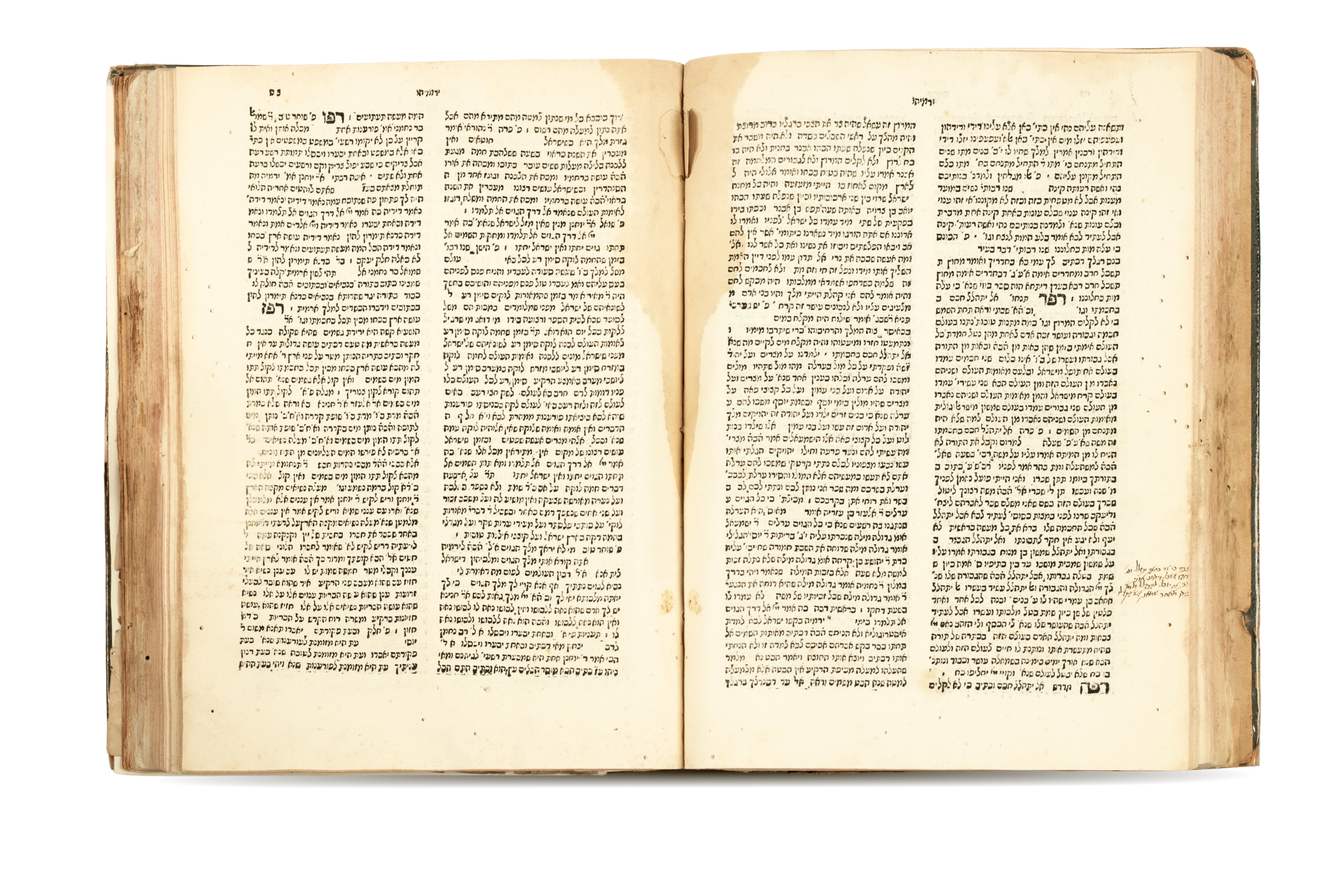
Throughout the volume there are more than thirty-five manuscript annotations in early Italian script, some extremely long and extending across the entire page margin. Most consist of additional material related to the printed text on the page.
Venice, 1546. First edition.
Page Count: 93 leaves.
Height: 29.7 cm.
Condition: Fair to good. Holes in some leaves, a minority with repairs. Noticeable stains.
Bibliography:
Stefansky, Sifrei Yesod, no. 123.