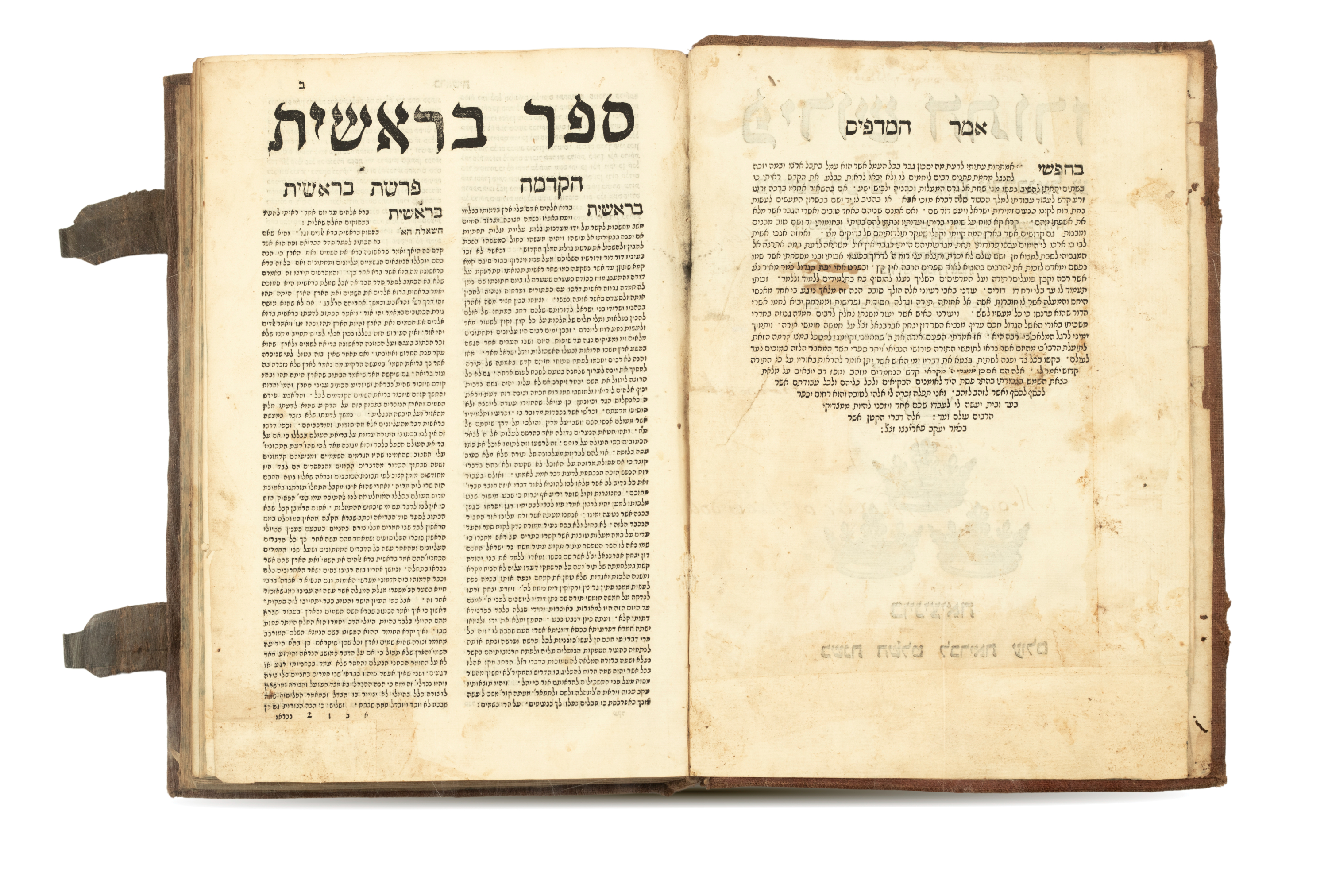
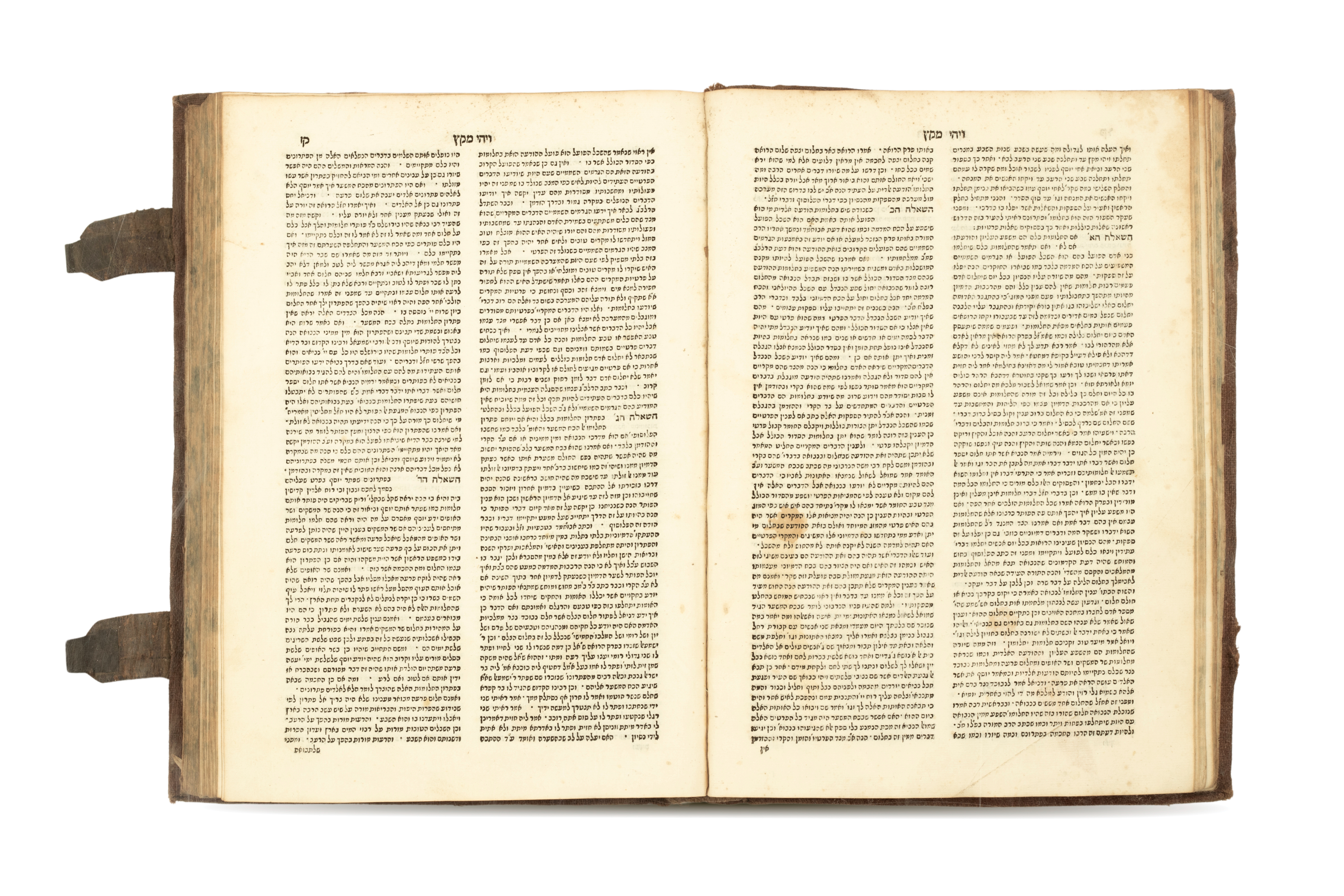
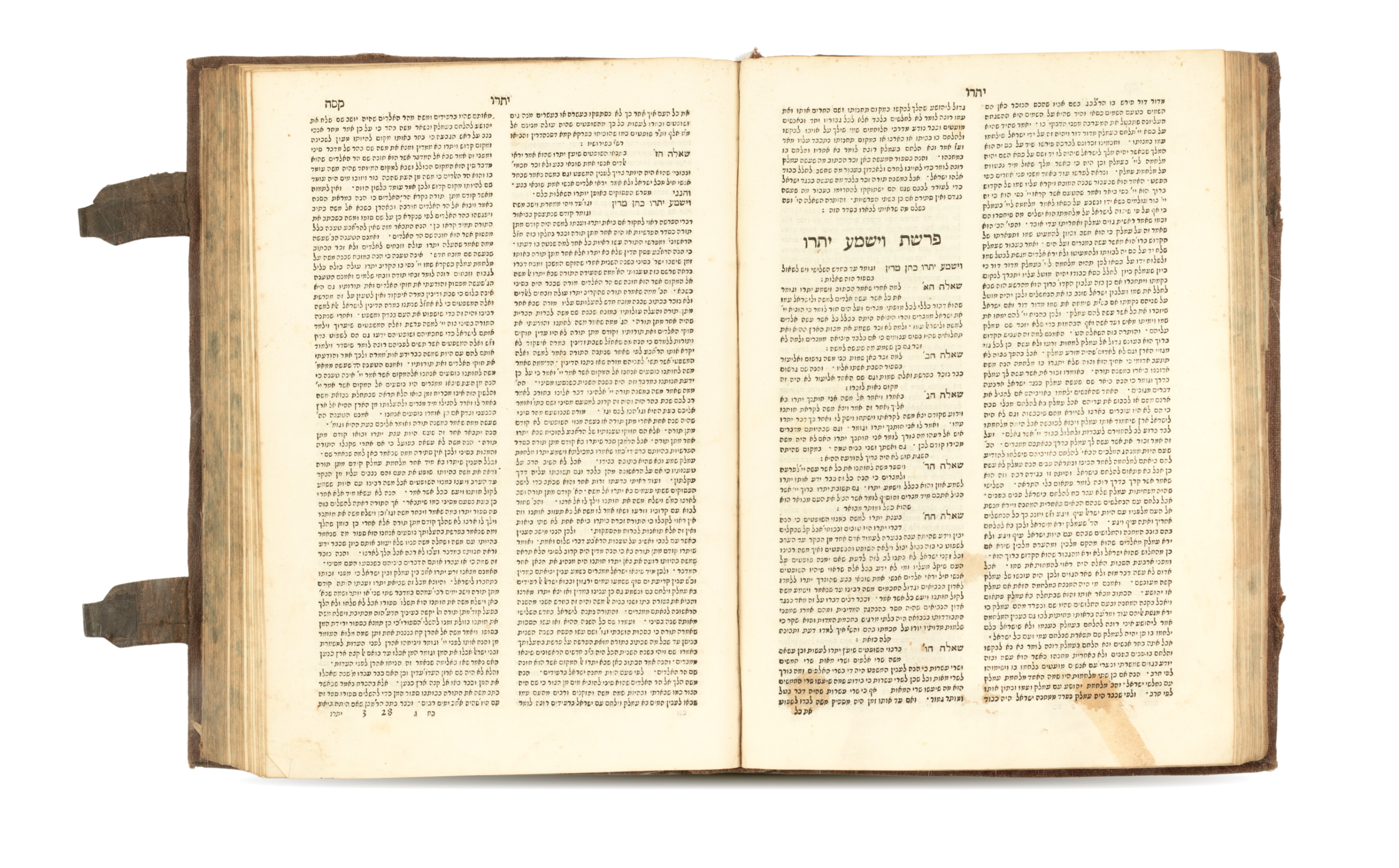
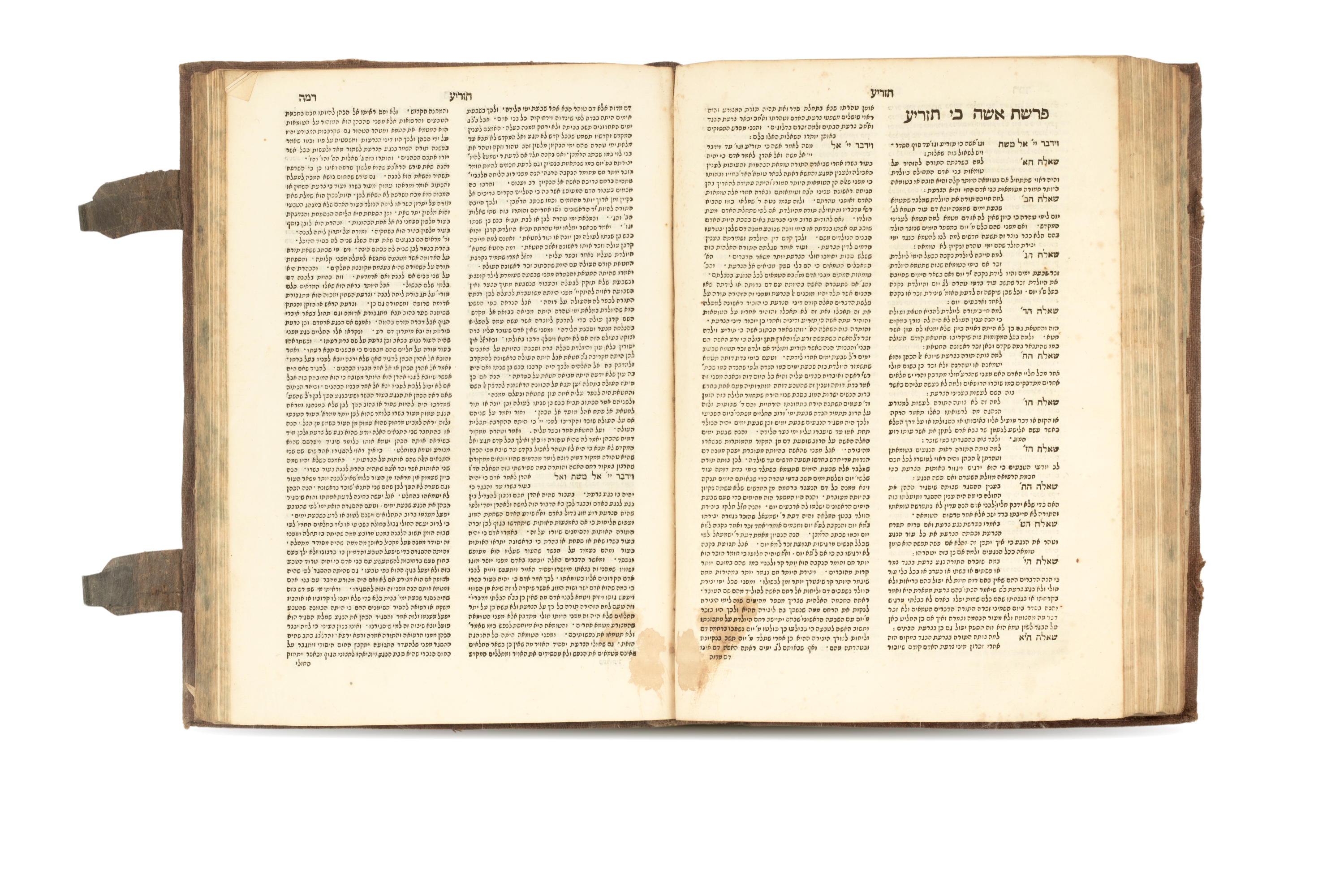
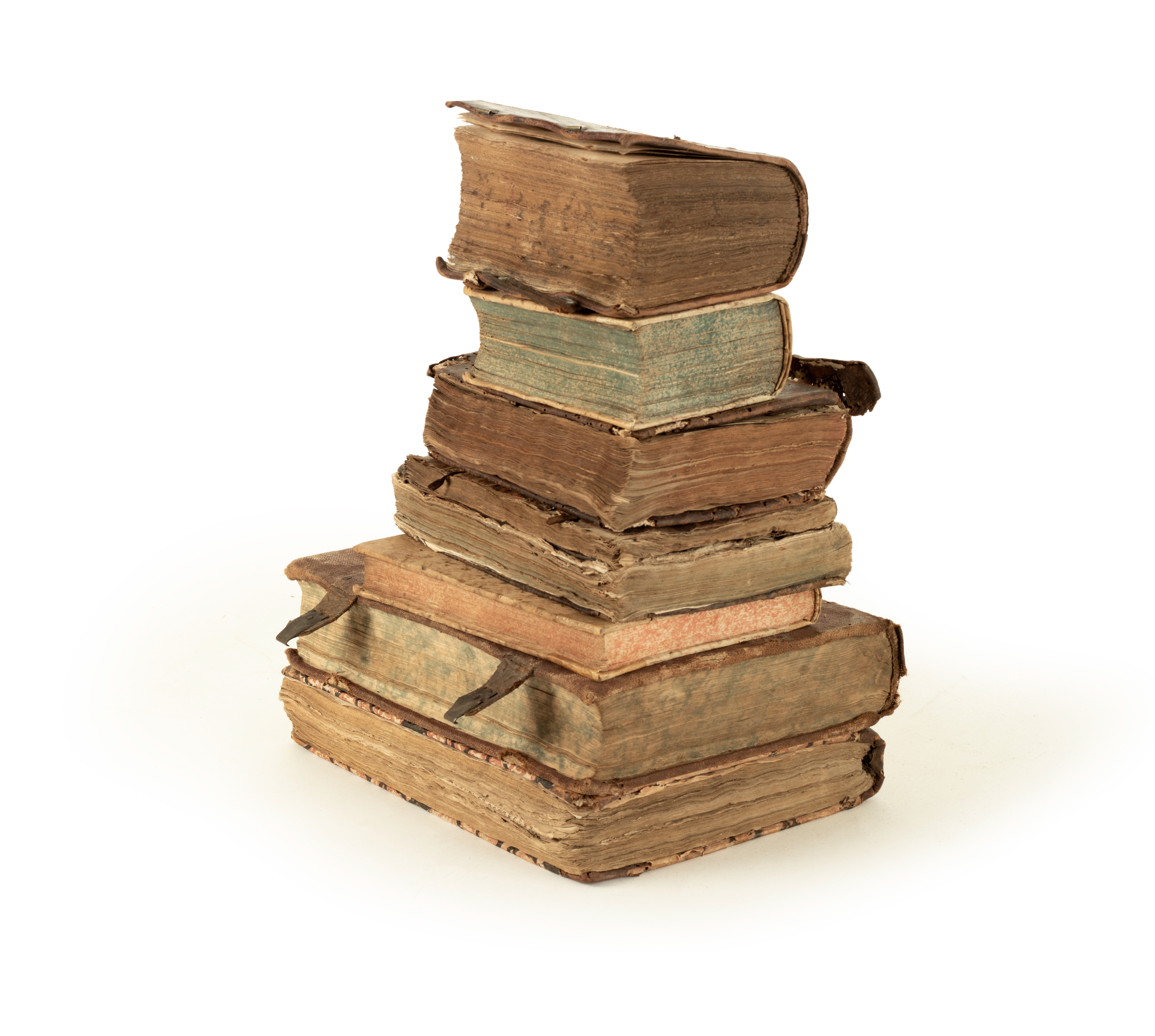
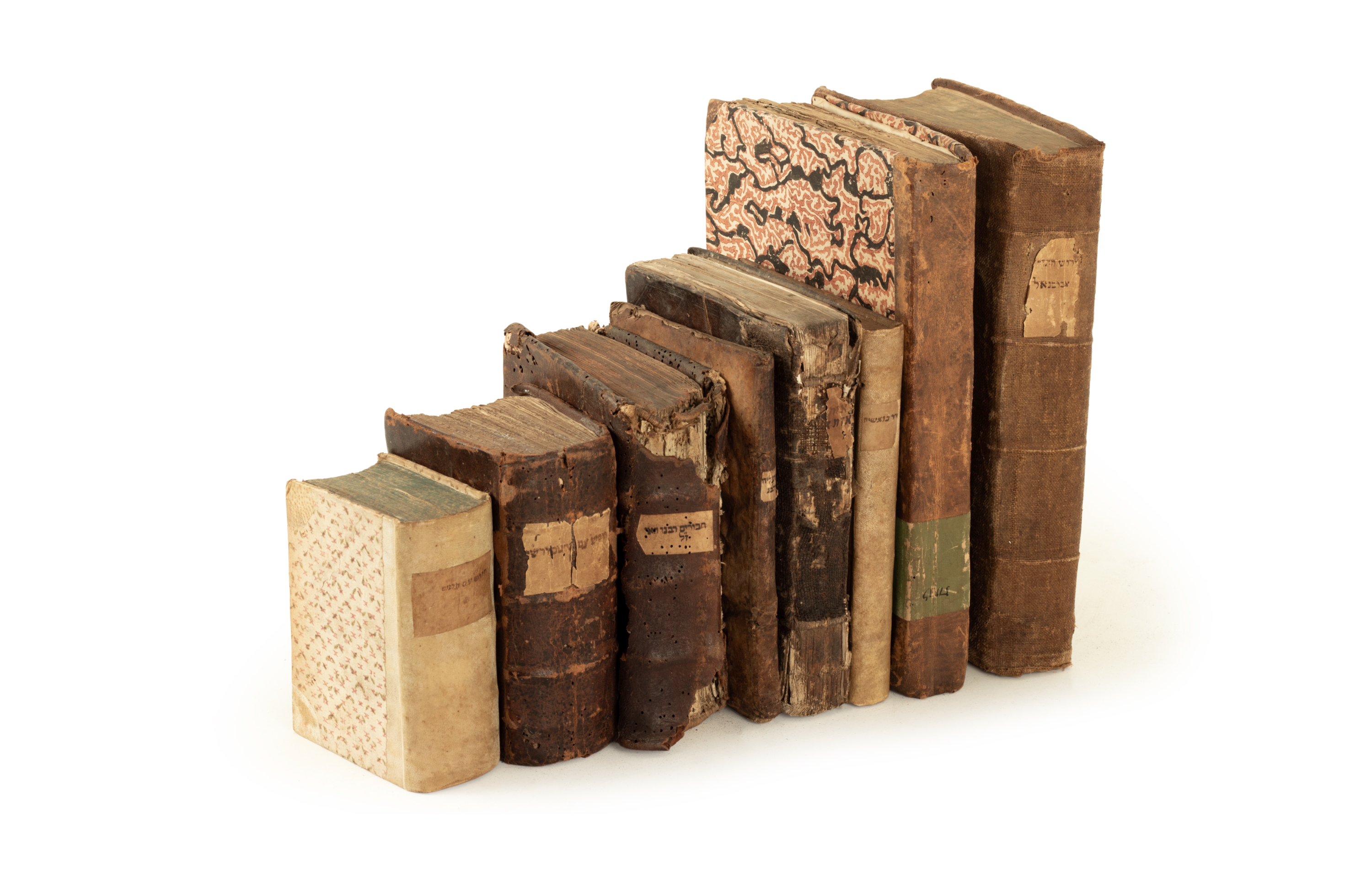
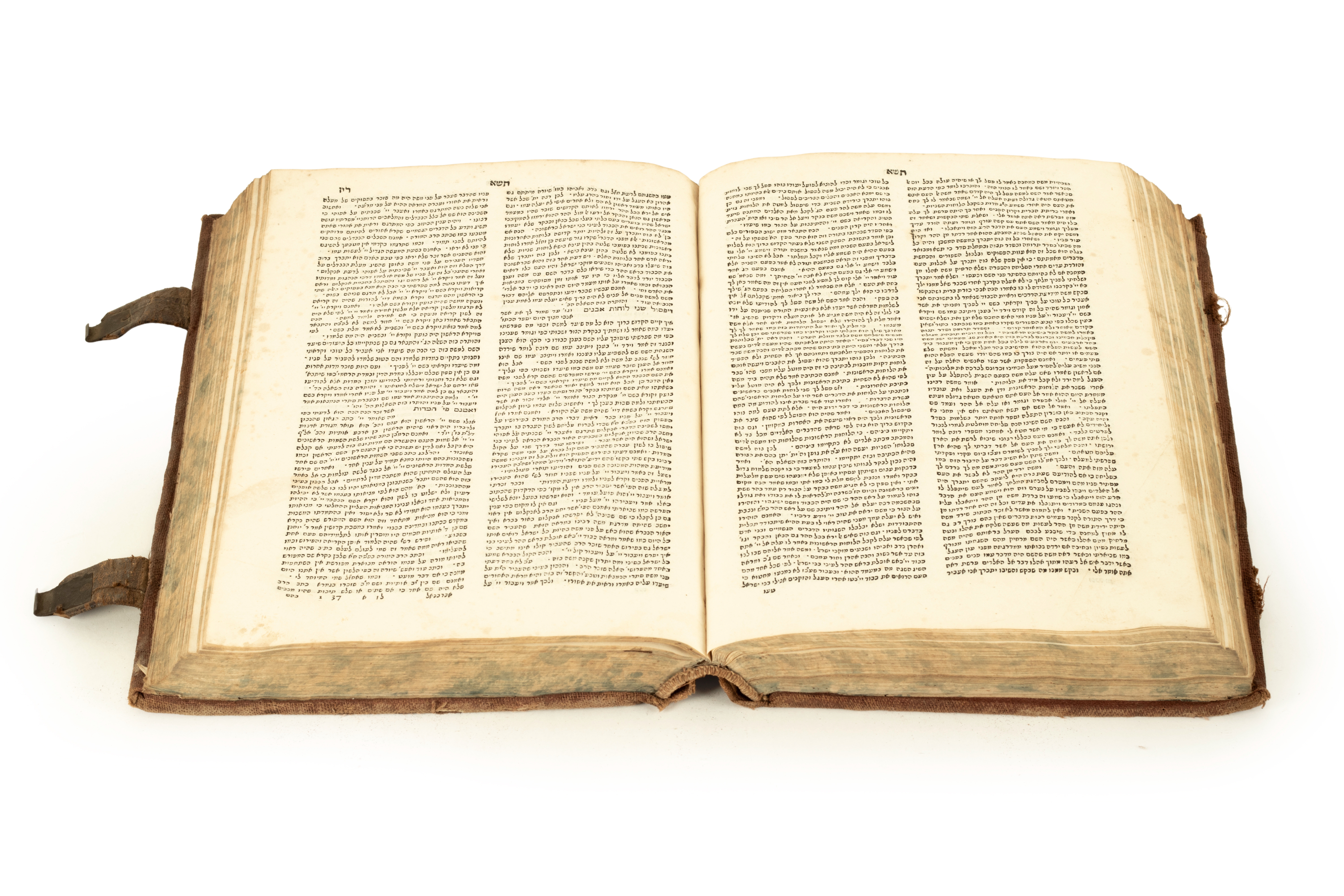
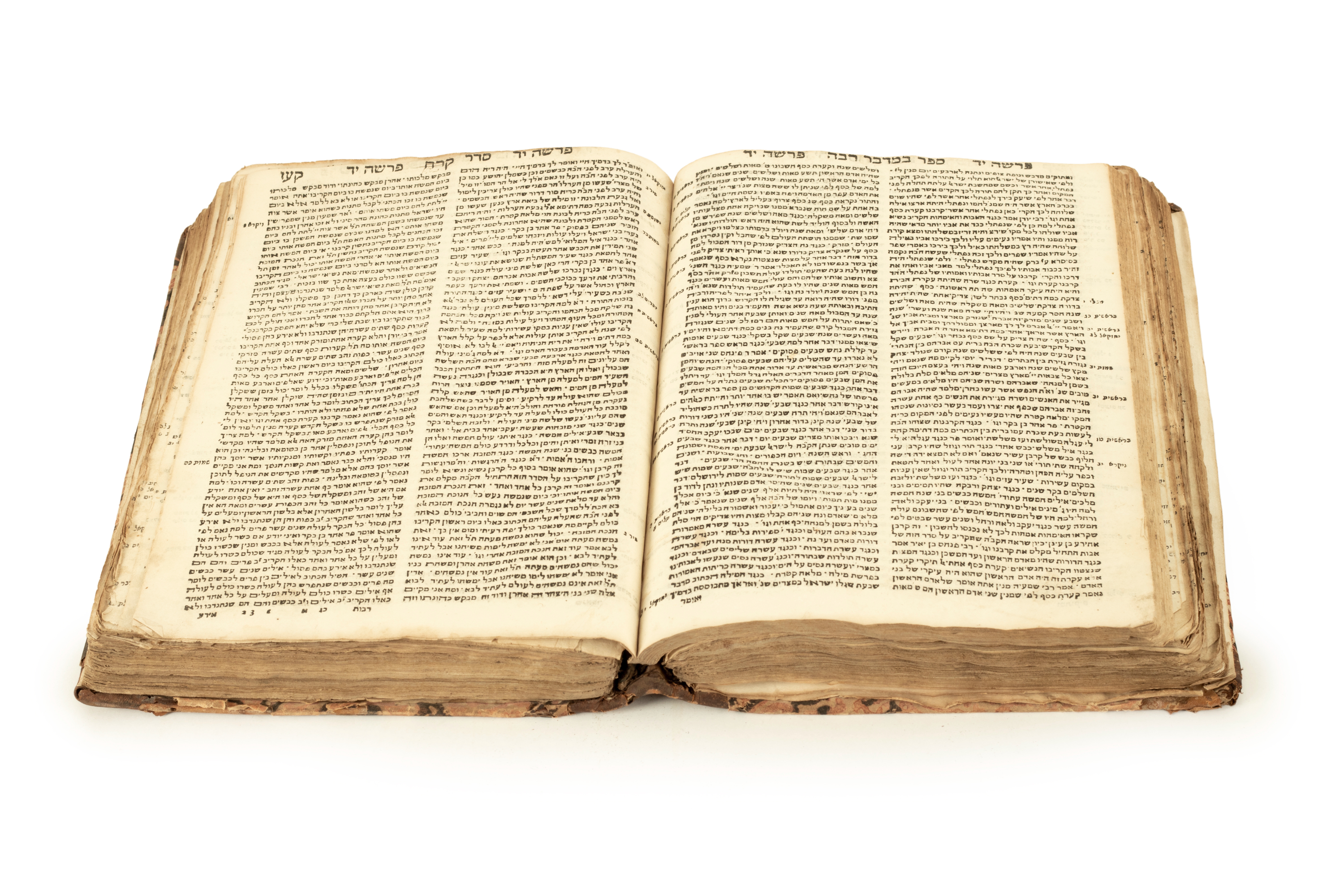
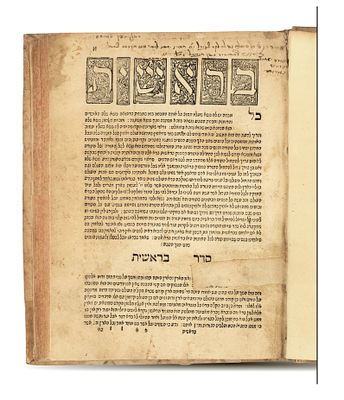
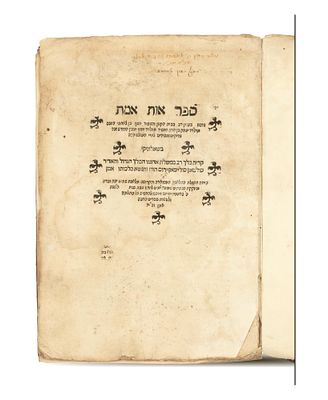
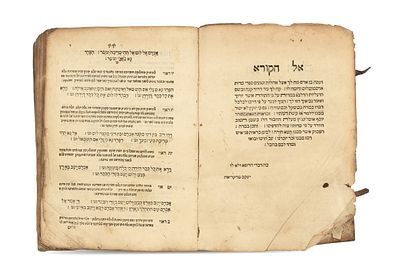
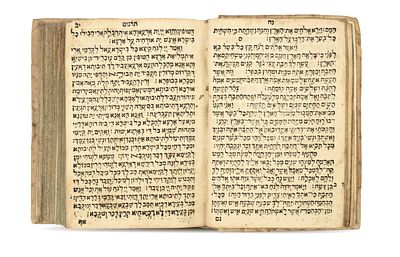
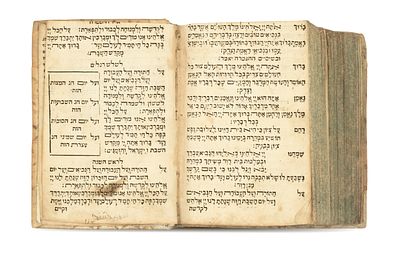
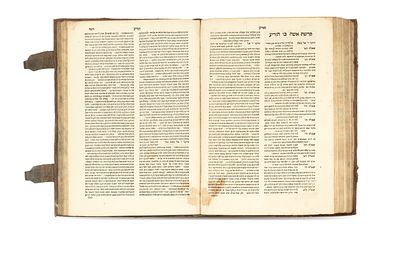
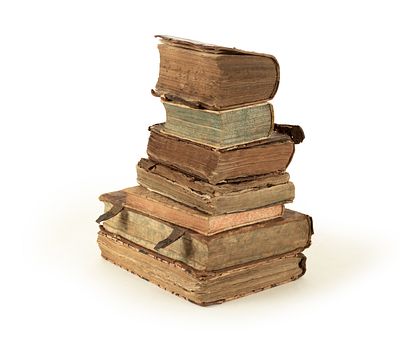
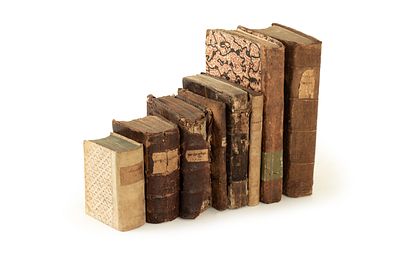
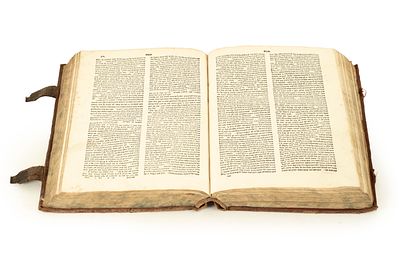
Group of Important Incomplete Sefarim: Chumashim, Torah Commentaries, and Midrashim – Italy and Salonika Printings, 1545–1644
A substantial Group of eight Hebrew works, including Chumashim, commentaries and Midrashim on the Torah, printed during the sixteenth and seventeenth centuries, spanning exactly one hundred years.
Most of the volumes are incomplete and in less-than-ideal condition, and have therefore been grouped together as a single lot.
Chumashim:
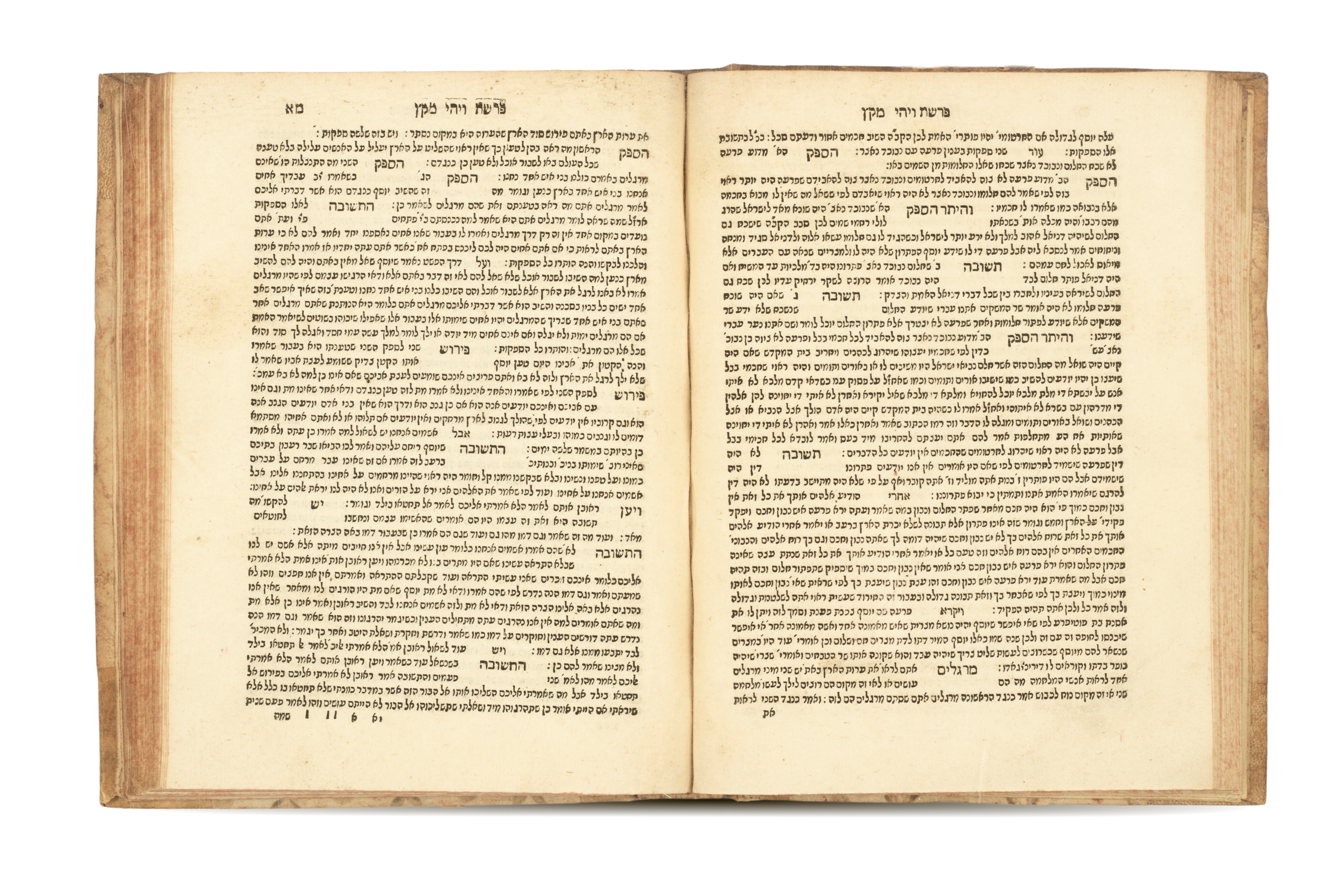
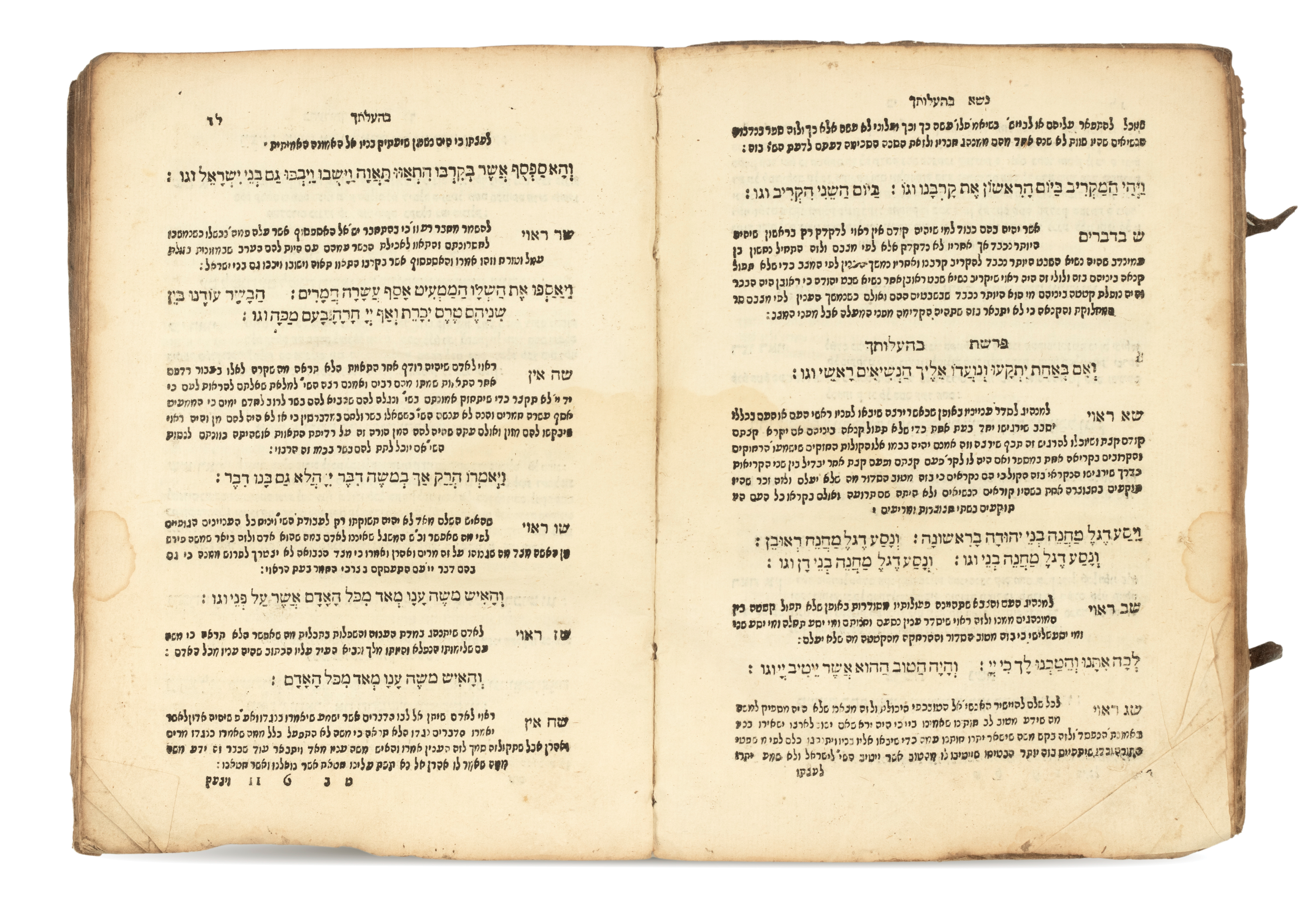
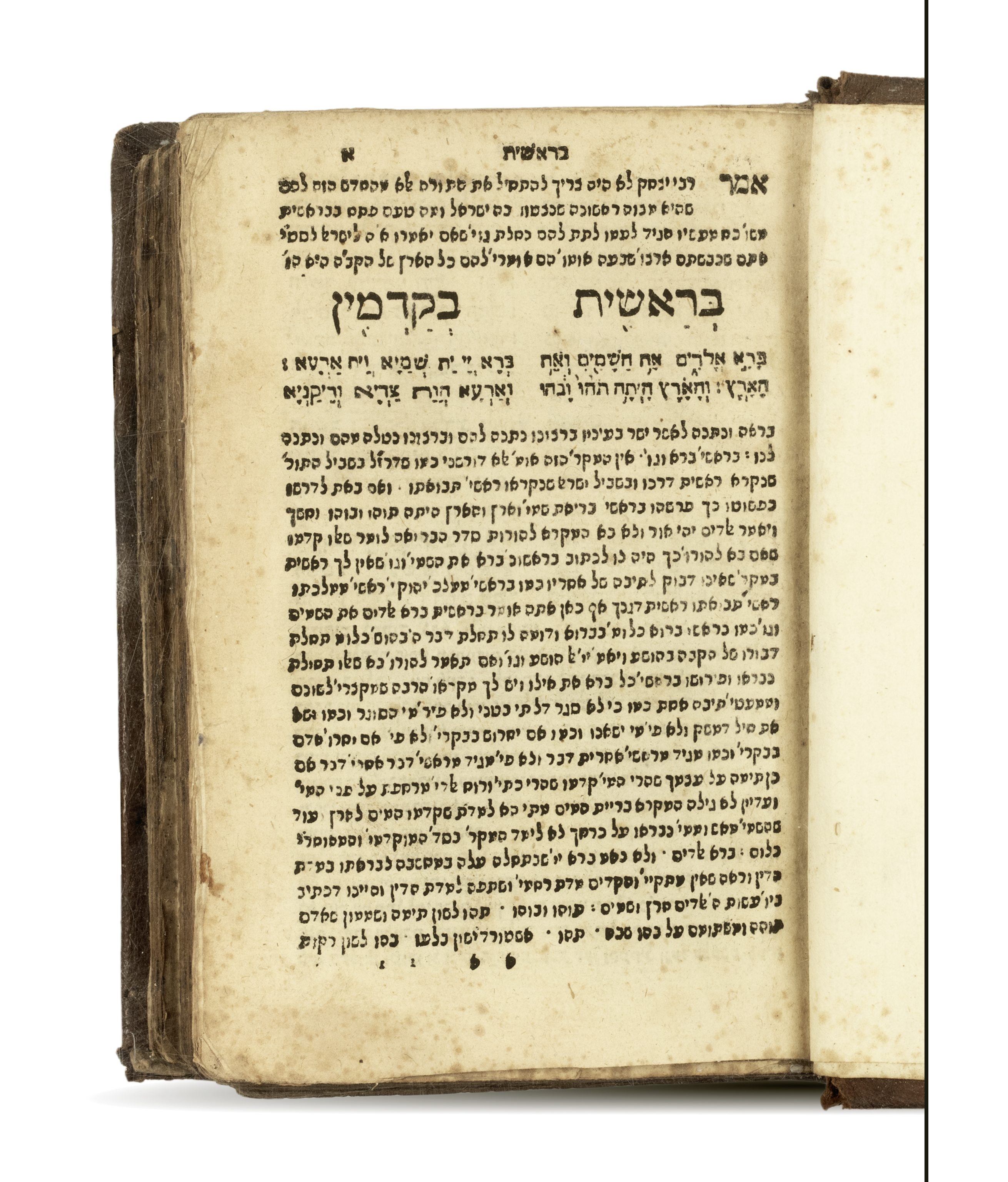
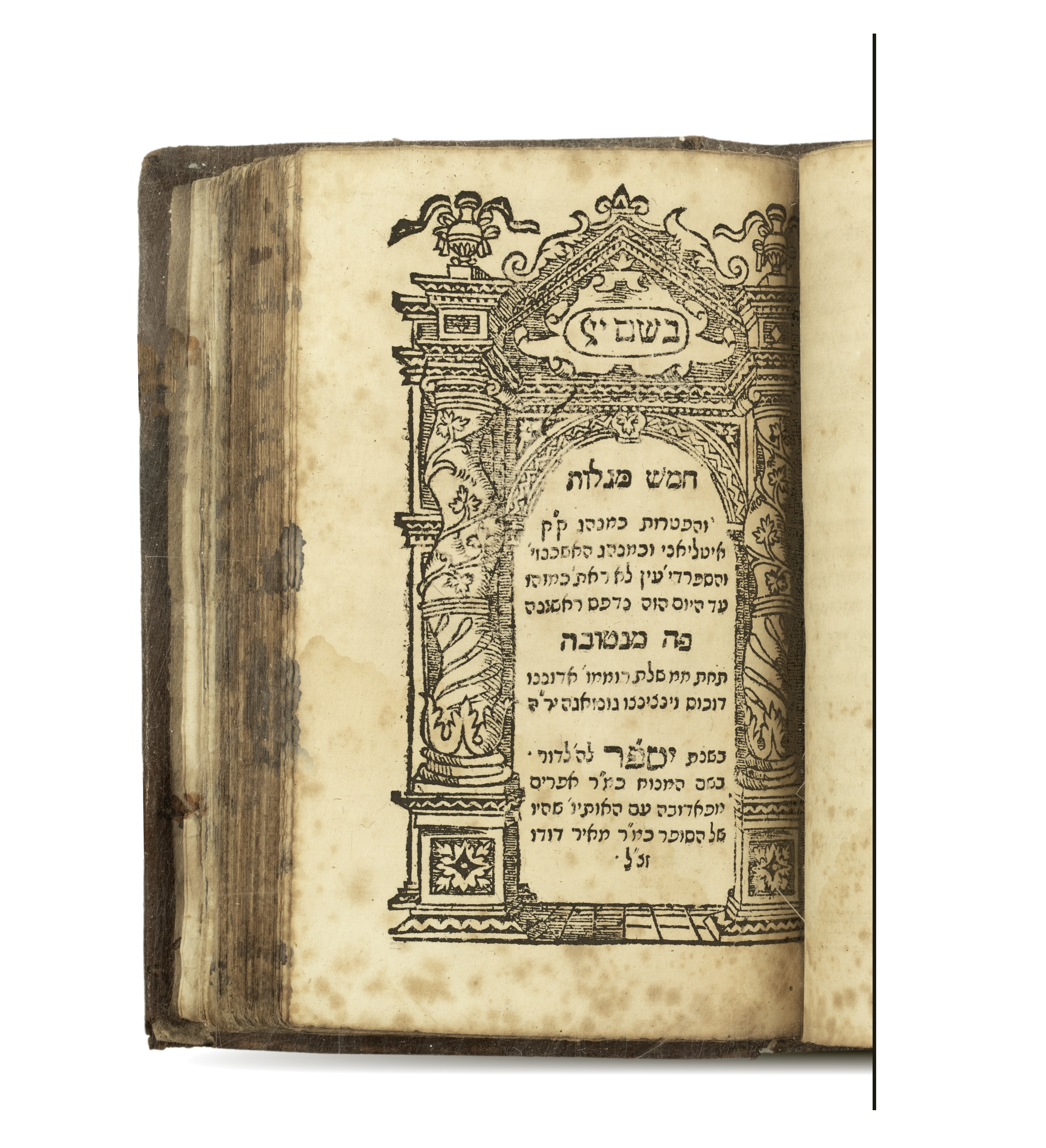
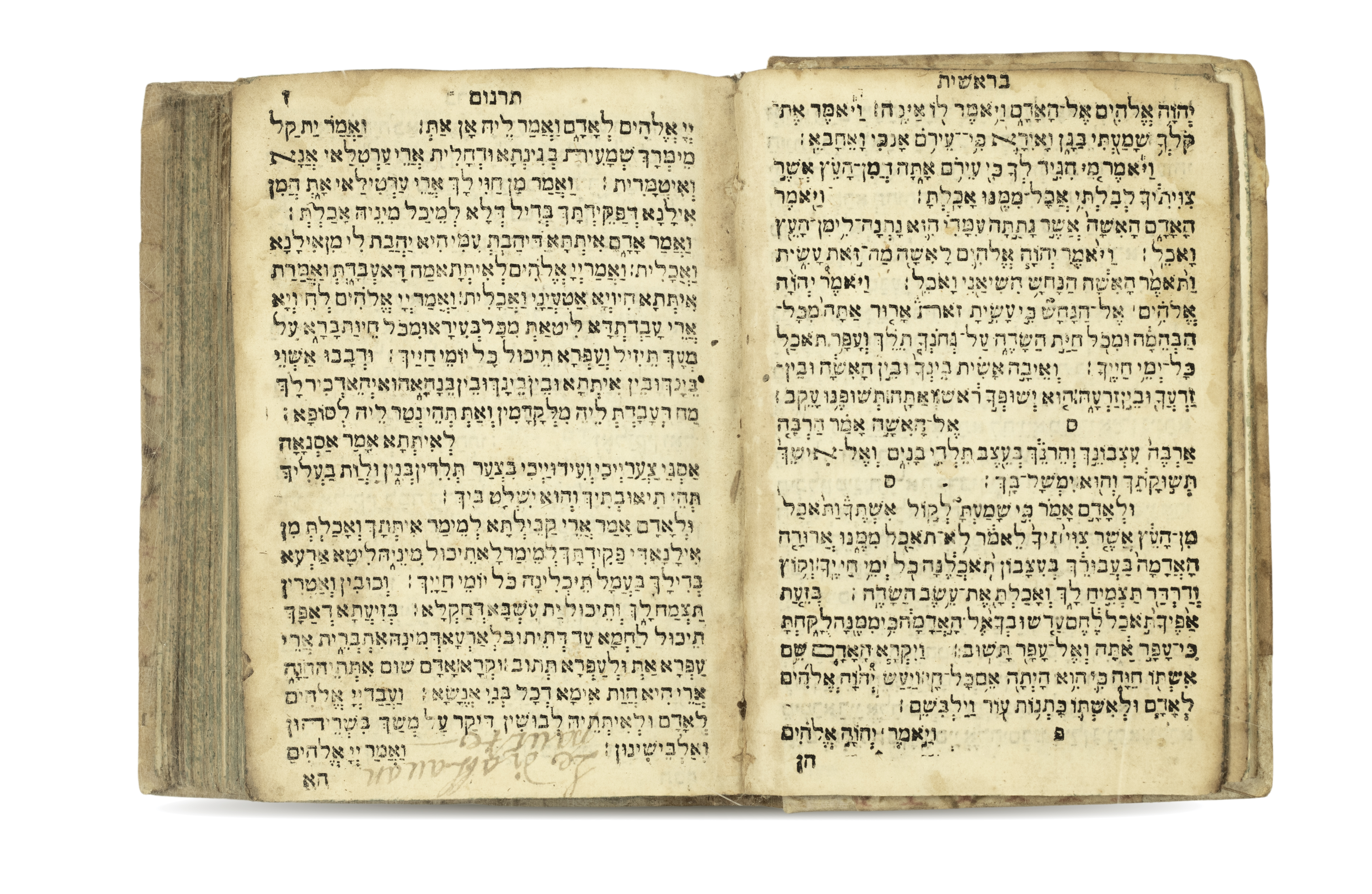
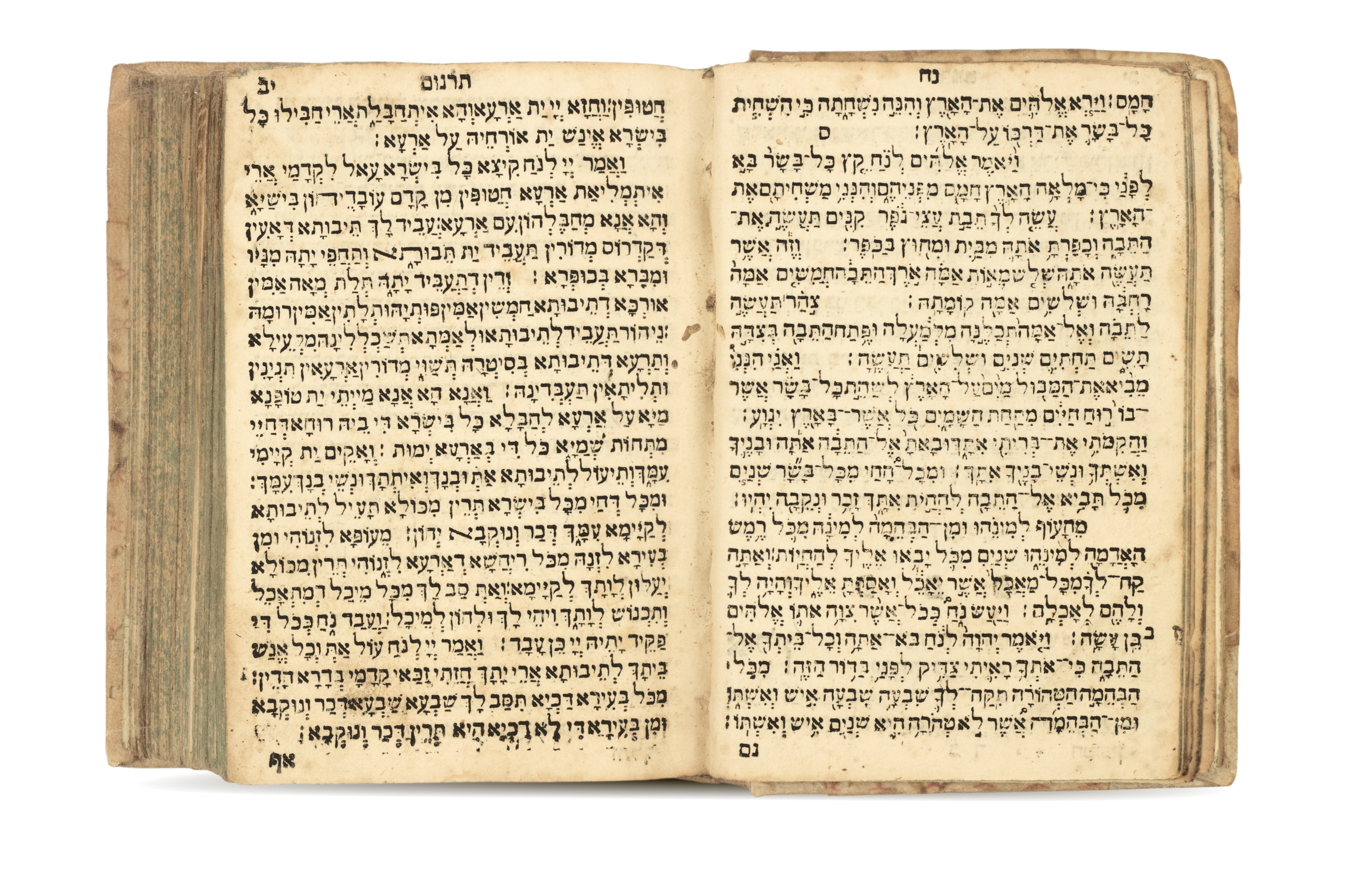
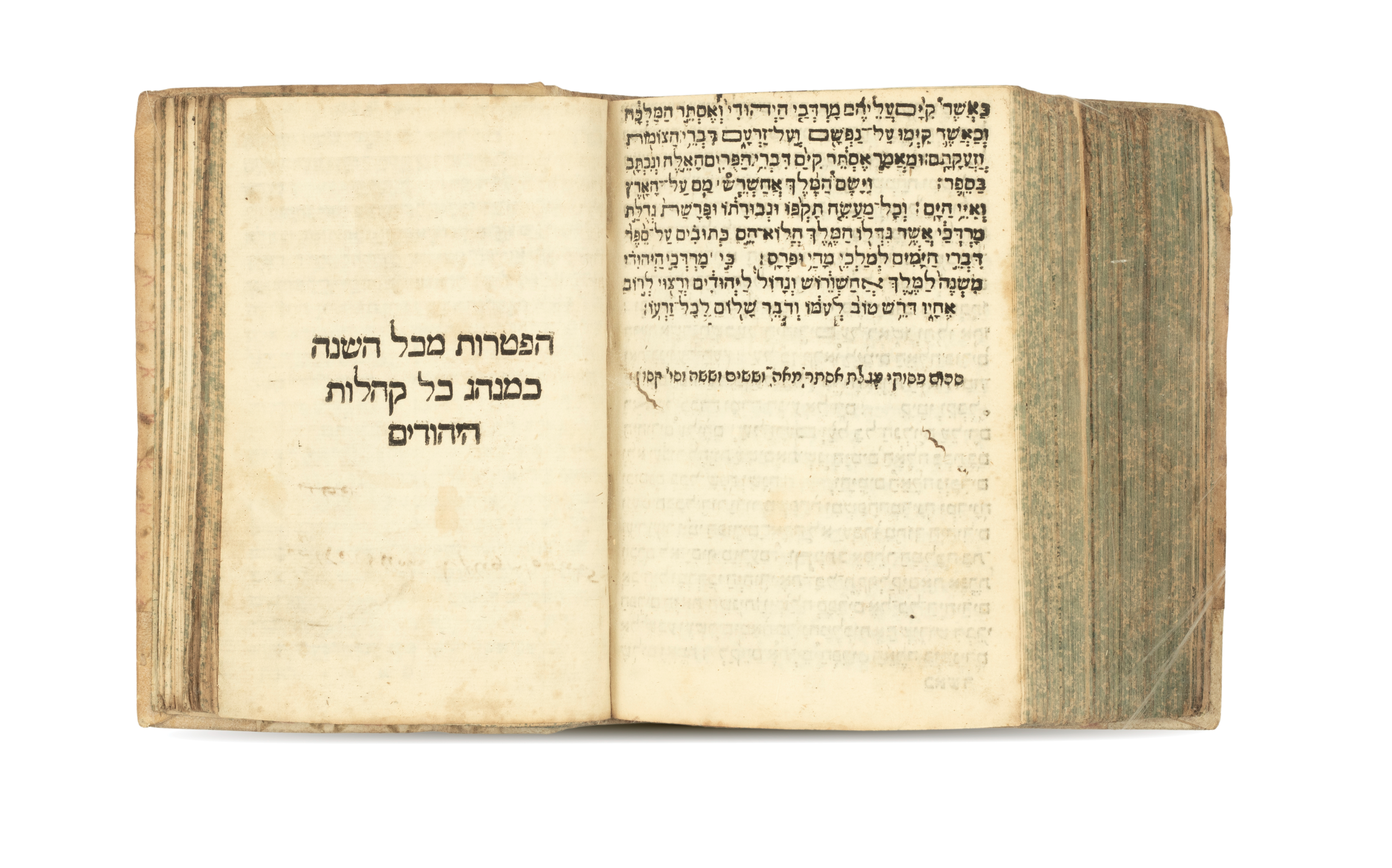
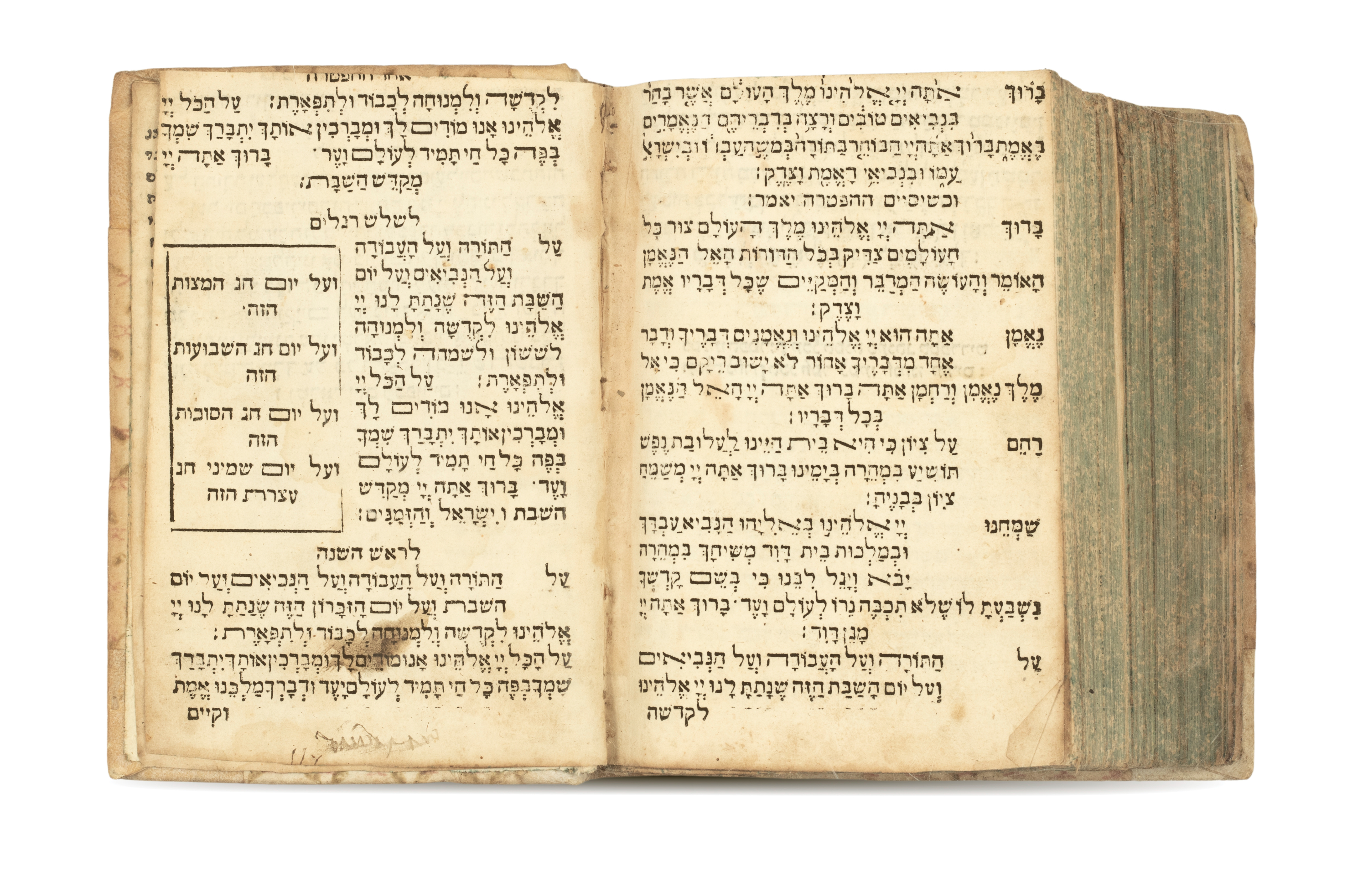
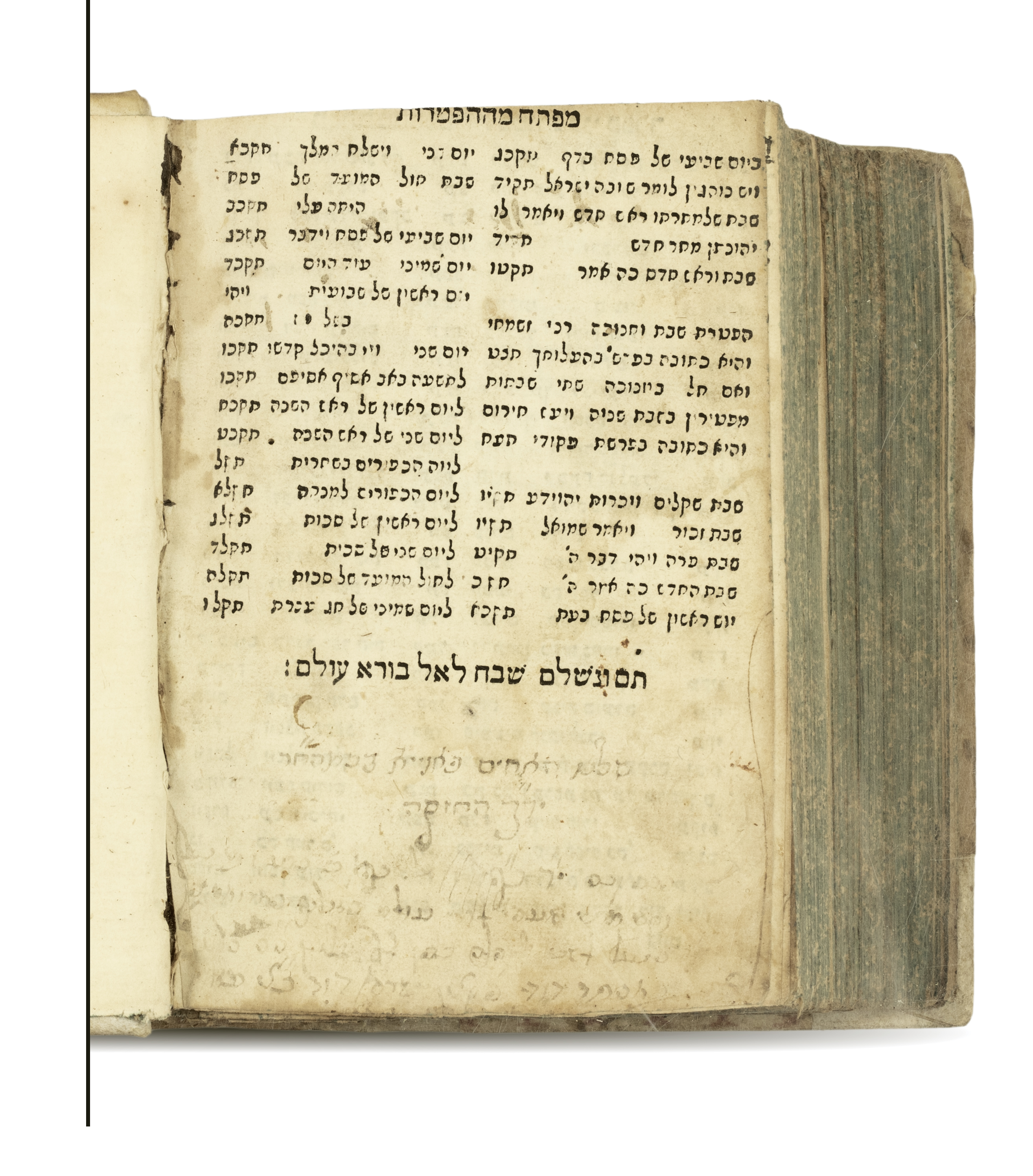
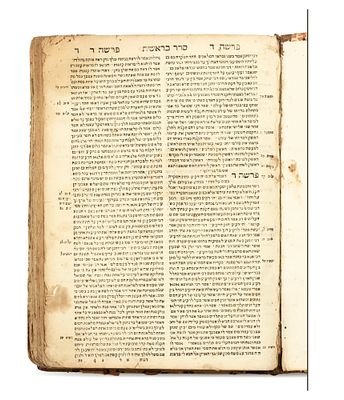
A. Five Chumashim with the haftaros, Mantua, [1589]–1590. Exceedingly rare edition. Incomplete copy.
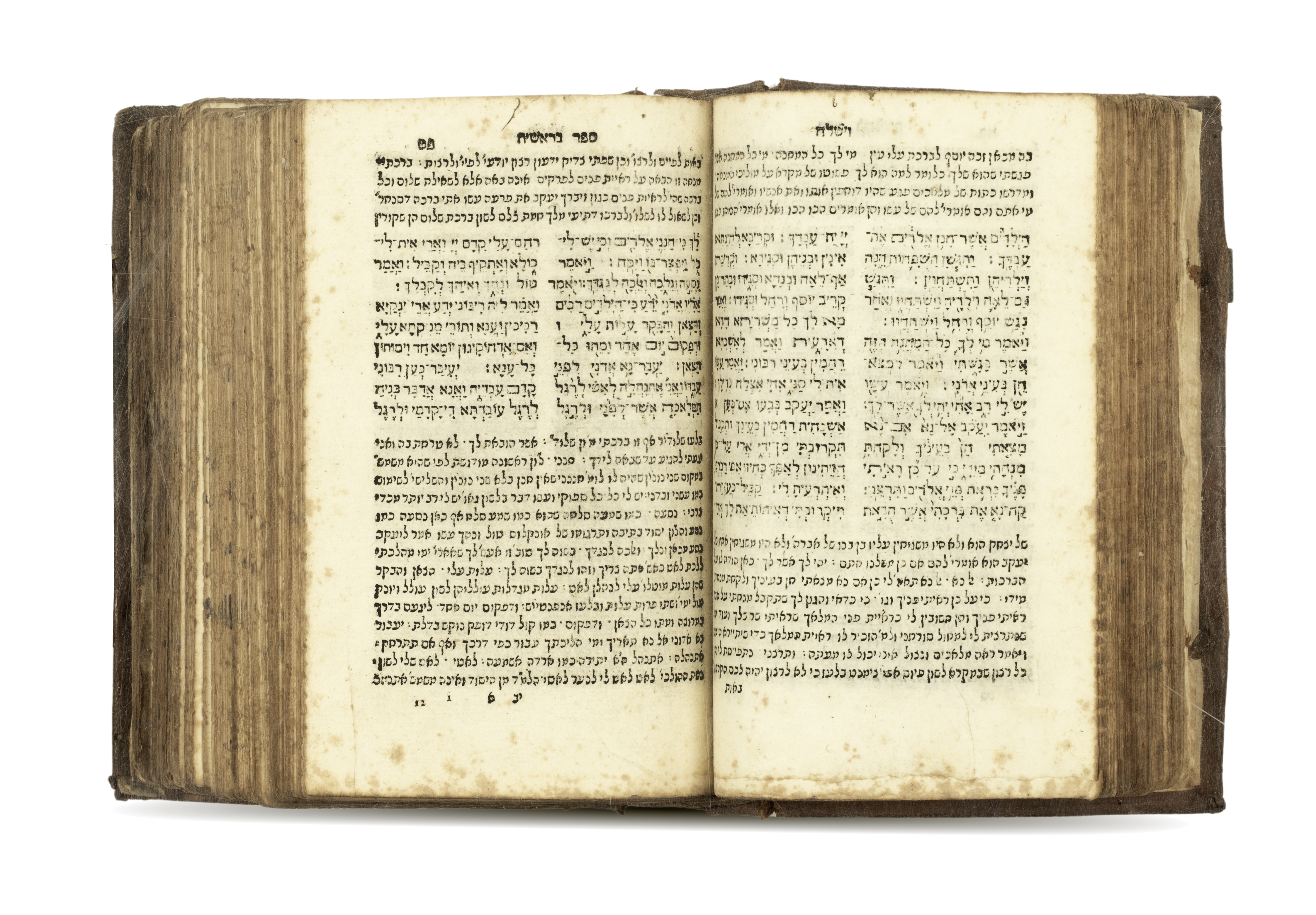
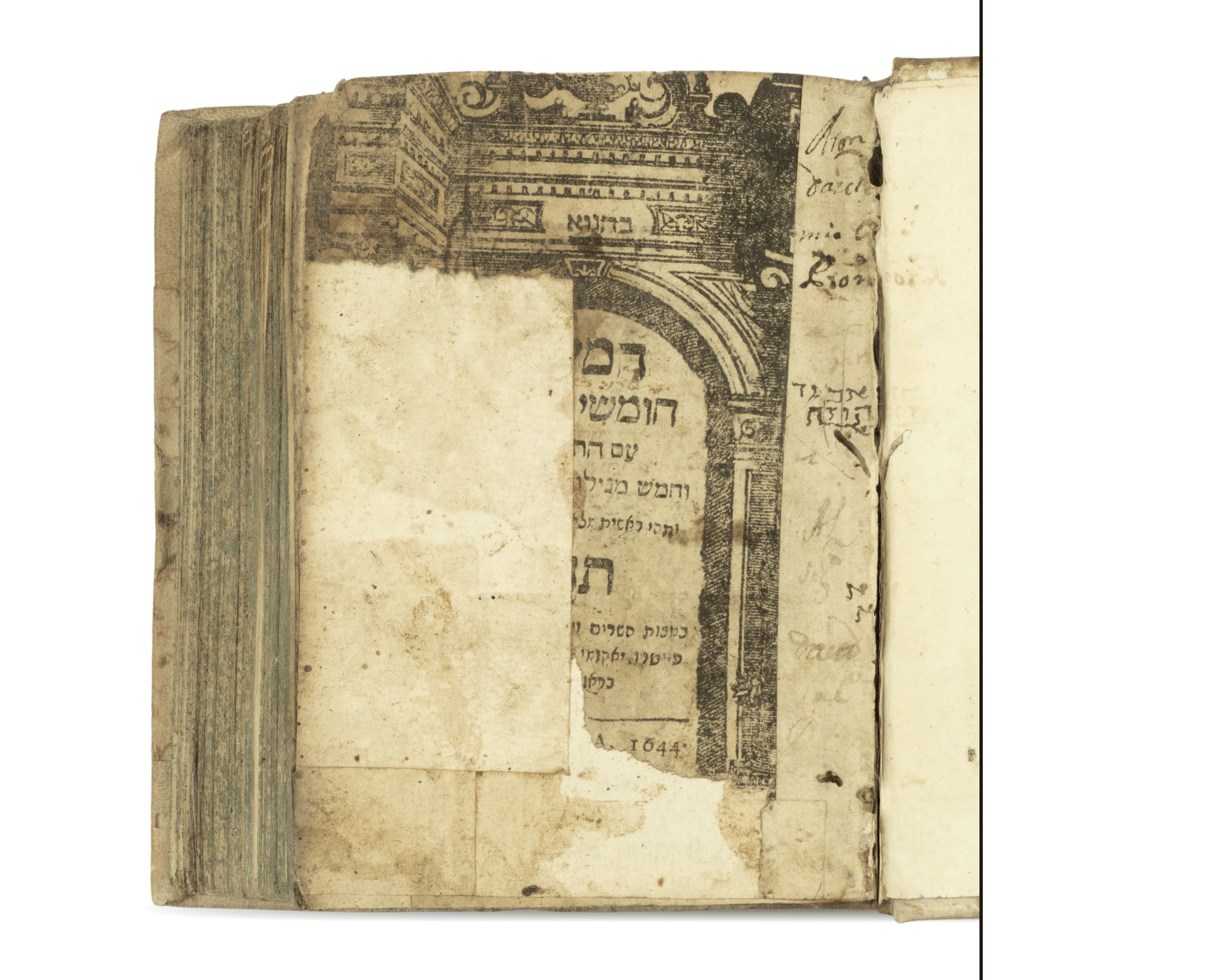
B. Five Chumashim with the haftaros, Venice, 1644. Incomplete copy.
Torah Commentaries:
C. Toldos Yitzchak, [Riva di Trento, 1558]. Incomplete copy.
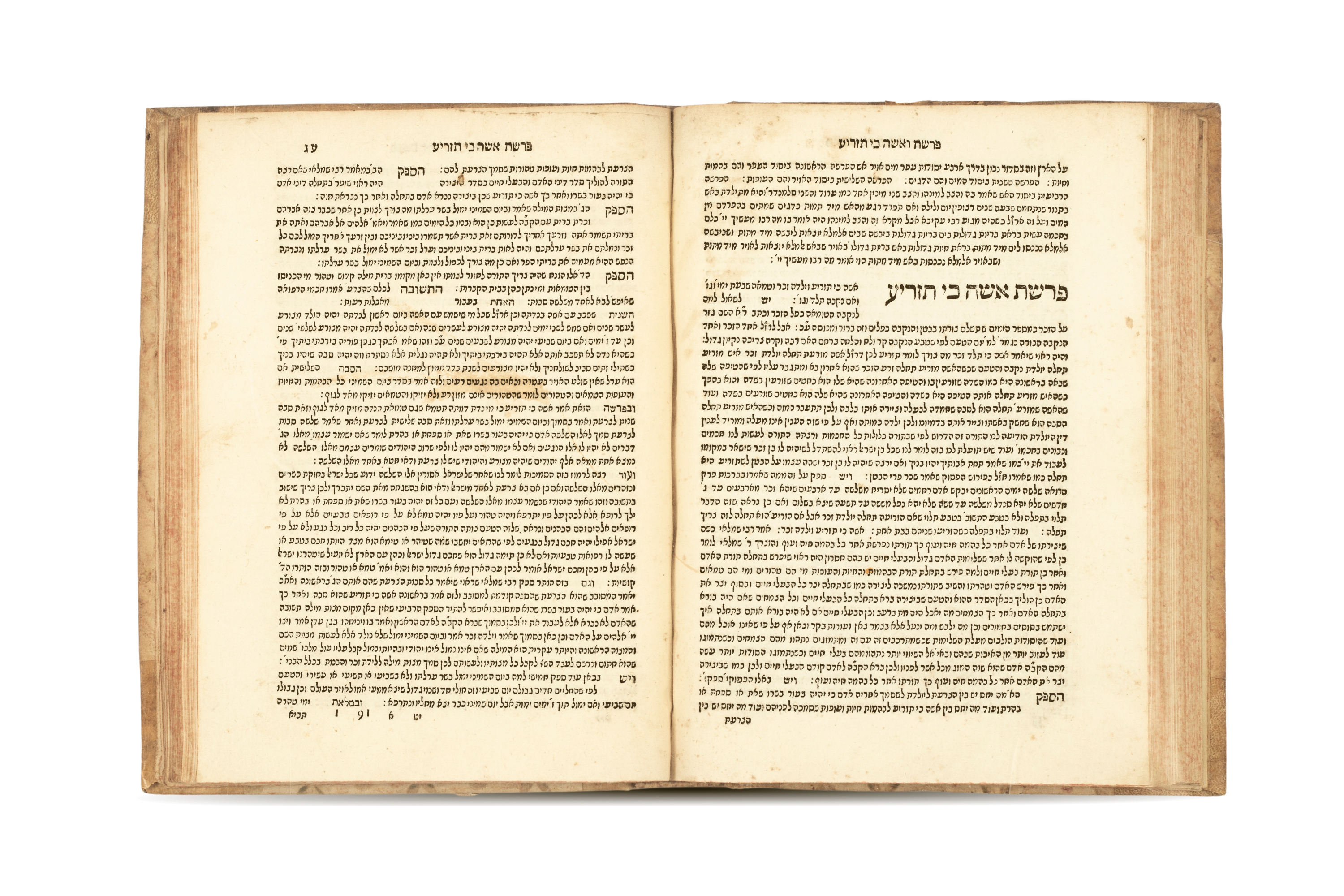
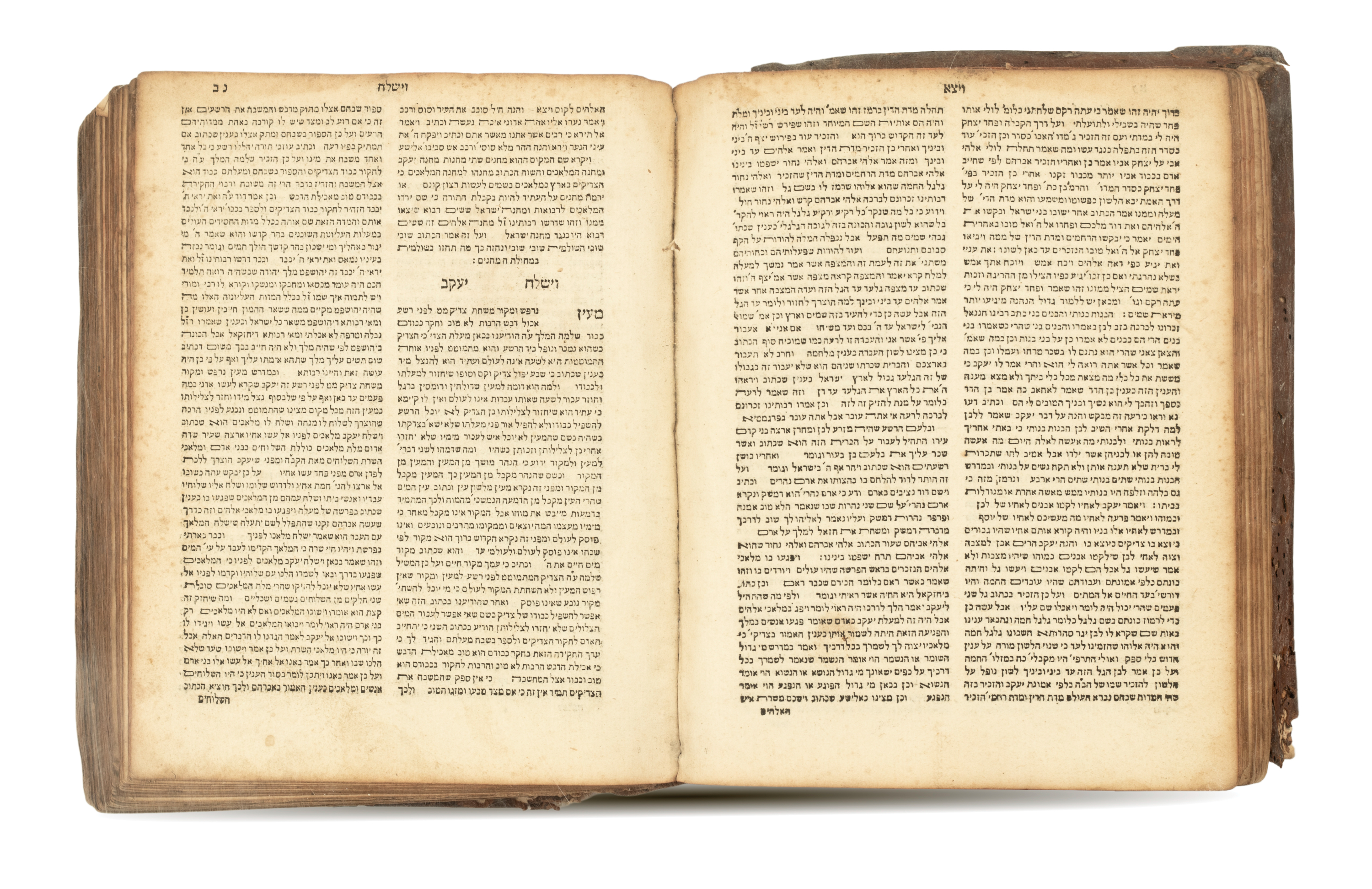
D. Rabbeinu Bachya on the Torah, [Riva di Trento, 1559]. Incomplete copy.
E. To’aliyos HaRalbag, Riva di Trento, 1560. Copy with text loss.
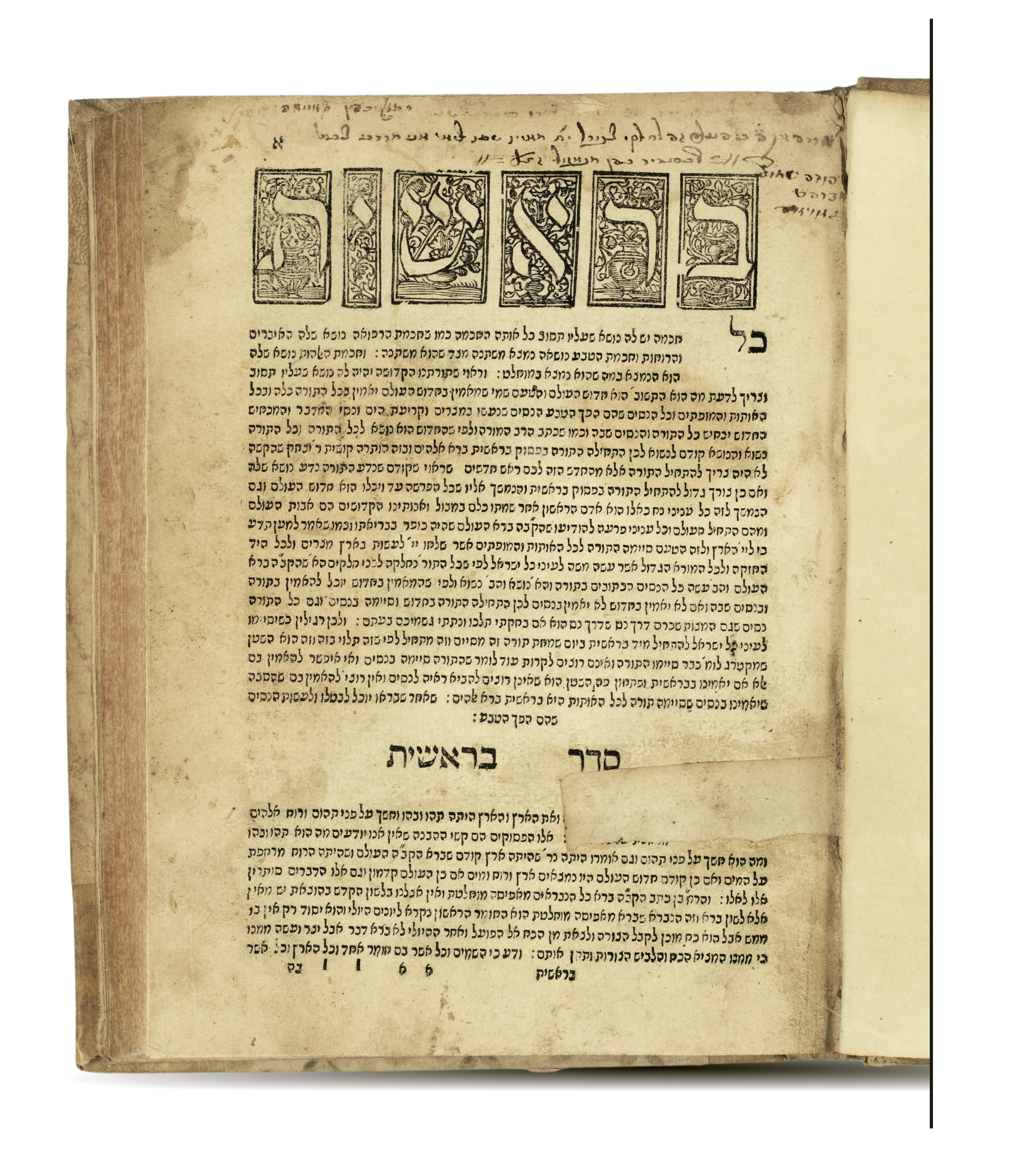
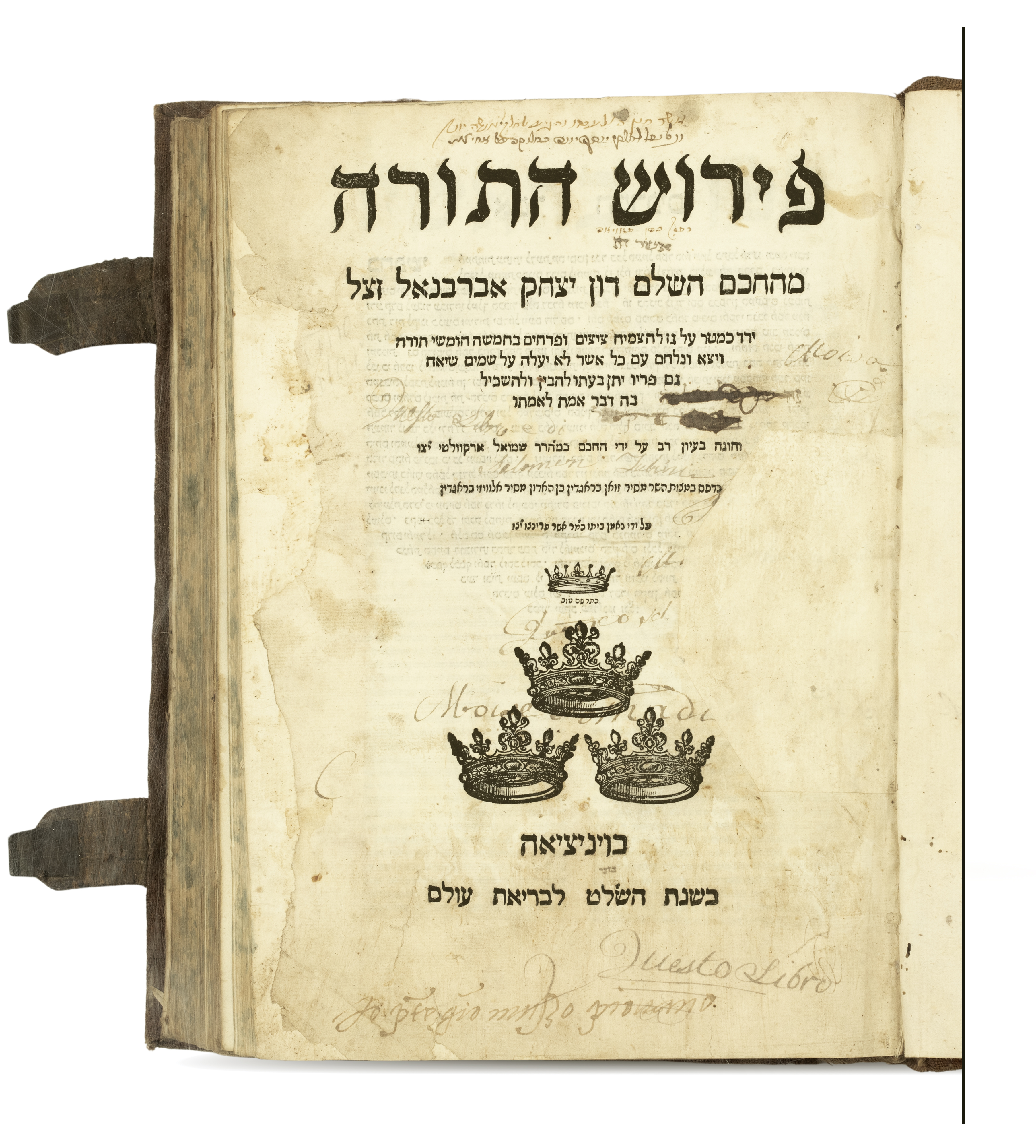
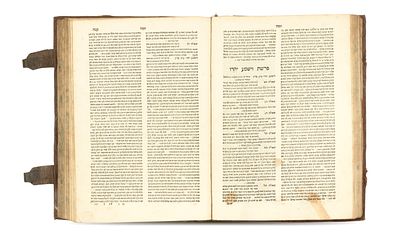
F. Abarbanel on the Torah, Venice, 1579. Sefer yesod, first edition. Complete copy, but damaged.
Midrash and Glosses on Midrashim:
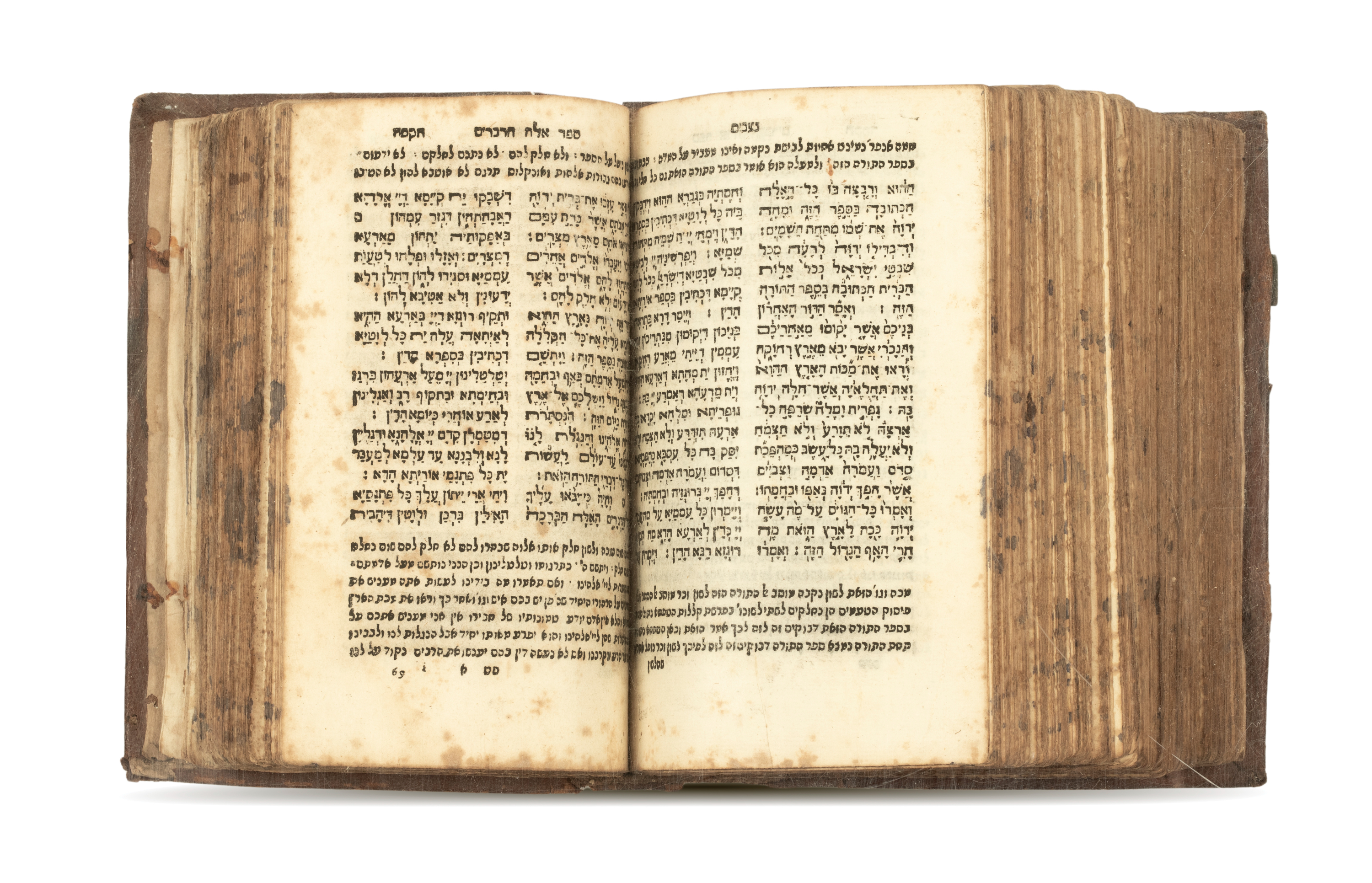
G. Os Emes, Salonika, 1565. First edition. Complete copy.
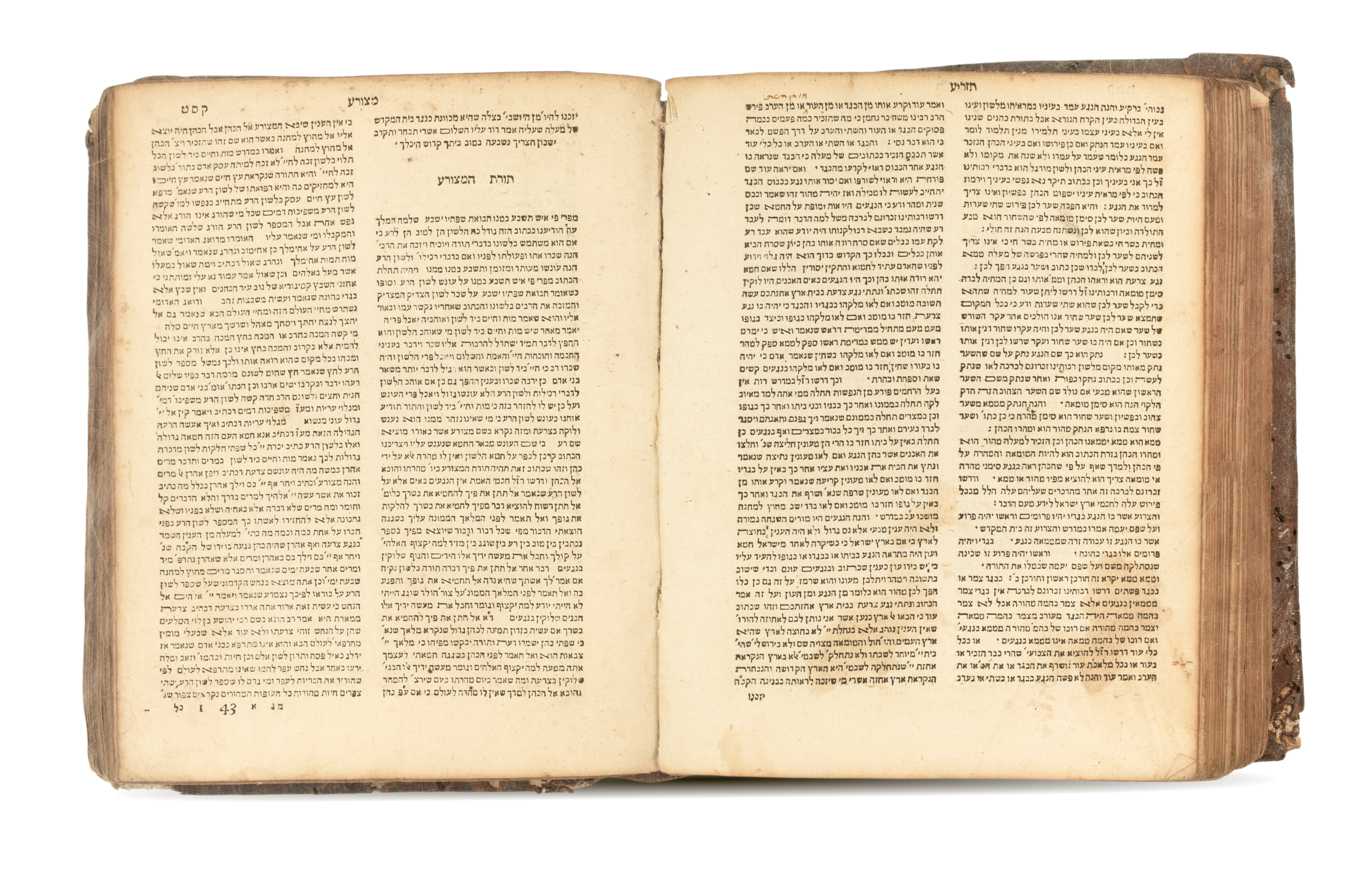
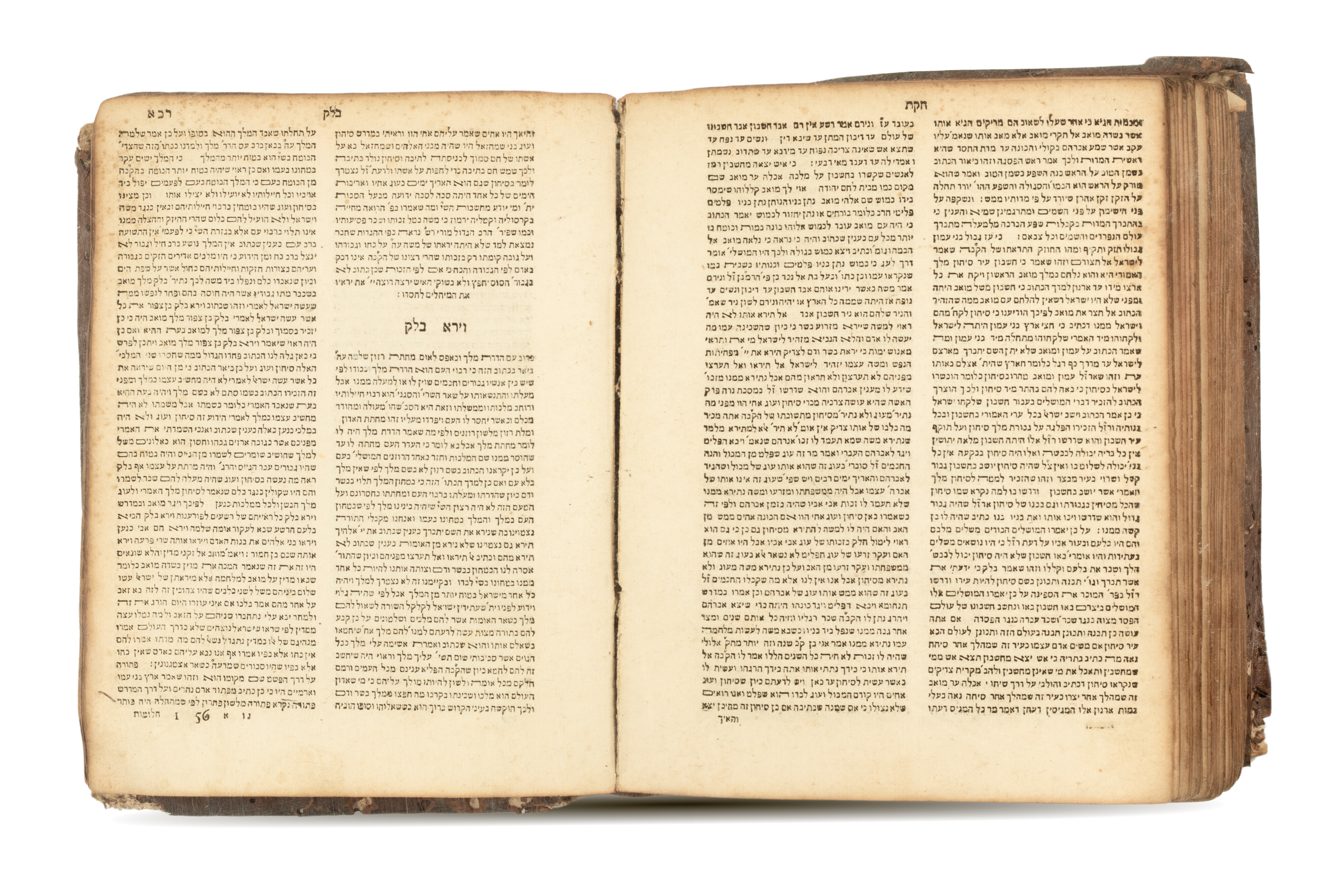
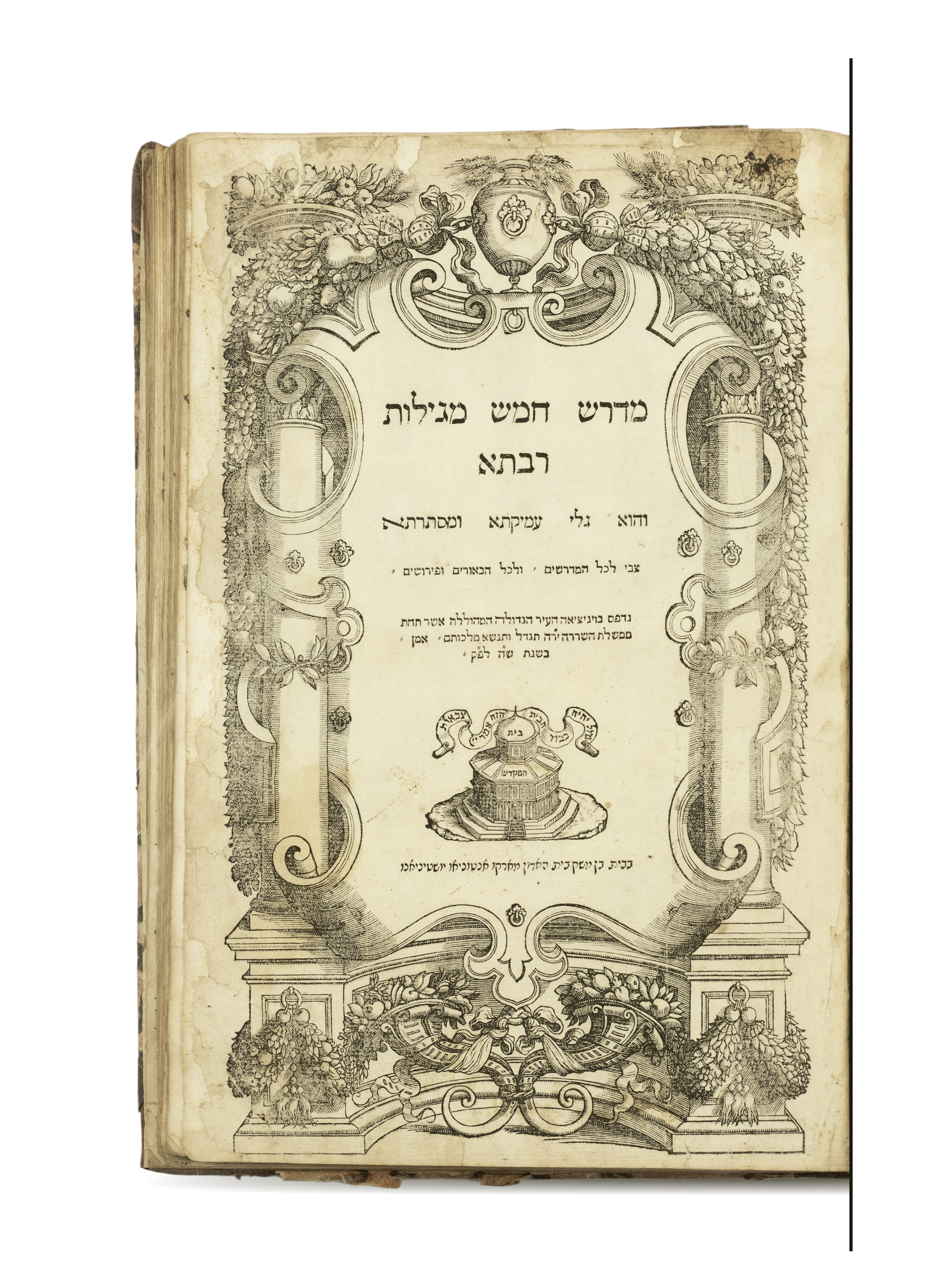
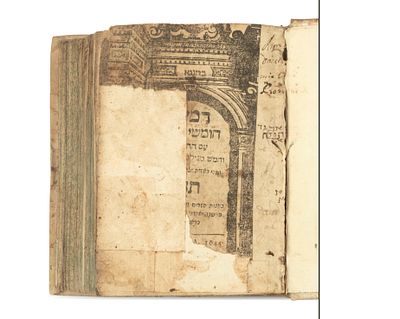
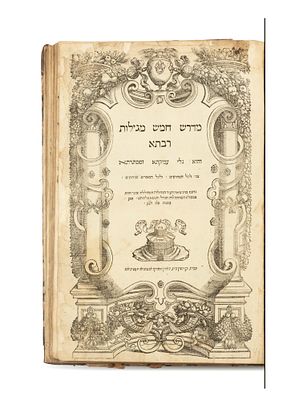
H. Midrash Rabbah on the Torah, [Venice, 1603], bound together with Midrash Rabbah on the Five Megillos from a different edition: Venice, 1545. Includes the original Giustiniani title page for the Five Megillos, which is exceptionally rare.
See below for a detailed description of each work and its contents.
Italy and Salonika printings, 1545–1644.
A total of 8 works in 8 volumes. Various sizes and conditions; see the detailed descriptions below.
Please review the detailed description and photographs before placing a bid. Additional photographs are available upon request.
– – – – – – – – – – –
Detailed Description:
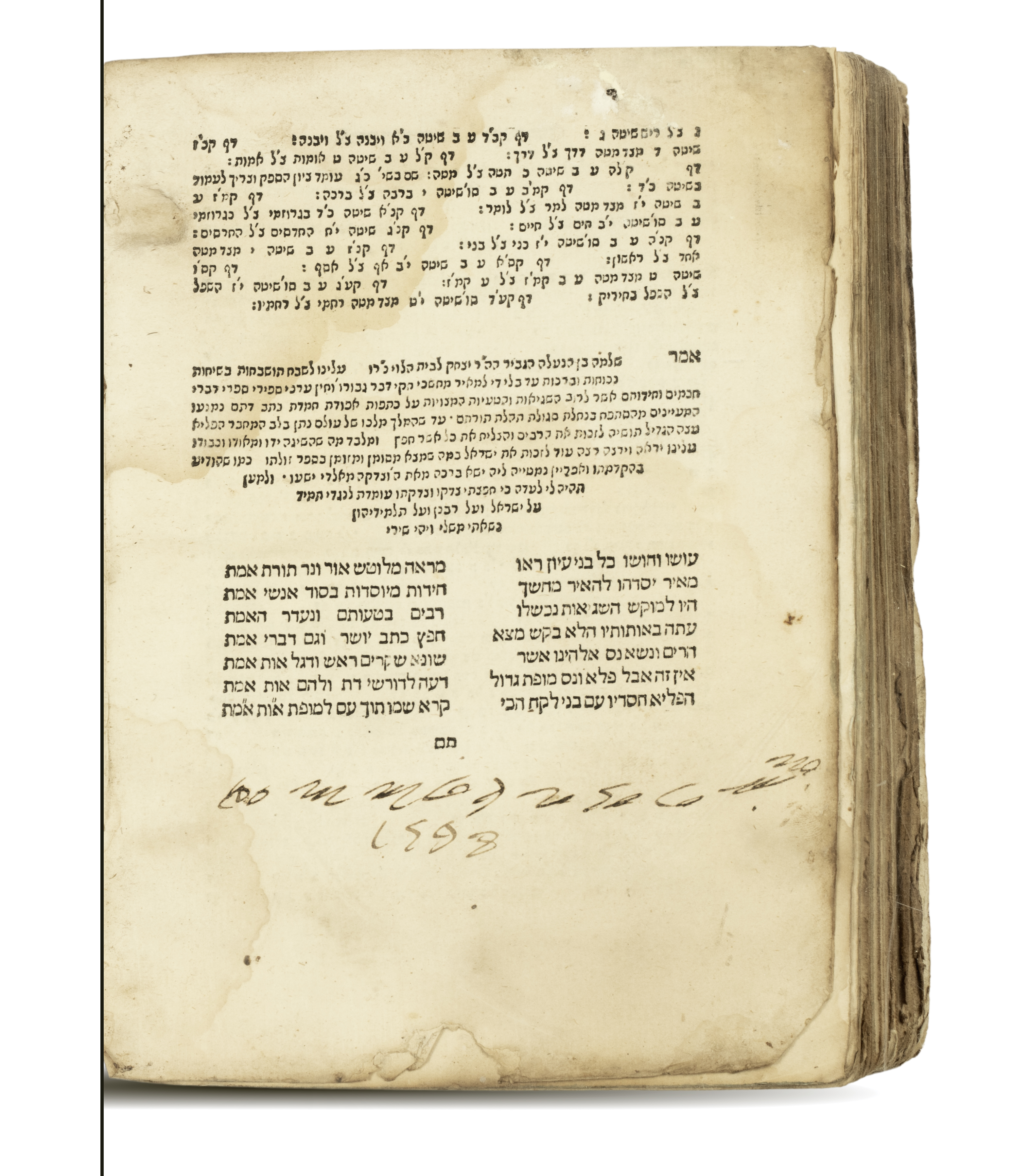
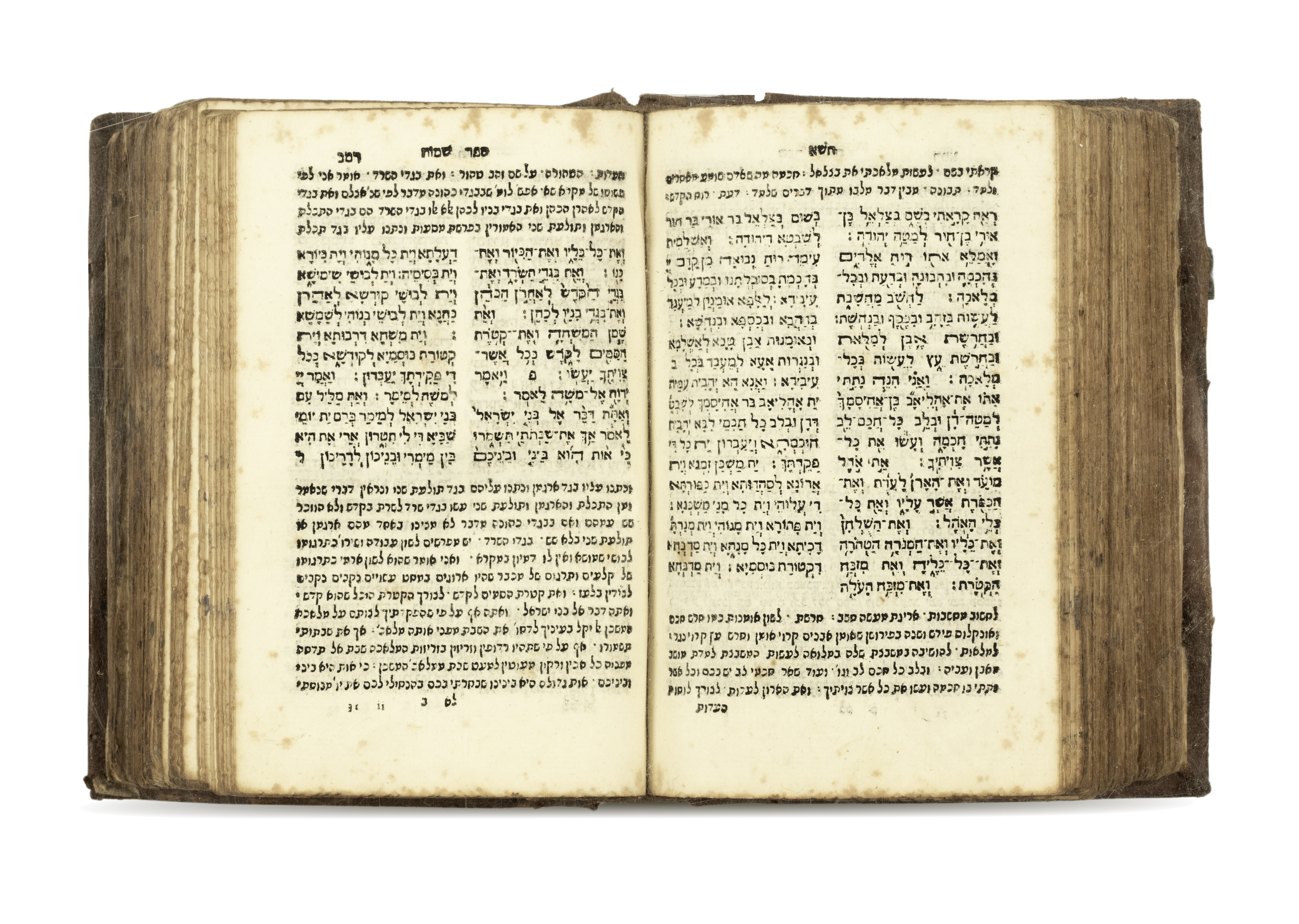
A. Five Chumashim with Targum Onkelos and Rashi. At the end, there is a separate title page for the Five Megillos and the haftaros according to the customs of the Italian, Ashkenazi, and Sephardic communities.
From the comments of the editor, Rabbi Meshulam Salem, it emerges that this was the first edition to print the haftaros according to the customs of all three communities. This is likewise stated on the separate title page for the haftaros, which is present in this copy.
The final two leaves contain the editor’s concluding remarks. These leaves are exceptionally rare and are absent from both copies in the National Library of Israel. Although they are mentioned by the Institute for Hebrew Bibliography, they are not included in its page count.
Likewise, the seventh leaf at the beginning of the haftaros, containing the cantillation names “according to the Italian order, ” is not recorded by the Institute for Hebrew Bibliography.
A thick and impressive volume in medium-small format (15.2 cm), containing more than 1,300 printed pages.
Mantua, 1589–1590. Page Count: Chumash: 564 leaves; Megillos: [7], 80, 82–87, [2] leaves.
A total of 3 leaves are missing: the title page of the Chumash, and leaves 81 and 88 of the Five Megillos.
Height: 15.2 cm.
Condition: Good-fair to fair. Stains. Repairs to the final leaves. Holes along the inner margins. A few erasures and handwritten additions.
A thick volume with one surviving clasp (the second is lacking). Worn binding with numerous holes along the spine.
B. Five Chumashim with Targum and the Five Megillos. At the end, with a partial title page for the haftaros “according to the custom of all Jewish communities.”
The biblical text and the Targum are printed on facing pages.
Venice, 1644. Page Count: 40, 42–72, 74–79, 81–96, 98–184, 186–191, 193–238, 240–304, 306–311, 313–344, 353–357, 359–368, 370–379, 382–447, 451–511, 514–537, [2] leaves.
A total of 38 leaves are missing: 41, 73–80, 97, 185–192, 239, 305, 312, 345–352, 358, 369, 380–381, 448–450, 512–513.
The Institute for Hebrew Bibliography records an additional leaf at the end. It is not recorded by the National Library of Israel and is not present here.
C. Toldos Yitzchak, Rabbi Yitzchak Karo’s Commentary on the Torah.
One of the most widely studied Sephardic works of Torah exposition during the sixteenth century.
The Chida lists it in Shem HaGedolim alongside the great Sephardic works of sifrei drush: “The delightful Akeidas Yitzchak, the illustrious sefer Toldos Yitzchak, and similar works.”
The work was first printed in Constantinople in 1518. (It was printed and distributed in installments, making complete copies exceptionally rare.) The present copy is the second edition.
Rabbi Yitzchak Karo (1488–1535) was one of the leading sages of Spain in the generation of the Expulsion and was a Rosh Yeshiva in Portugal. After the Expulsion from Portugal, he settled in Turkey, where he raised his nephew, Rabbi Yosef Karo, author of the Shulchan Aruch. Rabbi Yosef Karo absorbed much Torah from his uncle and repeatedly refers to him in the Beis Yosef (Orach Chaim 31, 382, 391) as “my teacher and uncle.”
Riva di Trento, 1558. Page Count: 1–113 leaves. Incomplete copy.
A total of 5 leaves are missing: the first 2 leaves and leaves 113–115.
Height: 19.8 cm.
Condition: Good. Stains, mainly on the opening and closing leaves. Repair to the first leaf.
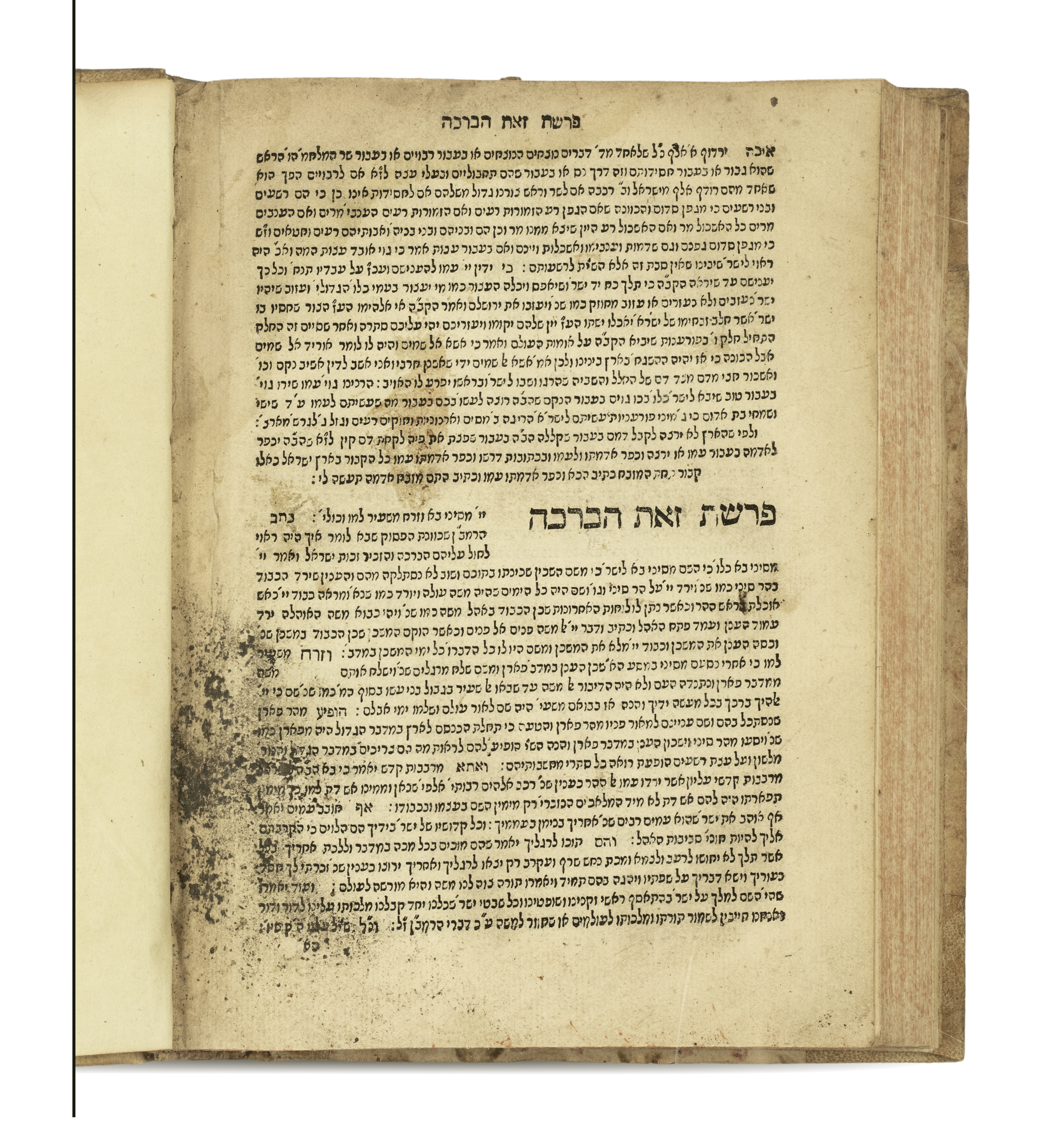
D. Rabbeinu Bachya’s Commentary on the Torah.
Rabbeinu Bachya’s commentary is one of the most well-known Torah commentaries, mentioned in the same breath as those of Rashi, Ramban, and Ibn Ezra.
Rabbi Avraham Zacuto stated in Sefer Yuchasin that “this sefer became famous throughout the world, ” and the Tosfos Yom Tov writes that “many righteous scholars regularly read and study Rabbeinu Bachya every Shabbos” (Introduction to Eichah). Indeed, almost every later Torah commentator drew from his explanations.
The work is structured according to the four levels of interpretation — Pshat, Remez, Derash, and Sod — and in many places explains the Ramban’s teachings in Kabbalah.
It was first printed during the incunabula period and was reprinted many times thereafter. The present copy is the ninth known edition!
Riva di Trento, 1559. Page Count: [10]–286 leaves. Incomplete copy.
A total of 9 leaves are missing: [1–9]. Large tears with losses on leaves [10]–14 and 116–120, some surviving only as fragments.
Height: 17.4 cm.
Condition: Fair. Holes and stains. Antique binding, very damaged.
E. To’aliyos of the Ralbag on the Torah and Nevi’im Rishonim.
As known, the Ralbag composed a great and classic commentary on the Torah. It was one of the earliest Hebrew books ever printed, its first edition having likely appeared in Mantua around 1476.
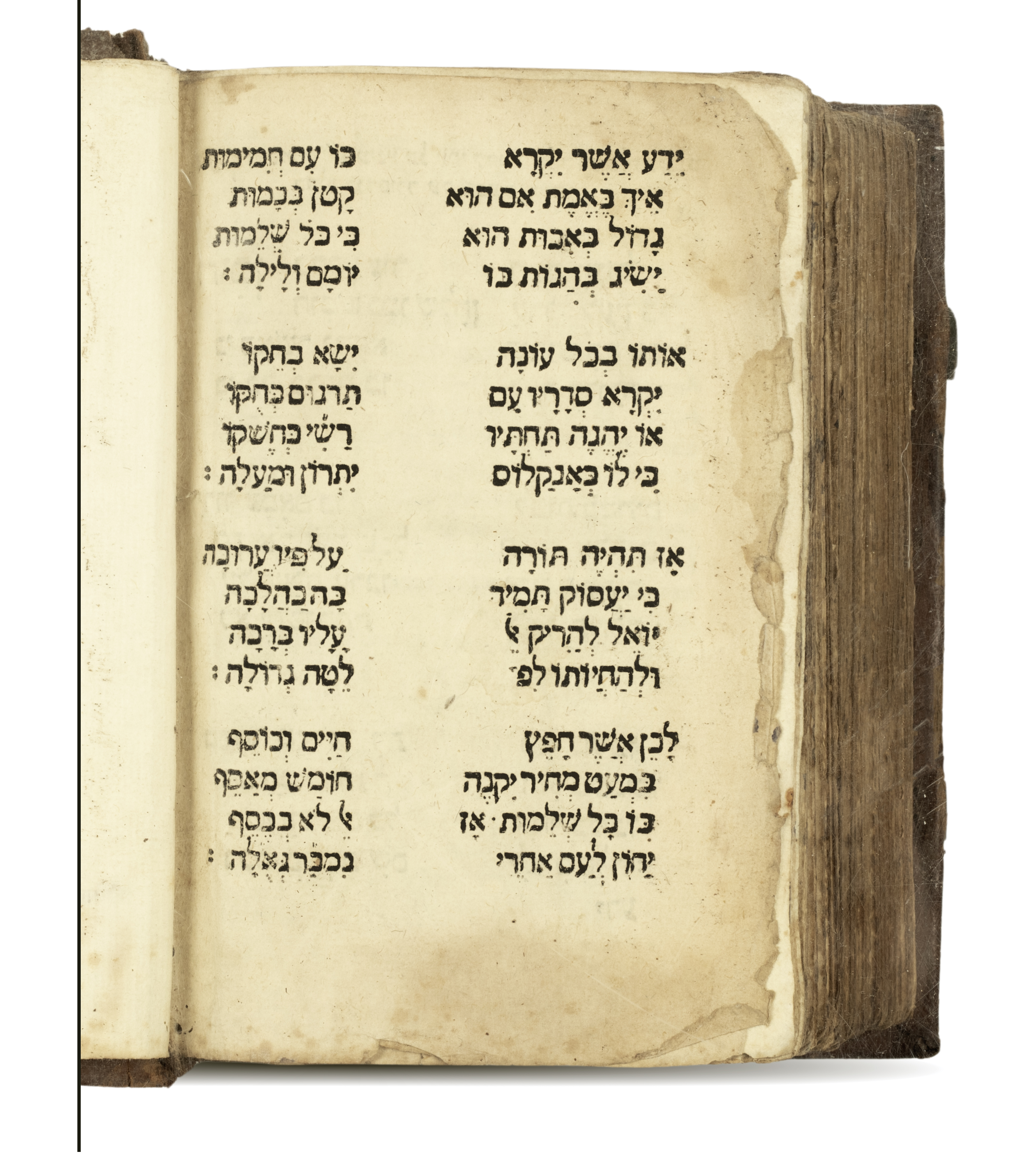
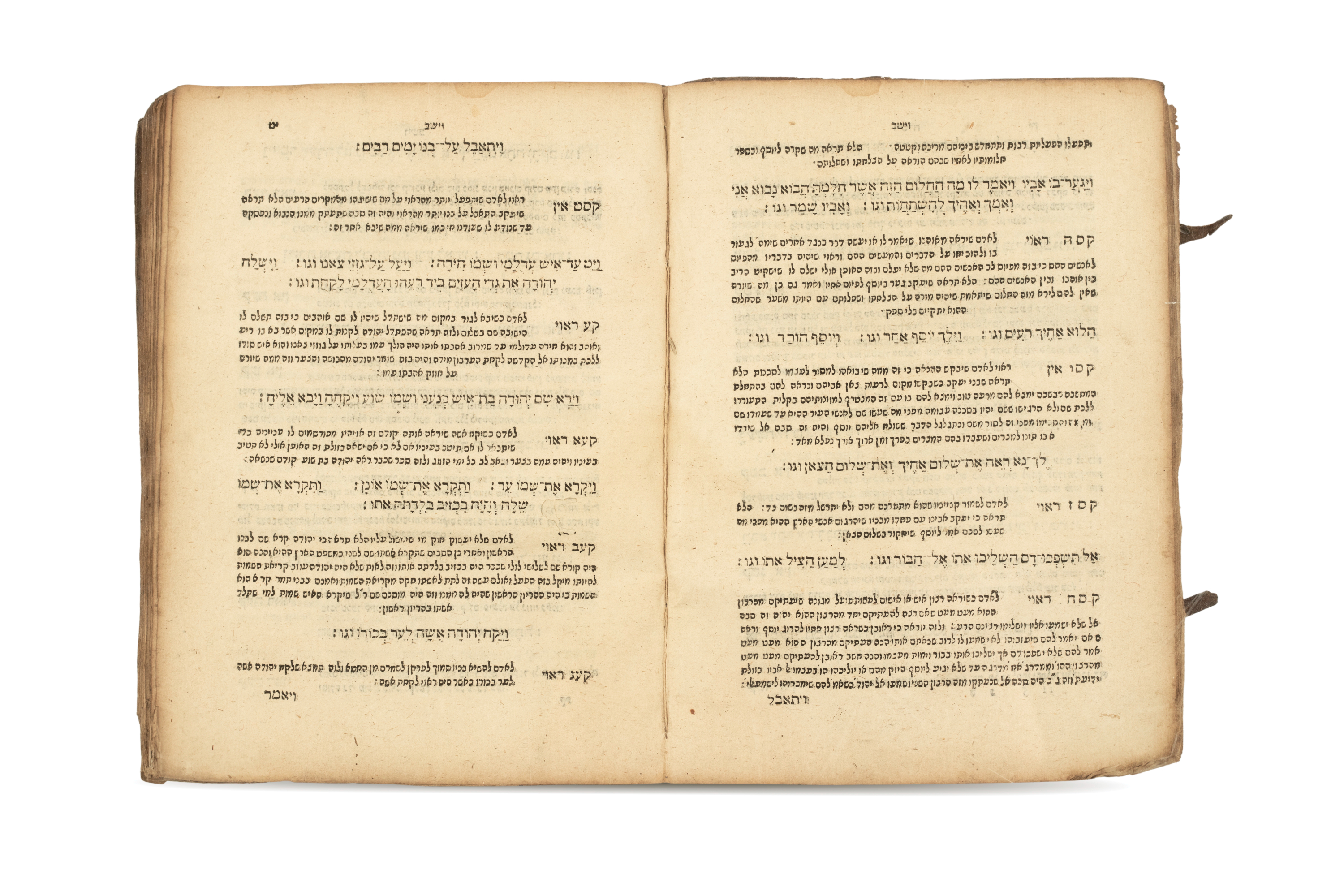
The present work is a unique anthology extracted from that commentary, containing the “to’aliyos” — the proper conduct expected of a person. Each section begins with the selected verse, followed by the corresponding lesson.
It contains a total of 364 to’aliyos on the Torah and 237 on Nevi’im Rishonim.
Rabbeinu Levi ben Gershon, the Ralbag (1288–1344), one of the sages of Provence, and one of the greatest Torah commentators, was described by the Rivash as “a great scholar of the Talmud who produced a fine commentary on the Torah and Nevi’im Rishonim” (Shu”t HaRivash, no. 45), while the Malbim wrote: “Who among those who labor in Torah and wisdom does not know the glorious stature of the Ralbag and his profound wisdom?”
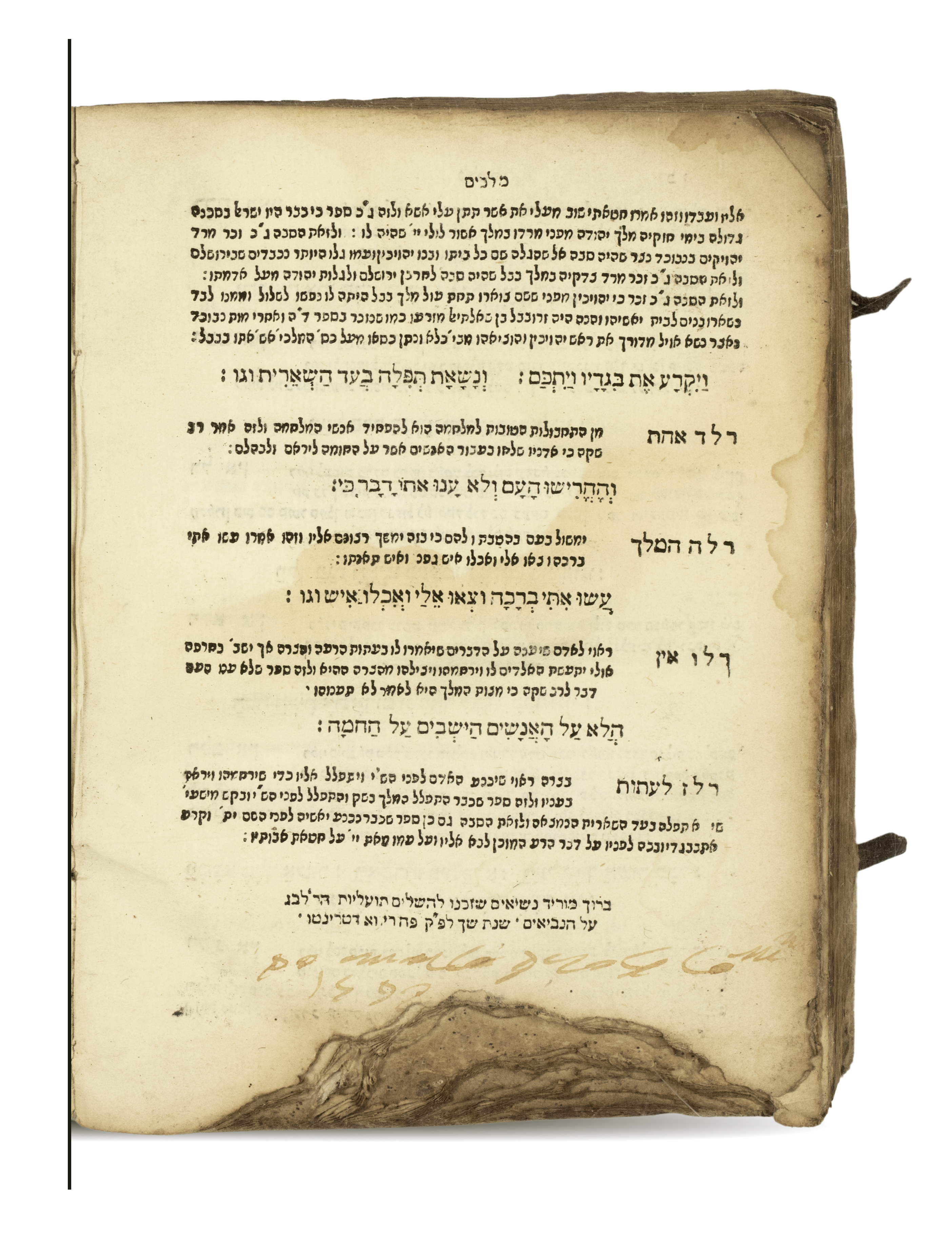
Riva di Trento, 1560. First edition of this anthology as an independent work. Page Count: 40; 27 leaves. Complete. Antique signatures.
Height: 19.5 cm.
Condition: Fair to poor. Losses at the bottom of the final leaves affecting the text. Wear at the margins, stains. The opening leaves are bound out of sequence. Antique vellum binding, damaged.
The title page features the word “Mezukak” in an early Italian handwriting.
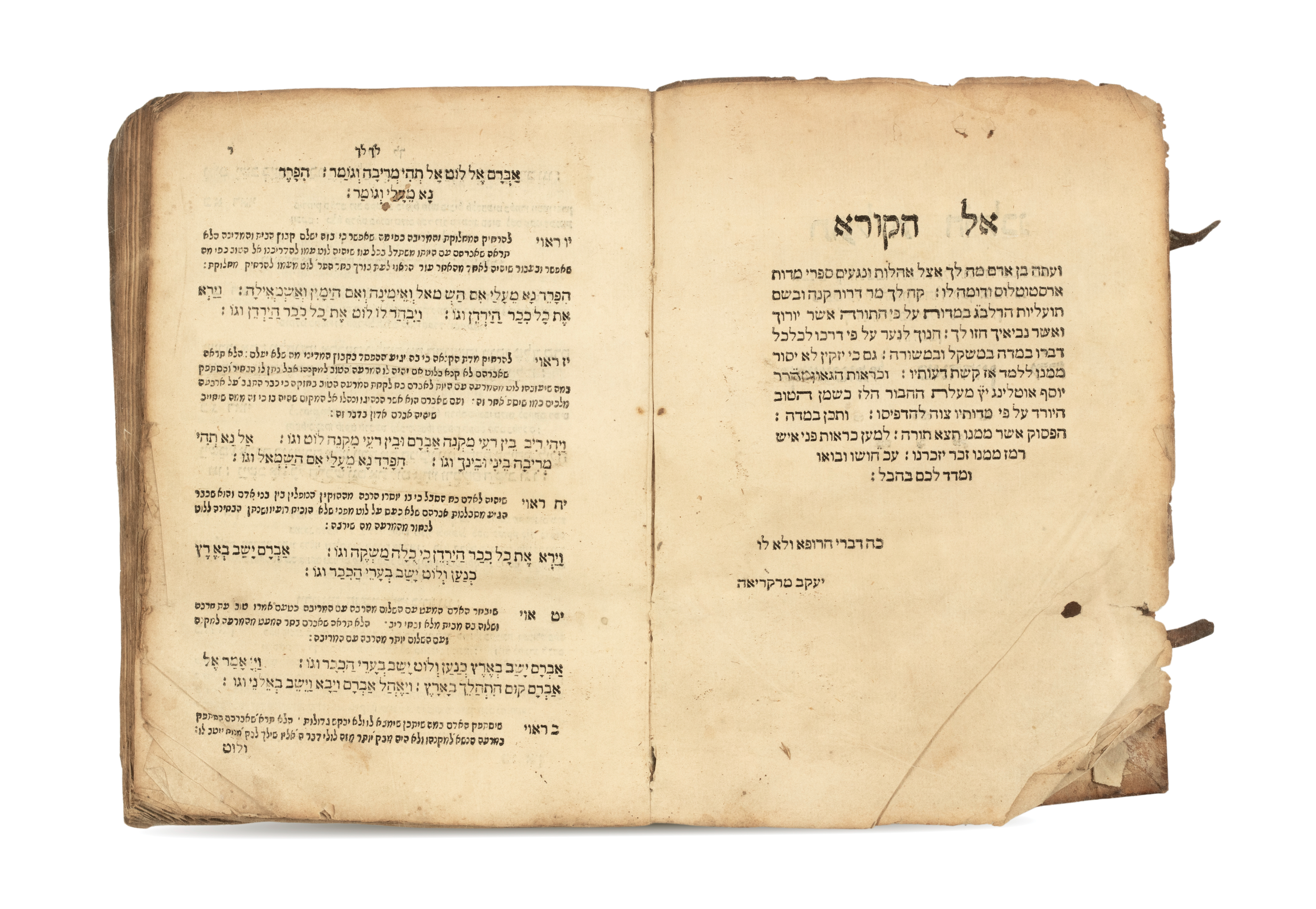
F. Sefer Yesod: Abarbanel’s commentary on the Torah. First edition.
The comprehensive and foundational commentary of Don Yitzchak Abarbanel on the Five Chumashim.
The work was widely embraced throughout the Jewish world and has remained a classic Torah commentary ever since its first publication.
Abarbanel himself regarded this commentary as the crowning achievement of all his writings. In listing his works, he wrote: “Foremost and greatest of all my works is my commentary on the Torah. It is a vast undertaking, more precious than pearls… into which I poured all my knowledge and understanding” (She’eilos by Rabbi Shaul HaKohen, Venice, 1574, fol. 12a).
The commentary is arranged as a series of questions and difficulties on each subject, followed by a comprehensive explanation that resolves them all. Throughout the work, Abarbanel interweaves fundamental principles of faith, philosophical insights, and ethical teachings.
Don Yitzchak Abarbanel (1437–1508), one of the greatest and most well-known Jewish scholars of the late Middle Ages, was a leading figure of Portuguese and Spanish Jewry during the Expulsion. His writings quickly became widespread, and several became enduring classics, including his commentaries on the Torah and the Haggadah.
Abarbanel first composed a separate commentary on Sefer Devarim, since few commentaries had been written on it (published as Merkavas HaMishneh, Sabbioneta, 1551). Later in life, he completed his commentary on the remaining Chumashim, and this is the work offered here.
The opening and closing pages include introductory remarks, concluding essays, and poems by the editor, Rabbi Shmuel Arkuvolti, and the publisher, Rabbi Asher Printz, material omitted from later editions.
Venice, 1579. First edition. Page Count: 425 [should read 424], [1] leaf.
Height: 28.4 cm.
Condition: Good-fair. Minor repairs and holes. Stains. Old binding with clasps (no longer functional).
Bibliography: Stefansky, Sifrei Yesod, no. 12.
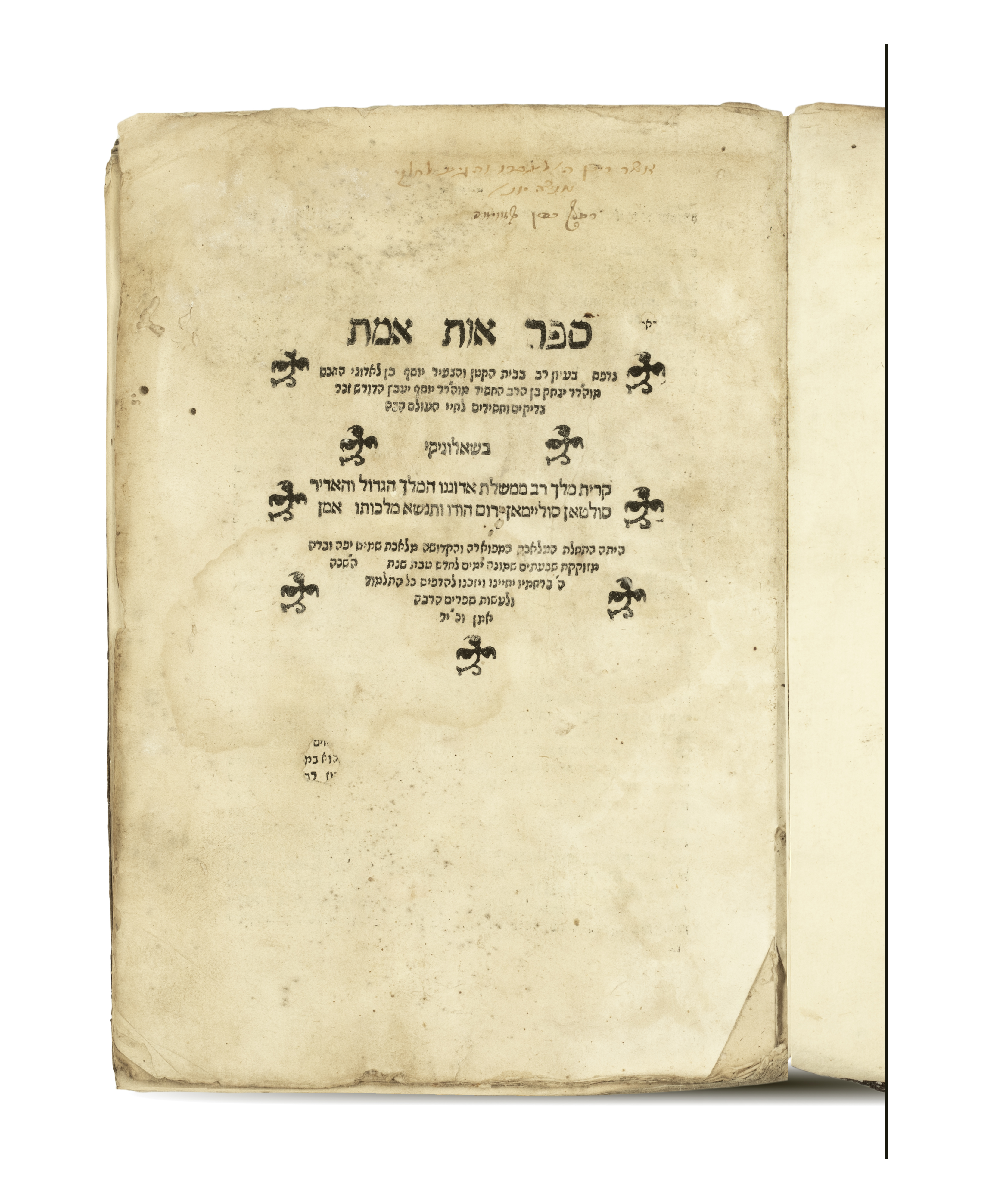
G. Os Emes — important glosses on the texts of the Midrashim and the prayers.
Glosses and textual corrections to several Midrashic works, together with corrections to the prayer text, by Rabbi Meir ben Ban Benveniste.
This was the first work devoted to establishing the correct text of the Midrashim, and many of its emendations were subsequently incorporated into the standard printed text.
The glosses cover the Midrashim of: Mechilta, Sifra, Sifrei, Midrash Rabbah, Tanchuma, Midrash Shmuel, Tehillim, Mishlei, and Yalkut Shimoni.
The end of the volume contains numerous glosses to the siddur (nusach Sephard). Many were accepted throughout the Jewish world — including Ashkenazic communities — and were relied upon by leading poskim.
Some of the glosses to the siddur were taken from the personal siddur of Rabbi Shlomo Alkabetz, author of Lecha Dodi.
Salonika, 1565. First edition. Page Count: 182 leaves. Complete.
Height: 21.4 cm.
Condition: Fair to good-fair. Wear and holes to the opening and closing leaves. Antique leather binding, damaged.
Bibliography: Stefansky, Sifrei Yesod, p. 87 (Addenda).
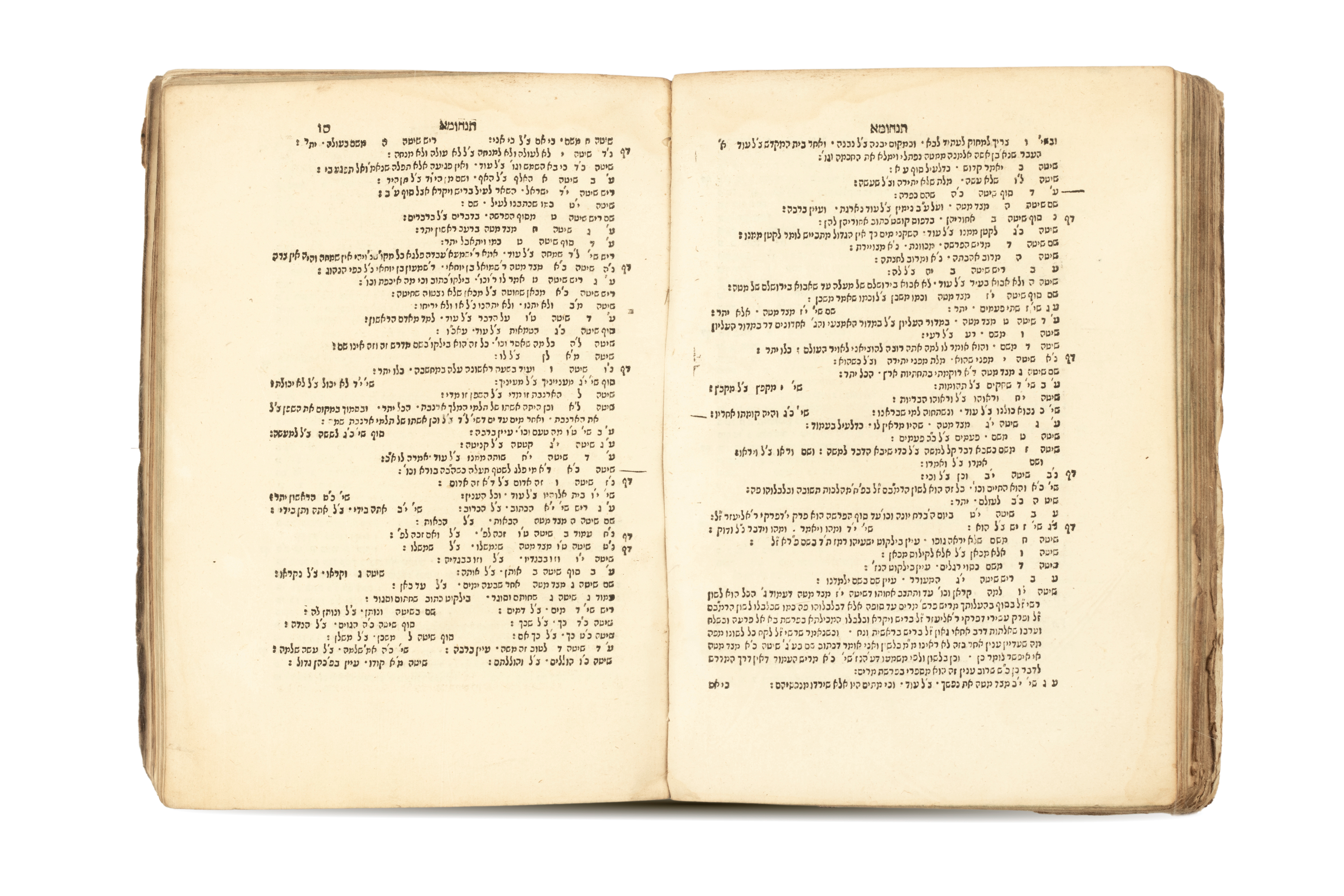
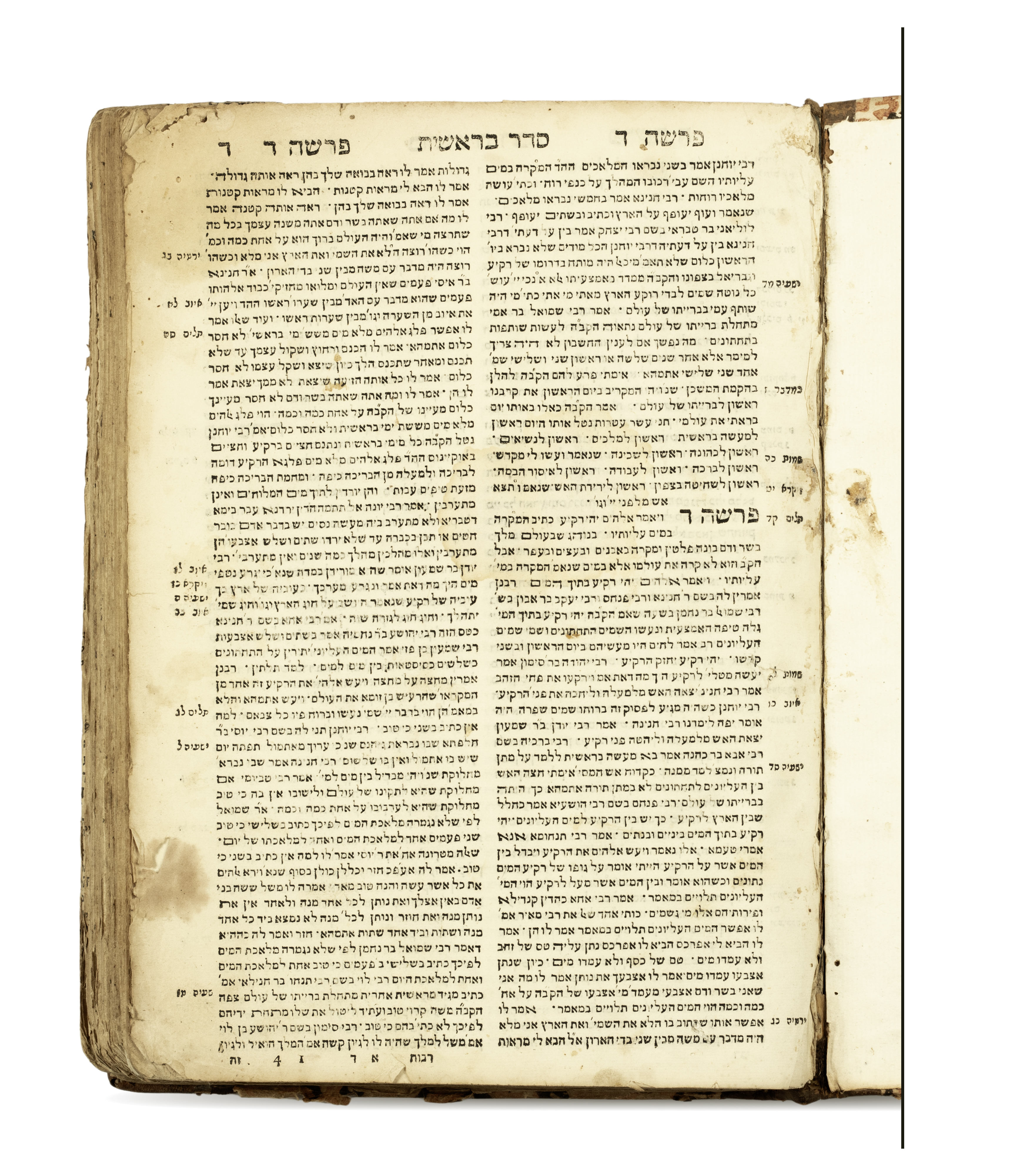
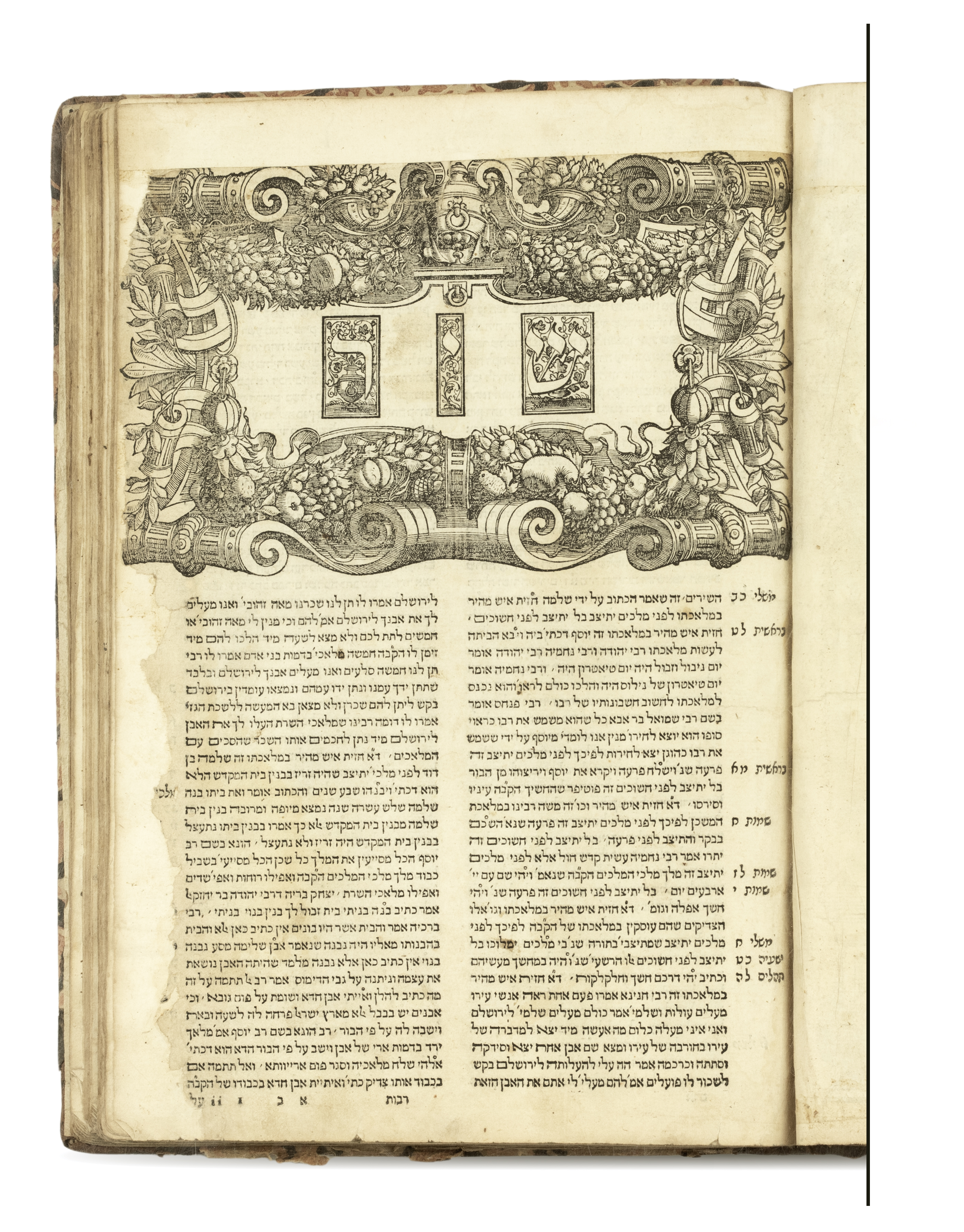
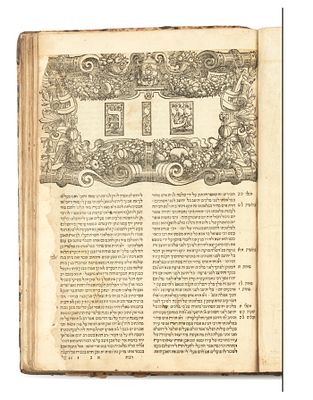
H. Midrash Rabbah on the Five Books of the Torah. At the end, with a separate title page: Midrash Rabbah on the Five Megillos.
One of the most important and foundational Midrashic works in Jewish literature.
This volume contains Midrash Rabbah on the Torah from the Venice 1603 edition, without the Midrash Rabbah on the Five Megillos that was printed in that edition. In its place, Midrash Rabbah on the Five Megillos from the Venice 1545 edition has been bound.
Midrash Rabbah on the Five Megillos was first printed in Pesaro in 1519 and is exceptionally rare. The present copy is its second edition.
The Institute for Hebrew Bibliography notes that although Midrash Rabbah on the Five Megillos was printed by Giustiniani, “in every copy we examined, the printer’s name was omitted from the title page, although the decorative border is Bomberg’s.”
The present copy preserves the original, exceptionally scarce Giustiniani title page, with its beautiful decorative border and the printer’s name explicitly stated: “Marco Antonio Giustiniani.”
Midrash Rabbah on the Torah: Venice, 1603.
Page Count: 4–209 leaves. Incomplete copy.
A total of 3 leaves are missing: [1–3].
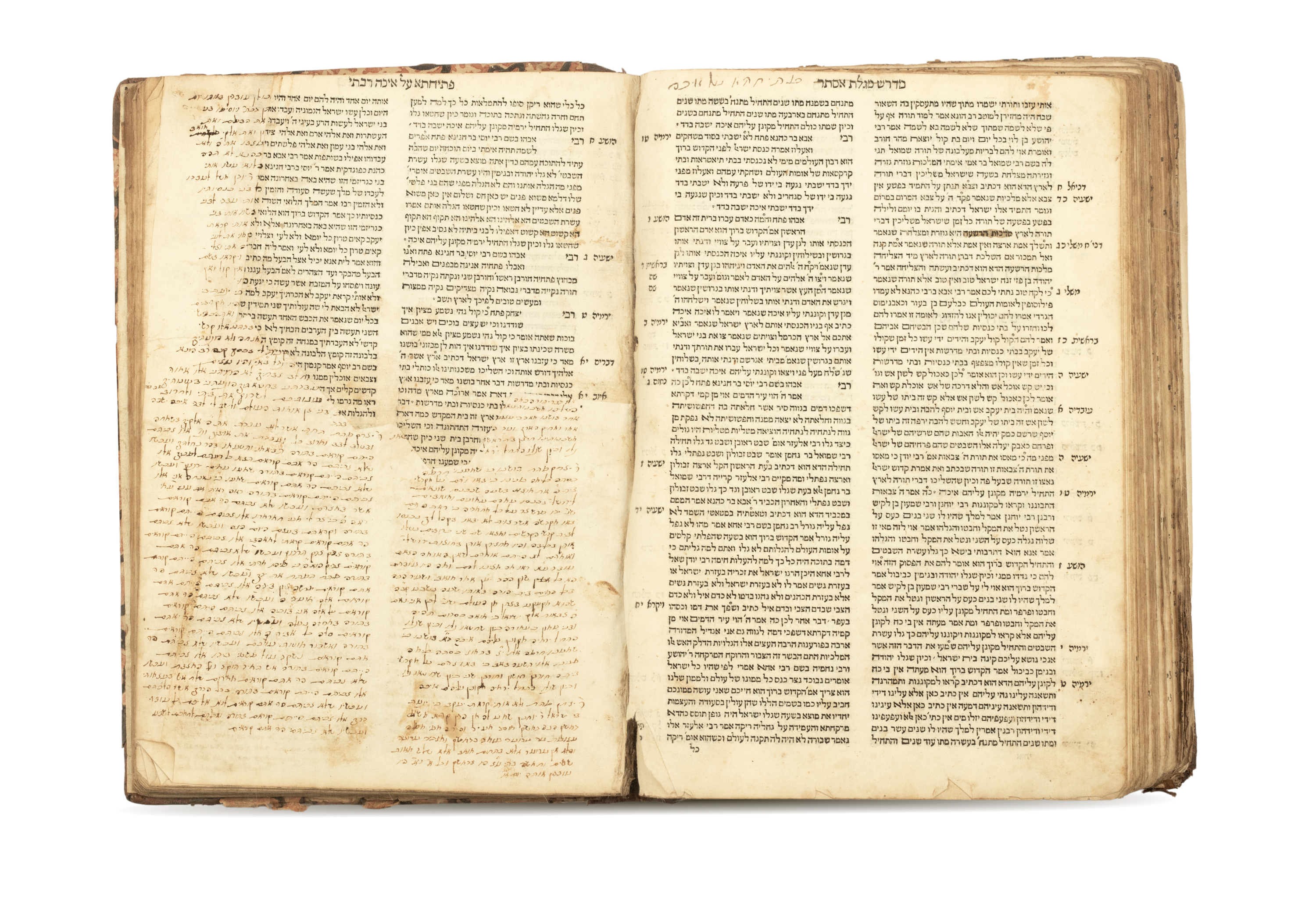
Midrash Rabbah on the Five Megillos: Venice, 1545. Page Count: 84 leaves (should read 90). Complete.
Height: 28.4 cm.
Condition: Fair to fair-poor. Tears with loss on several leaves, with handwritten completions. Numerous repairs. Margins trimmed with loss at the edge of the text. Wear and stains.
On the verso of the title page of Midrash Rabbah on the Five Megillos appears the ownership inscription: “This book belongs to Rabbi Meir Bakki, Rav of the state of Casale Monferrato.” Rabbi Meir, son of Rabbi Shimshon Bakki, was one of the Italian rabbanim of the early eighteenth century and served as Rav of Casale.
Bibliography: Midrash Rabbah on the Five Megillos: Stefansky, Sifrei Yesod, no. 128, note.