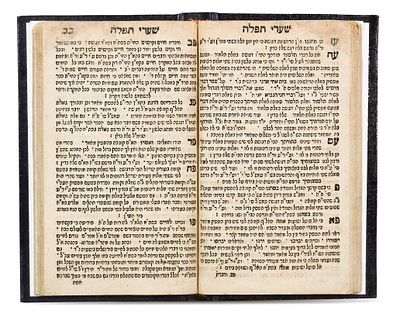
The Sefer That Shaped the Nusach of the Prayers:
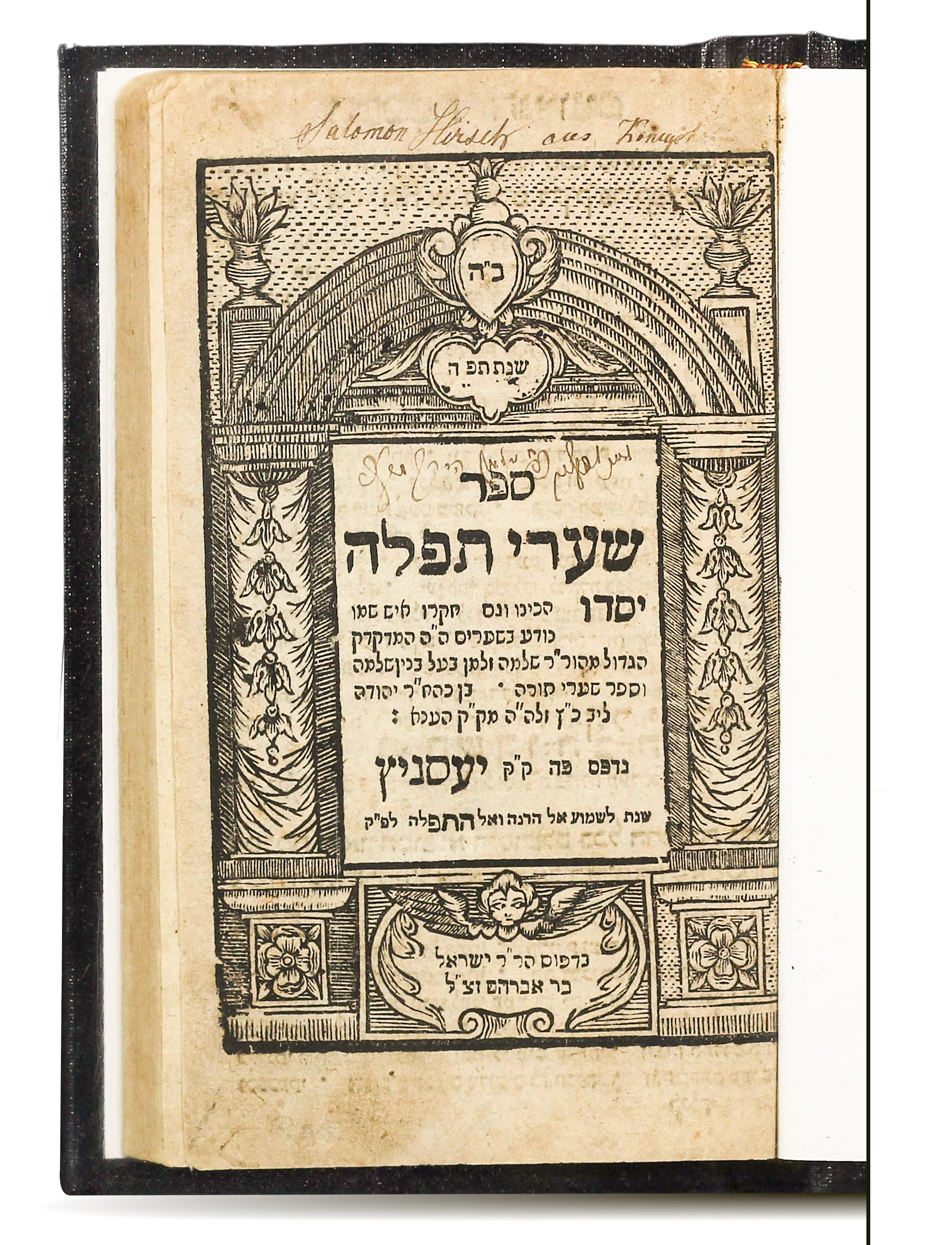
Sha’arei Tefillah,
Jessnitz, 1725. First Edition.
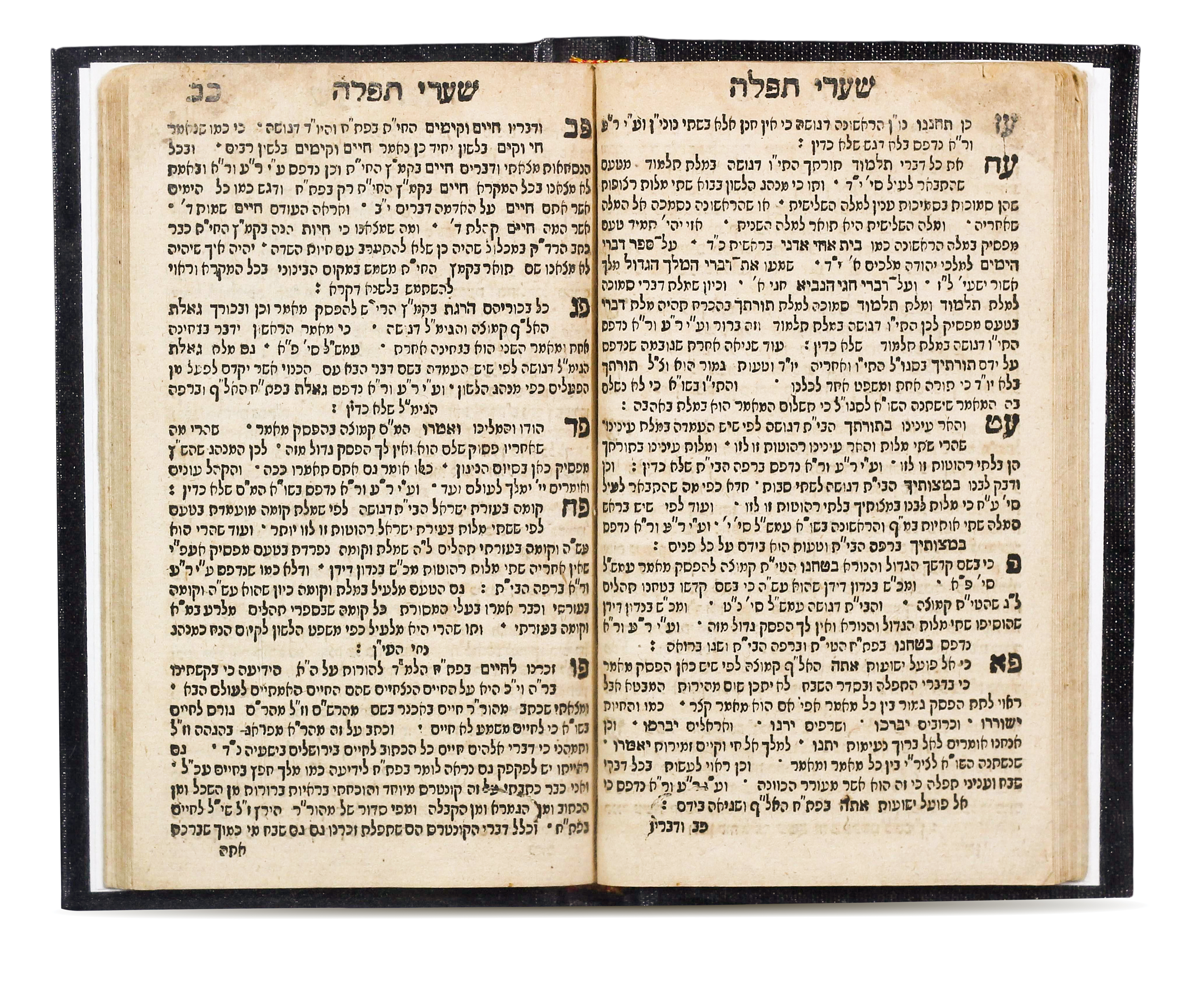
A unique work arranged according to the order of the prayers, presenting explanations and grammatical analyses of the prayer text.
It was authored by the renowned grammarian Rabbi Shlomo Zalman Hanau, universally known by the acronym: Raza”h.
This work serves as the companion volume to the foundational siddur ‘Beis Tefillah, ’ which the Raza”h published in the same year and which exerted an enormous influence on the nusach of the Jewish prayers.
The siddur itself was intended to contain only the prayer text according to the Raza” h’ss version, without commentary, so as not to distract the concentration of the person praying. Sha’arei Tefillah was therefore published as the explanatory companion volume for those wishing to study the reasoning behind his text, containing no prayers themselves.
Many of the textual variants and grammatical refinements that the Raza”h established in his siddur, and which are explained in the present Sha’arei Tefillah, were adopted into numerous later editions of siddurim and remain part of the prayer text to this day.
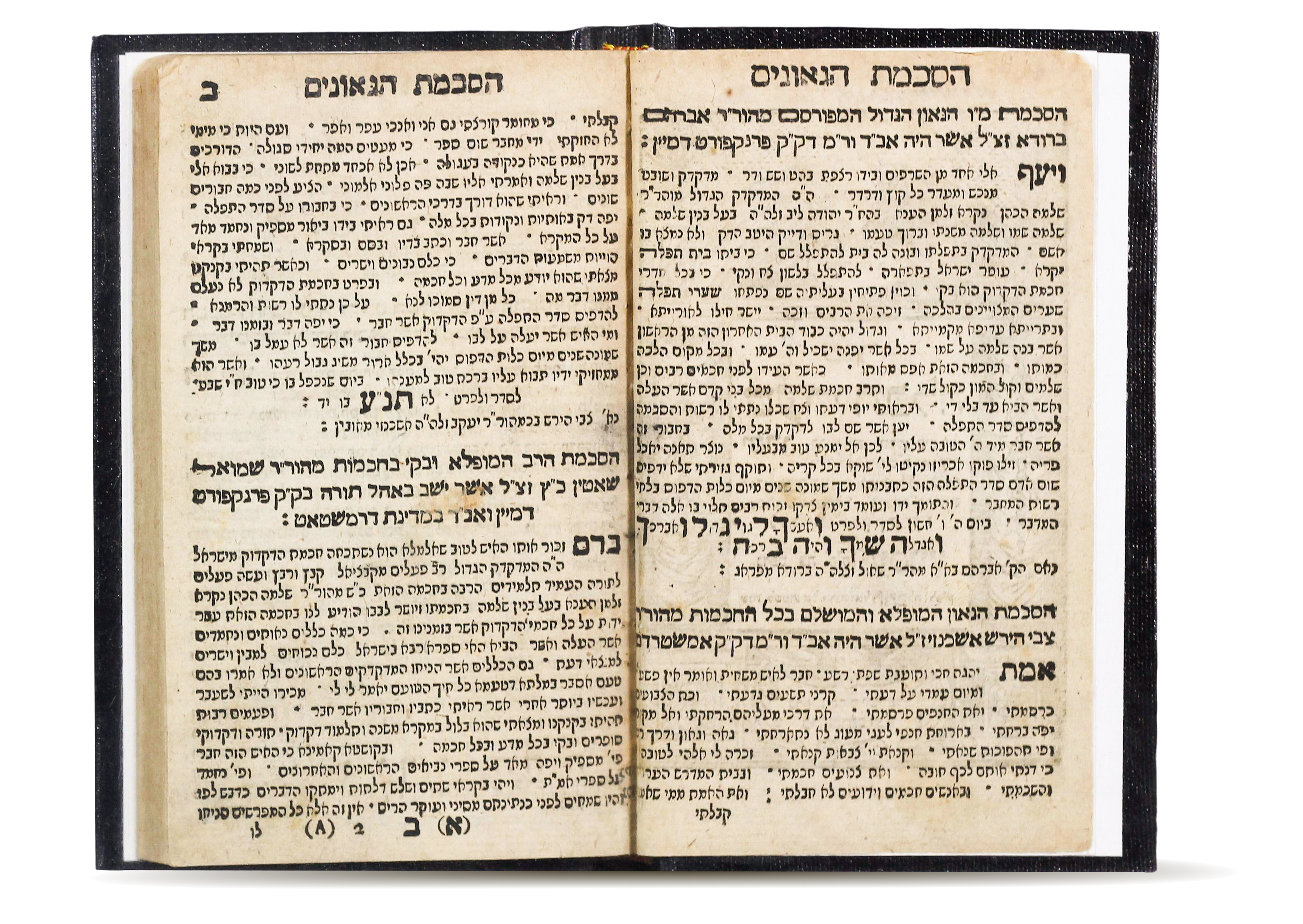
At the beginning of the sefer appear approbations from Gedolei Hador, including the Chacham Tzvi and Rabbi Avraham Broda of Prague. However, some of these approbations have been suspected of being forgeries.
The sefer sparked a major controversy and was sharply criticized by many grammarians.
The leading opponent was the Yaabetz, who referred to it as “Tza’arei Tefillah” (“Sorrows of Prayer”) and demanded that his father’s approbation, that of the Chacham Tzvi, be removed from all copies, claiming that it had been forged.
See below for a detailed account of this controversy.
Rabbi Shlomo Zalman Hanau (1687–1746), known as the Raza”h, was one of the foremost Ashkenazic grammarians among the Achronim. His reputation spread widely, and many of the revisions he proposed to the text of the prayers became permanently incorporated into the order of prayers as it is recited today (see Sifrei Yesod, Appendix: Sha’arei Tefillah, no. 10).
He was born in the town of Hanau near Frankfurt, and he started studying Hebrew grammar at a young age.
Although some of his contemporaries criticized him, at times with exceptional sharpness — most notably the Yaabetz — his scholarship generally received an ambivalent reception: he was highly respected even by those who disputed many of his conclusions. Indeed, the Yaabetz himself occasionally acknowledged that the Raza”h was correct on particular points. See, for example, the approbation of the Noda B’Yehuda to Kuntres Hasagos on the Raza” h’s siddur.
Jessnitz, 1725. First edition.
Page Count: 47, [1] leaves.
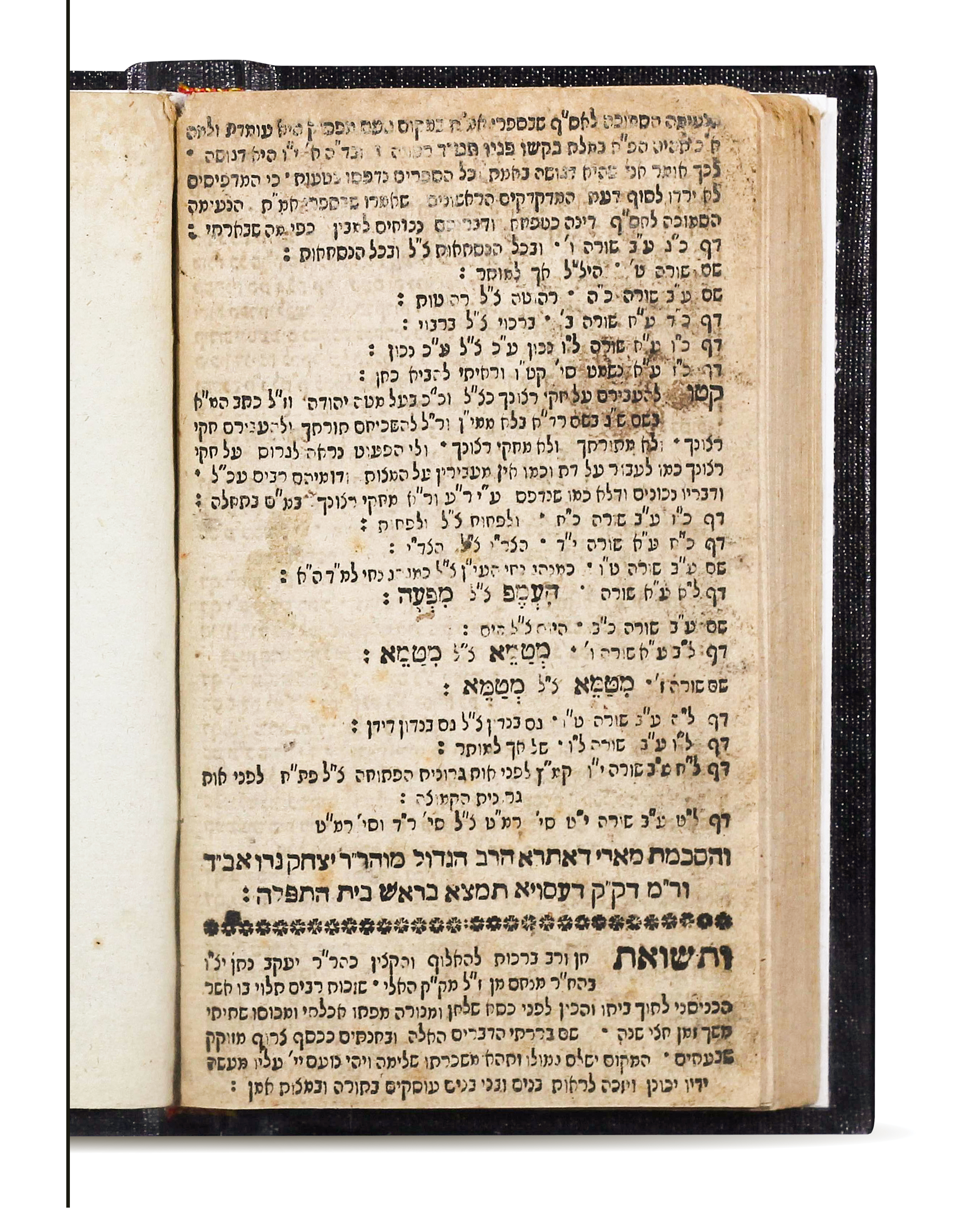
Condition: Good. Wear to the corners of the leaves. New binding.
Bibliography: Stefansky, Sifrei Yesod, no. 414, in note.
– – – – – – – – – –
The Raza”h’s Siddur, Sha’arei Tefillah, and the Great Controversy
The Raza”h devoted himself to Hebrew grammar from a remarkably young age and quickly earned a reputation as one of the foremost authorities in the field.
In 1704, a siddur was published by the grammarians Rabbi Azriel of Vilna and his son Rabbi Eliyahu. Owing to its great importance, the leading rabbanim of the generation instructed that teachers should teach their students and conduct prayers using this siddur alone—a virtually unprecedented development.
The young Raza”h challenged this siddur, arguing that it contained numerous serious grammatical errors. While still only about twenty years old, he published a critique entitled Binyan Shlomo. The sharp language he employed against several prominent rabbanim provoked a public outcry, forcing him to publish a separate printed apology.
Rabbi Azriel and his son responded by issuing revised editions of their siddur in 1713 and again in 1721. In these editions they answered some of the Raza” h’s criticisms, although they retained many of the things that he had challenged.
The Raza”h therefore published his own siddur, Beis Tefillah, prepared according to his grammatical principles, together with the companion volume Sha’arei Tefillah (the present work). The siddur was intended to contain only the daily prayers without commentary, while Sha’arei Tefillah presented detailed explanations and discussions arranged according to the order of the prayers.
Anyone wishing to understand why the Raza”h adopted a particular wording or vocalization in his siddur could consult the corresponding section of Sha’arei Tefillah, where his reasoning and grammatical principles were explained.
The Raza”h first published Sha’arei Tefillah, and only shortly afterward issued the siddur itself. Although he had originally intended the siddur to contain nothing beyond the prayer text, he ultimately added further notes at the foot of the pages responding to additional arguments against Rabbi Azriel and his son that had occurred to him after Sha’arei Tefillah had already gone to press.
The Controversy
Immediately upon its publication, the sefer ignited a major controversy among Hebrew grammarians, led by the Yaabetz, who devoted an entire work, Luach Eresh, to refuting the Raza” h’s methodology with hundreds of sharply worded criticisms.
A major source of the dispute was that the Raza”h formulated his own grammatical system even when it required departing from ancient prayer traditions established by earlier authorities whenever he believed those texts to be grammatically incorrect.
His opponents also accused him of forging the approbations printed at the beginning of Sha’arei Tefillah and of selectively adapting his sources to support his own conclusions.
The Yaabetz composed Luach Eresh while still a young man but delayed its publication until late in his life, in 1769. Even before the work appeared in print, however, he had already alluded pointedly to the Raza”h in his sefer Lechem Shamayim, published in Altona in 1733.
The Raza”h responded that same year by publishing his sefer Tzohar LaTeivah (Berlin, 1733), to which he appended a supplement entitled Michseh LaTeivah, defending his position and answering theYaabetz’ss criticisms. (A copy of this work belonging to the author himself, containing his autograph glosses, appeared in Genazym Auction 17, Lot 41.)
The Yaabetz also inserted sharp references against the Raza”h in his famous siddur Amudei Shamayim, including cross-references to Luach Eresh.
The second part of Luach Eresh was published in the Yaabetz’s sefer Etz Avos in 1751.
The complete text of Luach Eresh did not appear until 1769, many years after the Raza” h’s passing and only a few years before the death of the Yaabetz himself.
Despite the intensity of the controversy, substantial portions of the Raza” h’s approach ultimately became accepted and were incorporated into the traditional text of the siddur for generations to come.
A comprehensive account of the entire episode appears in the introduction to the Otzareinu edition of Luach Eresh (Jerusalem, 2001), from which most of the details presented above are drawn.
That edition also includes the expanded second edition of the study “The Grammarian the Raza’h and His Forgeries”, together with additions and a response to Pinkover’s critique of the article’s first edition (see Institute for Hebrew Bibliography, record no. 118735).