Lot : 82

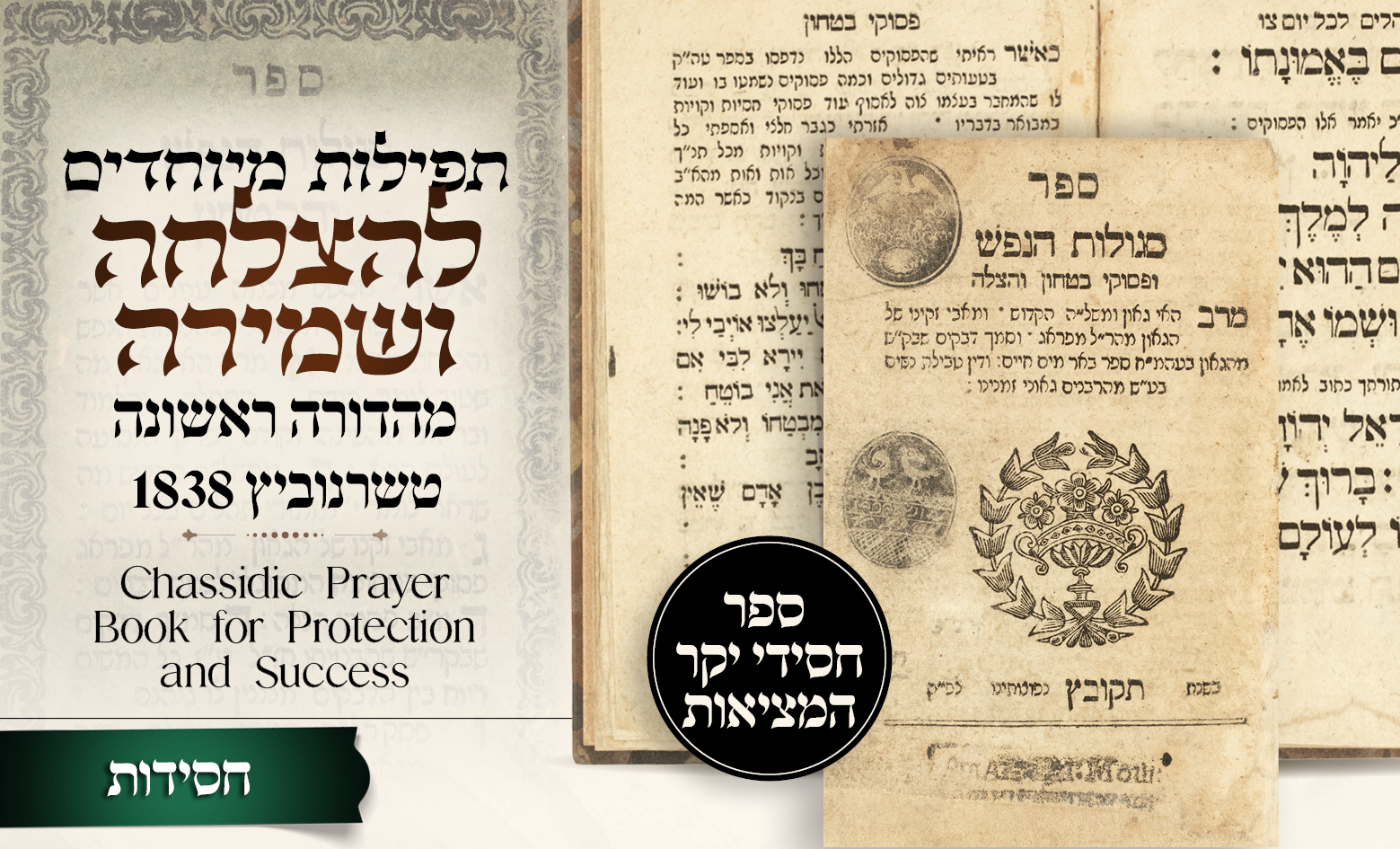
Rare Chassidic Prayers for Protection and Success.


Segulos HaNefesh VehaBitachon.

Exceptionally Rare Chassidic Print

Chernowitz, 1838. First Edition.

Lot : 82

Rare Chassidic Prayers for Protection and Success.


Segulos HaNefesh VehaBitachon.

Exceptionally Rare Chassidic Print

Chernowitz, 1838. First Edition.

Opening bid: $8,000

Rare Chassidic Prayers for Protection and Success.


Segulos HaNefesh VehaBitachon.

Exceptionally Rare Chassidic Print

Chernowitz, 1838. First Edition.


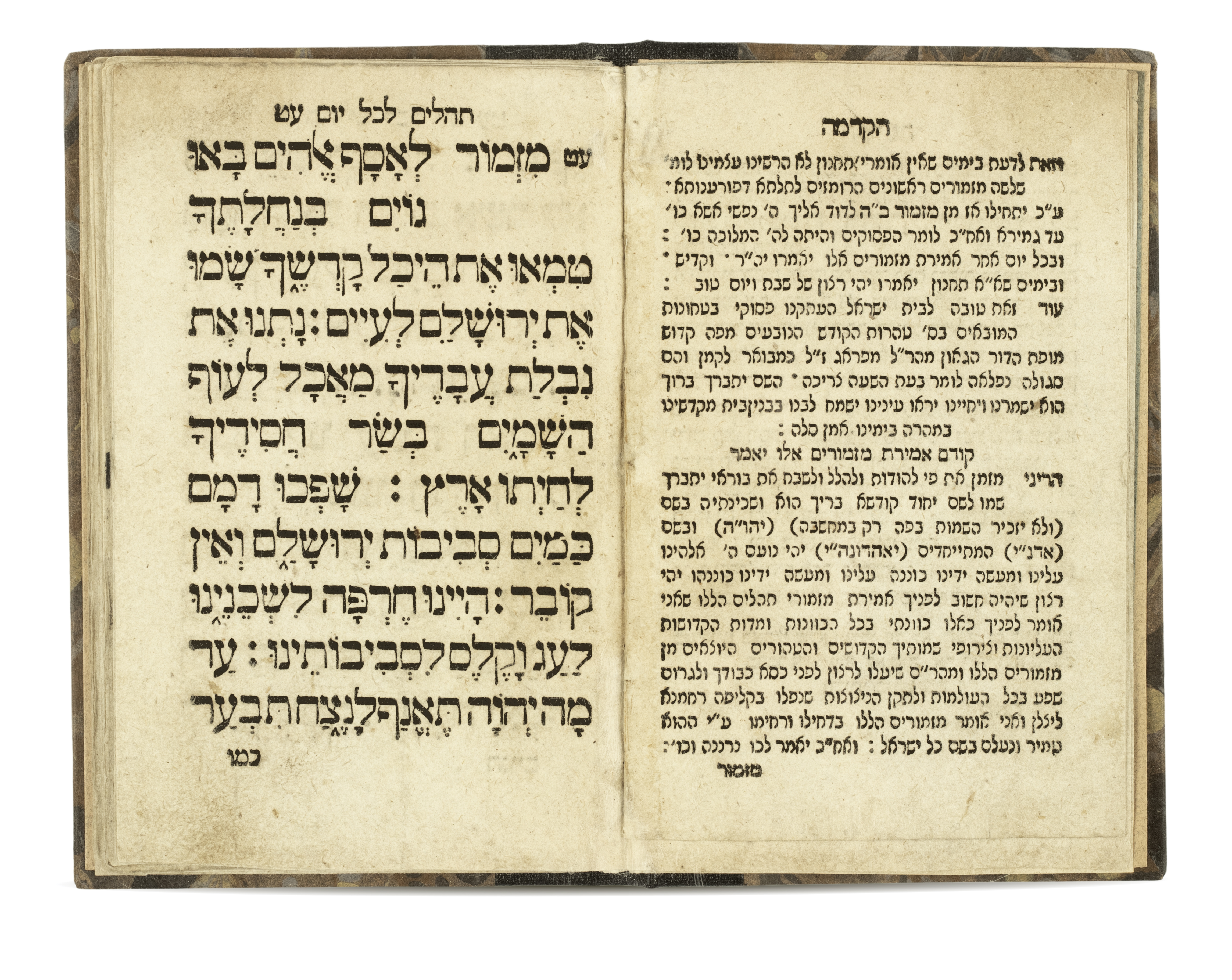
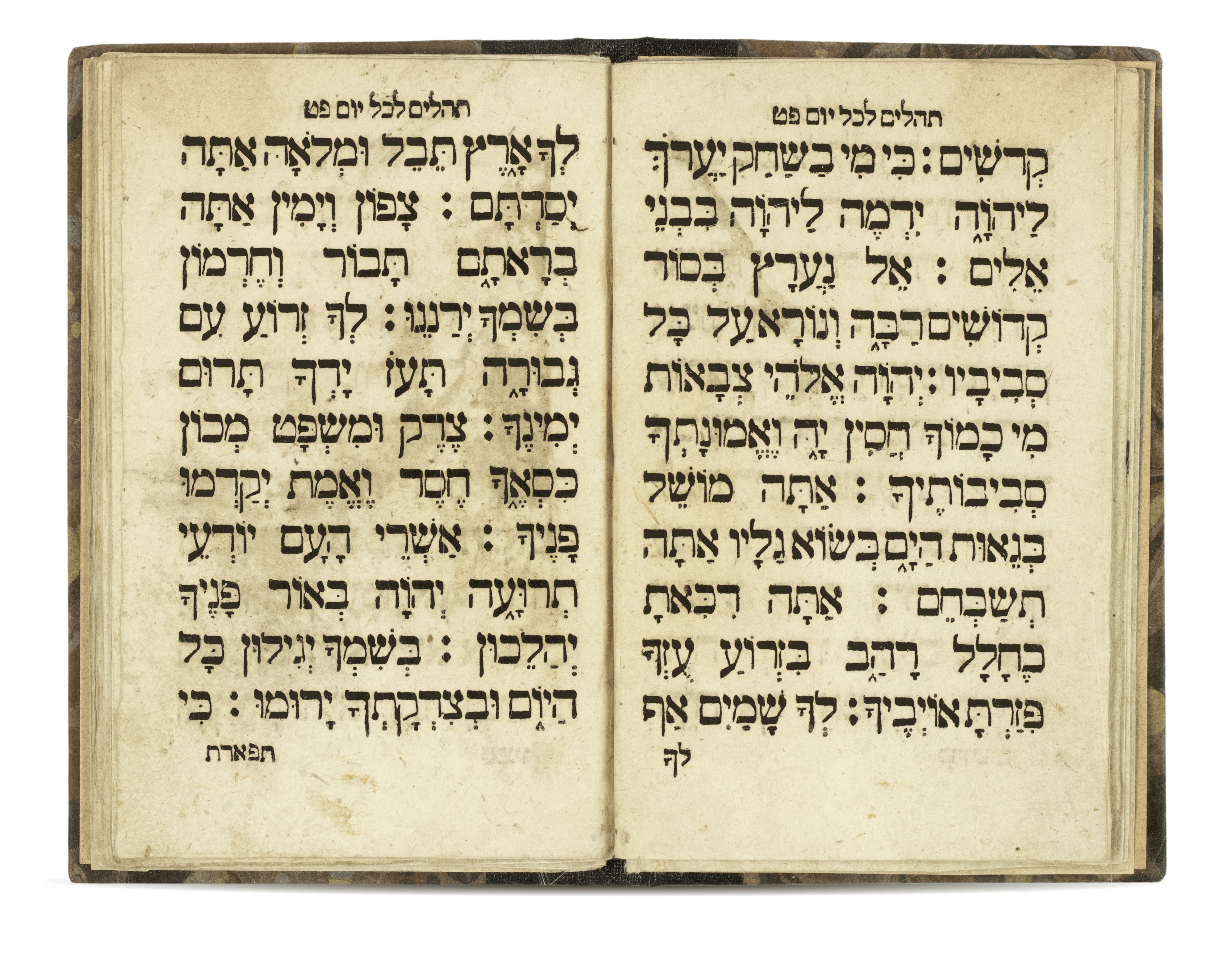
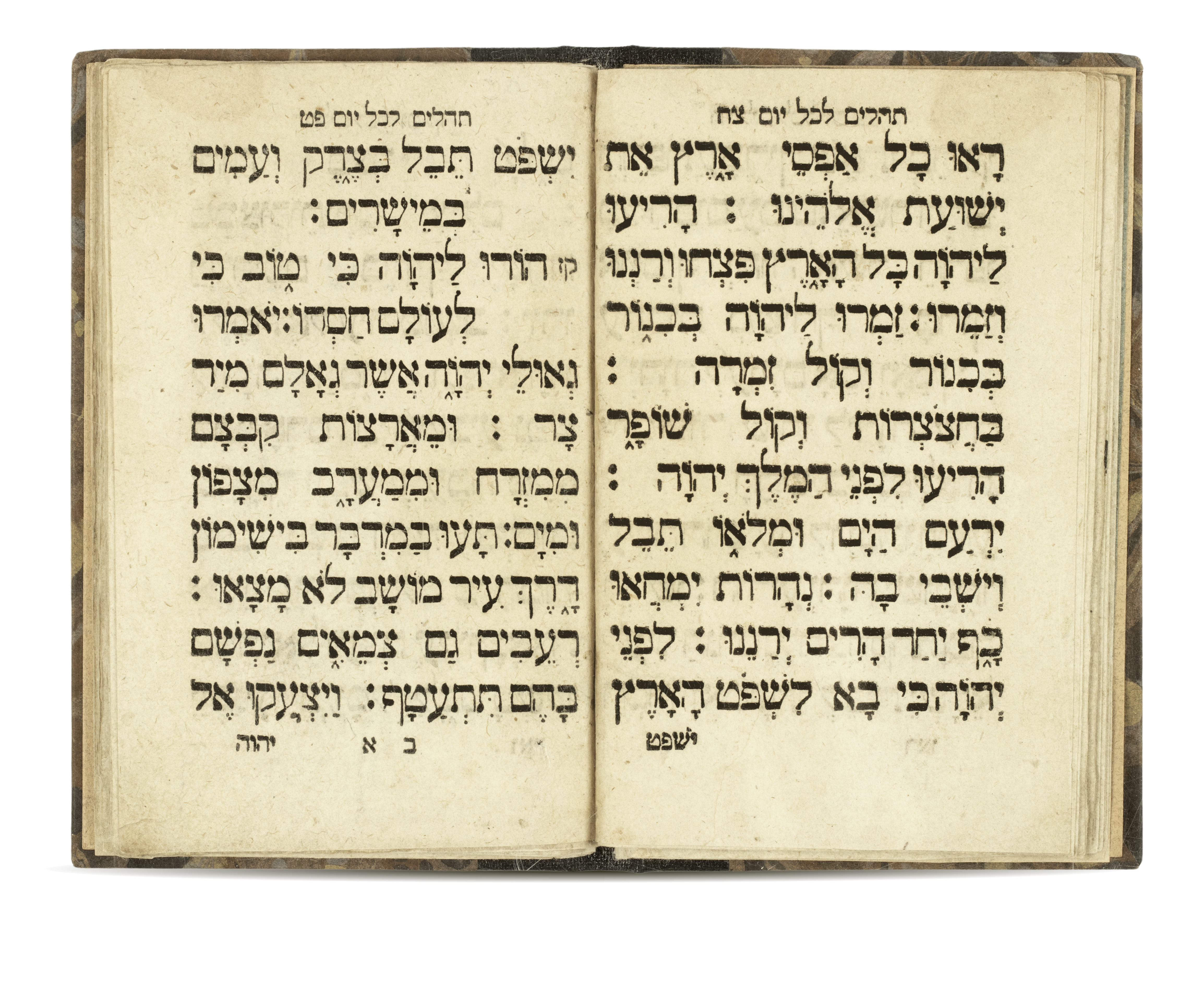
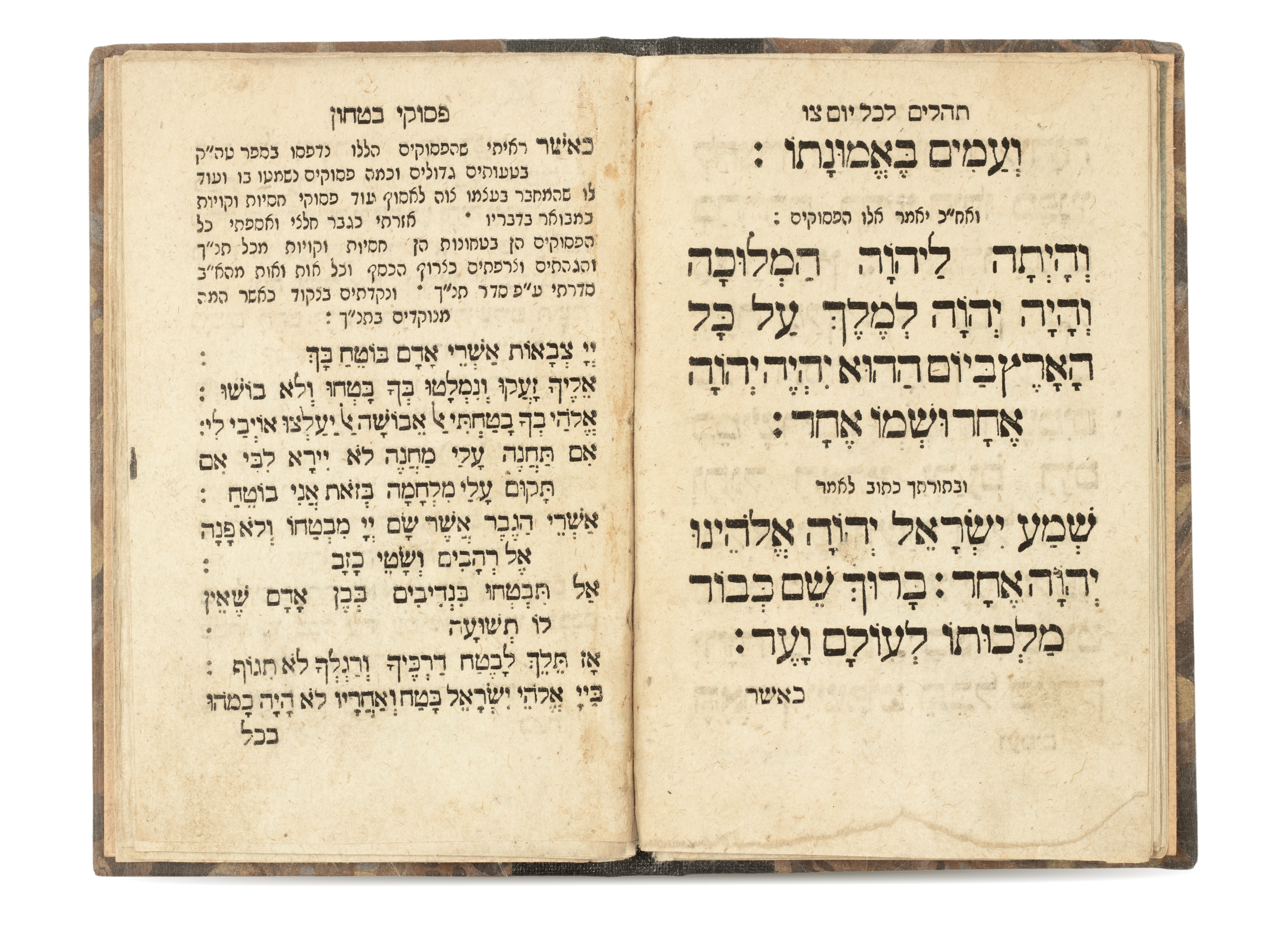
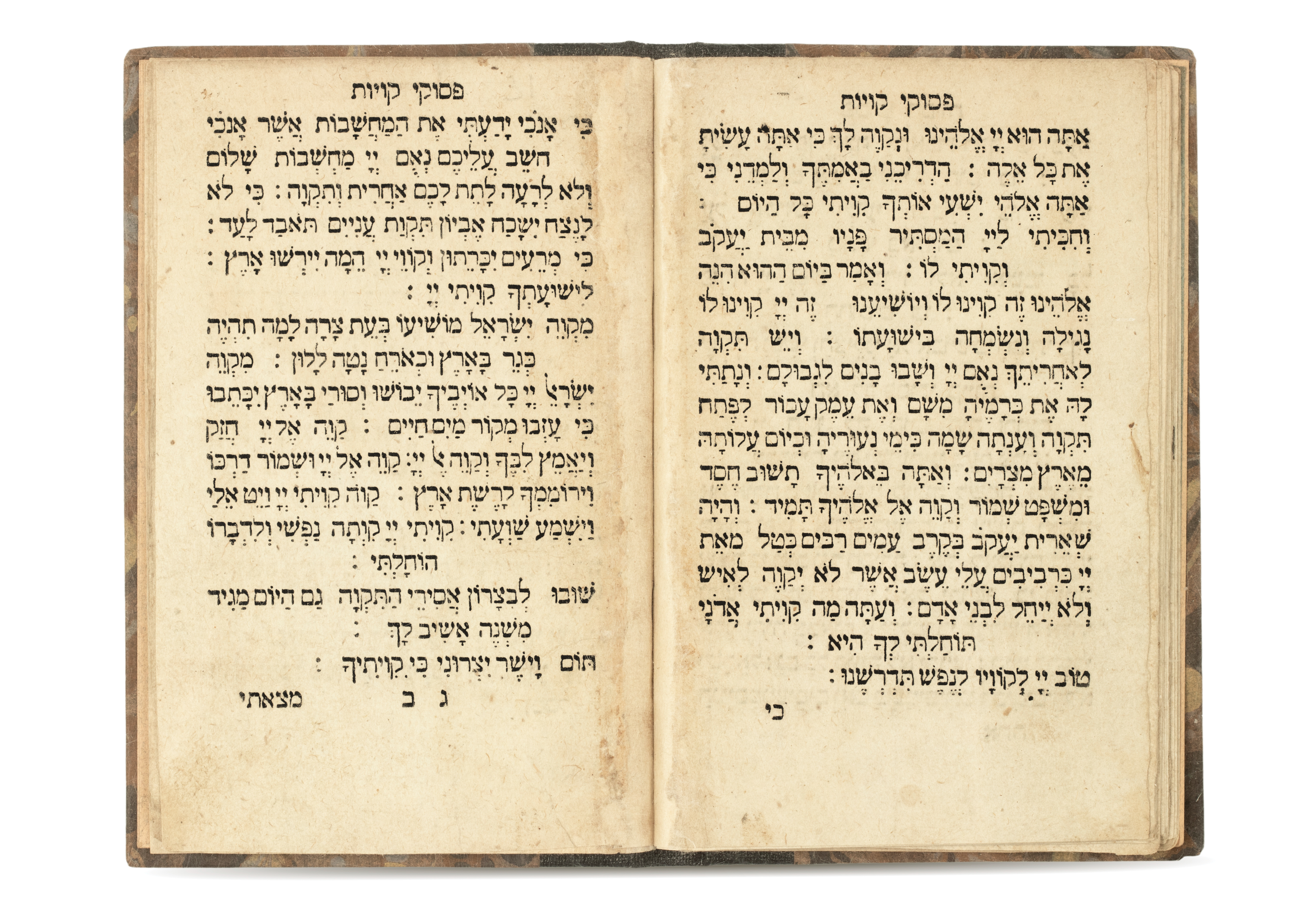
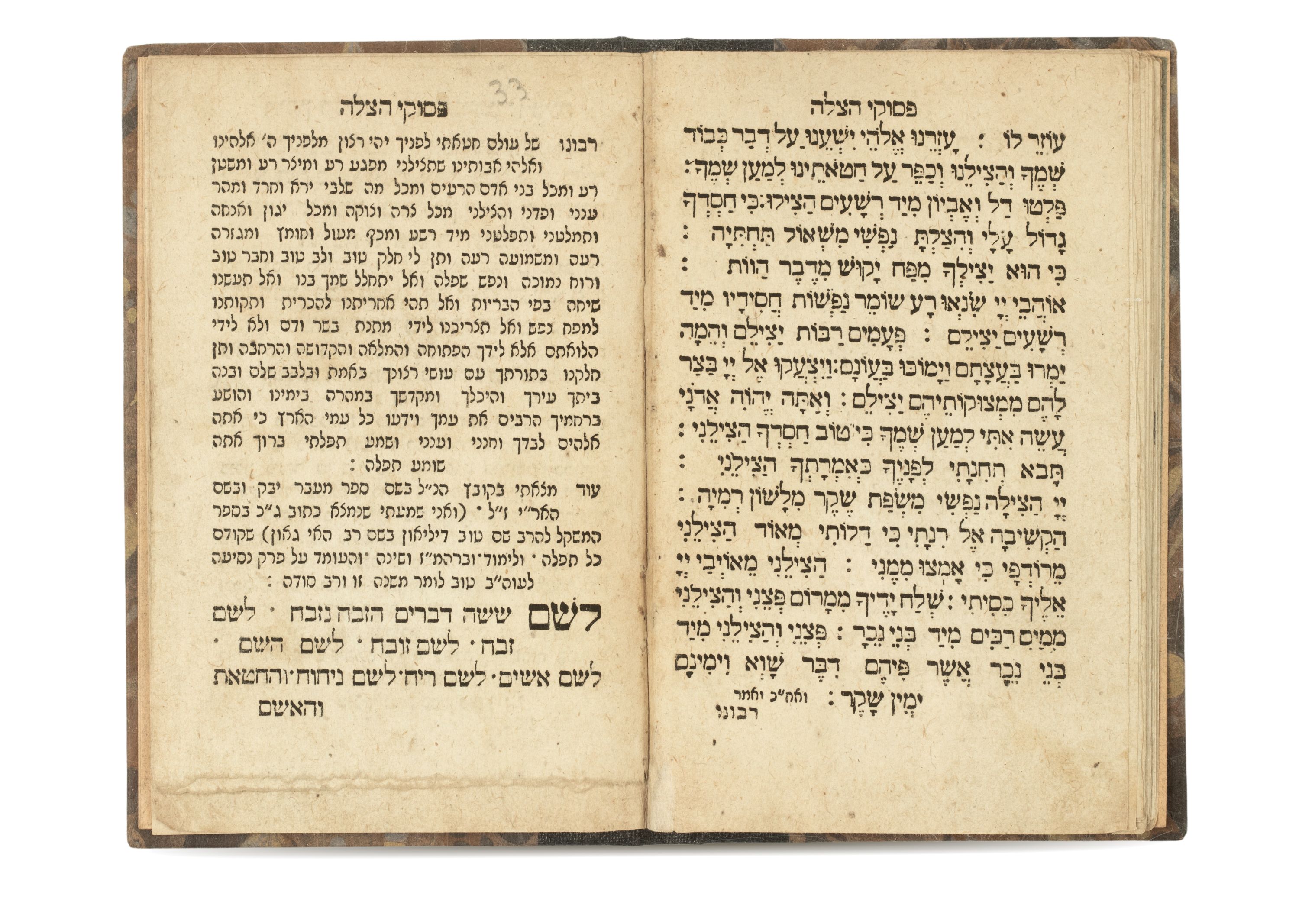
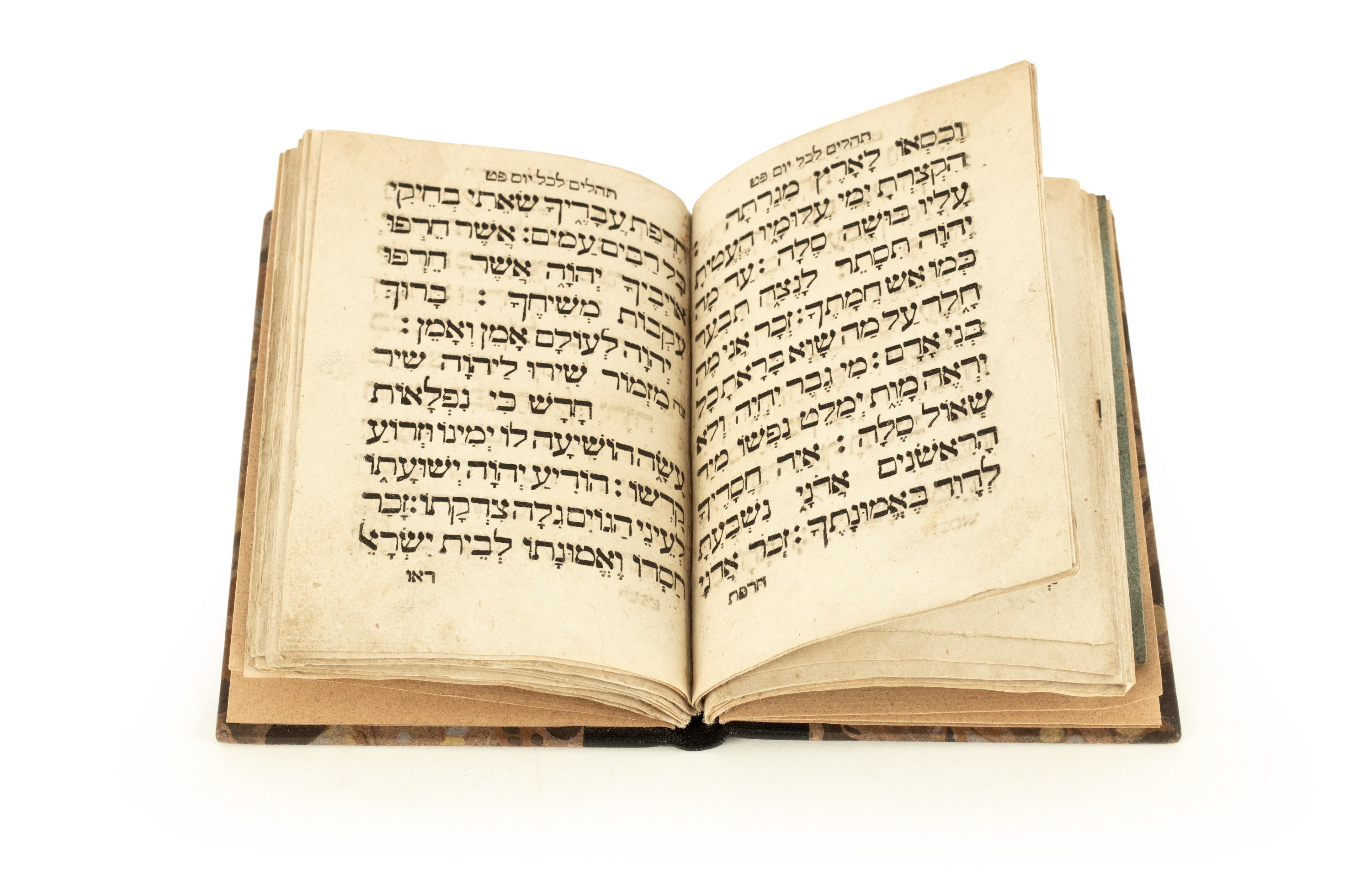
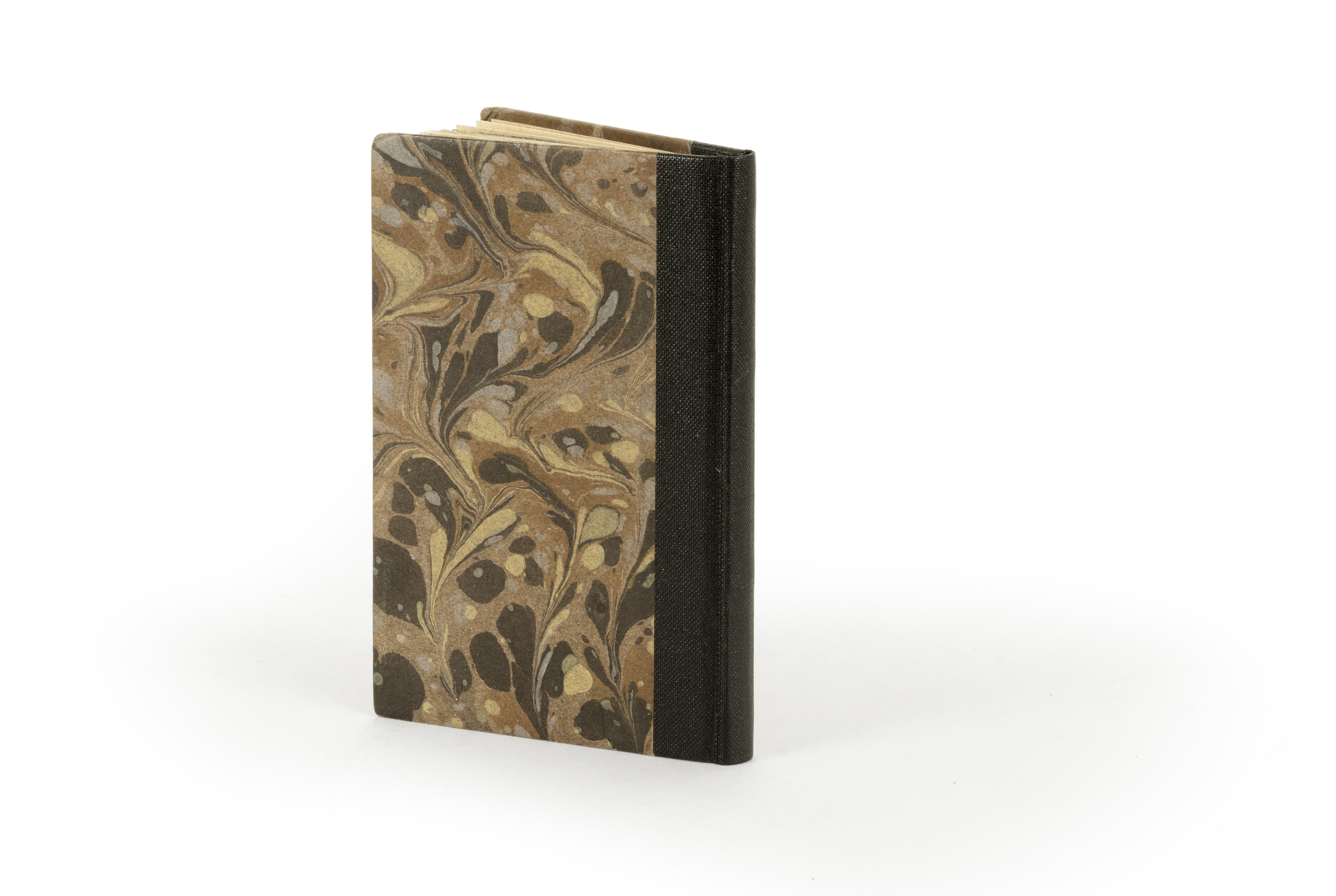
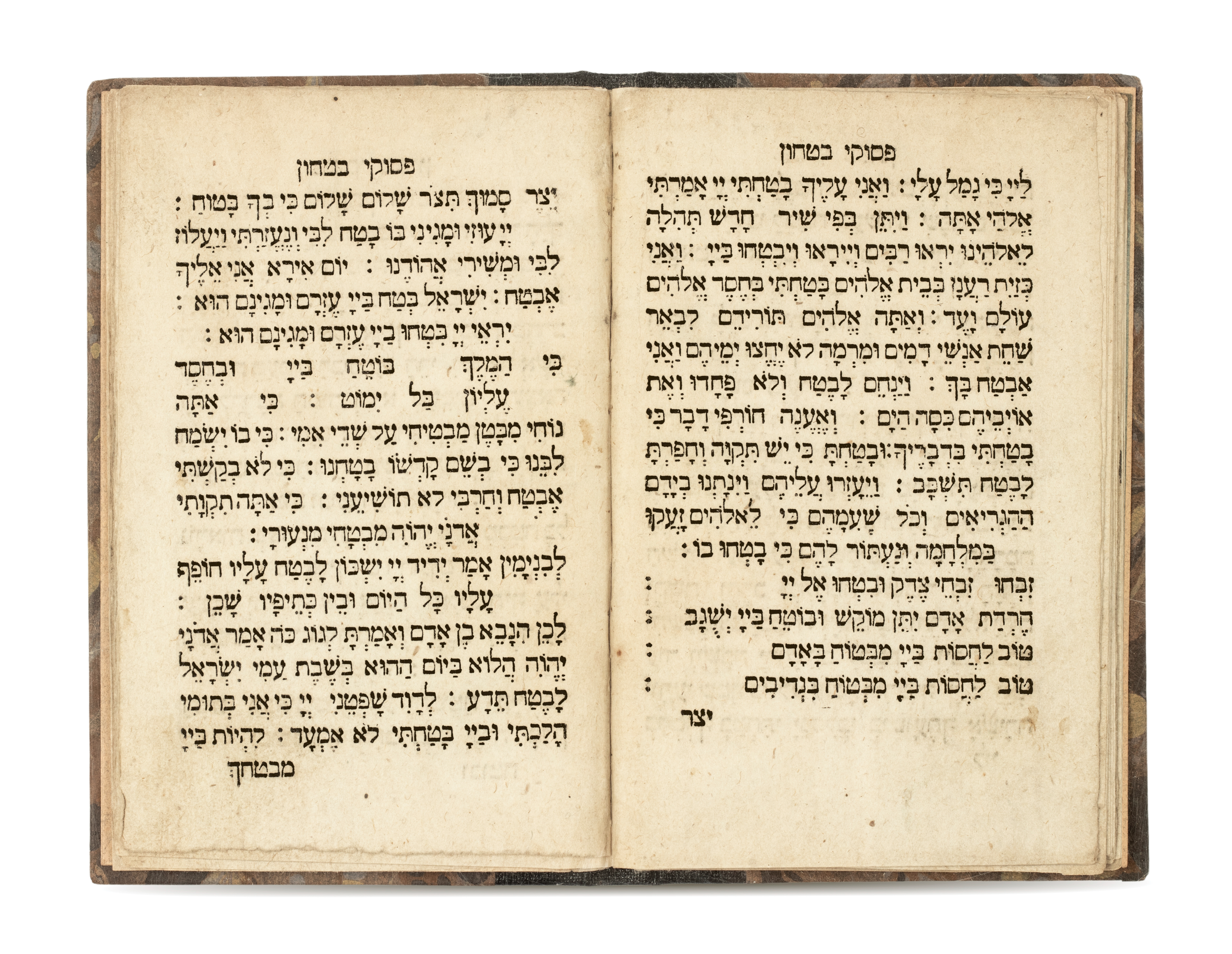
An exceptionally rare sefer, in pocket-format, containing a collection of chapters of Tehillim to be recited daily, following the order established by the Shelah HaKadosh – verses expressing trust in Hashem and His deliverance,   A special order of part of Seder Krias Shema, and additional special prayers.


Reciting the order of prayers printed here is a powerful segula for success and protection.

The Shelah HaKadosh writes regarding the order of the ten chapters of Tehillim that he established: “Mi LaHashem Ailai – Whoever is for Hashem should adopt this order.”

It is said in the name of the Maharal of Prague that the verses of bitachon are “capable of nullifying all harsh decrees. This has been tested and proven… During many battles, when these verses were recited and the people placed their trust in Hashem, they were saved” (Taharos HaKodesh, Amsterdam, 1733; cited by Rabbi Moshe of Zaleshin in Mishpat Tzedek, sec. 214).

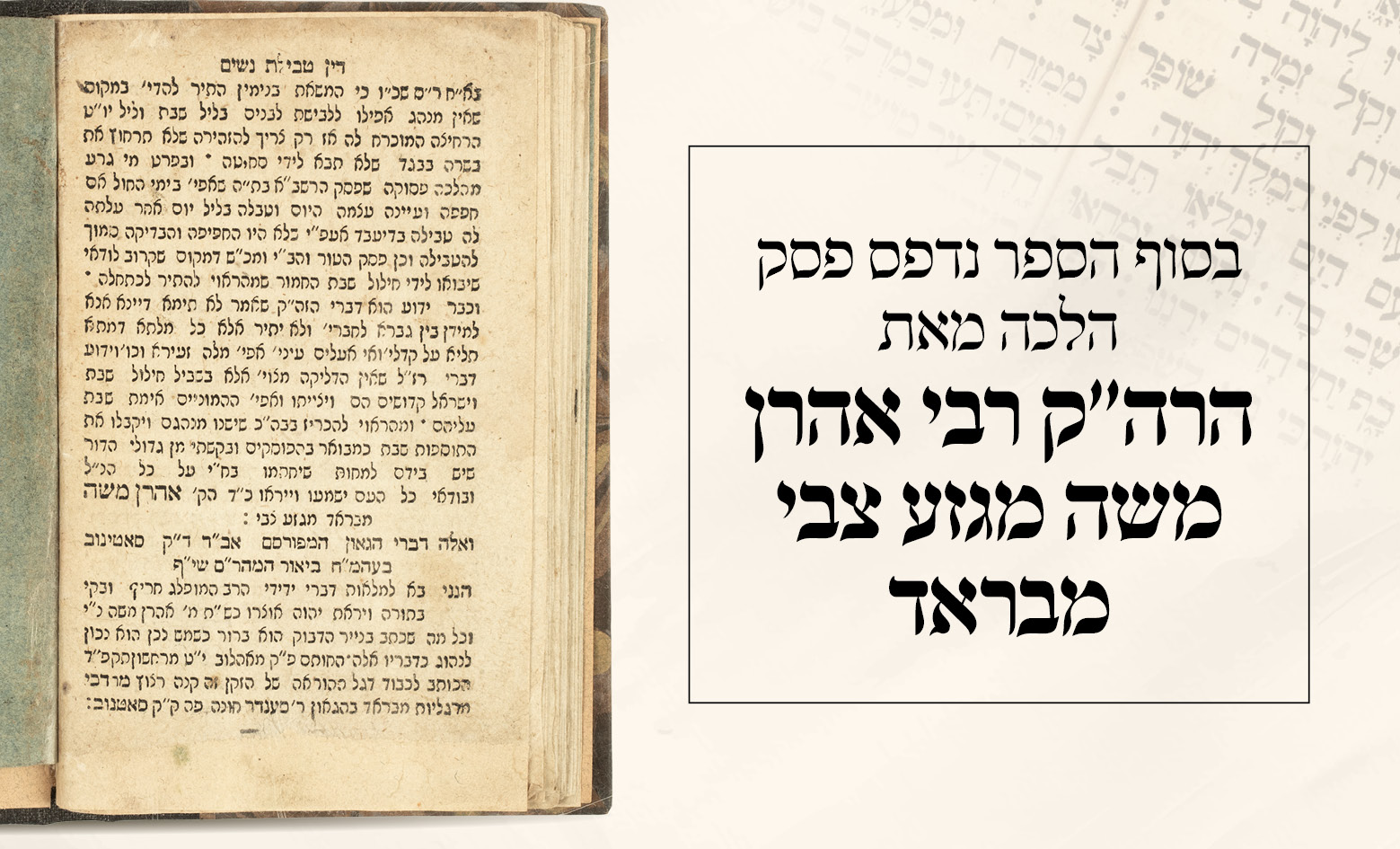
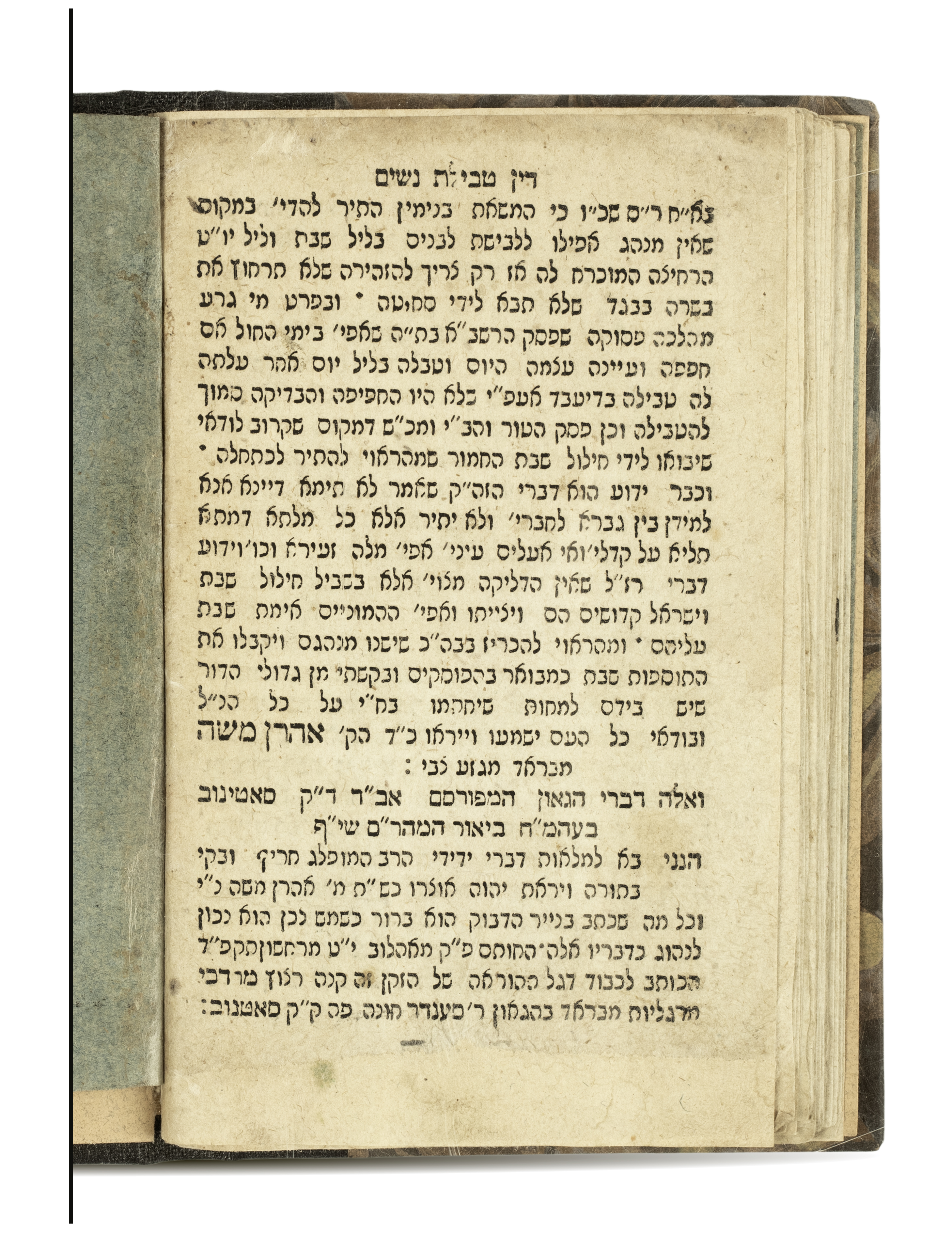
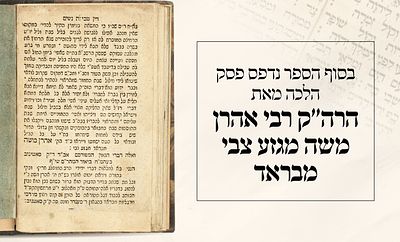
At the end of the sefer there is a halachic ruling by Rabbi Aharon Moshe of Brod concerning women’s immersion in a mikveh on Erev Shabbos. Rabbi Aharon Moshe was a disciple of the Chozeh of Lublin and the Ohev Yisrael of Apta, and was the first Chassidic Rebbe to settle in Jerusalem.

This edition was printed during Rabbi Aharon Moshe’s lifetime.


The present Chernowitz edition of 1838 is the earliest known edition of the work under its present title and in its current form.

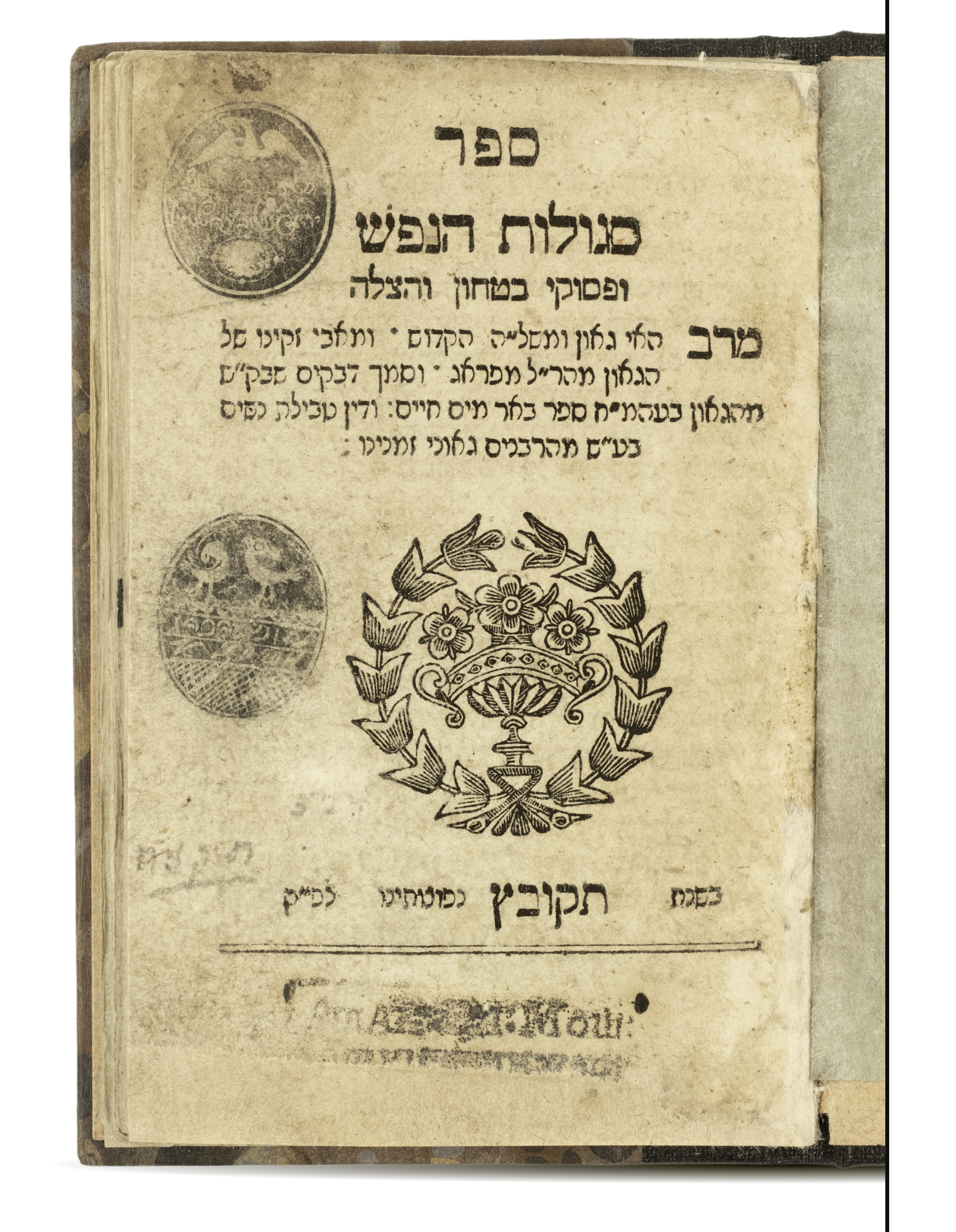
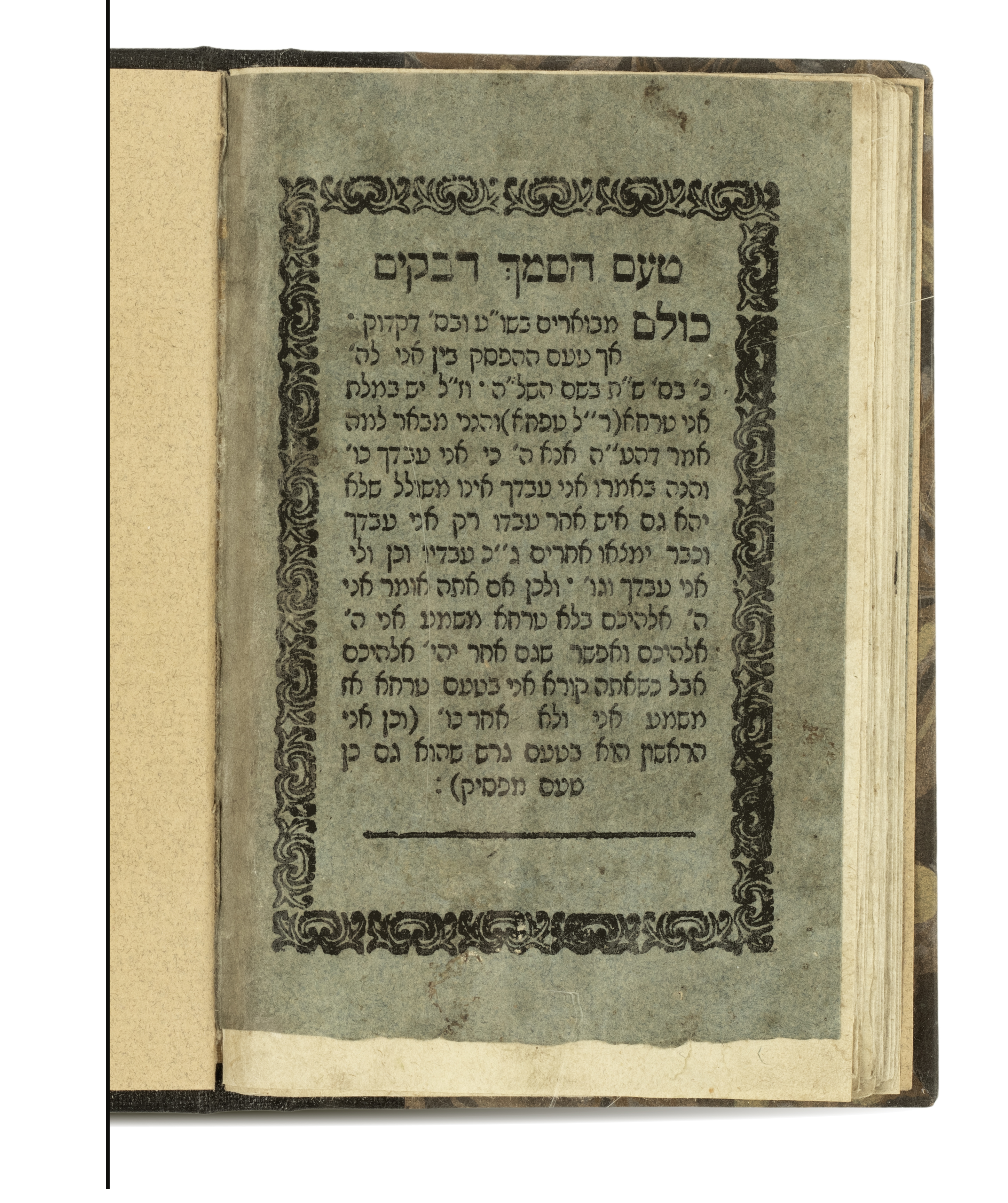
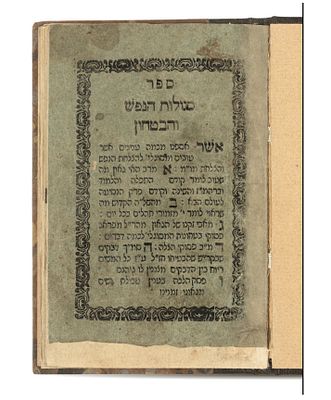
This copy is a new and unknown variant of the Chernowitz edition, in which the publishing details have been omitted and replaced with an illustration.

Only a single copy bearing the publication details is presently known. The present copy brings to light a second copy of this edition, with the publication details omitted.
No additional copies of this edition are known anywhere in the world.

None of the major bibliographers has recorded this edition, and it is not found in the world’s leading libraries.

An exceptionally rare Chassidic sefer, virtually unobtainable!

See below for a detailed discussion of the work, the history of its editions, and its extraordinary rarity.

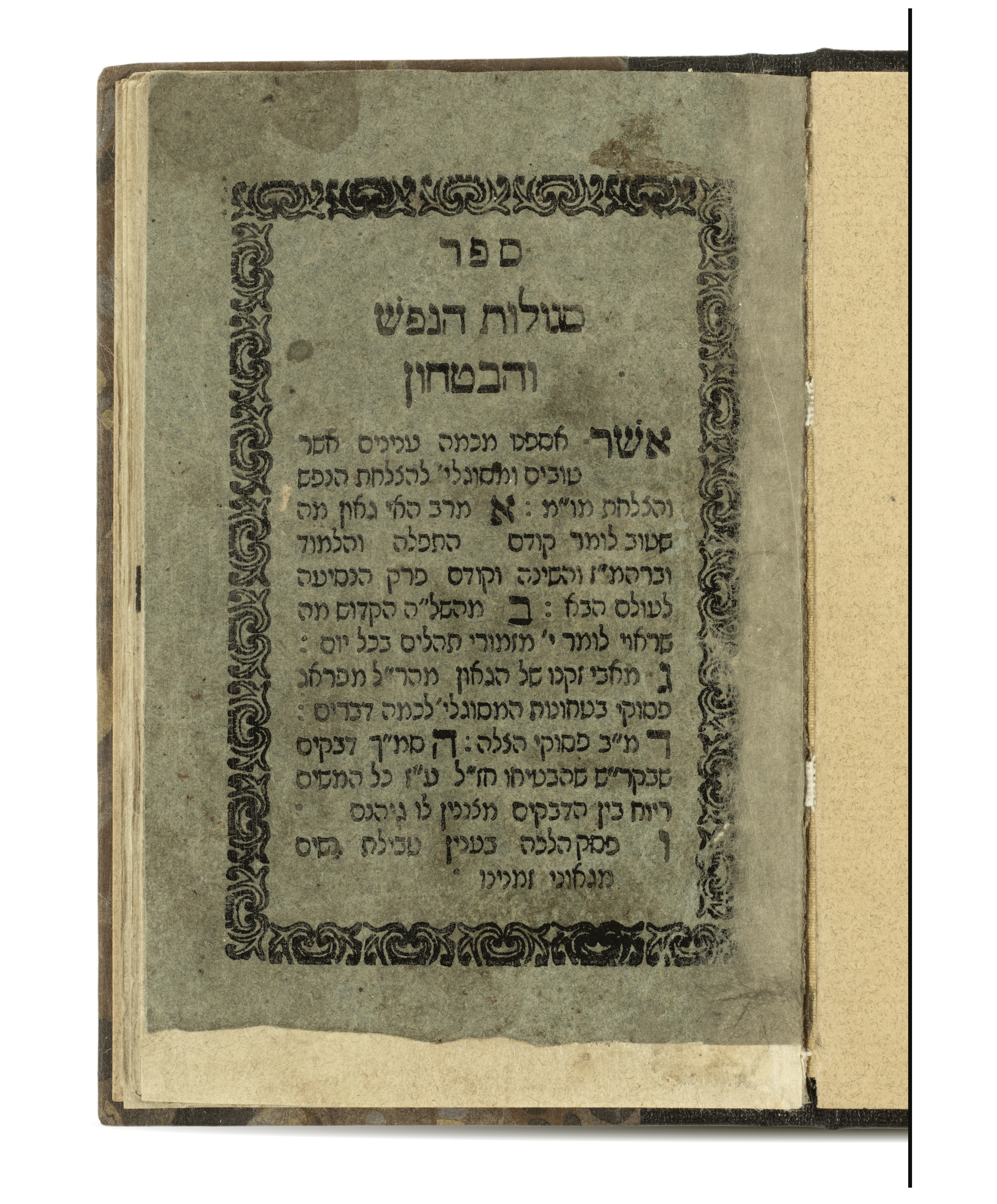
This copy includes a printed blue paper wrapper at the front and back of the volume. This considerably enhances its rarity, as such wrappers were frequently discarded by bookbinders and seldom survive.

As far as is known, printed paper wrappers for Hebrew books only began appearing around the 1830s, making this one of the earliest Hebrew books in the world to have been issued with a printed wrapper.


Chernowitz, 1838.
Earliest known edition of the work under its present title and format.

Page Count: [36] leaves, plus printed paper wrappers at the front and back. Total of [38] leaves.

Size: Pocket format, approximately 13 cm.

Condition: Good. Minor restorations to several leaves. Paper repairs at the lower portion of the title page, the final leaf, and the margins of the front flyleaf. A few stains. New binding.

– – – – – – – – – – – –

Contents of the Sefer

1. Introduction by the editor and compiler. His name is not known. (Leaves [1–4]).
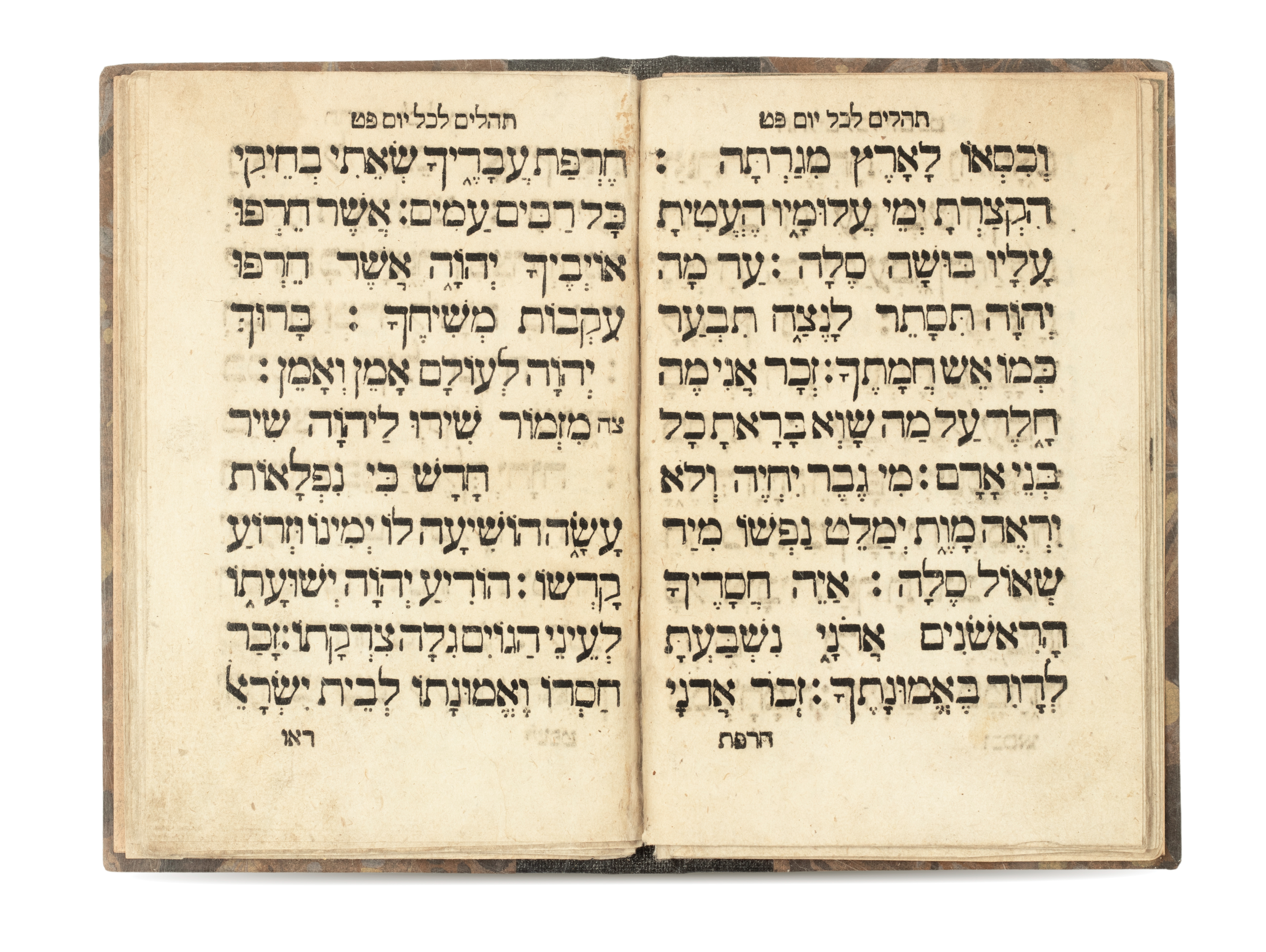
2. Ten chapters of Tehillim for daily recitation according to the order established by the Shelah HaKadosh: Psalms 79, 80, 137, 25, 51, 90, 89, 98, 107, and 96 (leaves [5–23]).
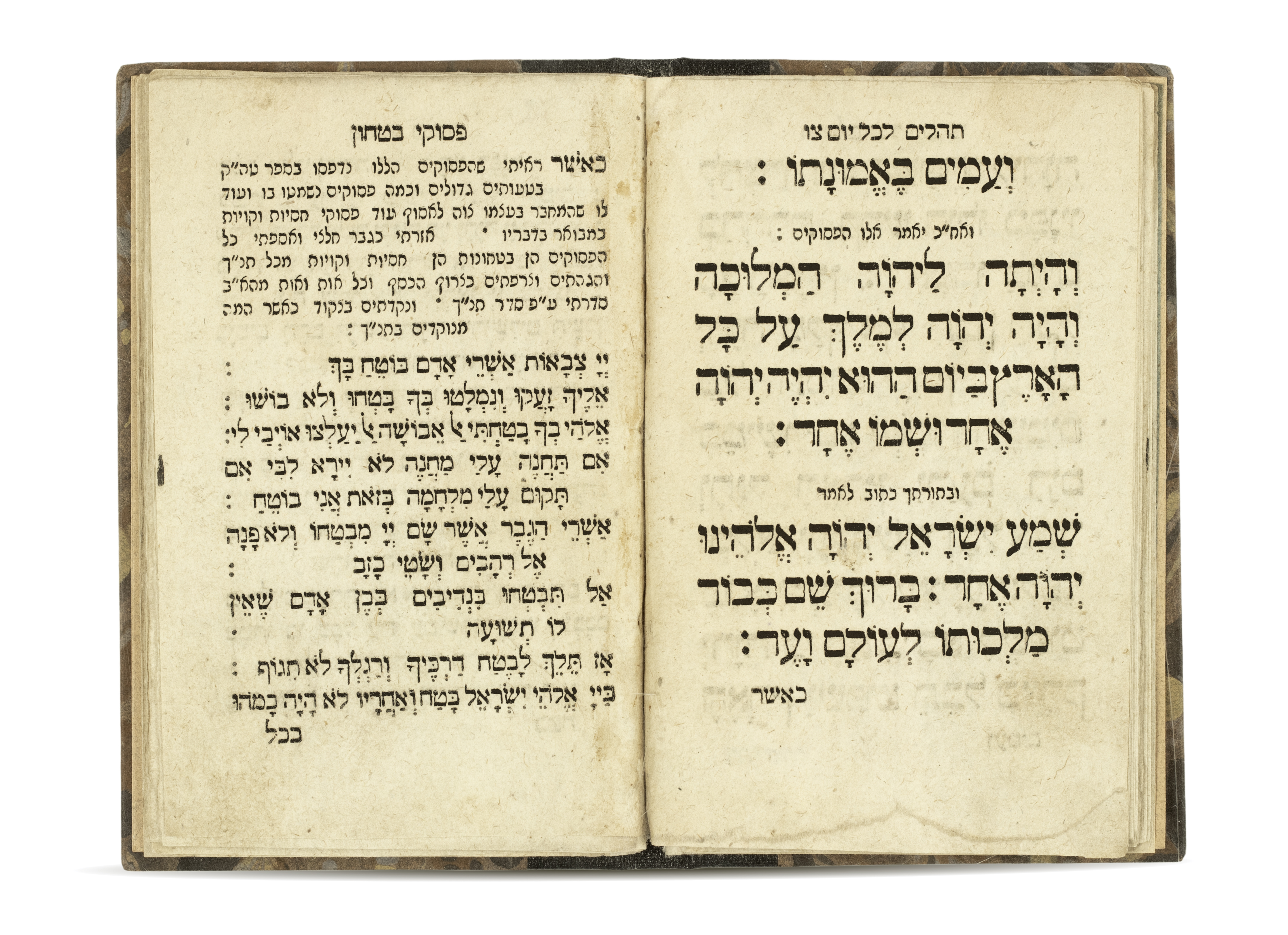
3. “Verses of Bitachon” — verses containing expressions such as “I trusted, ” and similar phrases (leaves [24–28]).
4. “Verses of Refuge” — verses containing expressions such as “I have taken refuge, ” and similar phrases (leaves [28–30]).
5. “Verses of Hope” — verses containing expressions such as “I hoped, ” and similar phrases (leaves [30–31]).
6. Forty-two “Verses of Deliverance” — verses containing expressions such as “save me” and the like. They are described as “highly efficacious” (leaves [31–33]).
7. A Mishnah recommended for recitation before prayer and Torah study. This segulah is attributed to Rav Hai Gaon (leaf [33]).
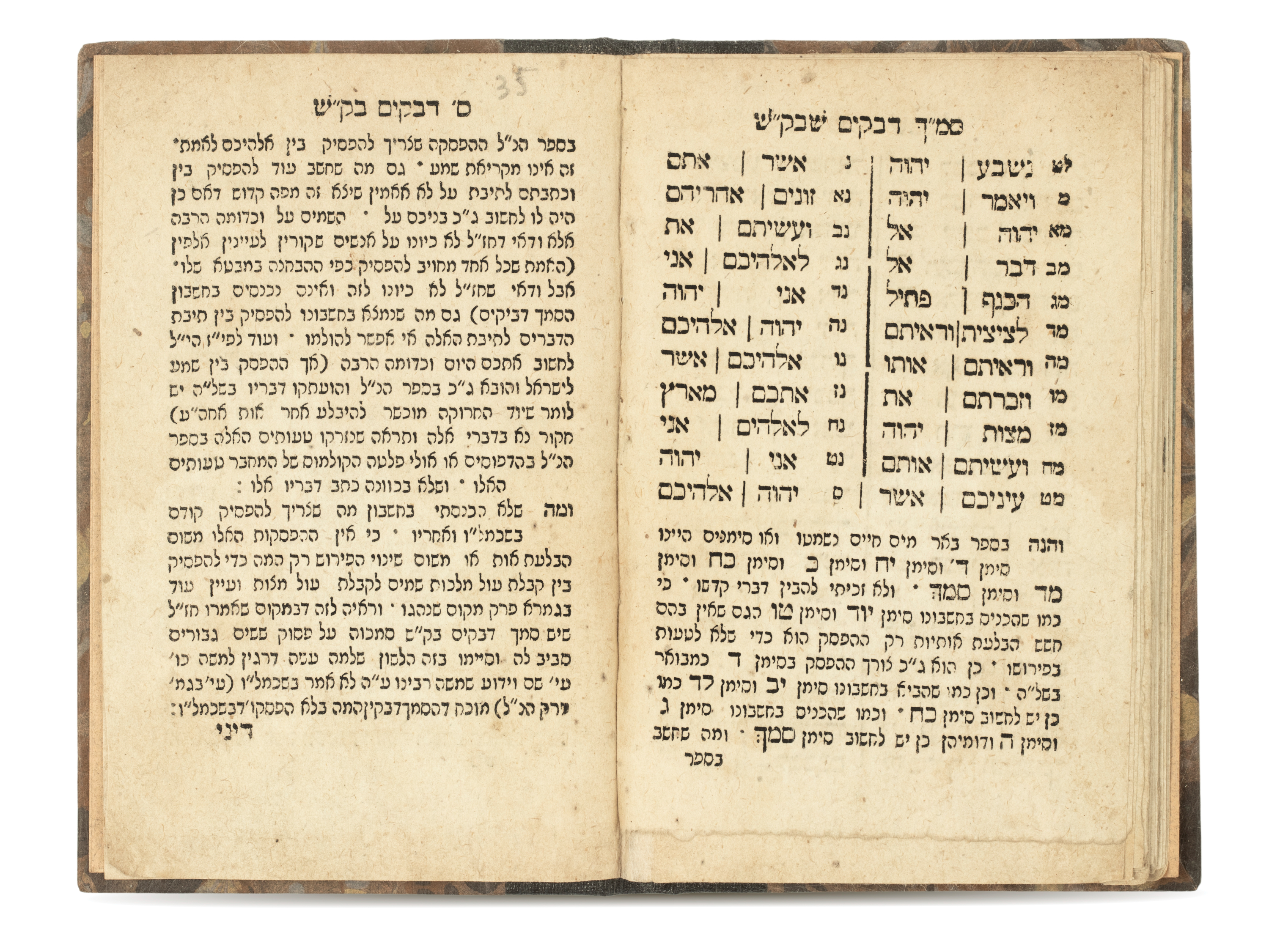
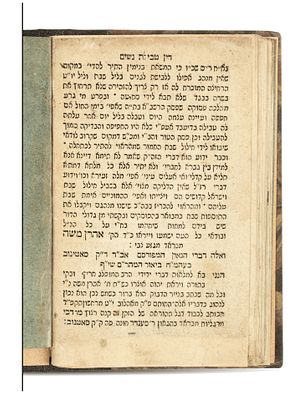
8. The sixty word-pairs in Krias Shema are printed with clear separation between each pair of words in accordance with Kabbalistic tradition, to facilitate their proper pronunciation. The Gemara (Brachos 15a) teaches: “Whoever recites Krias Shema and carefully articulates each of its letters is spared the fires of Gehinnom.” 

Within Krias Shema, sixty adjoining word combinations can easily be run together into a single word, such as ‘bechol levavchem’ and ‘al levavchem.’ According to Kabbalah, great care must be taken to pronounce these words separately. The compiler therefore printed these sixty word combinations with a vertical dividing line between the words, enabling the reader to pronounce them separately. This practice is mentioned by the Shelah HaKadosh in the name of the sefer Be’er Mayim Chaim (Salonika, 1546) (leaves [33–35]).

9. A halachic ruling concerning women’s immersion in a mikveh on Erev Shabbos by Rabbi Aharon Moshe MiGeza Tzvi of Brod, followed by a brief approbation from Rabbi Mordechai Margalios of Stanov, dated Mohilev, Cheshvan 1823 (leaves [35–36]).

– – – – – – – – – – – –

The Structure of the Sefer, Its Editions, and Its Exceptional Rarity

The ten chapters of Tehillim arranged by the Shelah HaKadosh first appeared independently (likely for the first time) in the sefer Tikkun Gadol, Radvil, 1819.

Appended to the work were the Verses of Trust, Refuge, and Hope, taken from the sefer Taharos HaKodesh (Amsterdam, 1733).

The sefer opens with an introduction by the editor, who concealed his identity. However, it is evident from his writings that he was an outstanding Torah scholar and an exceptionally pious individual.

Following the Radvil edition, numerous additional editions were published under the same title. These are extremely rare, some surviving in only a handful of copies (for example, the Zhitomir editions of 1857 and 1864). There are undoubtedly additional editions that have not yet come to light.

Several years later, the work was republished under a new title — ‘Segulos HaNefesh VehaBitachon’ — with numerous new editions. This is the present sefer.

Everything printed in Tikkun Gadol reappears in the present sefer (sections 1–5 above), but the collections of verses were greatly expanded. The “Verses of Refuge” and “Verses of Hope, ” which occupied less than a page in the Radvil edition, now extend across more than six pages, with numerous additions.

Similarly, new sections were added at the end of the work (sections 6–9 above), some appearing here in print for the first time.

In summary:

Sections 1–2 had previously been printed in Tikkun Gadol.

Sections 3–5 were also printed in Tikkun Gadol,
but new verses were added in this edition.

Sections 6–7
were first added here.

Sections 8–9 were likely printed here for the first time.



Rare Chassidic Prayers for Protection and Success.


Segulos HaNefesh VehaBitachon.

Exceptionally Rare Chassidic Print

Chernowitz, 1838. First Edition.


An exceptionally rare sefer, in pocket-format, containing a collection of chapters of Tehillim to be recited daily, following the order established by the Shelah HaKadosh – verses expressing trust in Hashem and His deliverance,   A special order of part of Seder Krias Shema, and additional special prayers.


Reciting the order of prayers printed here is a powerful segula for success and protection.

The Shelah HaKadosh writes regarding the order of the ten chapters of Tehillim that he established: “Mi LaHashem Ailai – Whoever is for Hashem should adopt this order.”

It is said in the name of the Maharal of Prague that the verses of bitachon are “capable of nullifying all harsh decrees. This has been tested and proven… During many battles, when these verses were recited and the people placed their trust in Hashem, they were saved” (Taharos HaKodesh, Amsterdam, 1733; cited by Rabbi Moshe of Zaleshin in Mishpat Tzedek, sec. 214).

At the end of the sefer there is a halachic ruling by Rabbi Aharon Moshe of Brod concerning women’s immersion in a mikveh on Erev Shabbos. Rabbi Aharon Moshe was a disciple of the Chozeh of Lublin and the Ohev Yisrael of Apta, and was the first Chassidic Rebbe to settle in Jerusalem.

This edition was printed during Rabbi Aharon Moshe’s lifetime.


The present Chernowitz edition of 1838 is the earliest known edition of the work under its present title and in its current form.

This copy is a new and unknown variant of the Chernowitz edition, in which the publishing details have been omitted and replaced with an illustration.

Only a single copy bearing the publication details is presently known. The present copy brings to light a second copy of this edition, with the publication details omitted.
No additional copies of this edition are known anywhere in the world.

None of the major bibliographers has recorded this edition, and it is not found in the world’s leading libraries.

An exceptionally rare Chassidic sefer, virtually unobtainable!

See below for a detailed discussion of the work, the history of its editions, and its extraordinary rarity.

This copy includes a printed blue paper wrapper at the front and back of the volume. This considerably enhances its rarity, as such wrappers were frequently discarded by bookbinders and seldom survive.

As far as is known, printed paper wrappers for Hebrew books only began appearing around the 1830s, making this one of the earliest Hebrew books in the world to have been issued with a printed wrapper.


Chernowitz, 1838.
Earliest known edition of the work under its present title and format.

Page Count: [36] leaves, plus printed paper wrappers at the front and back. Total of [38] leaves.

Size: Pocket format, approximately 13 cm.

Condition: Good. Minor restorations to several leaves. Paper repairs at the lower portion of the title page, the final leaf, and the margins of the front flyleaf. A few stains. New binding.

– – – – – – – – – – – –

Contents of the Sefer

1. Introduction by the editor and compiler. His name is not known. (Leaves [1–4]).
2. Ten chapters of Tehillim for daily recitation according to the order established by the Shelah HaKadosh: Psalms 79, 80, 137, 25, 51, 90, 89, 98, 107, and 96 (leaves [5–23]).
3. “Verses of Bitachon” — verses containing expressions such as “I trusted, ” and similar phrases (leaves [24–28]).
4. “Verses of Refuge” — verses containing expressions such as “I have taken refuge, ” and similar phrases (leaves [28–30]).
5. “Verses of Hope” — verses containing expressions such as “I hoped, ” and similar phrases (leaves [30–31]).
6. Forty-two “Verses of Deliverance” — verses containing expressions such as “save me” and the like. They are described as “highly efficacious” (leaves [31–33]).
7. A Mishnah recommended for recitation before prayer and Torah study. This segulah is attributed to Rav Hai Gaon (leaf [33]).
8. The sixty word-pairs in Krias Shema are printed with clear separation between each pair of words in accordance with Kabbalistic tradition, to facilitate their proper pronunciation. The Gemara (Brachos 15a) teaches: “Whoever recites Krias Shema and carefully articulates each of its letters is spared the fires of Gehinnom.” 

Within Krias Shema, sixty adjoining word combinations can easily be run together into a single word, such as ‘bechol levavchem’ and ‘al levavchem.’ According to Kabbalah, great care must be taken to pronounce these words separately. The compiler therefore printed these sixty word combinations with a vertical dividing line between the words, enabling the reader to pronounce them separately. This practice is mentioned by the Shelah HaKadosh in the name of the sefer Be’er Mayim Chaim (Salonika, 1546) (leaves [33–35]).

9. A halachic ruling concerning women’s immersion in a mikveh on Erev Shabbos by Rabbi Aharon Moshe MiGeza Tzvi of Brod, followed by a brief approbation from Rabbi Mordechai Margalios of Stanov, dated Mohilev, Cheshvan 1823 (leaves [35–36]).

– – – – – – – – – – – –

The Structure of the Sefer, Its Editions, and Its Exceptional Rarity

The ten chapters of Tehillim arranged by the Shelah HaKadosh first appeared independently (likely for the first time) in the sefer Tikkun Gadol, Radvil, 1819.

Appended to the work were the Verses of Trust, Refuge, and Hope, taken from the sefer Taharos HaKodesh (Amsterdam, 1733).

The sefer opens with an introduction by the editor, who concealed his identity. However, it is evident from his writings that he was an outstanding Torah scholar and an exceptionally pious individual.

Following the Radvil edition, numerous additional editions were published under the same title. These are extremely rare, some surviving in only a handful of copies (for example, the Zhitomir editions of 1857 and 1864). There are undoubtedly additional editions that have not yet come to light.

Several years later, the work was republished under a new title — ‘Segulos HaNefesh VehaBitachon’ — with numerous new editions. This is the present sefer.

Everything printed in Tikkun Gadol reappears in the present sefer (sections 1–5 above), but the collections of verses were greatly expanded. The “Verses of Refuge” and “Verses of Hope, ” which occupied less than a page in the Radvil edition, now extend across more than six pages, with numerous additions.

Similarly, new sections were added at the end of the work (sections 6–9 above), some appearing here in print for the first time.
In summary:

Sections 1–2 had previously been printed in Tikkun Gadol.

Sections 3–5 were also printed in Tikkun Gadol,
but new verses were added in this edition.

Sections 6–7
were first added here.

Sections 8–9 were likely printed here for the first time.