
Lot : 14
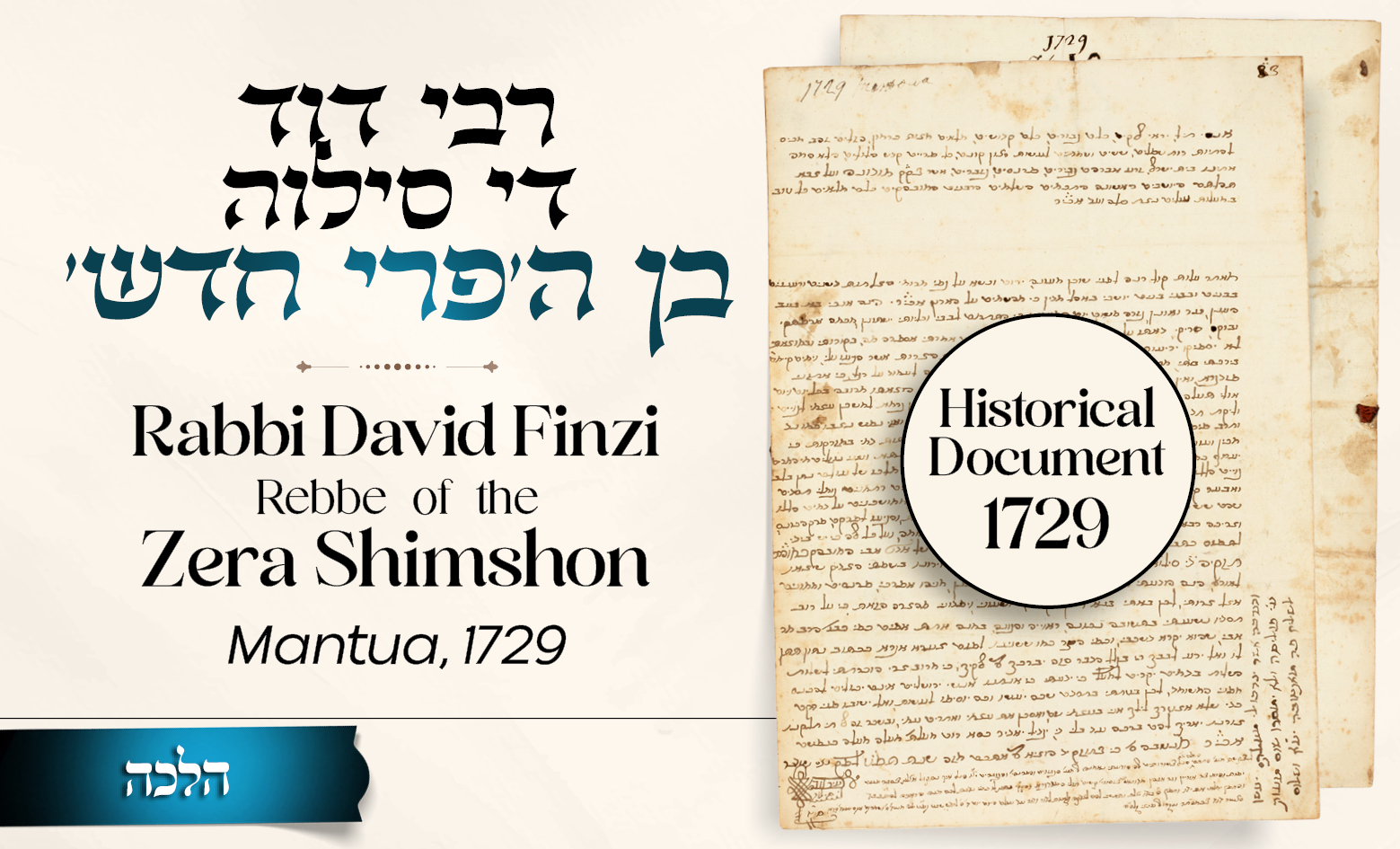
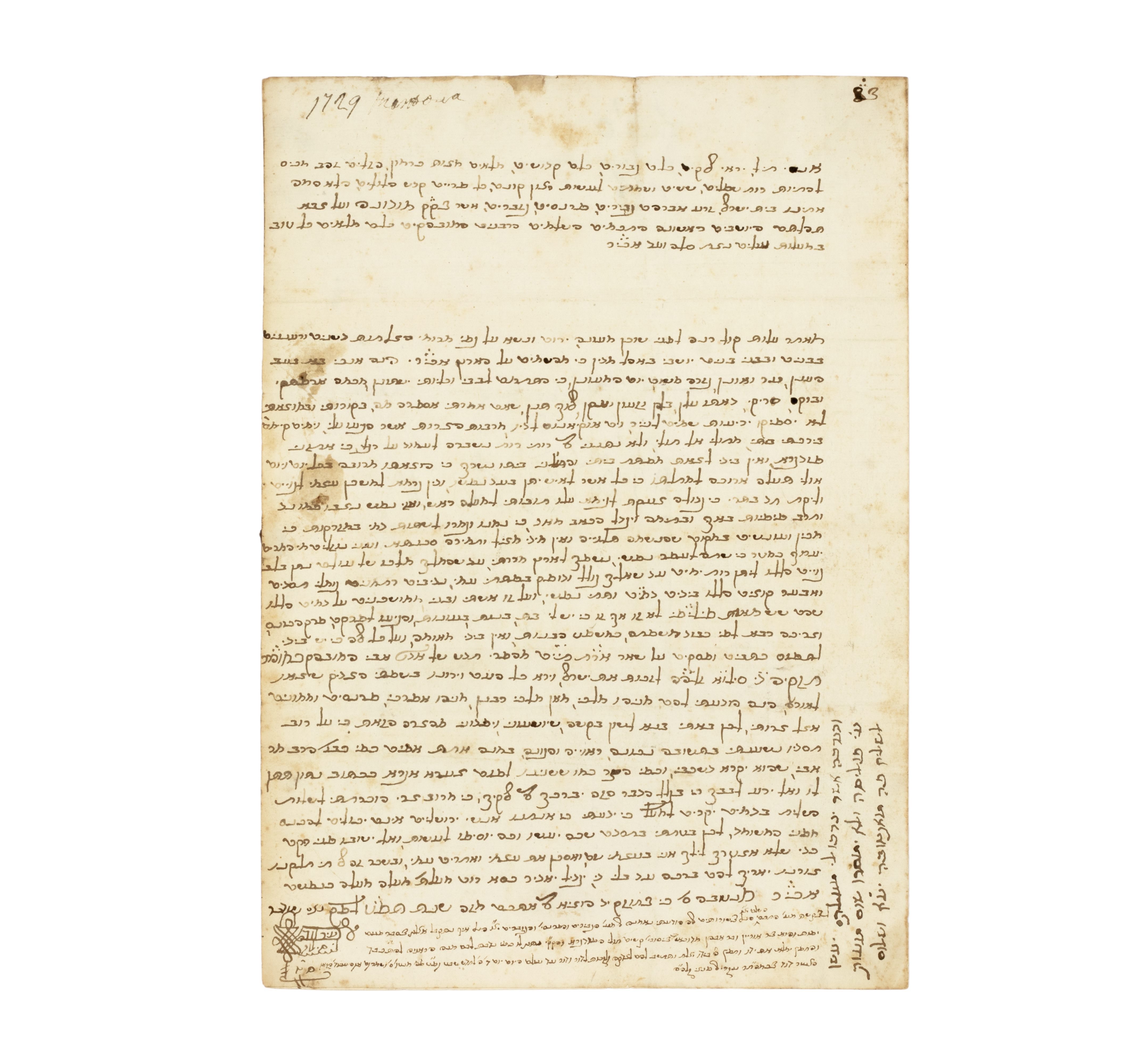
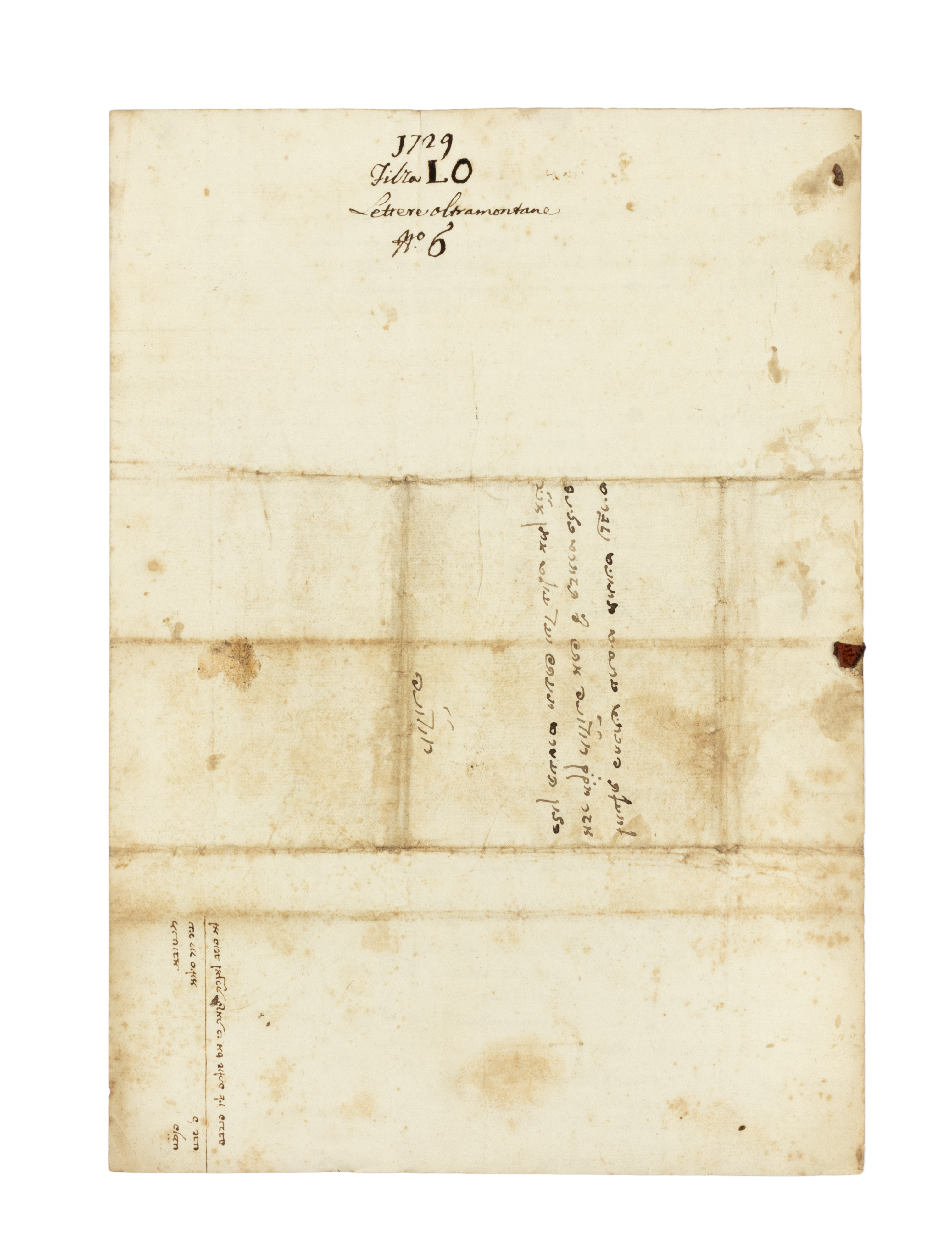
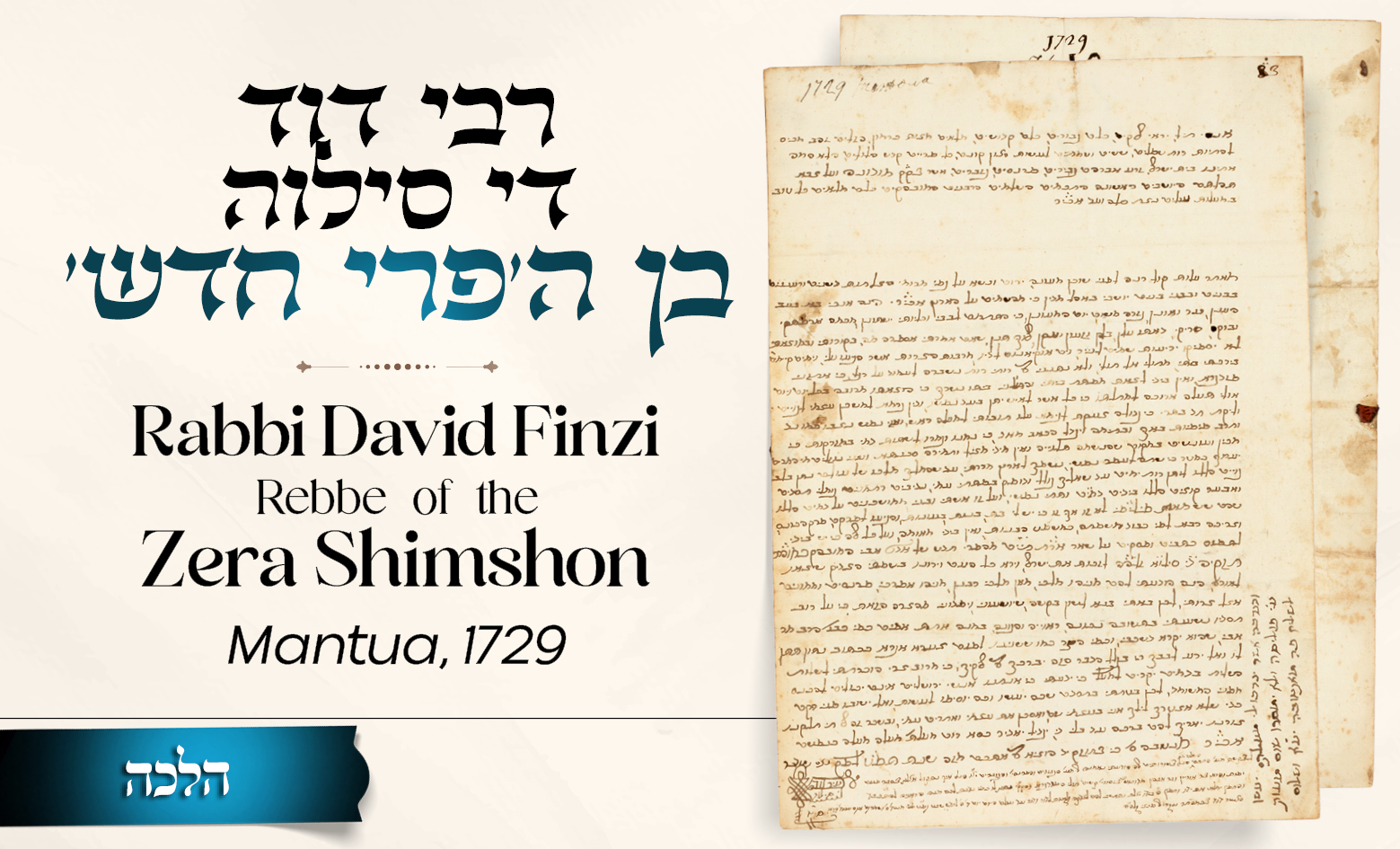
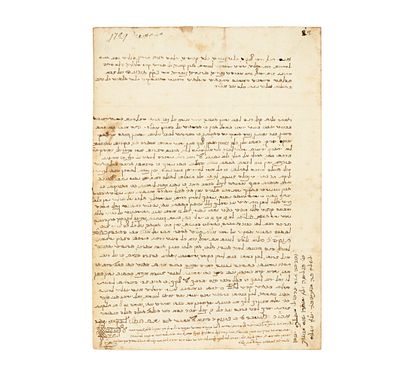
Letter Regarding the Printing of the Pri Chadash, by His Son Rabbi David di Silva, and by the Father-in-Law of the Ramchal, Rabbi David Finzi, Av Beis Din of Mantua – 1729
Letter Regarding the Printing of the Pri Chadash, by His Son Rabbi David di Silva, and by the Father-in-Law of the Ramchal, Rabbi David Finzi, Av Beis Din of Mantua – 1729
An important letter from Rabbi David di Silva, the only son of Rabbi Chizkiyah di Silva, author of Pri Chadash and Rosh Mesivta in Jerusalem, who was known for his exceptional brilliance.
The letter deals with his preparations and fundraising efforts for printing the writings of his illustrious father. He writes: “It is within my ability to undertake [=to print] manuscripts and halachic rulings on the remaining sections of Orach Chaim from the Pri Chadash of my distinguished father, Rabbi Chizkiyah di Silva, of blessed memory, to benefit Klal Yisrael, so that all may see and delight in the words of the tzaddik upon their publication.”
Indeed, in the following year he printed in Amsterdam two parts from his father’s Torah: Pri Chadash on Orach Chaim, and Mayim Chaim, containing sugyos and teshuvos.
In the letter, which was sent from Shalev, Rabbi David weaves together an account of his life’s events and his financial situation as an introduction to his request for assistance. Rabbi David later reused many expressions found in this letter in the introduction to the aforementioned sefarim that he published.
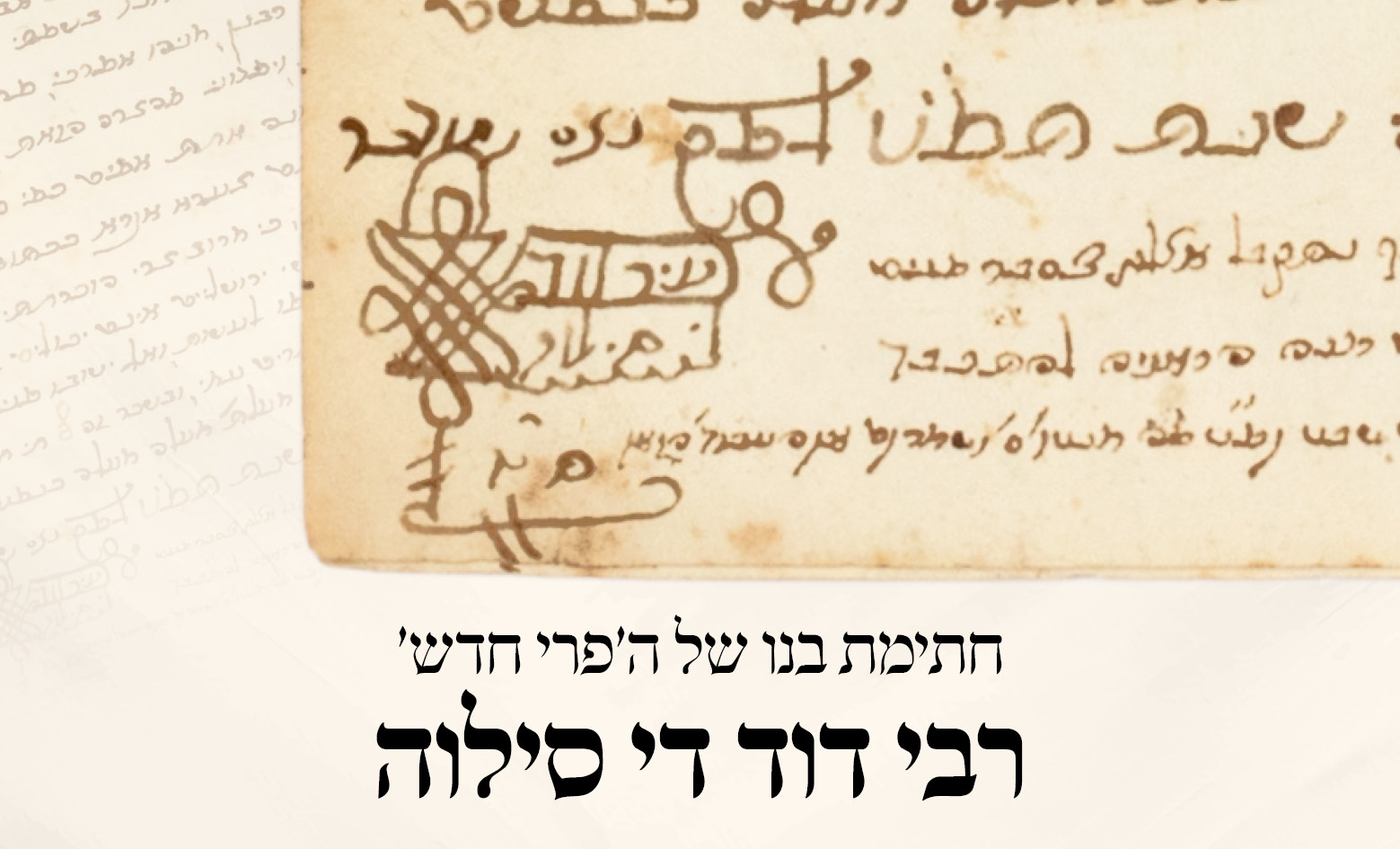
The letter bears Rabbi David’s decorative Eastern signature: “The young David di Silva, ס” ט, ” with an additional three short lines written in the margin.
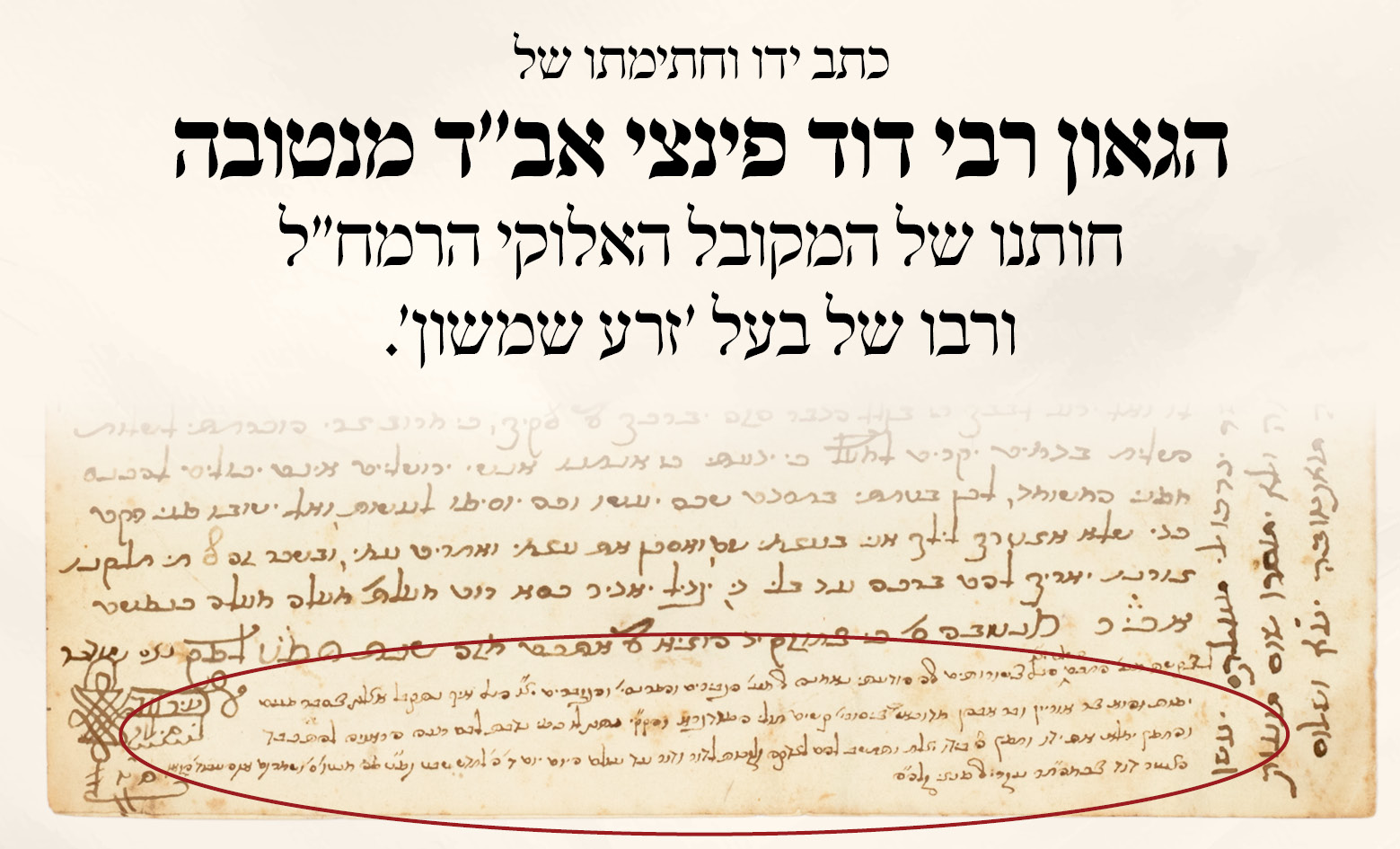
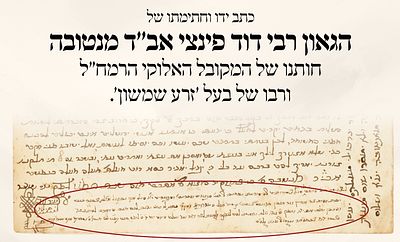
An additional letter of support regarding this important matter appears at the end of the letter, in the handwriting and with the signature of the gaon Rabbi David Finzi, Av Beis Din of Mantua, father-in-law of the holy kabbalist Rabbi Moshe Chaim Luzzatto — the Ramchal — and teacher of the Zera Shimshon.
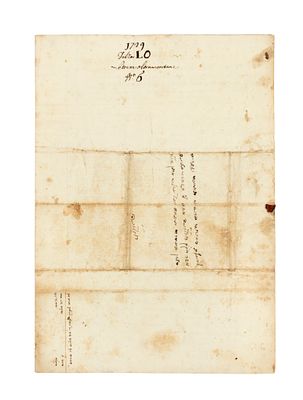
Mantua, 1729. The letter is written in Hebrew–Italian script by a scribe, followed by approximately four lines in the handwriting and with the signature of Rabbi David Finzi.
In the margins of the letter, three additional short lines were added in the handwriting of Rabbi David di Silva: “And any donation their honors wish to give should be made via a [written] policy, and money should not be sent from there to the agent here in Mantua, may it be rebuilt and established. Shalom.”
Page count: [1] folded paper leaf. Size: Approx. 20.5×29 cm.
Condition: Good, some stains.
_______________
Biographies of the Rabbanim Who Wrote the Letter
Rabbi David di Silva (d. 1741), one of the sages of Jerusalem, was the only son of the Pri Chadash. He labored to print his father’s writings, to which he appended important introductions that reflect his own greatness in Torah. He authored a large work in the science of medicine titled Pri Hadas, inspired by the name of his father’s work (a section of it, titled Pri Megadim, was printed in Jerusalem in 2004). He also left behind many Torah chiddushim in halacha and Midrashim of Chazal (Frumkin, Toldos Chachmei Yerushalayim, vol. II, pp. 106–107). He was eulogized by the Rishon LeTzion Rabbi Yaakov Yisrael Algazi (Shema Yaakov, 1783, leaf 24b and onward).
Twenty-three years prior to the present letter, Rabbi David printed another portion of the Pri Chadash (Amsterdam 1706). In the introduction there, he recounts an extraordinary incident that happened to him. While traveling by ship from Eretz Yisrael to Amsterdam to print the Pri Chadash, robbers seized all his possessions; yet remarkably, they took pity on him and returned the manuscript!
Rabbi David Finzi, Av Beis Din of Mantua (d. 1735), was one of the leading sages of Italy. He was a student of Rabbi Yehudah Briel in Revealed Torah and of Rabbi Moshe Zacuto in the Hidden Torah. Around the year 1731, his daughter married the Ramchal, and in one letter, he signed: “So says the father-in-law of Moshe, the humble David.” During the controversy surrounding the Ramchal, he stood up in his defense. The author of Zera Shimshon, Rabbi Shimshon Chaim Nachmani, was his student, and he composed a beautiful poem in honor of the marriage of the Ramchal to the daughter of his teacher.
– – – – – – – – – – – –
The Pri Chadash and His Remarkable Works
Rabbi Chizkiyah di Silva, the author of Pri Chadash, was an exceptionally sharp and brilliant scholar and a prolific author of chiddushim. It is hard to believe that although he passed away at a young age — before reaching forty — he nevertheless merited to be counted among the most eminent Torah giants, as testified by the Chida: “To this very day, all the sages of Klal Yisrael drink thirstily from his words.”
From a young age, he dedicated himself completely to Torah study, and his son Rabbi David testified that “indeed, the body, spirit, and soul of my master, my father — were entirely spiritual, through his engagement in Torah.”
Despite his young age, he served as Rosh Mesivta in Jerusalem and was held in great esteem among both Sephardi and Ashkenazi sages alike. It is said that the Vilna Gaon regarded him as being on par with Rabbeinu the Shach.
His brother-in-law, the gaon Rabbi Moshe Chagiz, testified that when the Pri Chadash presented his sefarim to one of the Gedolei Hador, the gaon exclaimed aloud that one who sees the Pri Chadash should recite the Shehecheyanu blessing!
Likewise, the Semichas Chachamim wrote poetically about the chiddushim of the Pri Chadash, describing them as “fine, refined flour… such that anyone who tastes them will experience it as though tasting a new fresh fruit, ” alluding to the title Pri Chadash, “whose produce is holy and worthy of praise and song, like the praises for which Eretz Yisrael is renowned…” (from his approbation to Pri Chadash, Amsterdam 1706).
In many sugyos, the Pri Chadash rules differently from earlier authorities. In his generation, some sages took issue with him, such as the Ohr HaChaim, who composed an entire sefer on the chiddushim of the Pri Chadash titled Peros Ginosar (Amsterdam 1742).
The Chida relates that in his youth, he traveled with the Ohr HaChaim and his students to pray at the graves of tzaddikim, and when they came to the resting place of the Pri Chadash, “we saw that the aforementioned Rav [the Ohr HaChaim] remained alone at his grave for about a quarter of an hour, and his lips were moving, and we understood that he was asking forgiveness and saying that his intent had been for the sake of Heaven…”
Four principal sefarim have been printed from the Pri Chadash to this day:
1. Pri Chadash on Yoreh Deah, Amsterdam 1692, printed by the author himself.
2. Pri Chadash on Orach Chaim, Amsterdam 1706, printed by his son Rabbi David.
3. Pri Chadash on Orach Chaim, Amsterdam 1730, printed together with:
4. Mayim Chaim—sugyos and teshuvos, Amsterdam 1730.
The present letter is regarding the printing of the latter two parts.