Lot : 7

Collection of Five Foundational Sifrei Midrash
1545–1654

Lot : 7

Collection of Five Foundational Sifrei Midrash
1545–1654

Opening bid: $2,000

Collection of Five Foundational Sifrei Midrash

1545–1654


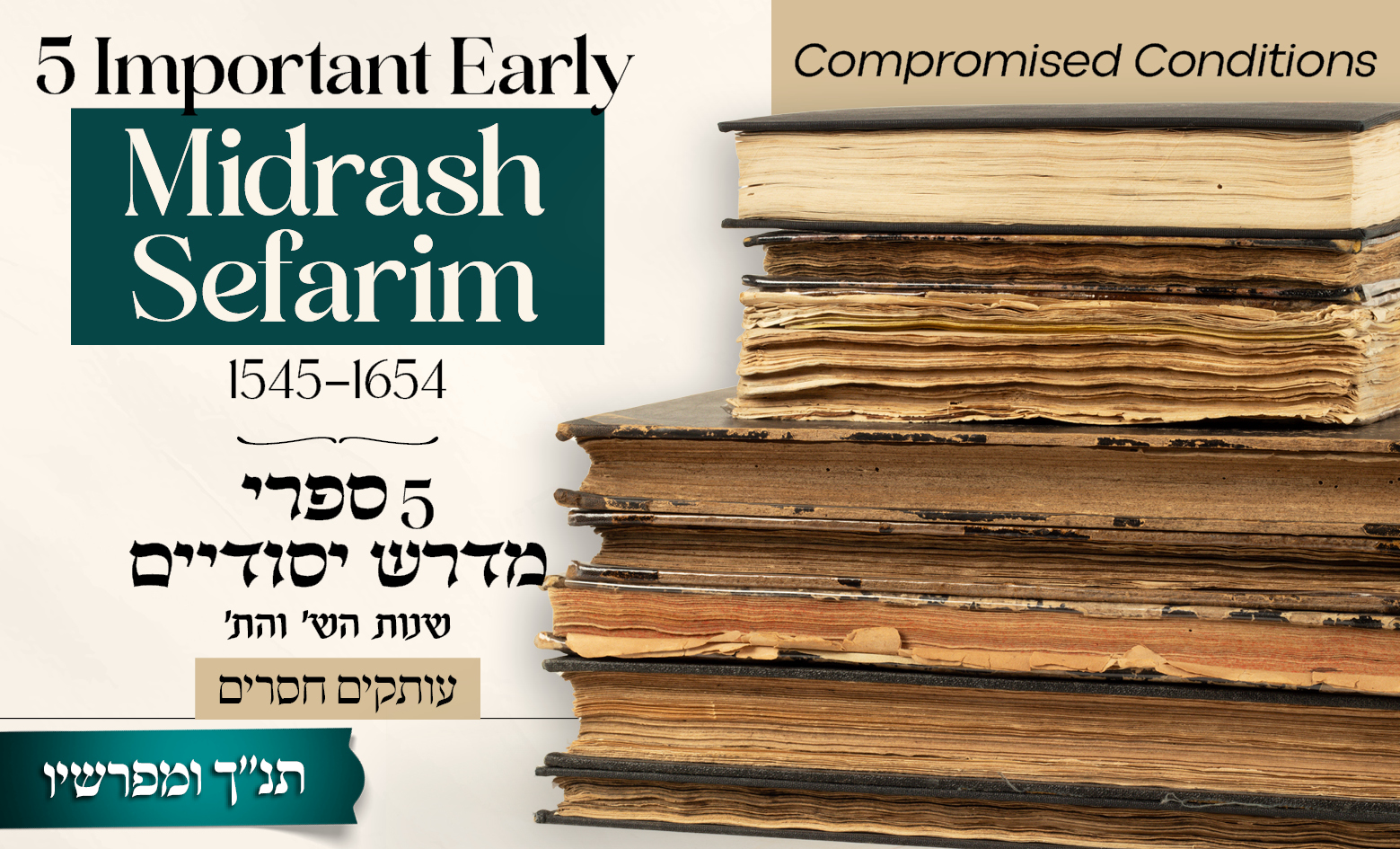
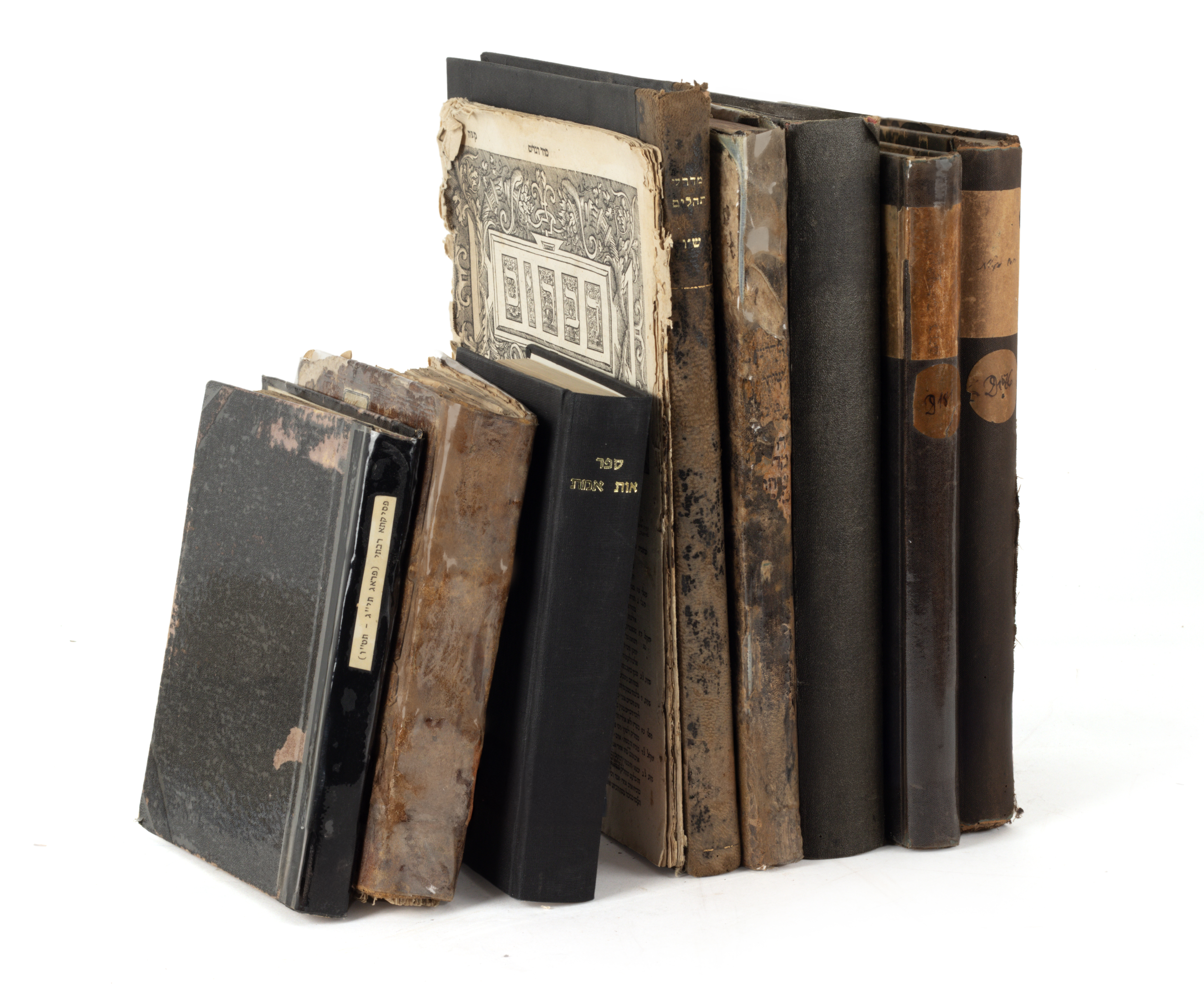
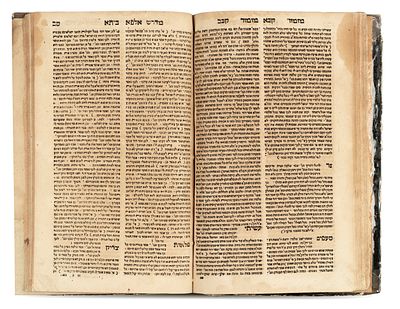
A collection of early sifrei Midrashim — some are sifrei yesod in their first edition, and some are sifrei yesod in their second and principal editions.

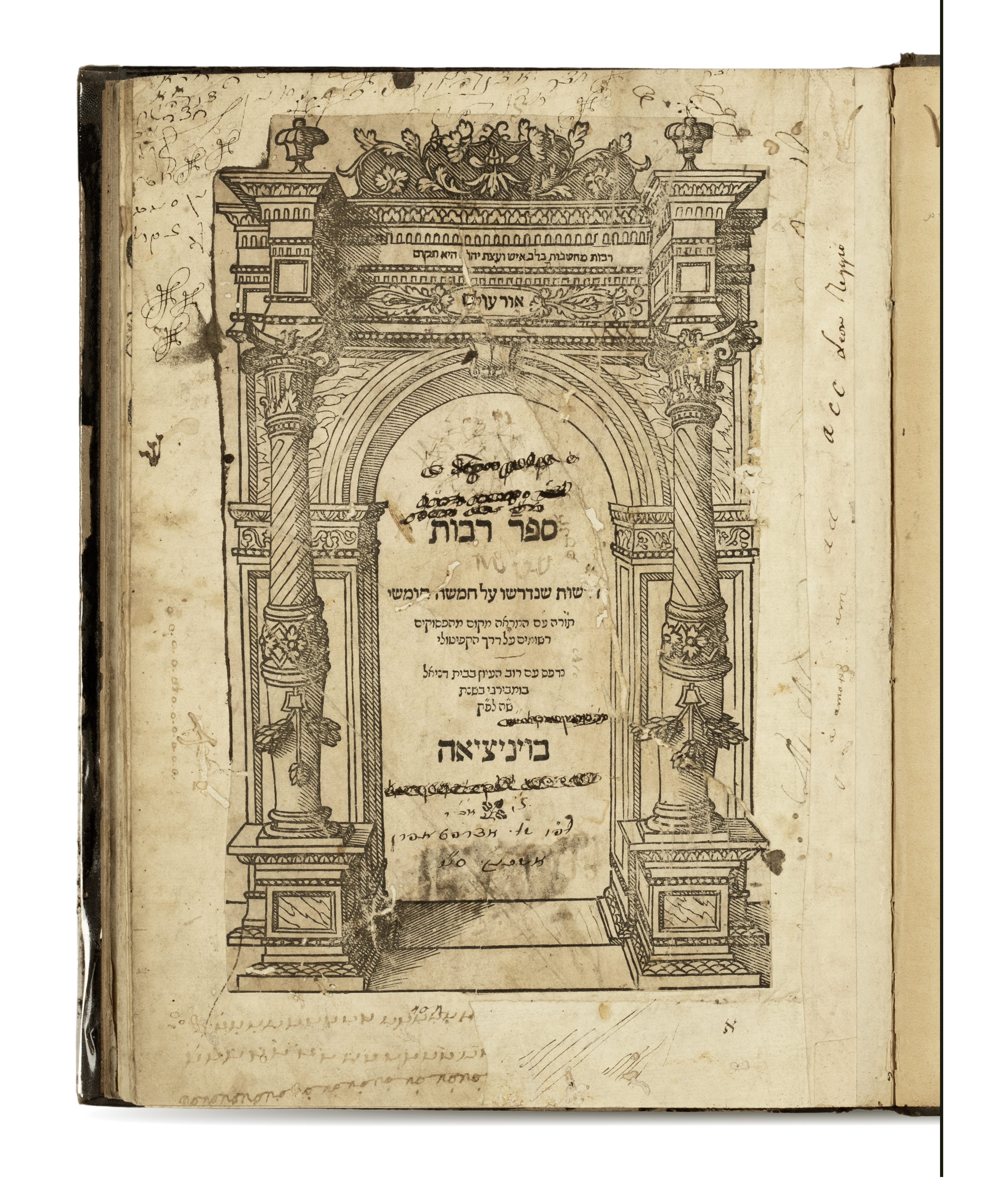
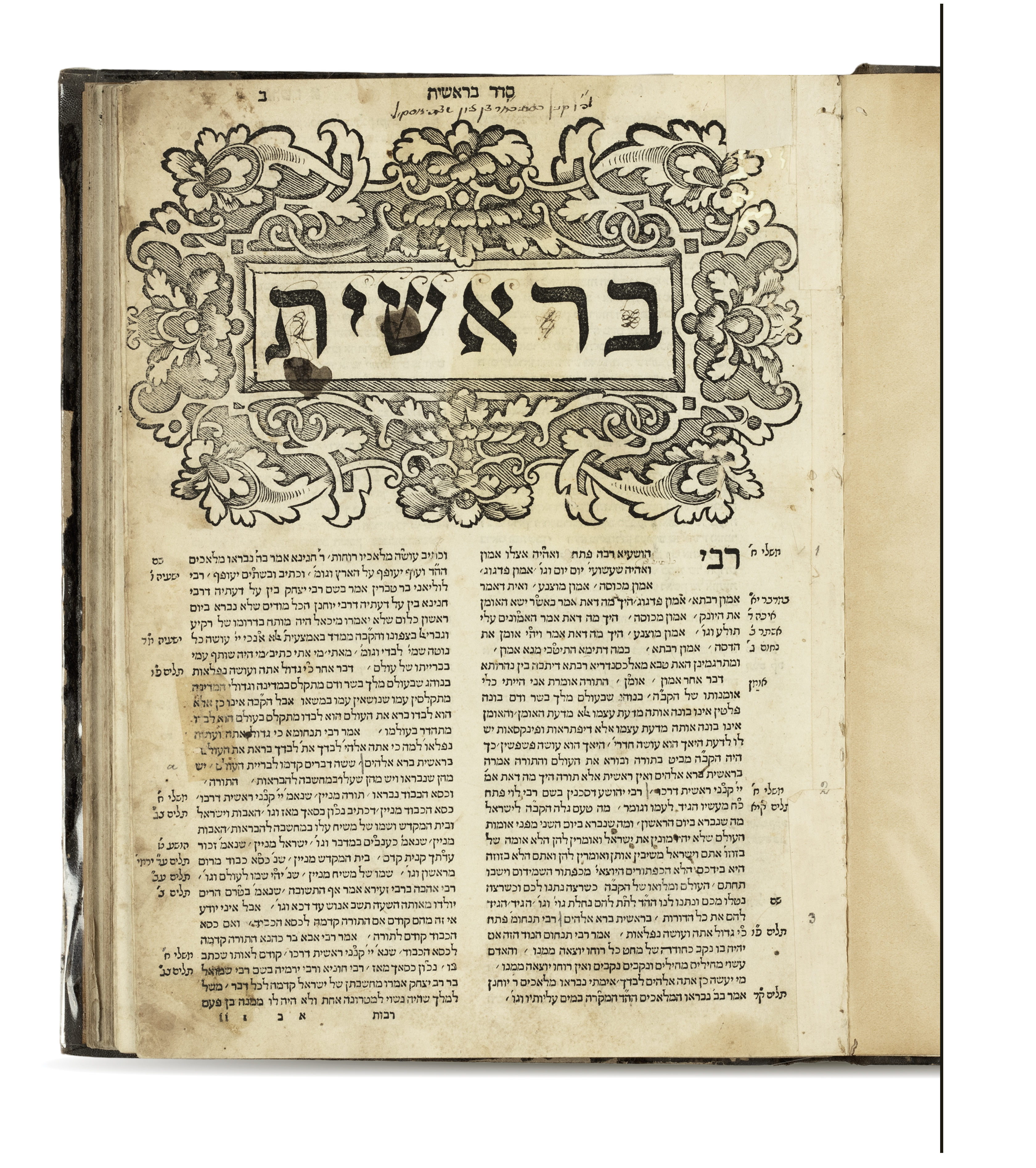
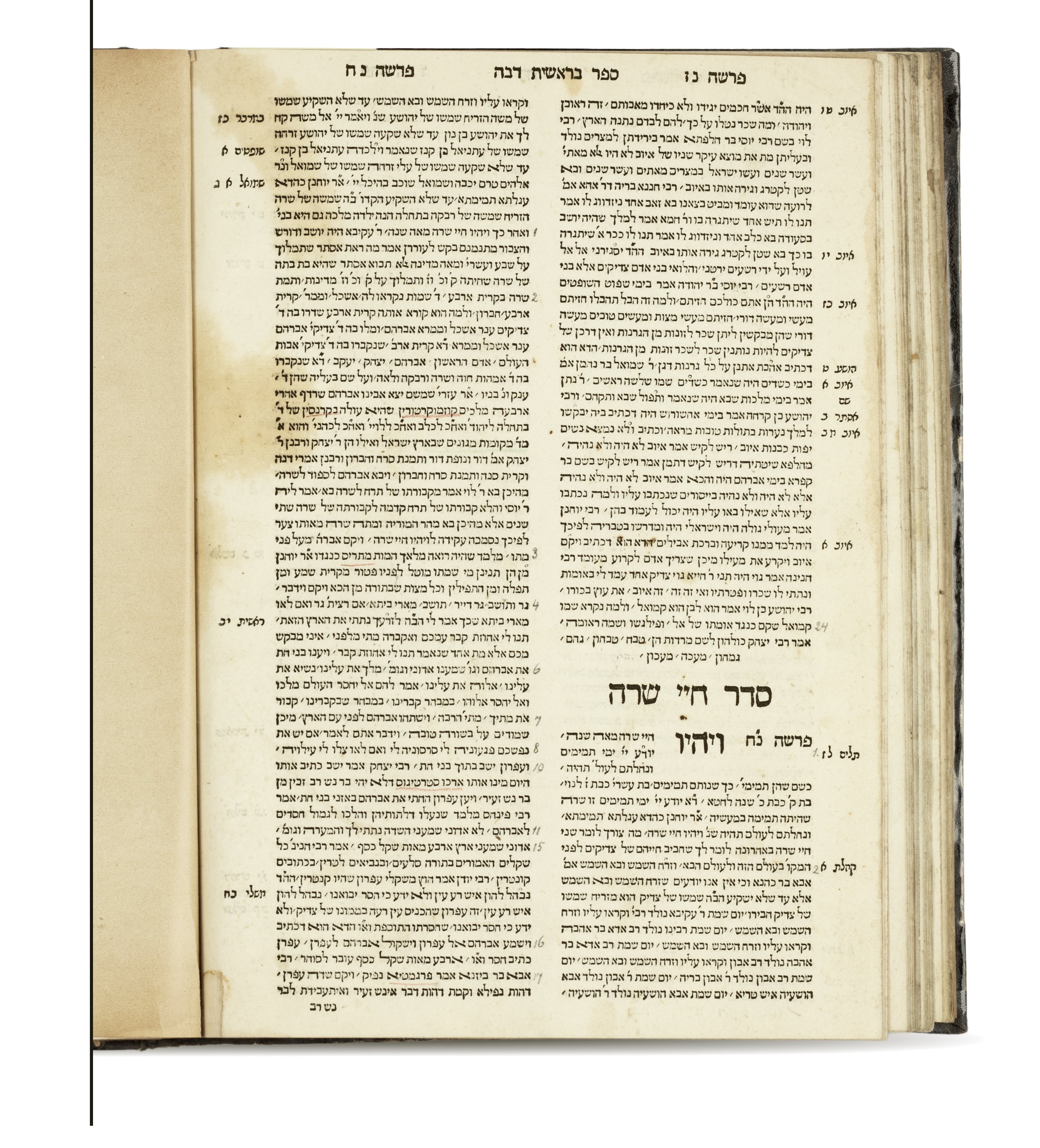
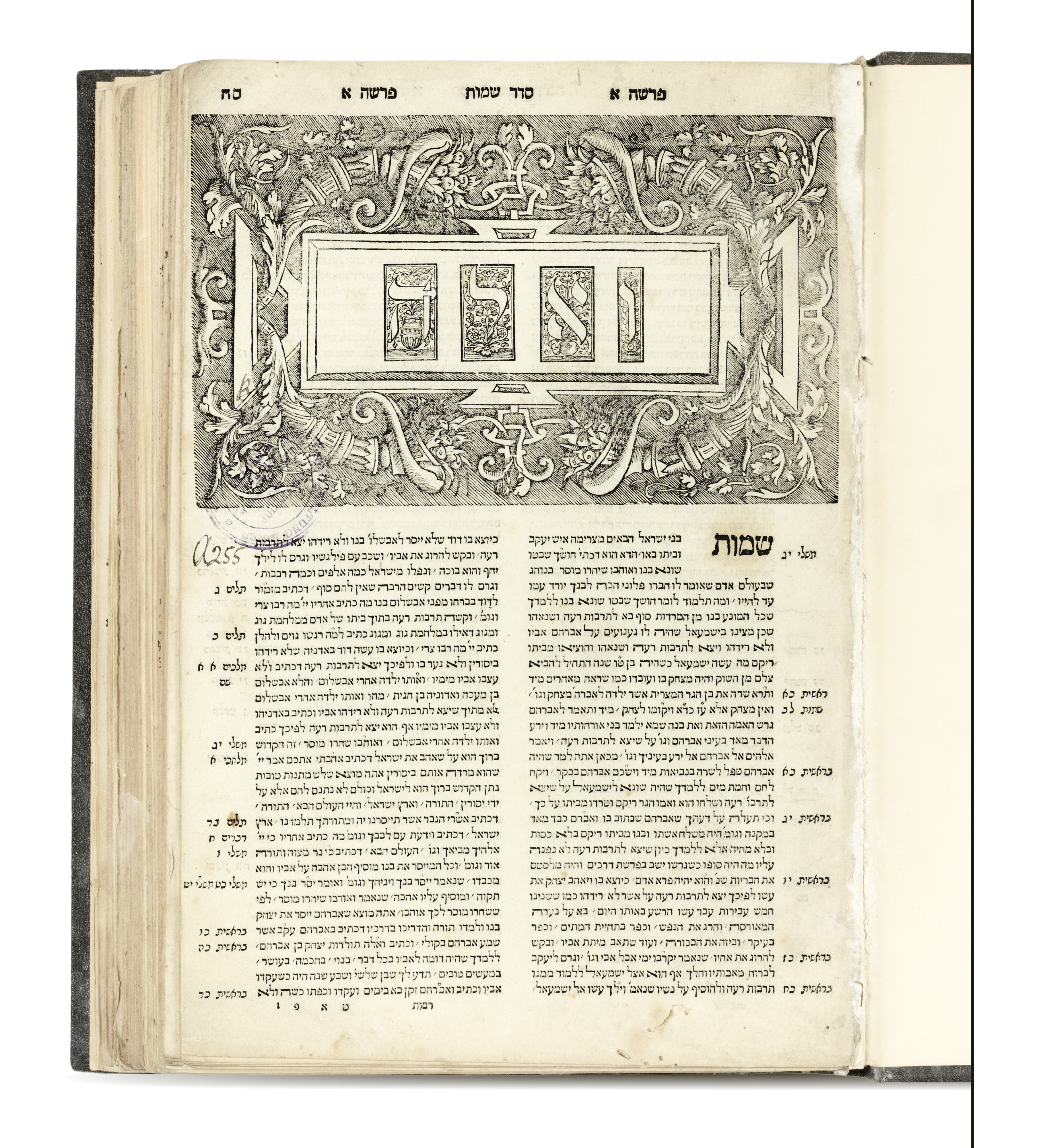
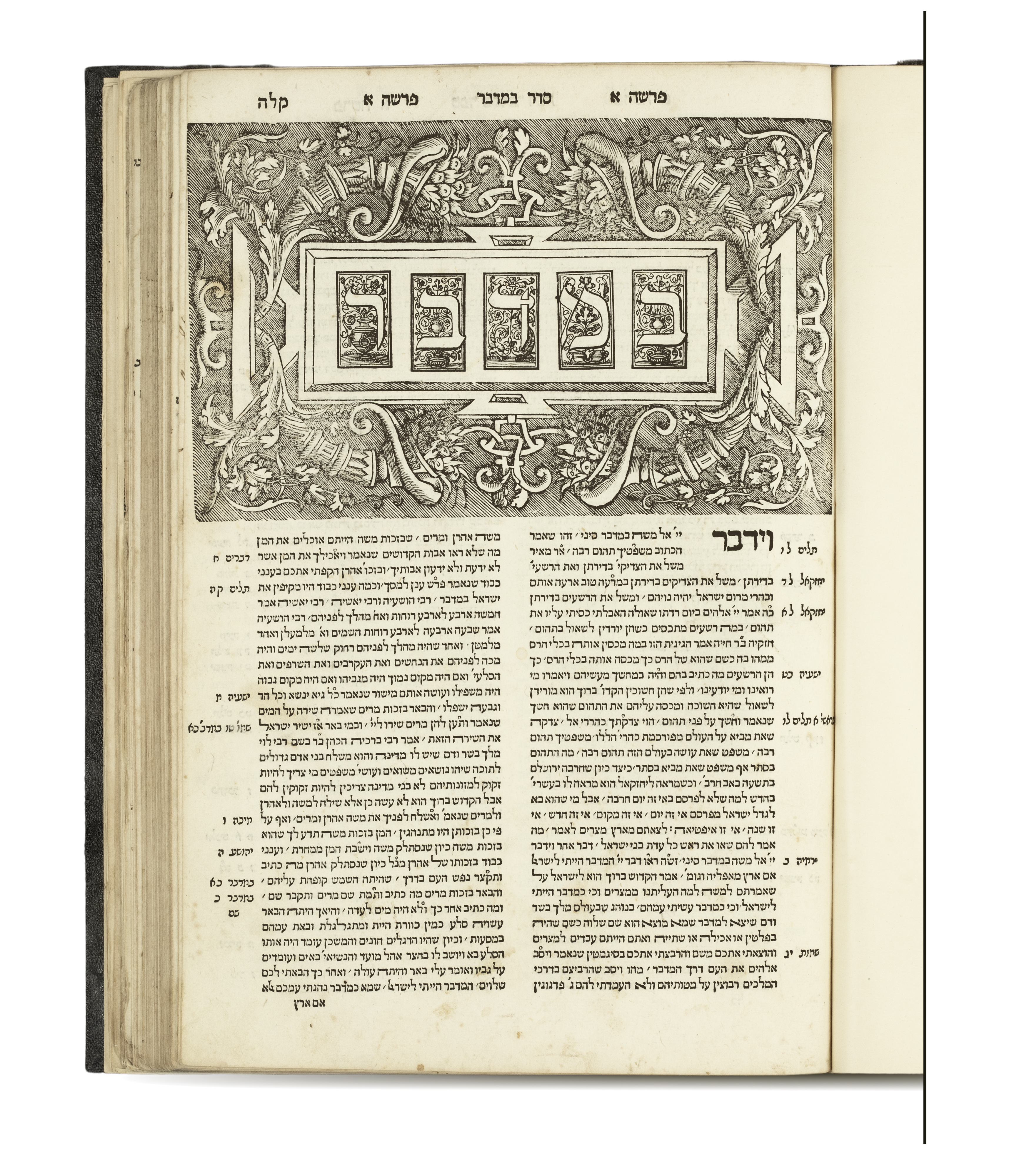
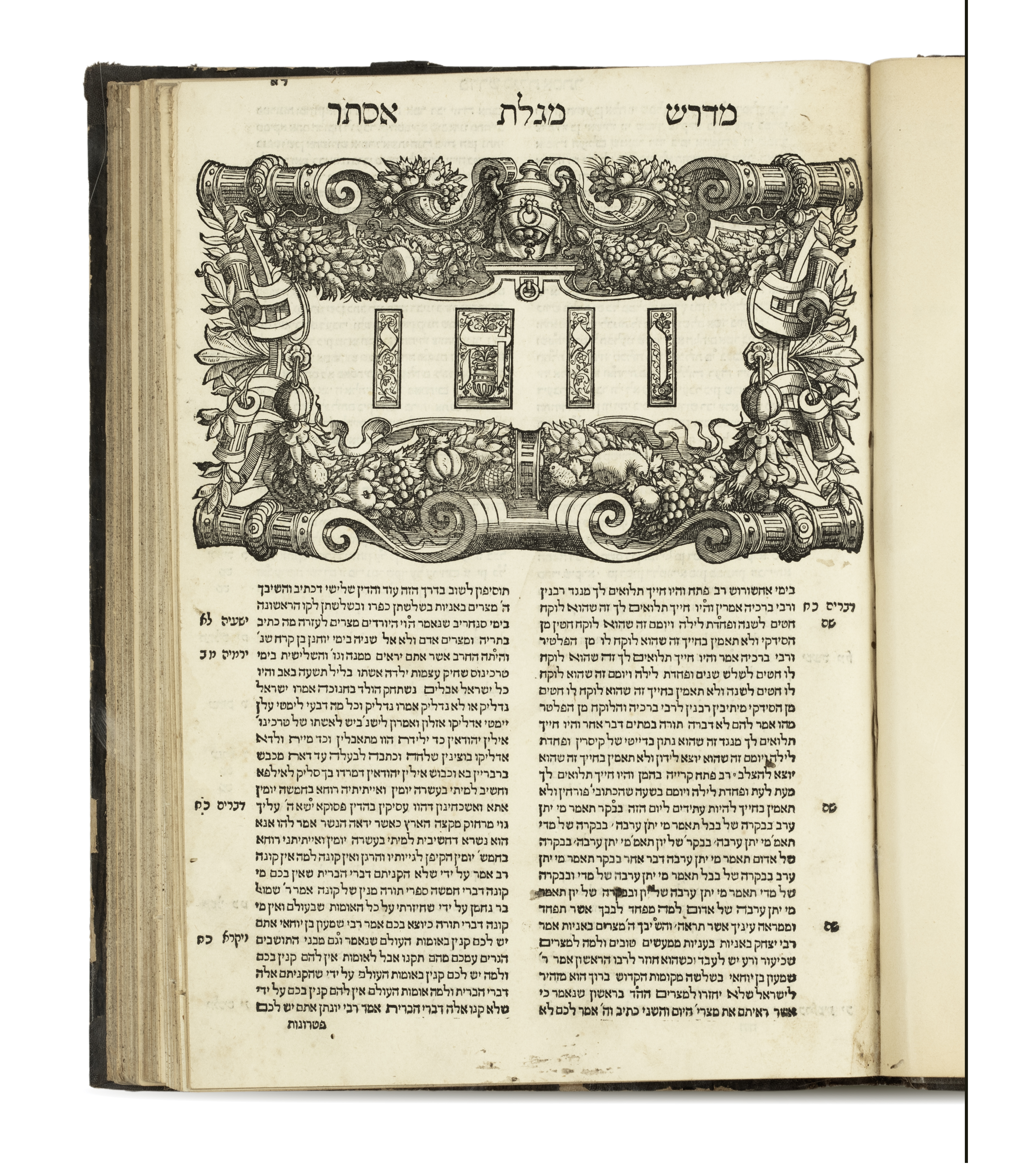
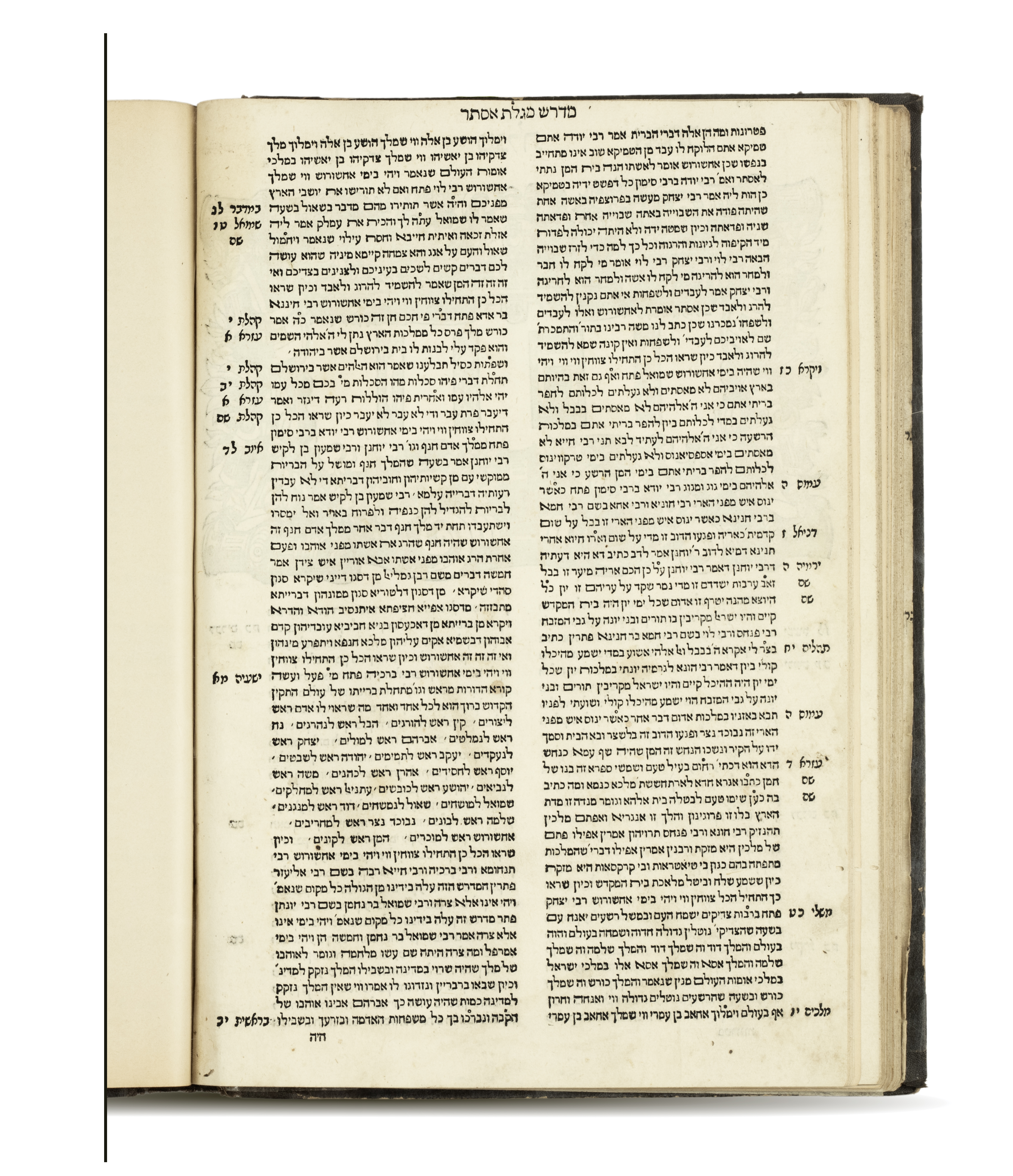
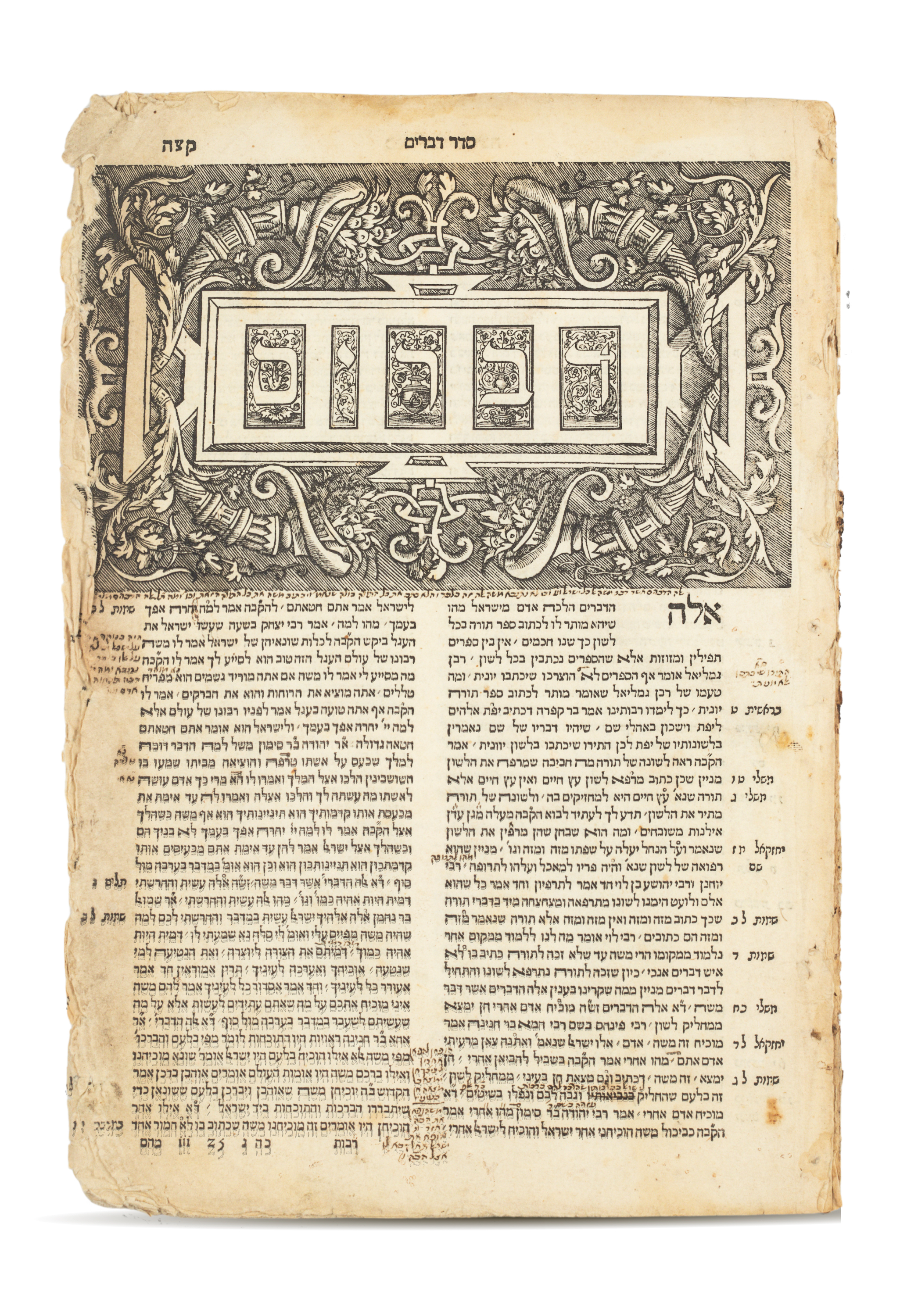
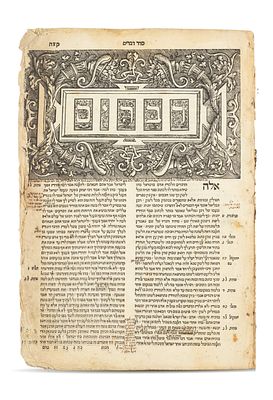
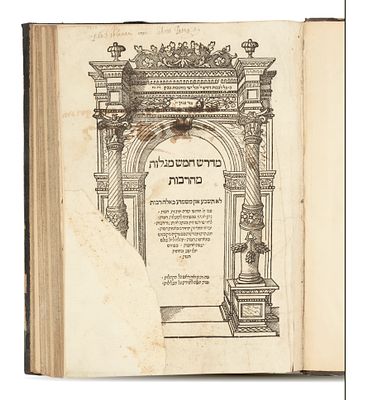
A: Midrash Rabbah on the Torah and the Five Megillos. Venice, 1545. Three volumes.
The second edition of one of the most important sifrei Midrashim. The first edition was printed in Constantinople in 1512 and is almost impossible to obtain.

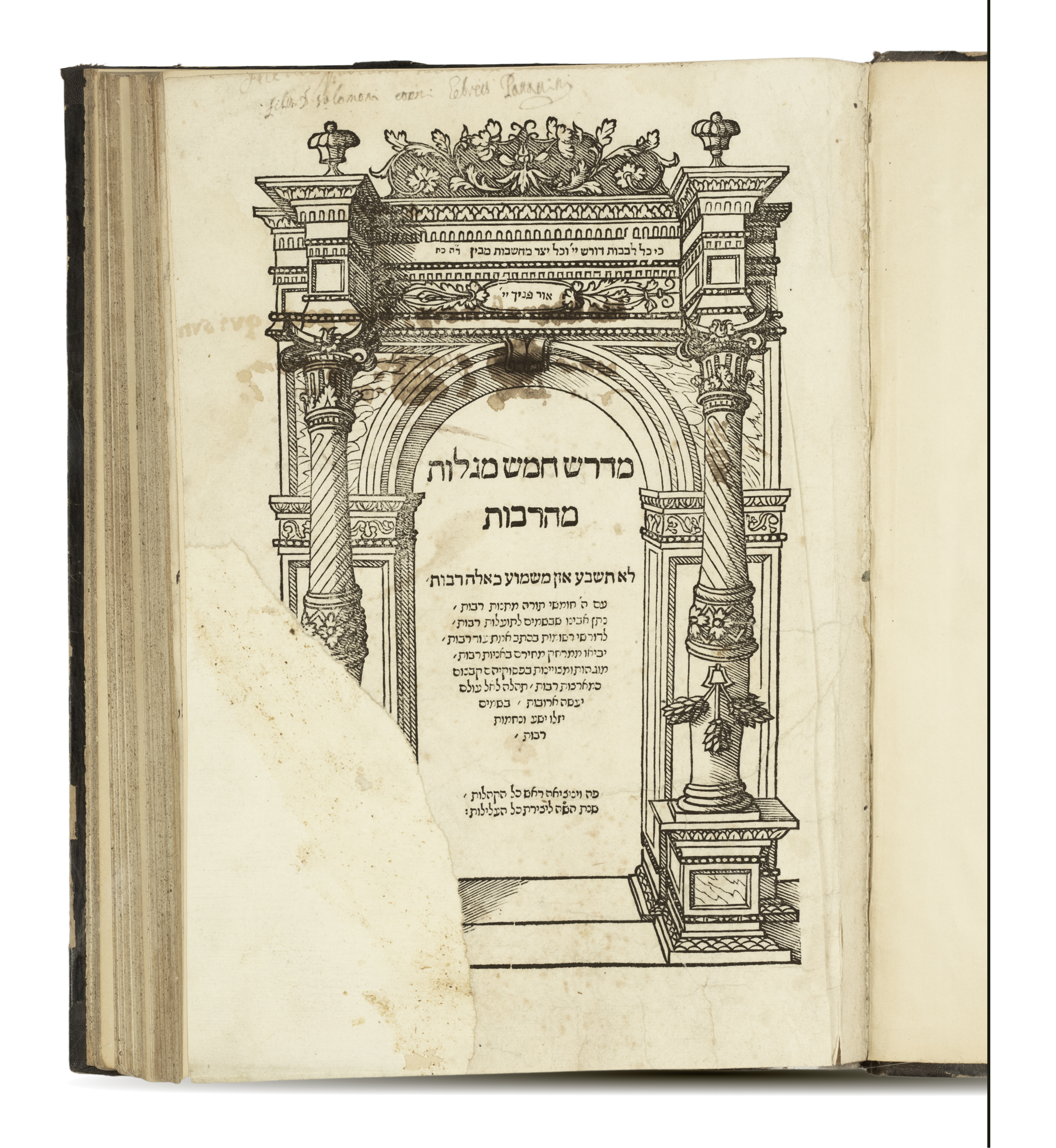
On the title page of the Torah volume, it is recorded that it was printed by the famed printer Daniel Bomberg. In certain copies, the title page states that it was printed by Giustiniani.

Several variant forms in the decorative architectural borders frame each Chumash; the present copy is the second of the four types recorded by Yitzchak Rivkind (Dikdukei Sefarim, Kiryat Sefer, vol. 4, 1927–1928, p. 277, no. 29).

Bibliography: Stefansky, Sifrei Yesod, nos. 127–128 (notes).

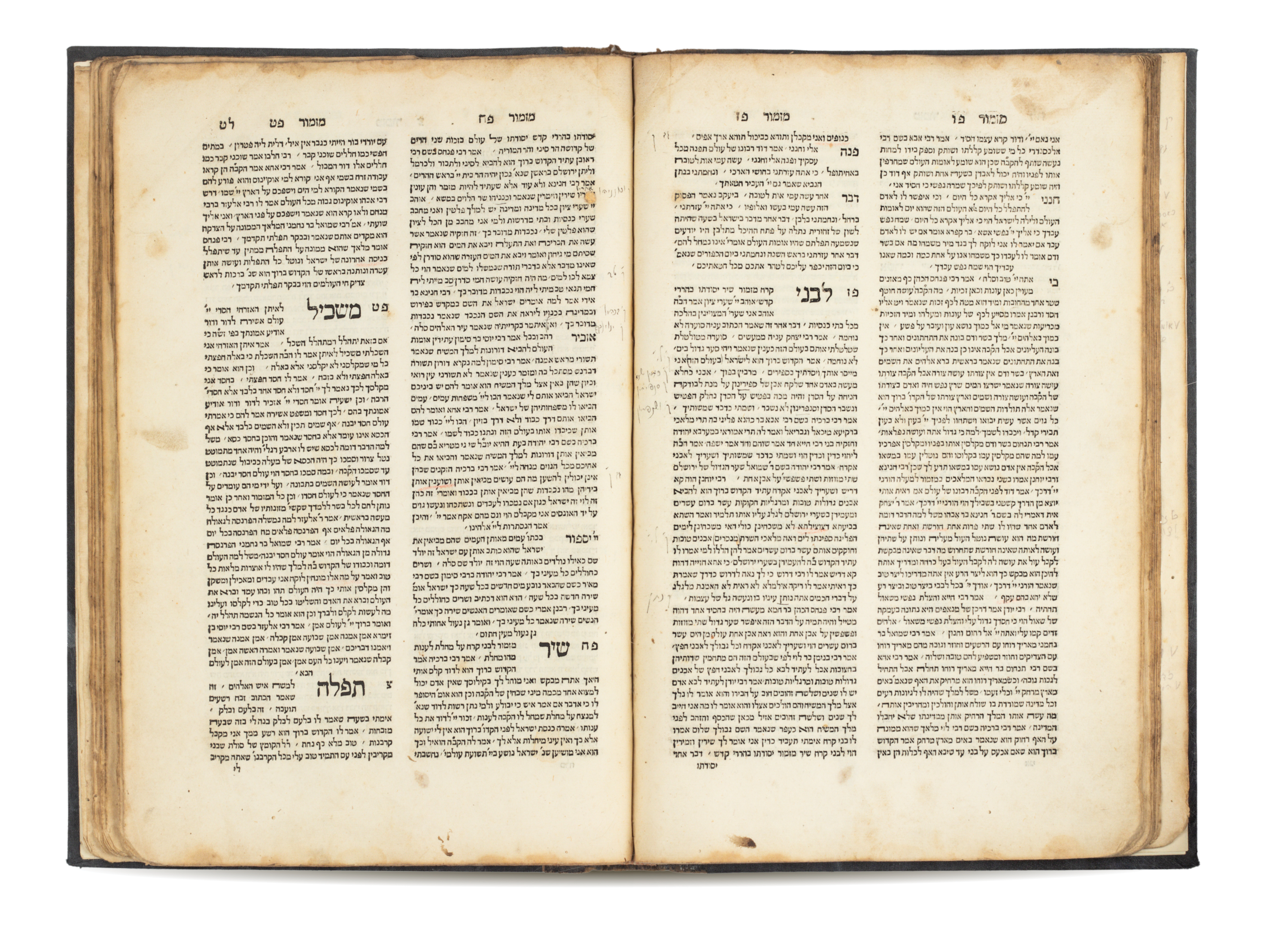
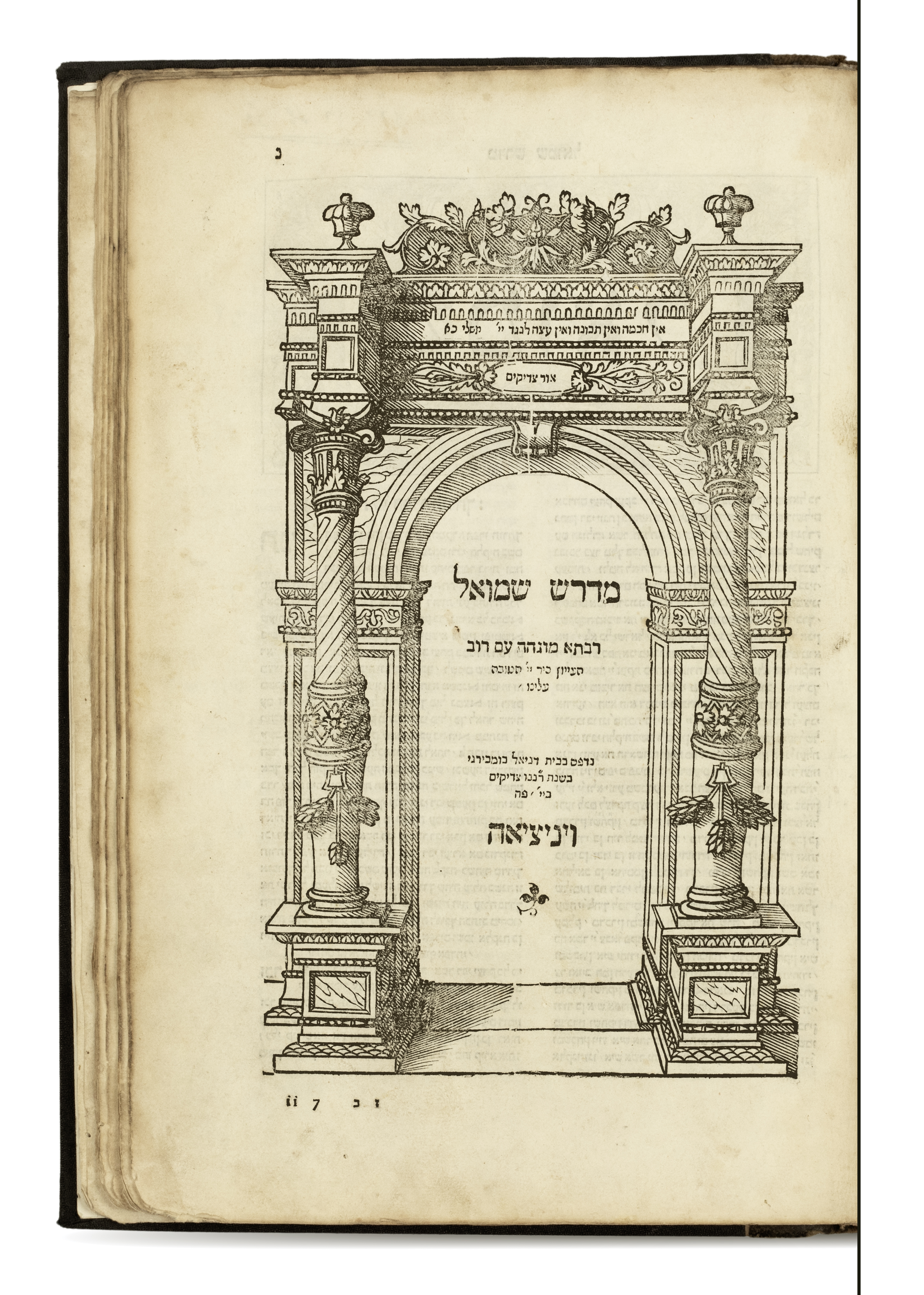
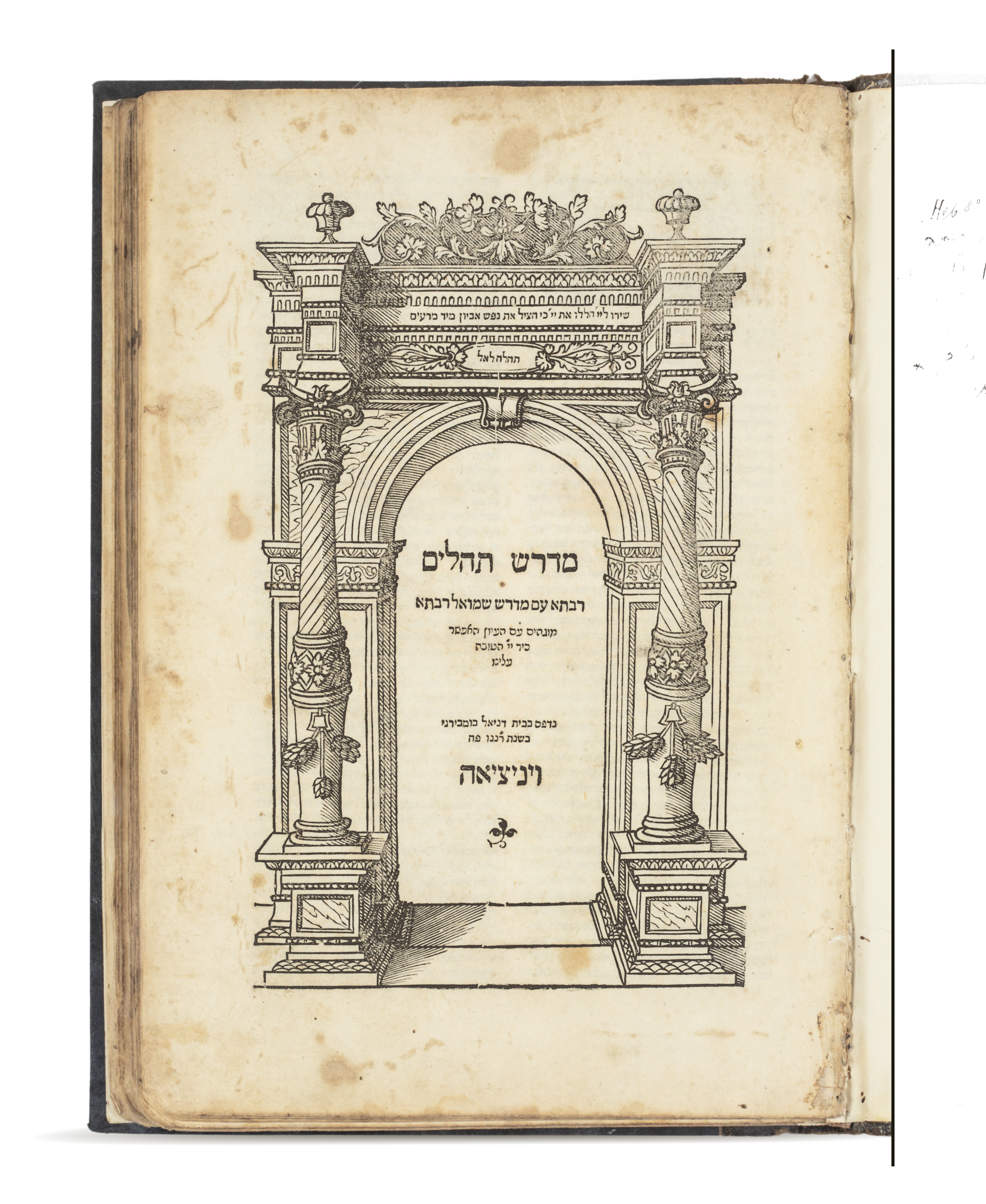
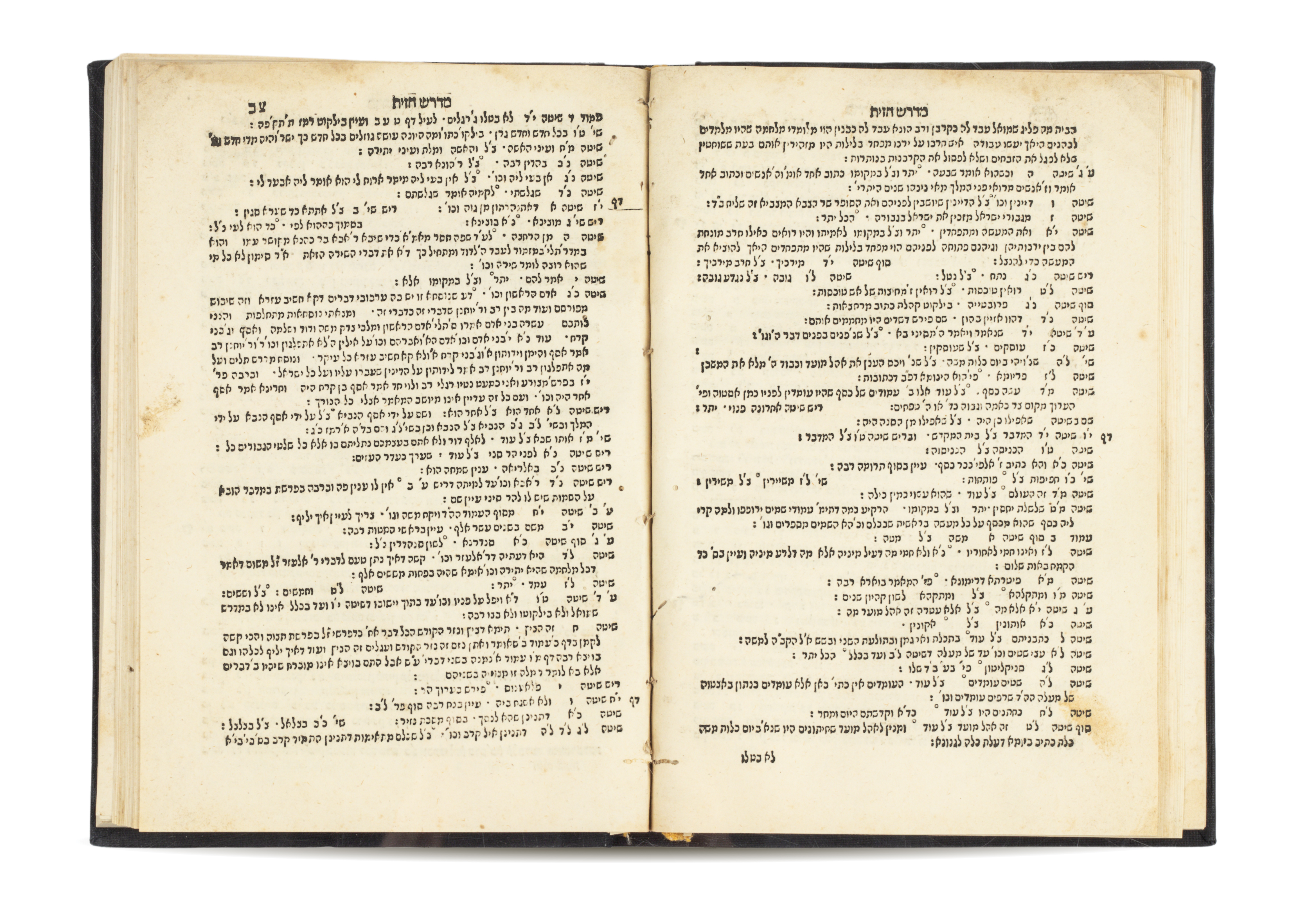
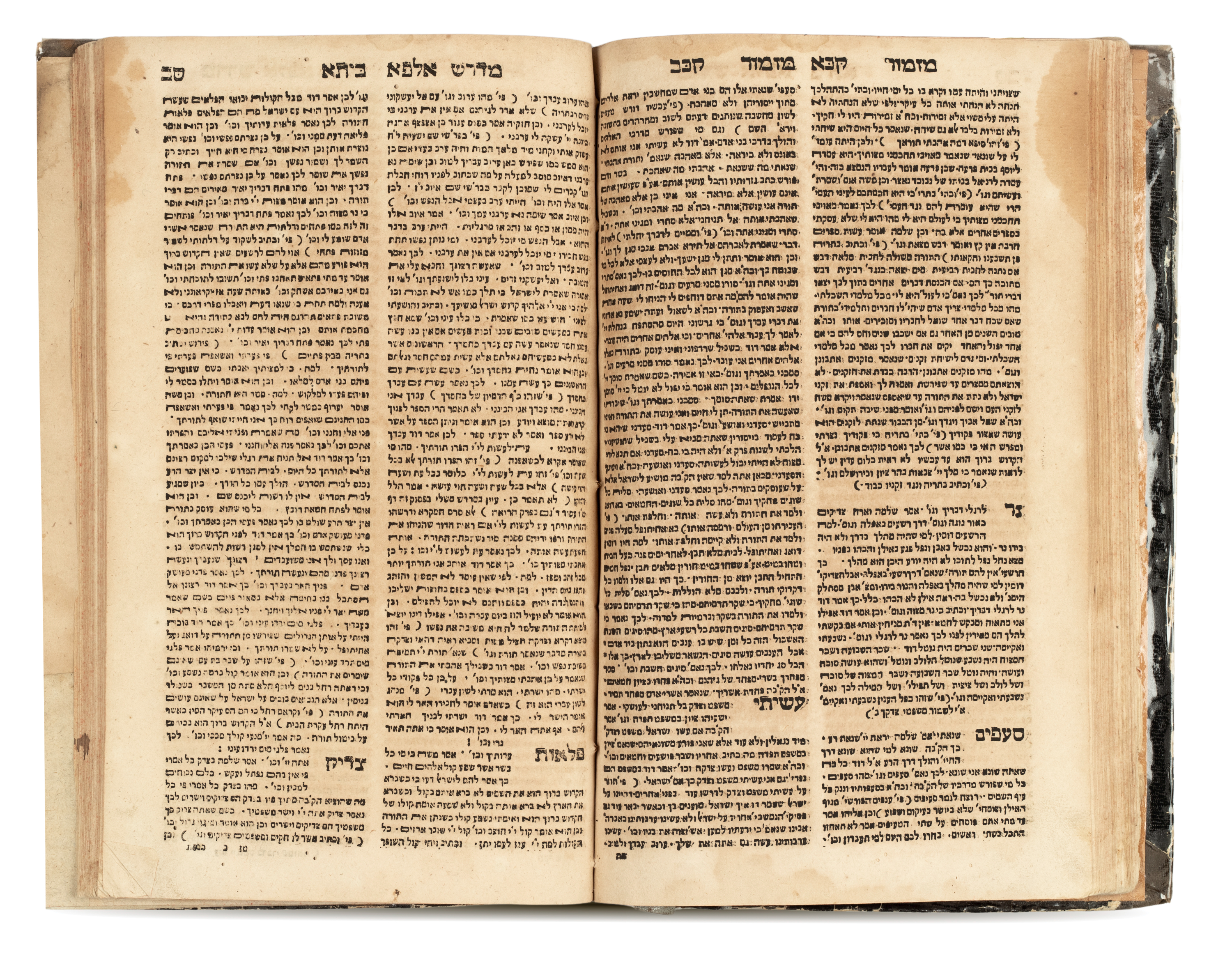
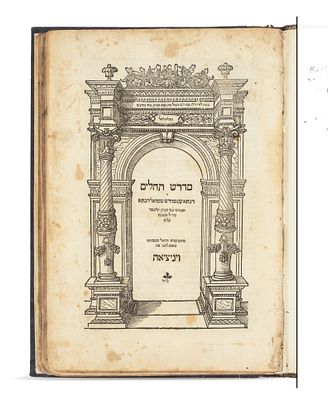
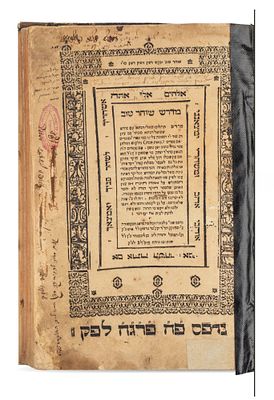
B: Midrash Tehillim and Midrash Shmuel. Venice, 1546.
Two early and foundational sifrei Midrashim in a single volume, with separate title pages:

Midrash Tehillim – the Midrashim of Chazal on Sefer Tehillim, also known as Midrash Shocher Tov, after the opening words of the work.

Midrash Shmuel – the Midrashim of Chazal on Sefer Shmuel and Sefer Mishlei. The commentary “Alfa Beisa” by Rabbi Matisyah HaYitzhari is printed on leaves 58b–66a.

This is the first time Midrash Tehillim has been printed in its entirety as a single, unified work; previously, it appeared in two parts, each printed in a different location.

It was printed by the famous printer Daniel Bomberg.

(The subsequent edition of Midrash Tehillim, titled Midrash Shocher Tov, with the glosses of Rabbi Yitzchak Katz, also appears in the present item; see below, item D.)

Bibliography: Stefansky, Sifrei Yesod, nos. 130–131 (notes).

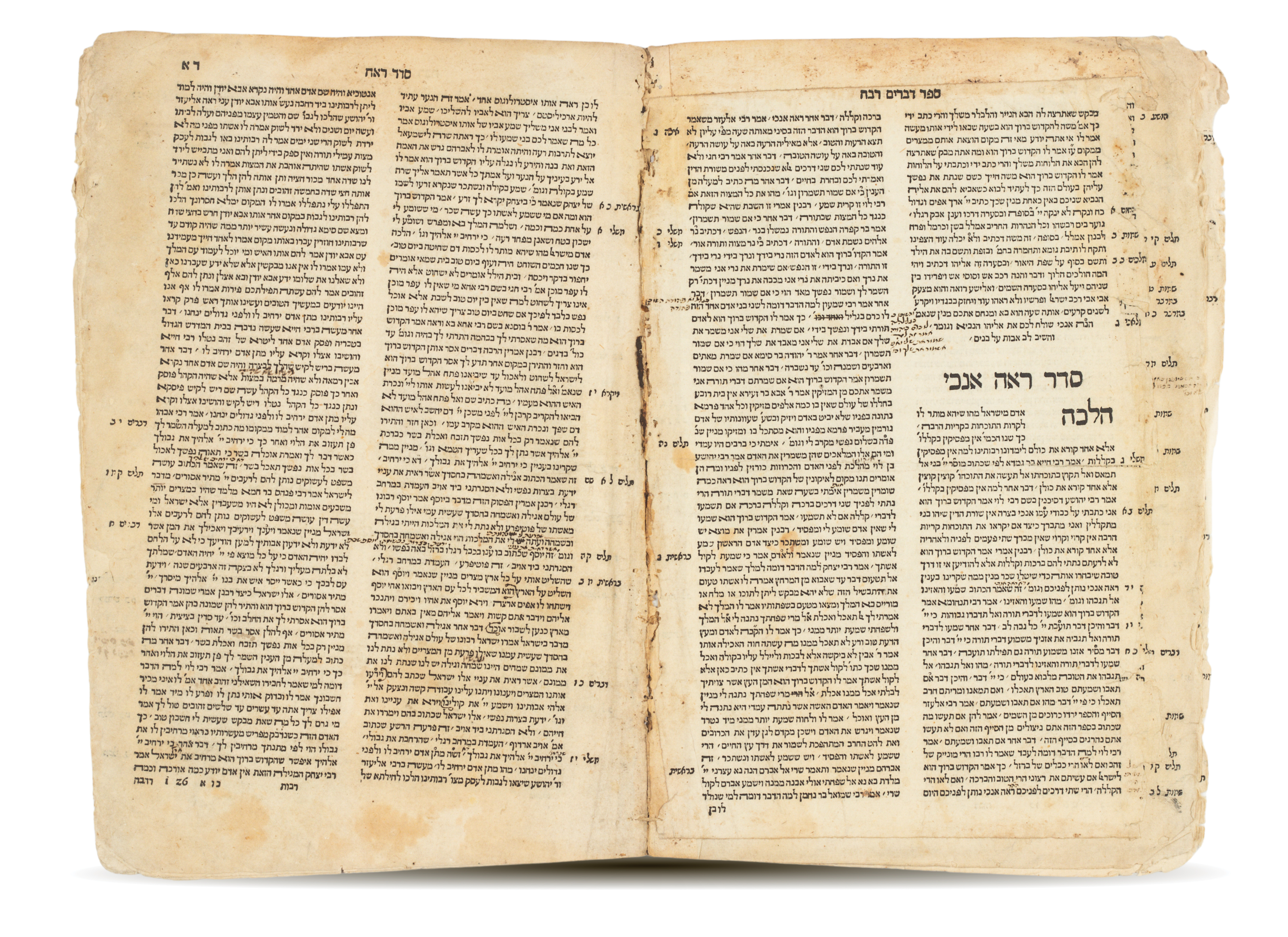
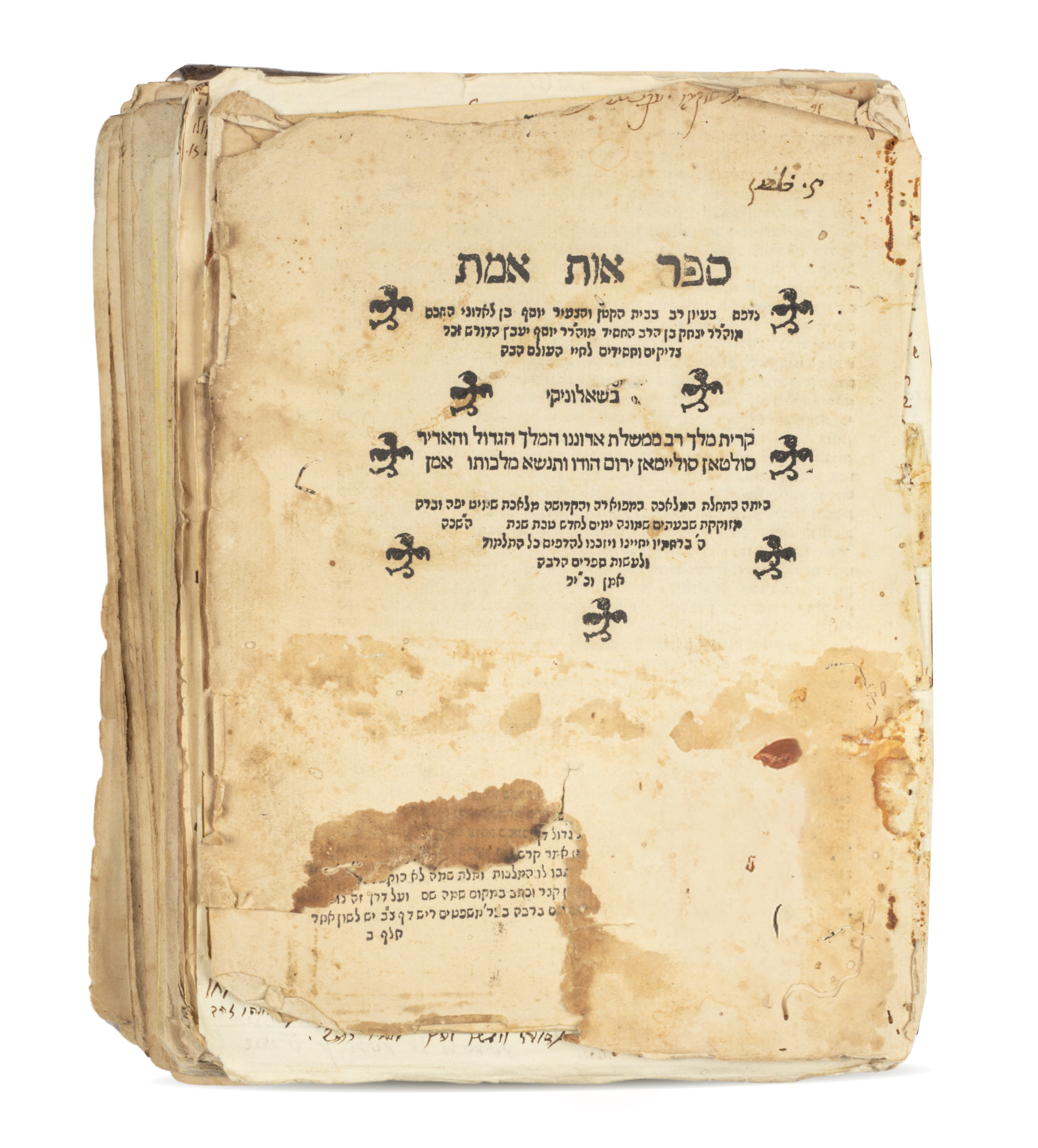
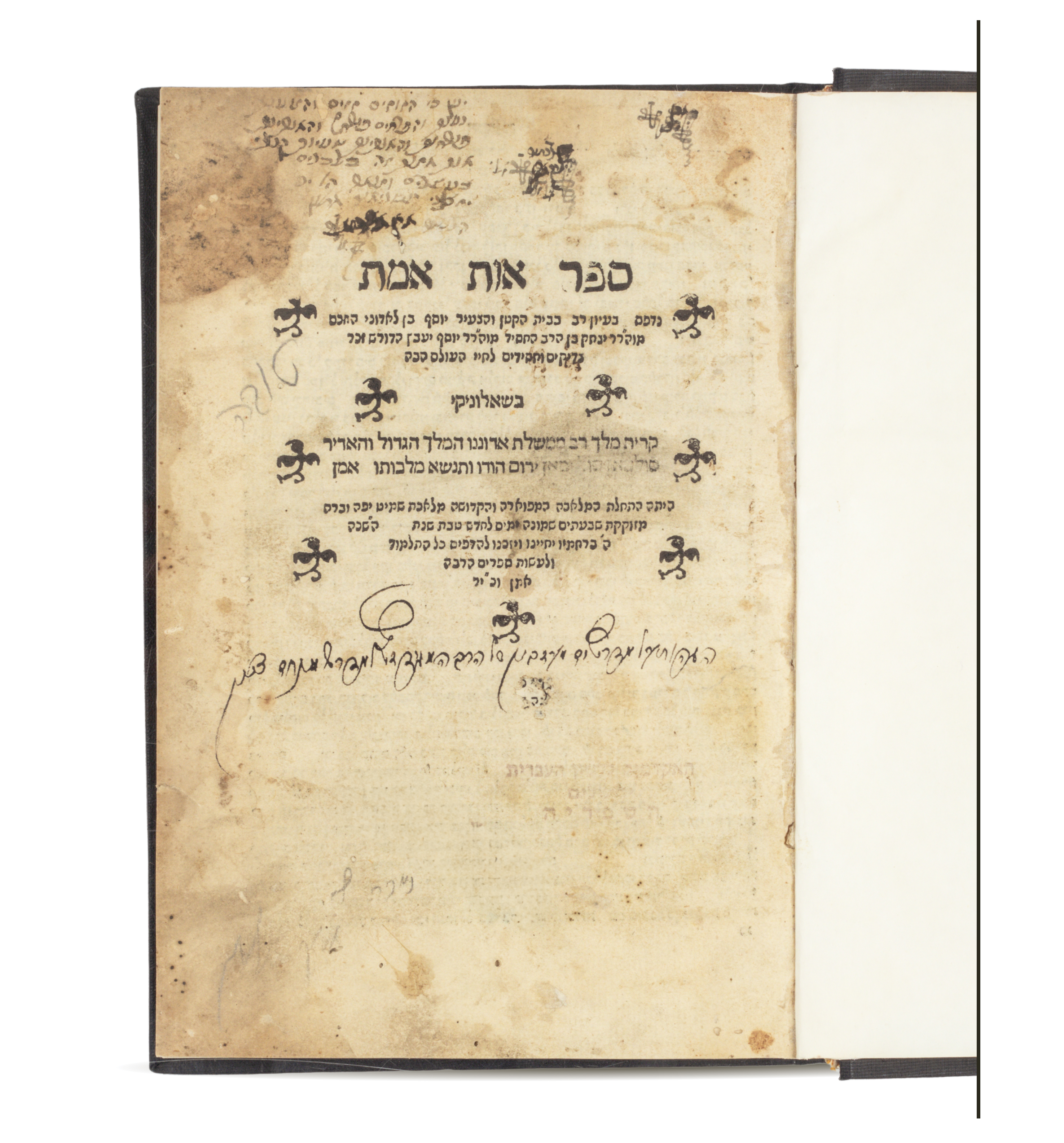
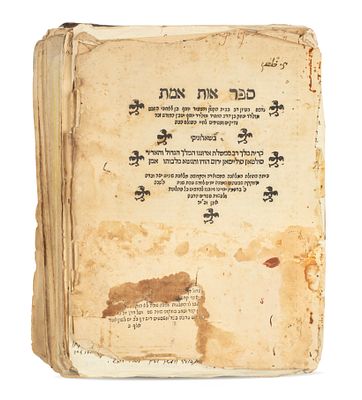
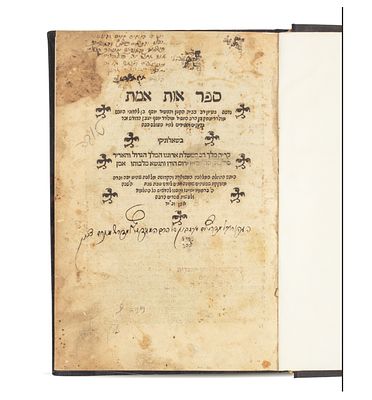
C: Sefer Ois Emes. Salonika, 1565. First edition. Two copies, one lacking [19] leaves.

Glosses and textual emendations to several sifrei Midrashim, as well as glosses on the siddur, by Rabbi Meir Benveniste.

This is the first sefer devoted to the correction and emendation of sifrei Midrashim, and in many places its corrections were incorporated into the standard text itself.

The Midrashim with glosses printed here are: Mechilta, Sifra, Sifri, Midrash Rabbah, Tanchuma, Midrash Shmuel, Tehillim and Mishlei, and Yalkut Shimoni.

At the end of the sefer are numerous glosses on the order of prayer (Nusach Sefard), some of which were embraced throughout Jewish communities. Part of the glosses on the siddur were taken from the personal siddur of Rabbi Shlomo Alkabetz, author of Lecha Dodi.

On the title page of the first copy, there is an inscription in the handwriting of Rabbi Zundel of Salant: “Glosses on Midrashim from the estate of the Rav HaMaggid, of blessed memory, for the Midrash Menachem Tzion.” The “Rav HaMaggid” refers to the maggid Rabbi Moshe Rivlin, who merited to see the Vilna Gaon and passed away in 1846.

Bibliography: Stefansky, Sifrei Yesod, p. 87 (addenda).

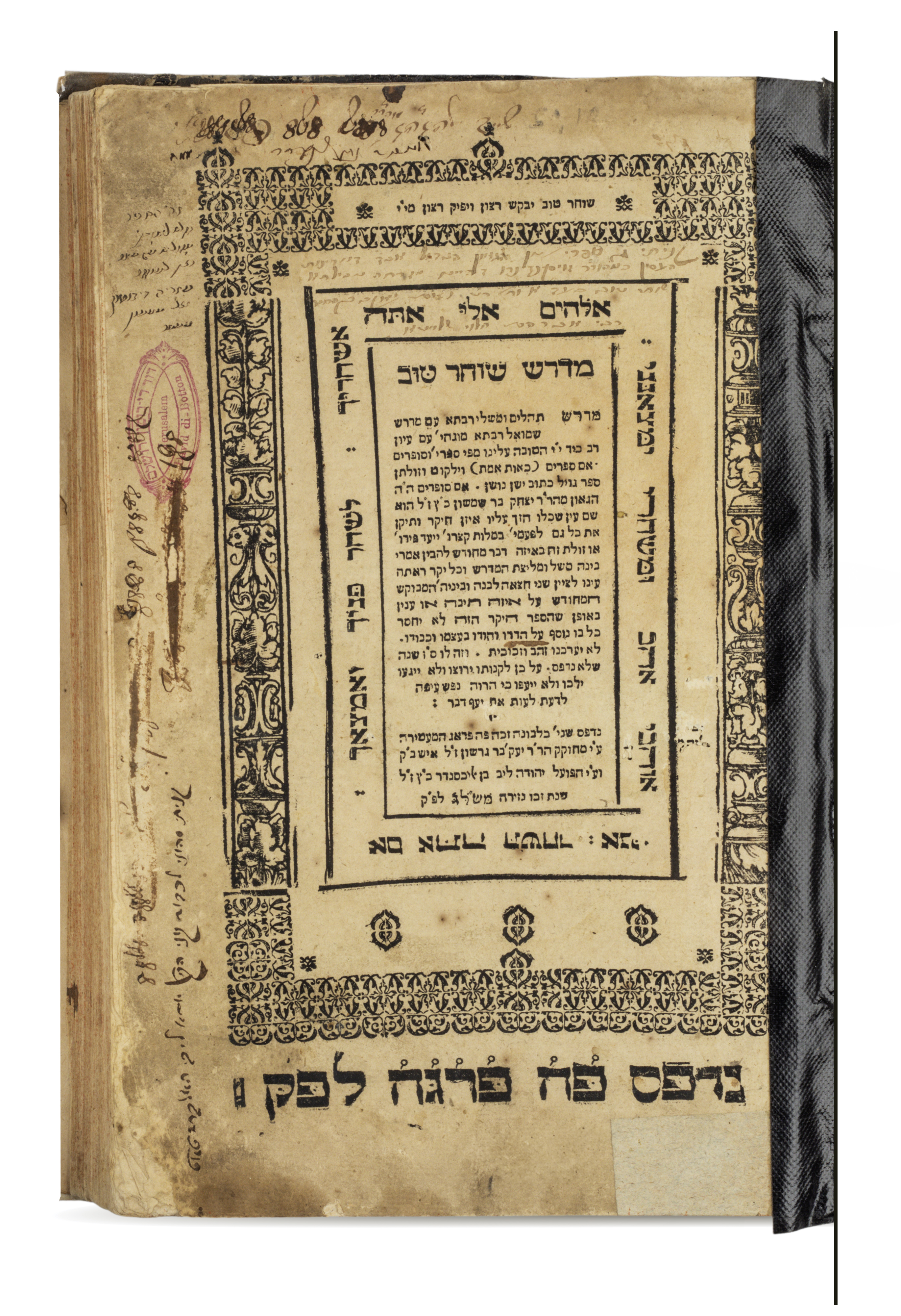
D: Midrash Shocher Tov. Prague, 1613. First edition of the glosses of Rabbi Yitzchak Katz, son-in-law of the Maharal of Prague.
Midrash Shocher Tov, containing the Midrashim of Chazal on Sefer Tehillim.

In this edition, there were added glosses by the Gaon Rabbi Yitzchak ben Shimshon Katz, the distinguished son-in-law of the Maharal of Prague.

An inscription on the title page attests that the sefer was purchased from the gaon Rabbi Mordechai Ziskind Rottenberg (Maharam Rottenberg), Av Beis Din of Witzenhausen in the province of Hesse, Posen (as recorded in his approbation to Chavos Yair), Grodno, and Lublin.

The wording of the inscription reads: “I purchased three sefarim from the great gaon, Av Beis Din of the provinces of Hesse, the honorable Rabbi Ziskind, namely Mizracha (!), Mechilta, Shocher Tov, for one and eight Reichsthaler. Signed, Yaakov ben hachaver Rabbi Avraham HaLevi, shlita.”

Bibliography: Stefansky, Sifrei Yesod, no. 130 (in note).

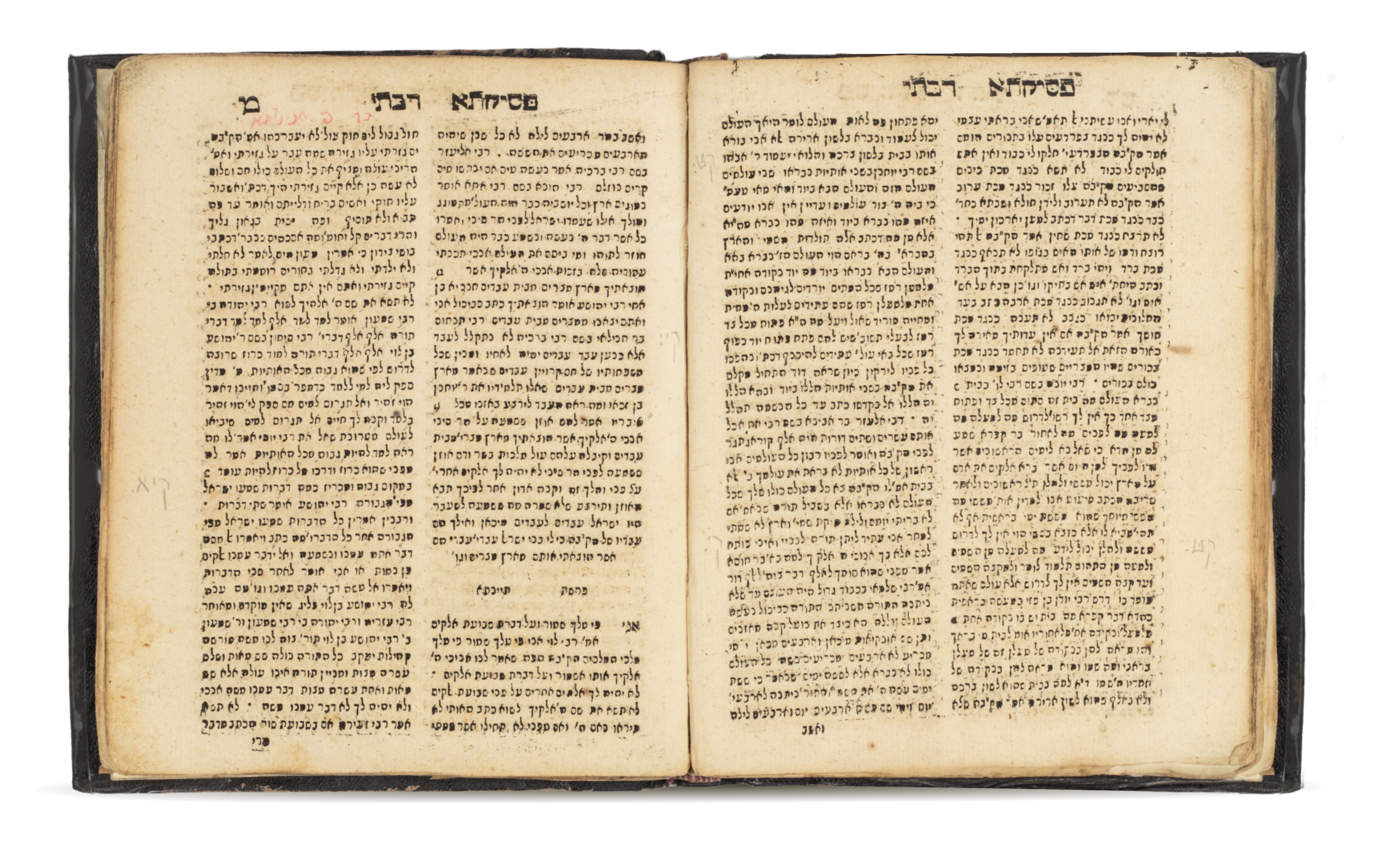
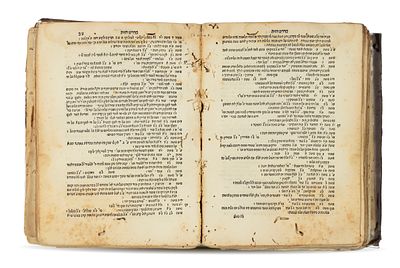
E: Sefer Yesod – Midrash Pesikta Rabbasi. Prague, 1654. Incomplete copy.
A Midrash of Chazal arranged according to the parshiyos, revolving primarily around the festivals of the year. An extremely rare sefer yesod.

Bibliography: Stefansky, Sifrei Yesod, no. 122.

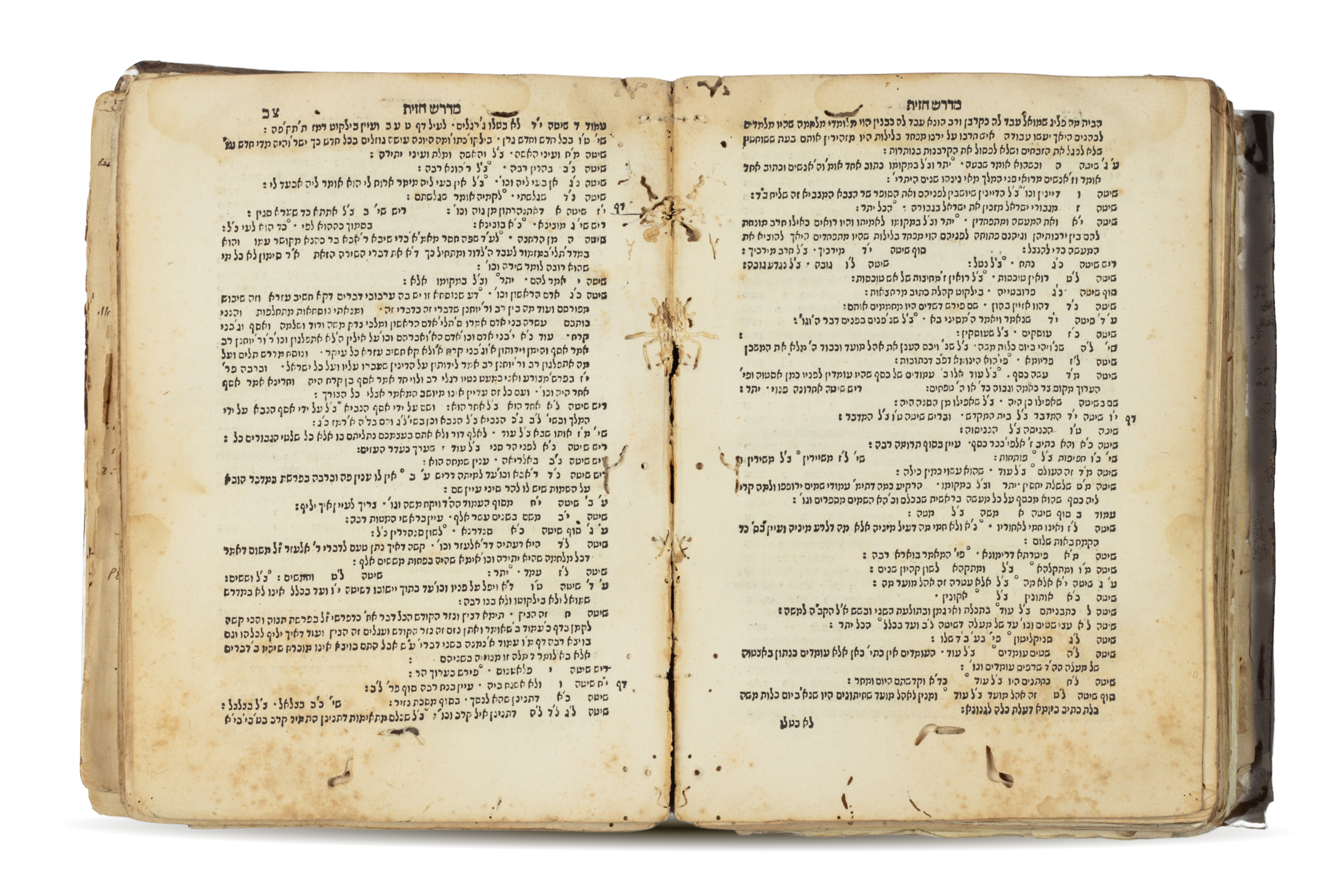
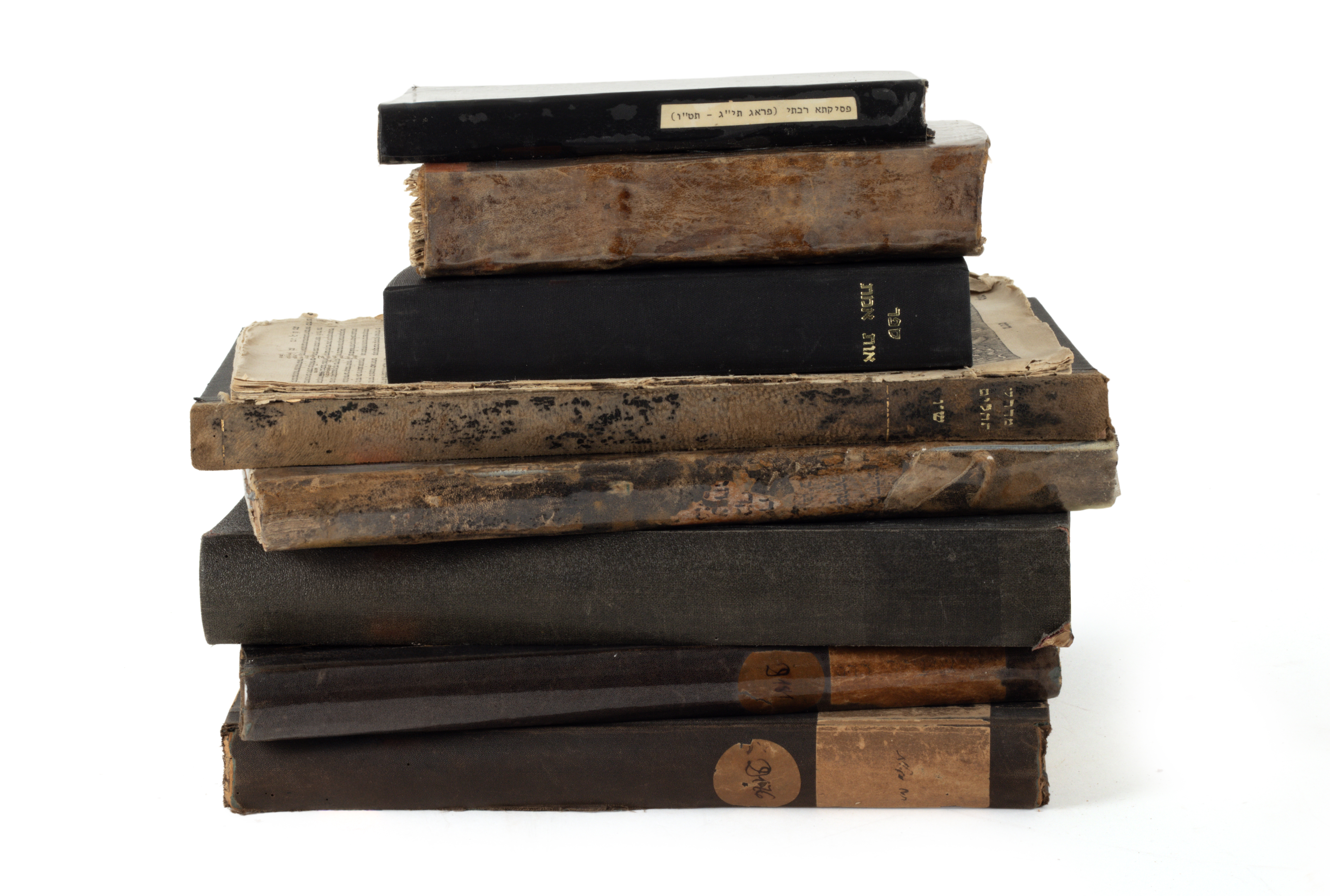
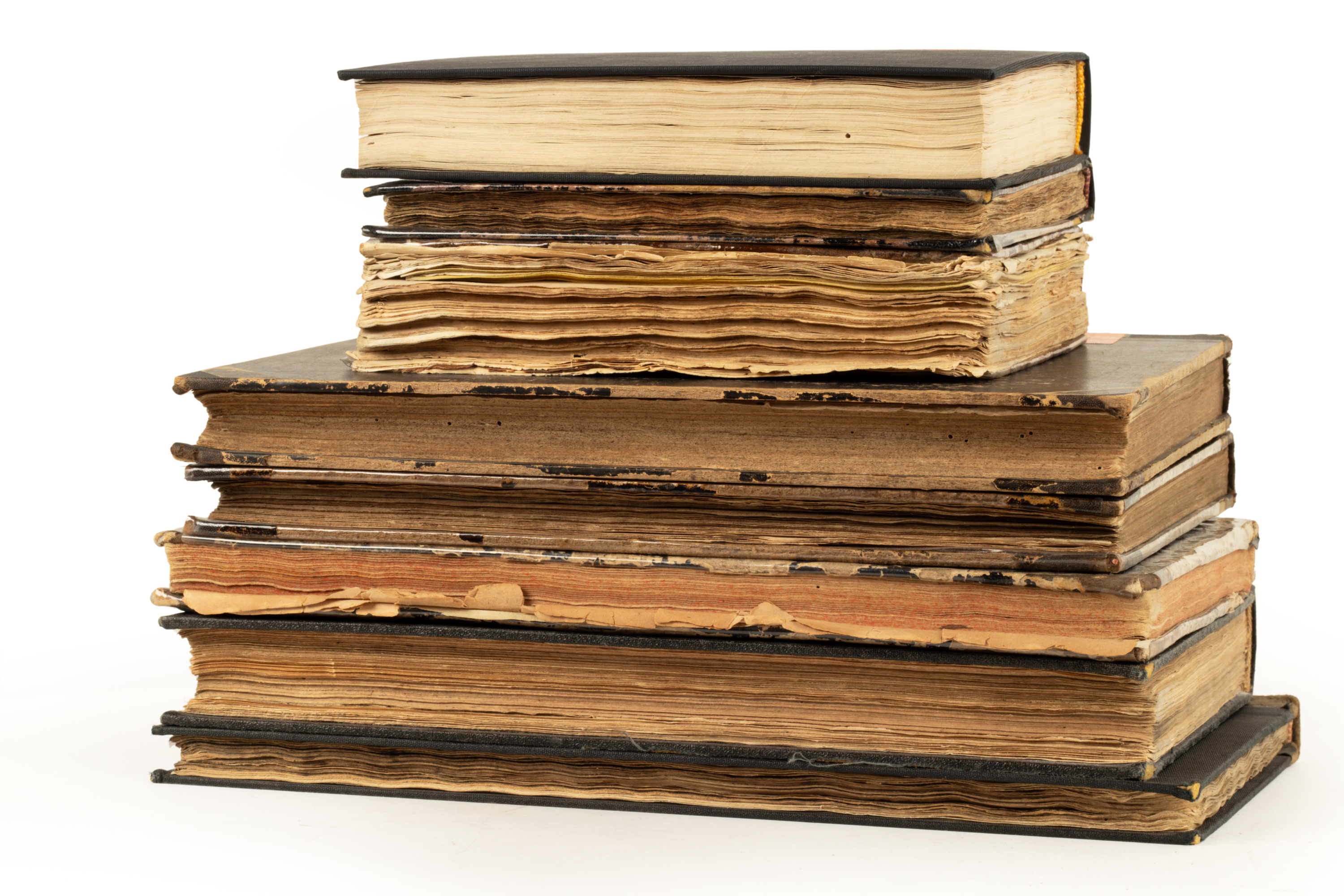
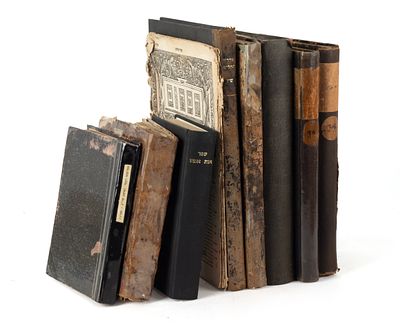
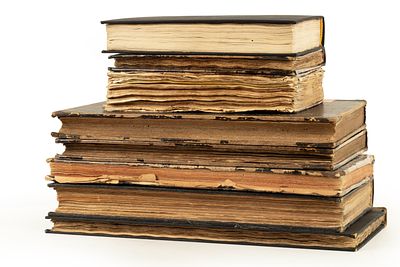
In total, [8] volumes. Condition varies; most volumes are in fair to fair–good condition; some are in poor condition with numerous holes and significant wear.

The collection is sold as is. The grouping of these sefarim into a single lot reflects their physical condition.

Please review the photos prior to submitting a bid. Additional photos are available upon request from our office.

– – – – – – – – – – – – – –

Detailed Condition Report of the Sefarim:

A – Midrash Rabbah:
A complete copy in three volumes, with two title pages.
First volume: 64 leaves. Fair–good condition, with holes in some leaves. The margins of the original title page were trimmed up to the border and mounted onto another sheet of paper.
Second volume: 65–201, 201–208 leaves. Fair to fair–good condition, with holes in some leaves.
Third volume: 90 leaves. Fair to fair–good condition. Part of the title page is lacking. Holes in some leaves.
Interleaved copies (including blank leaves inserted between sections for the writing of notes).

B – Midrash Tehillim and Midrash Shmuel:
Complete copy. 66; 50–62; 65–74 leaves. Fair–good condition. Holes in some leaves.
Numerous glosses appear throughout the volume, most written in pencil, dating approximately to the mid-20th century.

C – Sefer Ois Emes, two copies:
First copy – complete. 382 leaves. Leaf 4 bound twice. A torn corner on leaf 113 with the loss of several words.
Sephardi signatures on the title page, partially erased.
Fair–poor condition, with numerous holes throughout the volume.
Second copy – incomplete. Present are leaves [1]–3, 9–56, 61–[172]. Originally 182 leaves; in this copy, a total of [19] leaves are lacking: 4–8, 57–60, [173]–182. The missing leaves were completed in handwriting in approximately the mid-20th century.
Poor condition, with numerous holes throughout. Many leaves are detached.

D – Midrash Shocher Tov:
Complete copy. 31, [1], 37–88, 69–86 leaves.
Leaf 85 of the second foliation appears twice, and the subsequent leaf 86 appears in handwritten transcription, executed in the first half of the 19th century.

E – Pesikta Rabbasi:
Incomplete copy, containing leaves 1–45, 48–74. Originally [1], 74 leaves; in the present copy [3] leaves are lacking: the title page and leaves 46–47.
Fair condition, with numerous holes in the first and last leaves.


Collection of Five Foundational Sifrei Midrash

1545–1654


A collection of early sifrei Midrashim — some are sifrei yesod in their first edition, and some are sifrei yesod in their second and principal editions.

A: Midrash Rabbah on the Torah and the Five Megillos. Venice, 1545. Three volumes.
The second edition of one of the most important sifrei Midrashim. The first edition was printed in Constantinople in 1512 and is almost impossible to obtain.

On the title page of the Torah volume, it is recorded that it was printed by the famed printer Daniel Bomberg. In certain copies, the title page states that it was printed by Giustiniani.

Several variant forms in the decorative architectural borders frame each Chumash; the present copy is the second of the four types recorded by Yitzchak Rivkind (Dikdukei Sefarim, Kiryat Sefer, vol. 4, 1927–1928, p. 277, no. 29).

Bibliography: Stefansky, Sifrei Yesod, nos. 127–128 (notes).

B: Midrash Tehillim and Midrash Shmuel. Venice, 1546.
Two early and foundational sifrei Midrashim in a single volume, with separate title pages:

Midrash Tehillim – the Midrashim of Chazal on Sefer Tehillim, also known as Midrash Shocher Tov, after the opening words of the work.

Midrash Shmuel – the Midrashim of Chazal on Sefer Shmuel and Sefer Mishlei. The commentary “Alfa Beisa” by Rabbi Matisyah HaYitzhari is printed on leaves 58b–66a.

This is the first time Midrash Tehillim has been printed in its entirety as a single, unified work; previously, it appeared in two parts, each printed in a different location.

It was printed by the famous printer Daniel Bomberg.

(The subsequent edition of Midrash Tehillim, titled Midrash Shocher Tov, with the glosses of Rabbi Yitzchak Katz, also appears in the present item; see below, item D.)

Bibliography: Stefansky, Sifrei Yesod, nos. 130–131 (notes).

C: Sefer Ois Emes. Salonika, 1565. First edition. Two copies, one lacking [19] leaves.

Glosses and textual emendations to several sifrei Midrashim, as well as glosses on the siddur, by Rabbi Meir Benveniste.

This is the first sefer devoted to the correction and emendation of sifrei Midrashim, and in many places its corrections were incorporated into the standard text itself.

The Midrashim with glosses printed here are: Mechilta, Sifra, Sifri, Midrash Rabbah, Tanchuma, Midrash Shmuel, Tehillim and Mishlei, and Yalkut Shimoni.

At the end of the sefer are numerous glosses on the order of prayer (Nusach Sefard), some of which were embraced throughout Jewish communities. Part of the glosses on the siddur were taken from the personal siddur of Rabbi Shlomo Alkabetz, author of Lecha Dodi.

On the title page of the first copy, there is an inscription in the handwriting of Rabbi Zundel of Salant: “Glosses on Midrashim from the estate of the Rav HaMaggid, of blessed memory, for the Midrash Menachem Tzion.” The “Rav HaMaggid” refers to the maggid Rabbi Moshe Rivlin, who merited to see the Vilna Gaon and passed away in 1846.

Bibliography: Stefansky, Sifrei Yesod, p. 87 (addenda).

D: Midrash Shocher Tov. Prague, 1613. First edition of the glosses of Rabbi Yitzchak Katz, son-in-law of the Maharal of Prague.
Midrash Shocher Tov, containing the Midrashim of Chazal on Sefer Tehillim.

In this edition, there were added glosses by the Gaon Rabbi Yitzchak ben Shimshon Katz, the distinguished son-in-law of the Maharal of Prague.

An inscription on the title page attests that the sefer was purchased from the gaon Rabbi Mordechai Ziskind Rottenberg (Maharam Rottenberg), Av Beis Din of Witzenhausen in the province of Hesse, Posen (as recorded in his approbation to Chavos Yair), Grodno, and Lublin.

The wording of the inscription reads: “I purchased three sefarim from the great gaon, Av Beis Din of the provinces of Hesse, the honorable Rabbi Ziskind, namely Mizracha (!), Mechilta, Shocher Tov, for one and eight Reichsthaler. Signed, Yaakov ben hachaver Rabbi Avraham HaLevi, shlita.”

Bibliography: Stefansky, Sifrei Yesod, no. 130 (in note).

E: Sefer Yesod – Midrash Pesikta Rabbasi. Prague, 1654. Incomplete copy.
A Midrash of Chazal arranged according to the parshiyos, revolving primarily around the festivals of the year. An extremely rare sefer yesod.

Bibliography: Stefansky, Sifrei Yesod, no. 122.

In total, [8] volumes. Condition varies; most volumes are in fair to fair–good condition; some are in poor condition with numerous holes and significant wear.

The collection is sold as is. The grouping of these sefarim into a single lot reflects their physical condition.

Please review the photos prior to submitting a bid. Additional photos are available upon request from our office.

– – – – – – – – – – – – – –

Detailed Condition Report of the Sefarim:

A – Midrash Rabbah:
A complete copy in three volumes, with two title pages.
First volume: 64 leaves. Fair–good condition, with holes in some leaves. The margins of the original title page were trimmed up to the border and mounted onto another sheet of paper.
Second volume: 65–201, 201–208 leaves. Fair to fair–good condition, with holes in some leaves.
Third volume: 90 leaves. Fair to fair–good condition. Part of the title page is lacking. Holes in some leaves.
Interleaved copies (including blank leaves inserted between sections for the writing of notes).

B – Midrash Tehillim and Midrash Shmuel:
Complete copy. 66; 50–62; 65–74 leaves. Fair–good condition. Holes in some leaves.
Numerous glosses appear throughout the volume, most written in pencil, dating approximately to the mid-20th century.

C – Sefer Ois Emes, two copies:
First copy – complete. 382 leaves. Leaf 4 bound twice. A torn corner on leaf 113 with the loss of several words.
Sephardi signatures on the title page, partially erased.
Fair–poor condition, with numerous holes throughout the volume.
Second copy – incomplete. Present are leaves [1]–3, 9–56, 61–[172]. Originally 182 leaves; in this copy, a total of [19] leaves are lacking: 4–8, 57–60, [173]–182. The missing leaves were completed in handwriting in approximately the mid-20th century.
Poor condition, with numerous holes throughout. Many leaves are detached.

D – Midrash Shocher Tov:
Complete copy. 31, [1], 37–88, 69–86 leaves.
Leaf 85 of the second foliation appears twice, and the subsequent leaf 86 appears in handwritten transcription, executed in the first half of the 19th century.

E – Pesikta Rabbasi:
Incomplete copy, containing leaves 1–45, 48–74. Originally [1], 74 leaves; in the present copy [3] leaves are lacking: the title page and leaves 46–47.
Fair condition, with numerous holes in the first and last leaves.