Lot : 55

“I am certain that when this work spreads, it will bring the Redemption closer!”


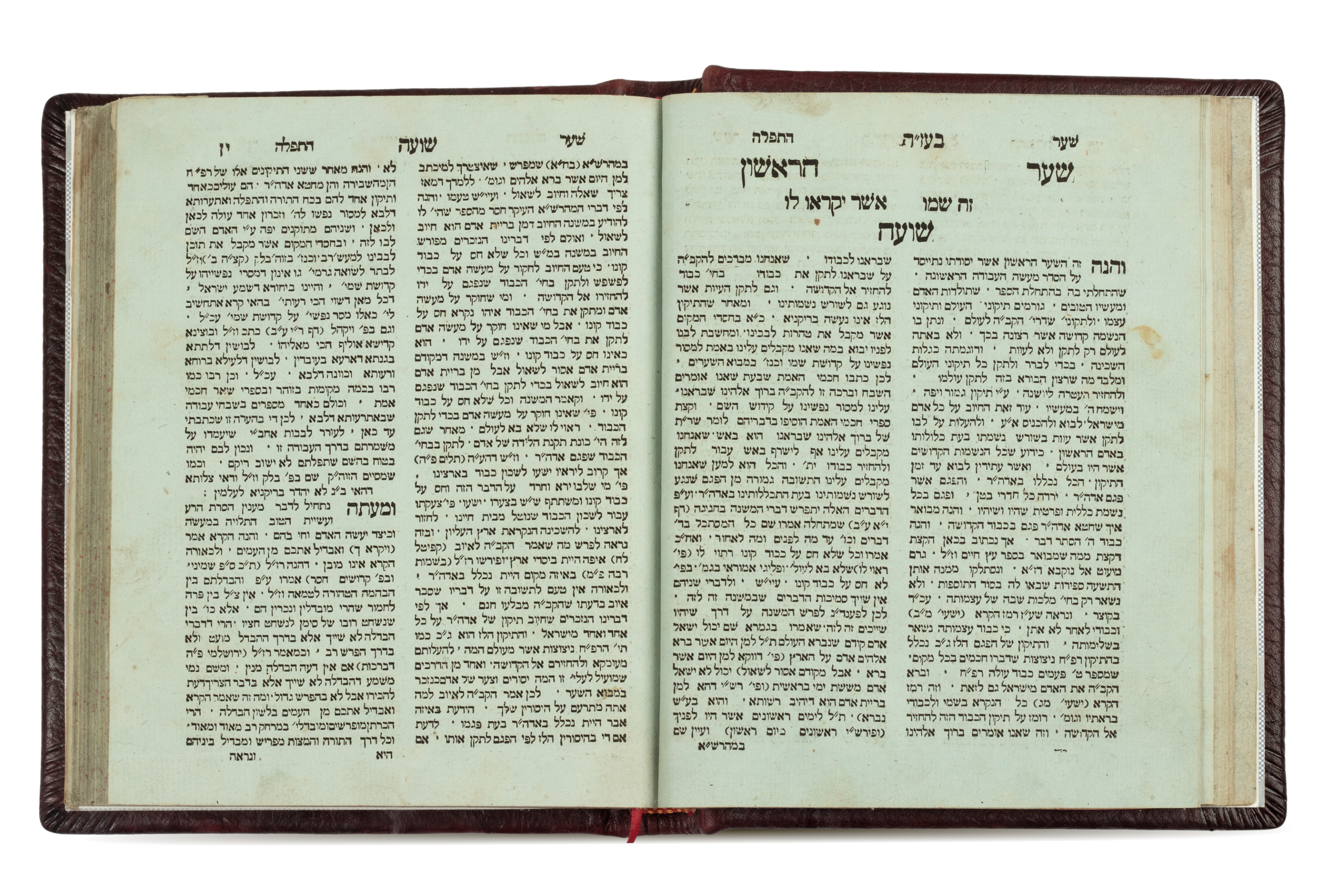
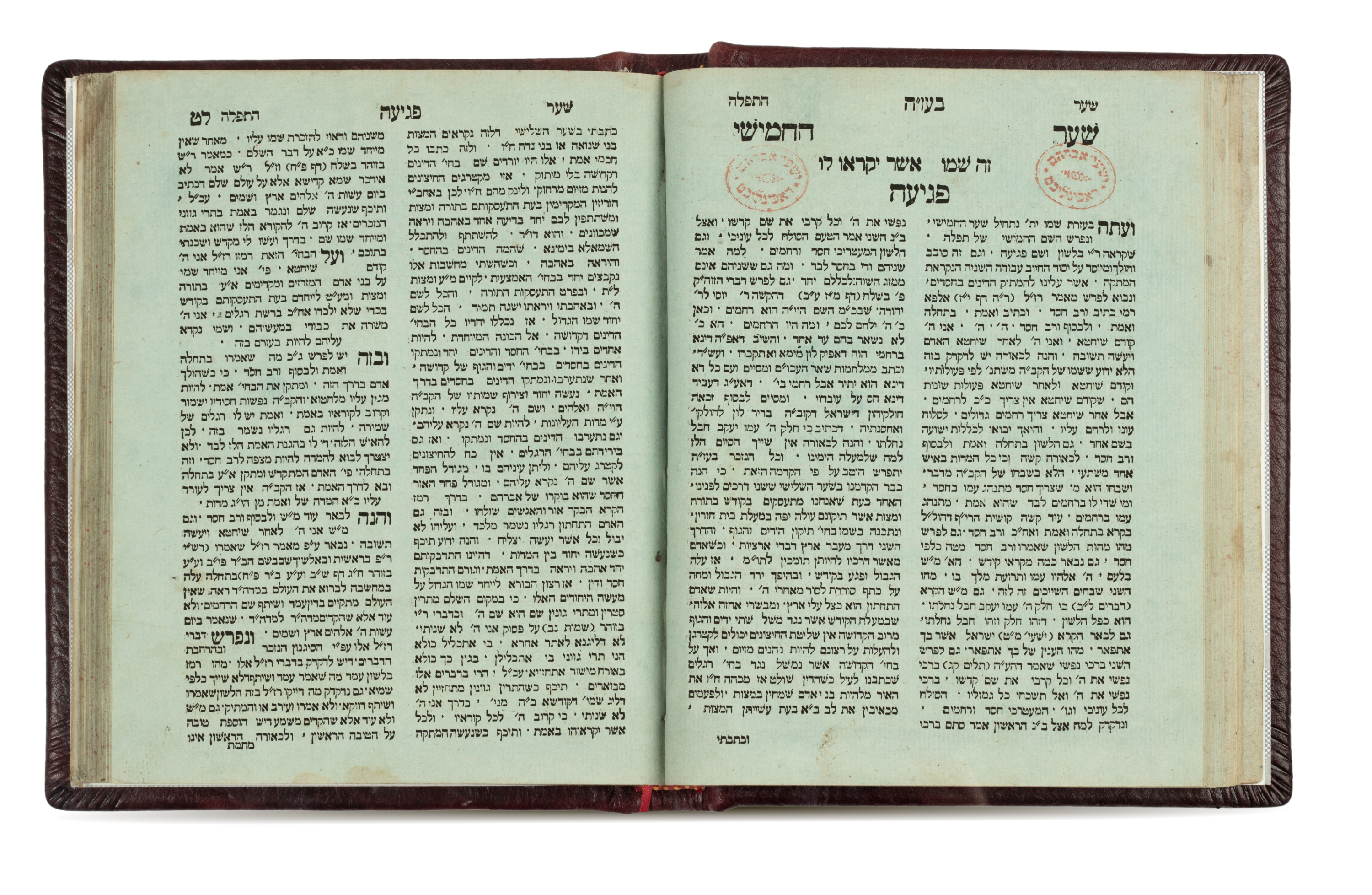
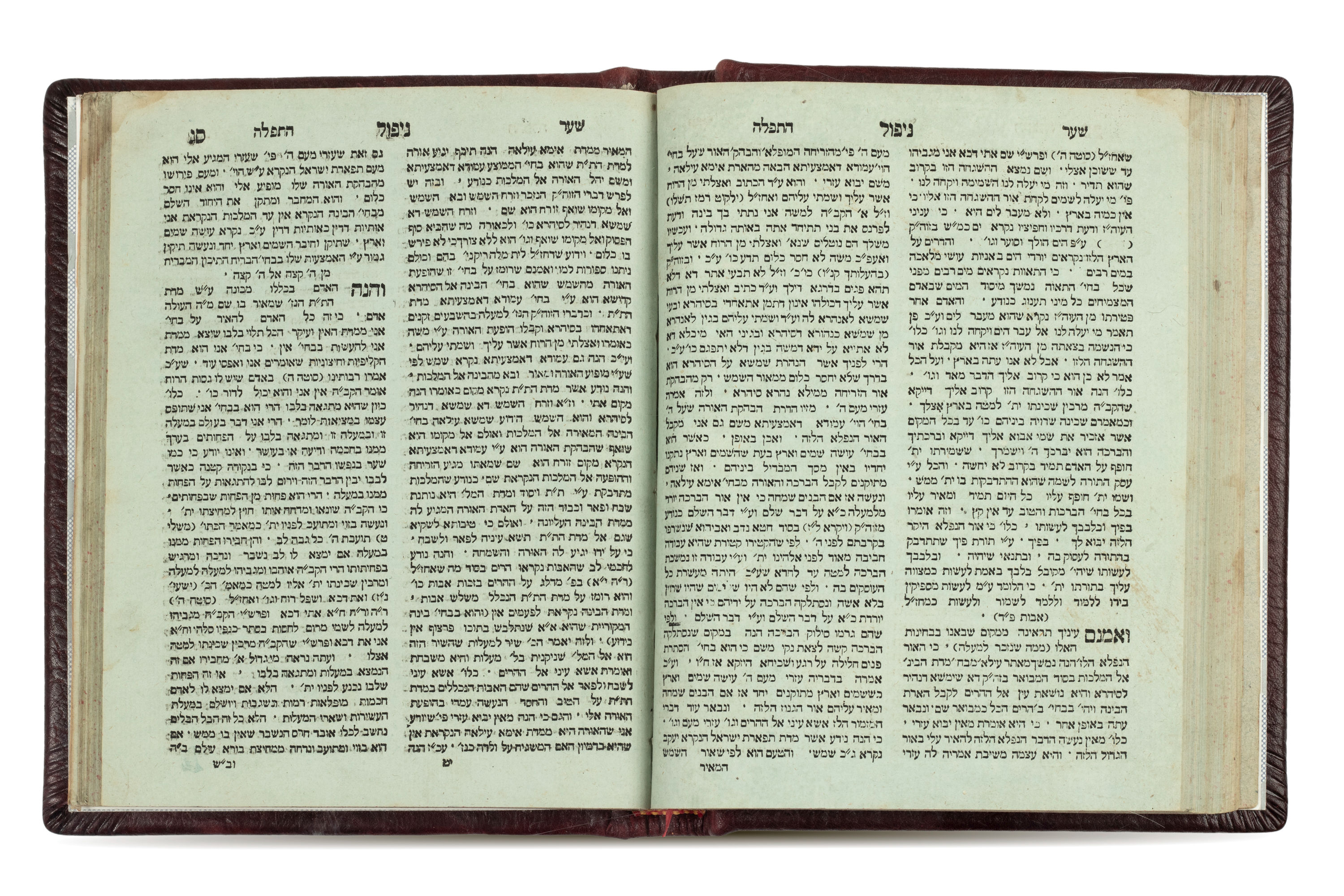
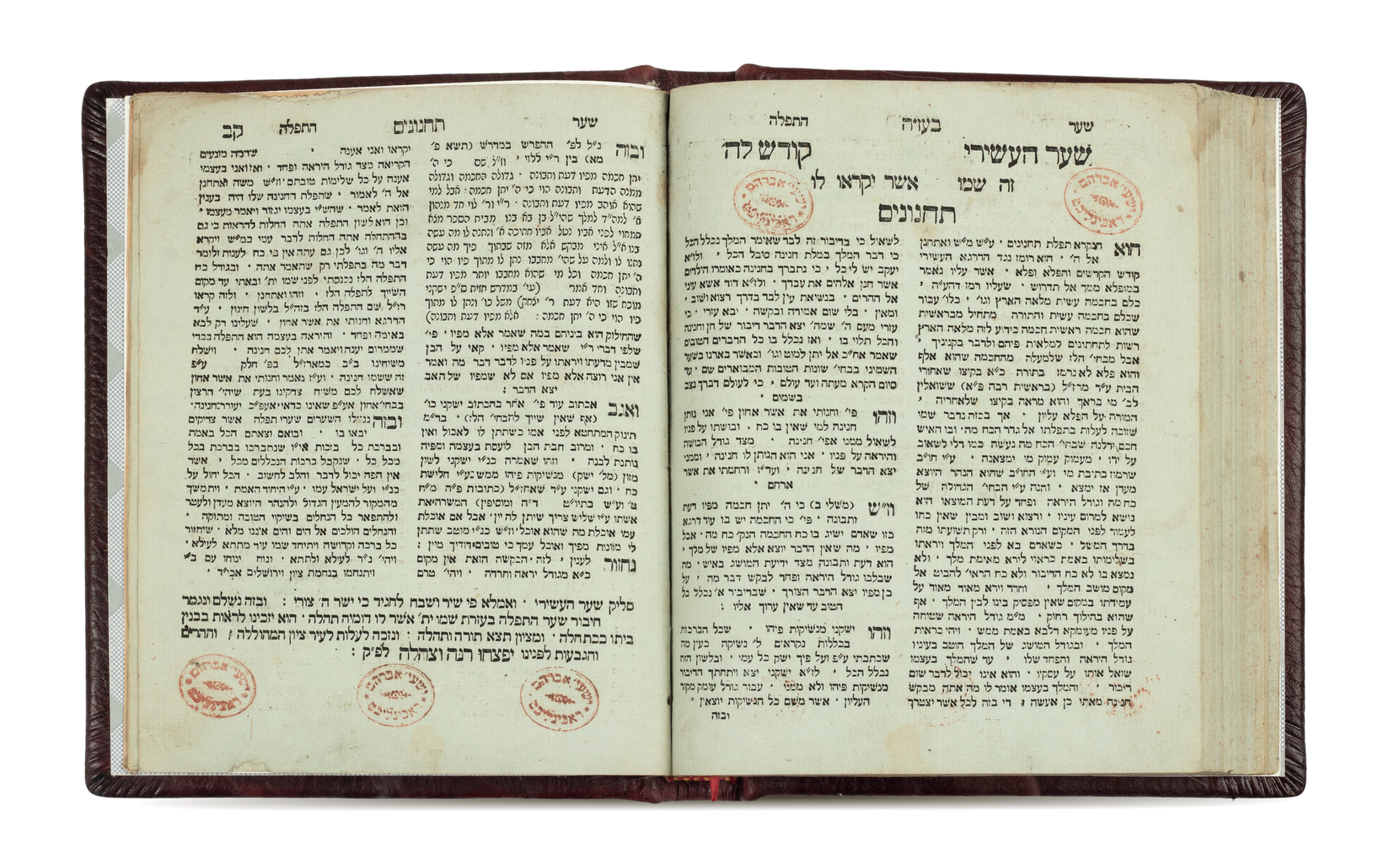
Sha'ar HaTefillah by Be'er Mayim Chaim
First Edition. Sudilkov, 1825.

Lot : 55

“I am certain that when this work spreads, it will bring the Redemption closer!”


Sha'ar HaTefillah by Be'er Mayim Chaim
First Edition. Sudilkov, 1825.

Opening bid: $2,000

“I am certain that when this work spreads, it will bring the Redemption closer!”


Sha’ar HaTefillah by Be’er Mayim Chaim
First Edition. Sudilkov, 1825.


Sha’ar HaTefillah containing esoteric explanations on the avodah of tefillah according to Chassidus and Kabbalah. It was written by Rabbi Chaim of Czernowitz, author of Be’er Mayim Chaim and Sidduro Shel Shabbos.

This sefer became one of the foundational sefarim of Chassidus in the avodah of tefillah, and it was reprinted many times due to its great popularity. The Apter Rav described its words as “sweeter than honey.”

The publisher, the author’s disciple, Rabbi Tzvi Gershon of Botoshan, wrote an introduction to the sefer in which he cites the author’s own words regarding his work: “I am certain that when this work spreads throughout the world, it will bring the Redemption closer!”

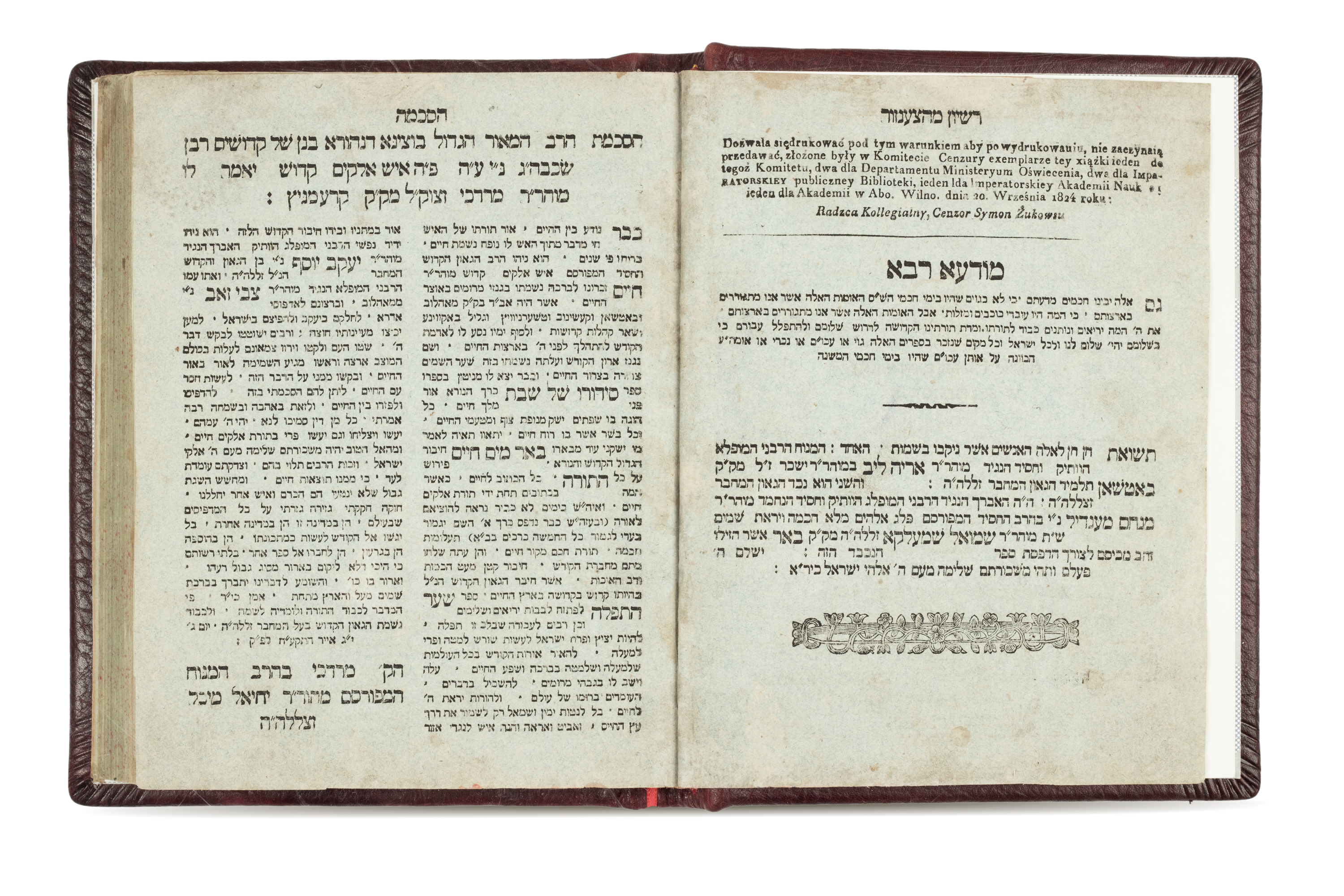
The author attributed great sanctity to this work, since he wrote it upon the holy soil of Eretz Yisrael, unlike his two earlier works, which were written in the Diaspora. Rabbi Mordechai of Kremenitz, son of Rabbi Yechiel Michel of Zlotshov, writes in his approbation: “The holy gaon composed it while suffused with holiness in the sacred Land of Life.”

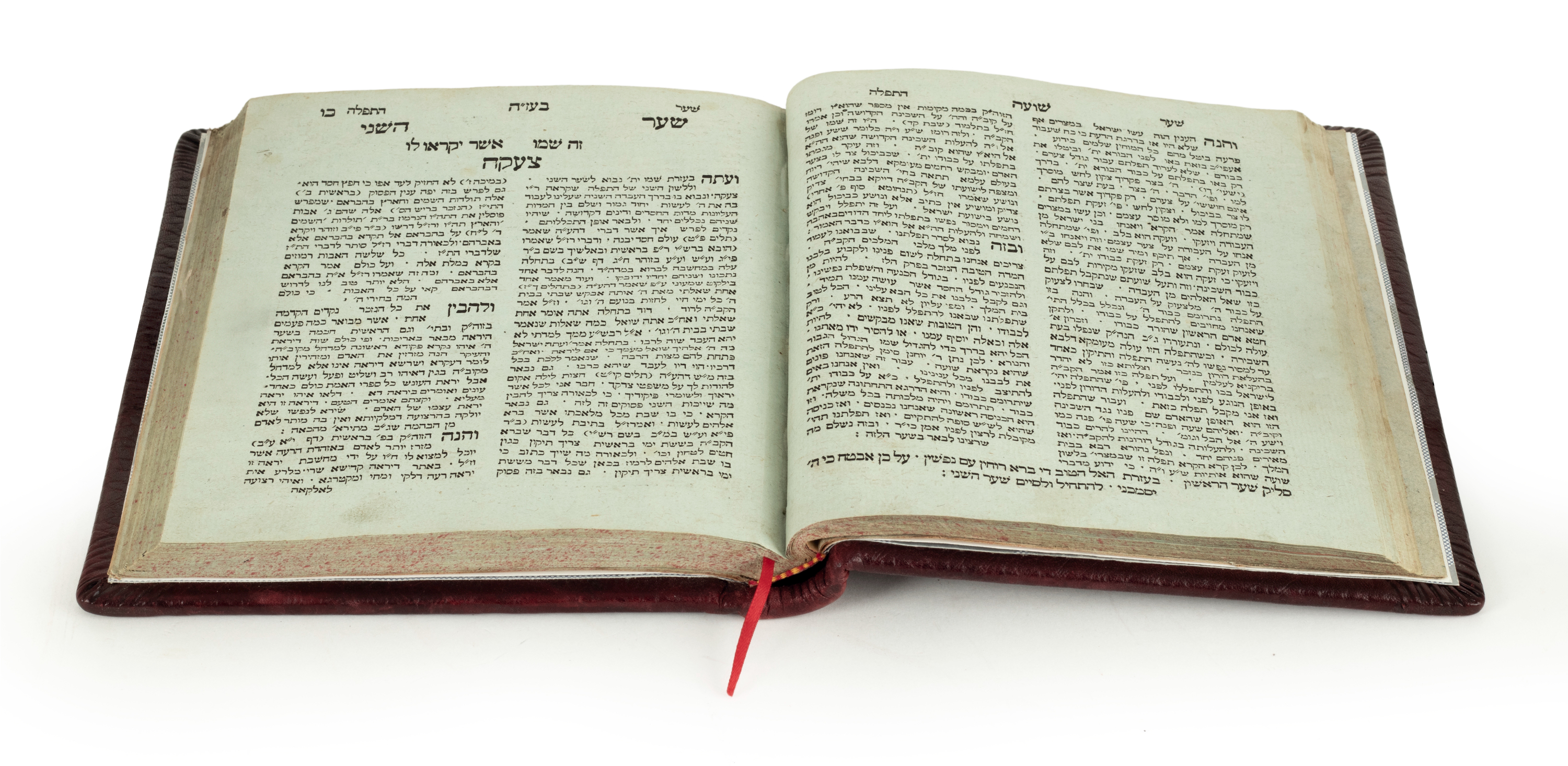
The sefer is divided into ten chapters, founded upon the ten expressions of prayer, in accordance with the words of Rabbi Yochanan in Devarim Rabbah: “Prayer is referred to by ten different expressions, and they are: sha’avah, tza’akah, ” and so forth.

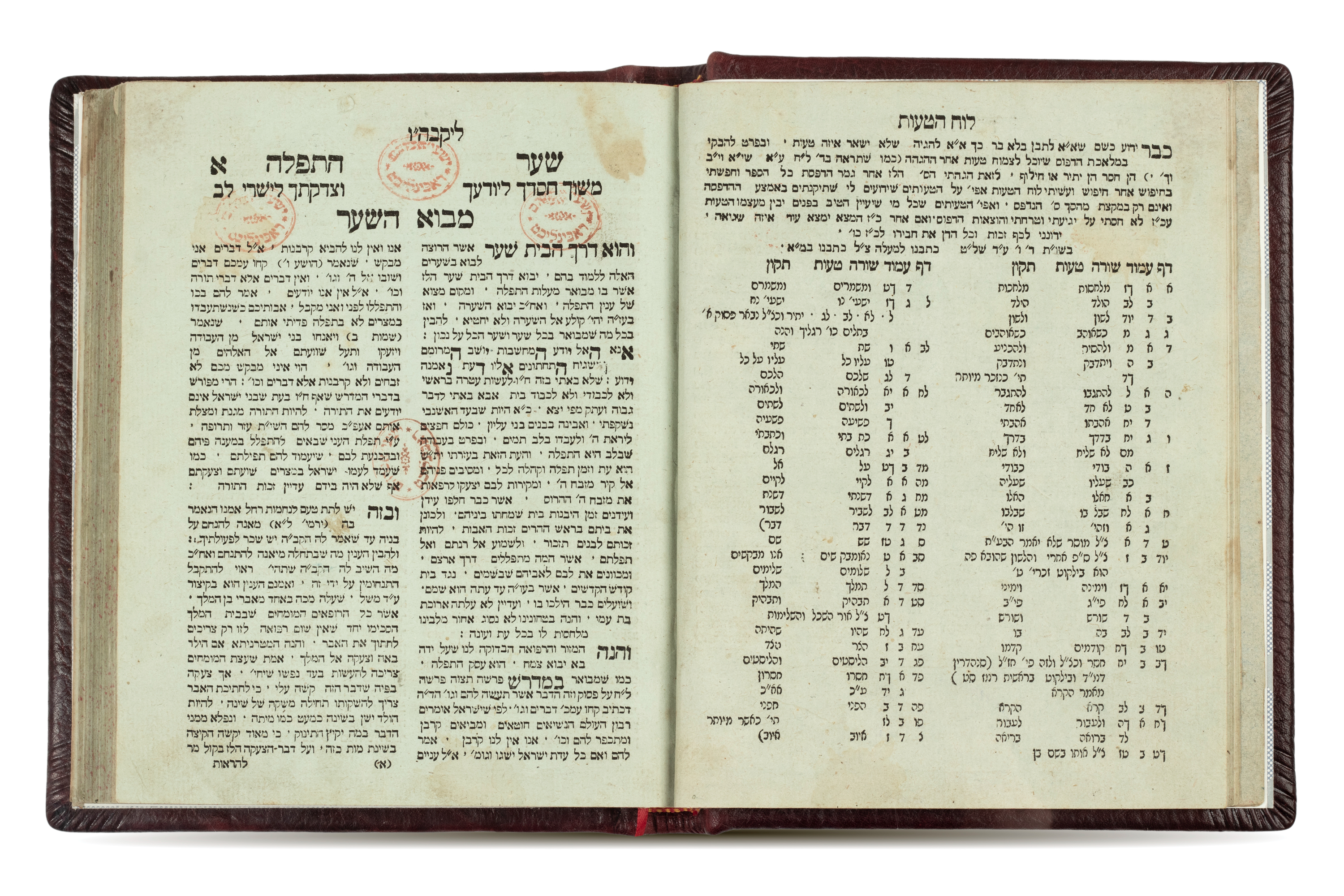
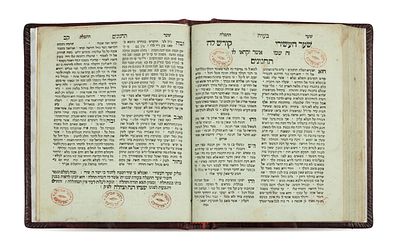
The sefer begins with the famous teshuva defending the custom of the recital of “L’shem Yichud” by chassidim before performing mitzvos, written sharply and with great erudition, in response to those who opposed the practice.

(Parenthetically, the Noam Elimelech, in his sefer Tzetel Katan, wrote that one should accustom himself to the recitation of L’shem Yichud, “and in the course of time, he will feel a great spiritual light through this recitation.”)

This teshuva is lacking in some copies and is present here.

Until today, it was accepted that the sefer was printed in Sudilkov in 1825. However, in light of a reassessment conducted by Zaidy, it appears that the first part was printed in Mohilev already around 1818, and the second part was completed in Sudilkov in 1825. (See below.)

The author,
Rabbi Chaim of Czernowitz, author of Be’er Mayim Chaim (1760–1818), was one of the giants of Chassidus in the third generation after the Baal Shem Tov. He acquired Chassidus from Rabbi Yechiel Michel of Zlotchov, who was his primary rebbi. He served as Rav in the communities of Czernowitz, Botoshan, Mohilev, and Kishinev in Romania, and was one of the preeminent disseminators of Chassidus in Romania and Bukovina. Toward the end of 1813, he fulfilled his lifelong dream of traveling to Eretz Yisrael, where he settled in Tzfas and dwelled there until his passing five years later.

He is known in the world of Chassidus by his classics: Be’er Mayim Chaim on the Torah, overflowing with principles of Chassidic thought; Sidduro Shel Shabbos, the sefer yesod on Shabbos in the teachings of Chassidus; Sha’ar HaTefillah before us, with profound explanations on the greatness of prayer in Chassidic thought; and Eretz HaChaim, on various books of Nach and on maseches Brachos.

Mohilev-Sudilkov, 1825. First edition. Page Count: 10, 102, 113–115 leaves.
Size: 20.5 cm.
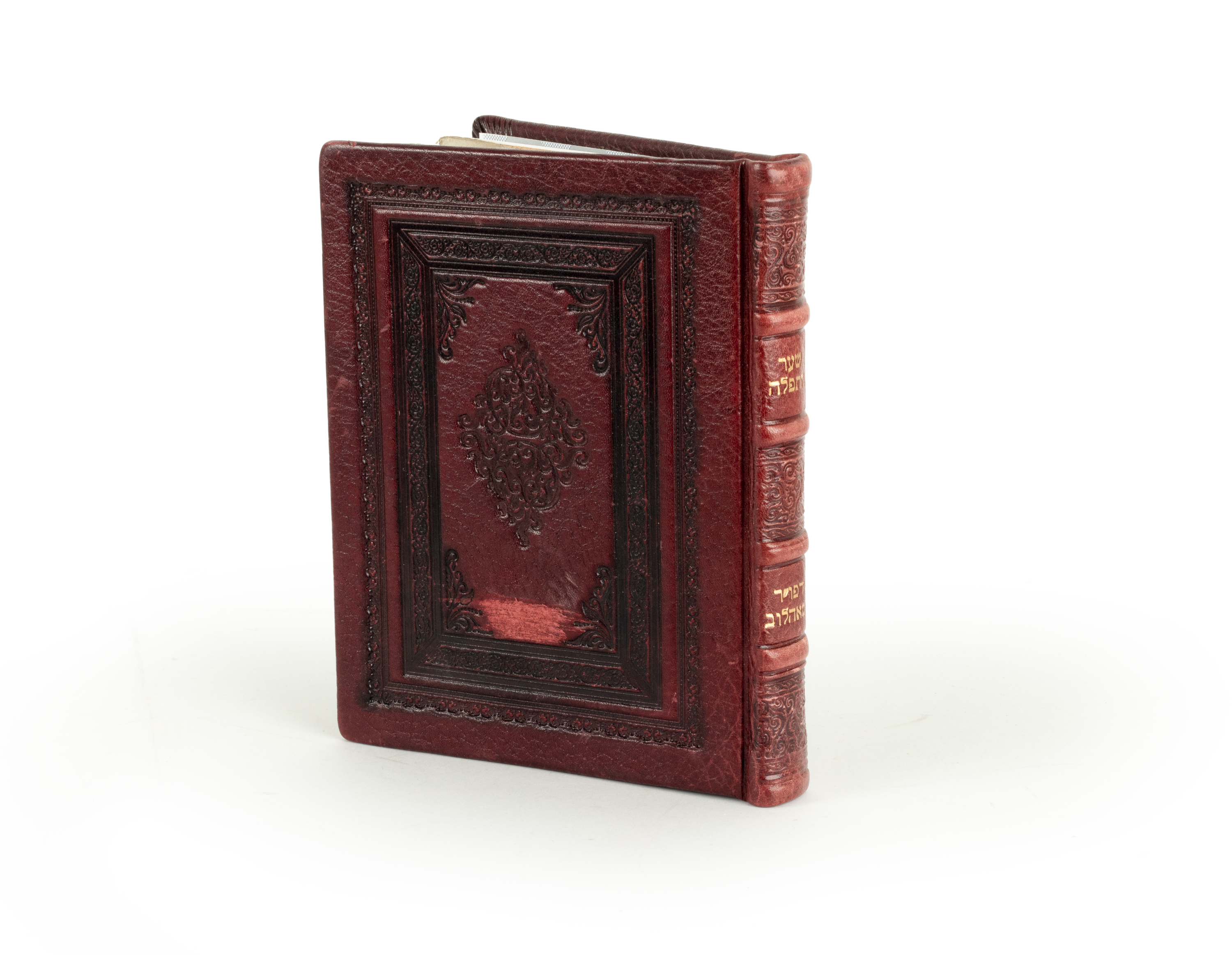
Condition: Good. Minor restoration to the first three leaves. Isolated holes. Stains at the corners. New leather binding.

Bibliography: Stefansky, Sifrei Chassidus, no. 583.

– – – – – – – – – – – –

Bibliographic Discovery!

A Renewed Clarification of the Place of Printing – Mohilev or Sudilkov
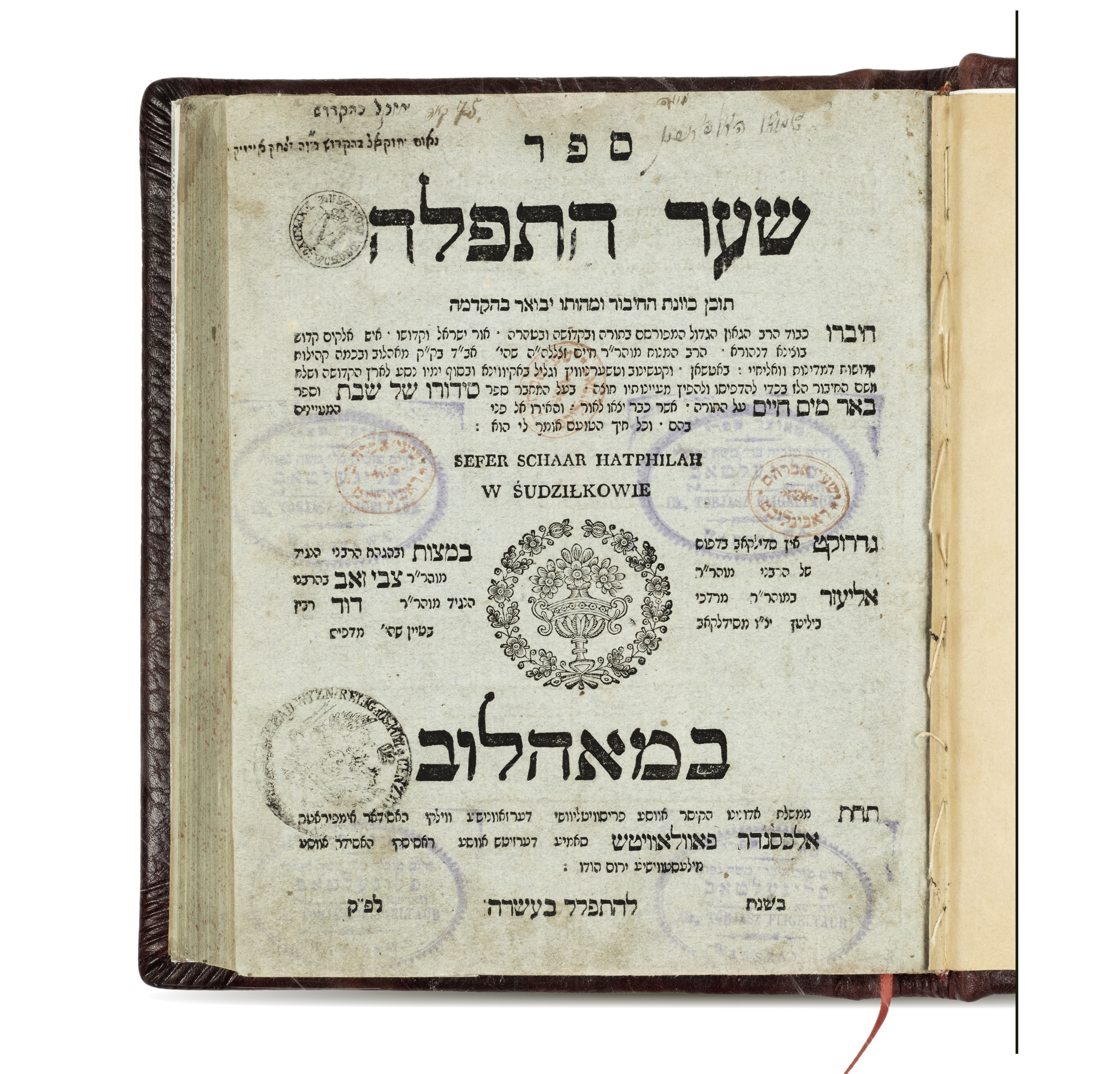
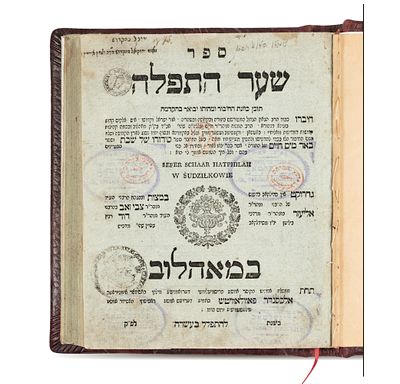
On the title page of the sefer, the place of printing appears in large letters: “In Mohilev.” Yet preceding this, in smaller letters, are the words: “גדרוקט אין סדילקאב” (printed in Sudilkov). On the basis of this wording, various bibliographers determined that the place of printing was Sudilkov.

However, a renewed examination of the typographic and historical features of the sefer indicates that the first portion of the work was likely printed in Mohilev around 1818, while the rest was printed in Sudilkov around 1825!

In order to substantiate this conclusion, one must first review the historical background of the printing of the writings of the Be’er Mayim Chaim and the activity of the printing presses in Mohilev and Sudilkov.

The Publication of the Be’er Mayim Chaim’s Writings and the History of the Mohilev Press

A printer named Rabbi Tzvi Ze’ev Rabin Stein operated a printing press in Mohilev, and he collaborated with the Be’er Mayim Chaim, the Rav of Mohilev. Already in 1812, the sefer Galya Raza was printed in his press, financed jointly by the Be’er Mayim Chaim and the printer. In its introduction, the  Be’er Mayim Chaim praises the printer as “unique among those engaged in the sacred labor of printing.” In 1813, Sidduro Shel Shabbos was likewise printed there, and the printer even took the trouble to prepare the index to the sefer himself.

In 1816 or earlier, the author sent the manuscript of his large work, Be’er Mayim Chaim, for printing in Mohilev, and in that year the work was submitted for censorship approval (as mentioned on the title page of Chumash Bereishis).
In the approbation of Rabbi Mordechai of Kremenitz to Sha’ar HaTefillah, written in Iyar 1818, it is explicitly stated that one volume of the Chumashim had already been printed.

Indeed, Chumash Shemos was printed in Mohilev in 1818, and at its conclusion, the printers note that the printing commenced with it.

This volume differs from the other volumes by several clear typographic signs:

On its title page, Mohilev is listed as the place of printing, and each booklet consists of four leaves. By contrast, the other four Chumashim feature the combined wording — “In Mohilev” in large letters, preceded by “Gedruckt in Sudilkov” — and the structure of the booklets consists of only two leaves.

This distinction in the number of leaves per booklet is noted by the Institute for Hebrew Bibliography as one of the definitive signs distinguishing the Mohilev press from the Sudilkov press.

Around 1819, the Mohilev printing press was sold to the printer Rabbi Pinchas Eliezer Bilitz of Sudilkov, son-in-law of the renowned printer Rabbi Shmuel son of Yissachar Ber of Berdichev. The sale of the press explains the continued printing of the remaining Chumashim in Sudilkov, using the original printing equipment from Mohilev.

It is noteworthy that even after the sale of the equipment, the printer Rabbi Tzvi Ze’ev continued to be involved in publishing the writings of the Be’er Mayim Chaim, and he was the one who proofread all five Chumashim — including those printed at a later stage in Sudilkov.

In light of this introduction, we can now reexamine the printing of Sha’ar HaTefillah.

The manuscript was sent for printing in 1818, only a few months after the author’s passing. The printing of the sefer apparently began that same year, when the approbation of Rabbi Mordechai of Kremenitz was written for the sefer in the name of the printer Rabbi Tzvi Ze’ev, who was still printing sefarim in Mohilev at that time.

Examination of the structure of the booklets in the sefer reveals a division identical to that found in the Chumashim of the Be’er Mayim Chaim.
Leaves 1–52 are arranged in booklets of four leaves — a clear hallmark of the Mohilev press.

From leaf 53 onward, the structure shifts to booklets of only two leaves — a distinct characteristic of the Sudilkov press. (The ten leaves at the beginning of the sefer likewise belong to the Sudilkov printing, as they were printed after the completion of the main body of the work.)

Despite the transition between printing houses, the printing plates remained uniform throughout the entire sefer, consistent with the fact that the Sudilkov printer utilized the equipment acquired from Mohilev.

Summary:

The historical and typographic data lead to the reasonable conclusion that the sefer was printed in two stages: its beginning in Mohilev around 1818, and its completion in Sudilkov in the subsequent years, most likely around 1825. This division explains both the internal structural differences between the parts of the sefer and the dual wording on the title page, in which “In Mohilev” is prominently emphasized alongside the mention of printing in Sudilkov.

“I am certain that when this work spreads, it will bring the Redemption closer!”


Sha’ar HaTefillah by Be’er Mayim Chaim
First Edition. Sudilkov, 1825.


Sha’ar HaTefillah containing esoteric explanations on the avodah of tefillah according to Chassidus and Kabbalah. It was written by Rabbi Chaim of Czernowitz, author of Be’er Mayim Chaim and Sidduro Shel Shabbos.

This sefer became one of the foundational sefarim of Chassidus in the avodah of tefillah, and it was reprinted many times due to its great popularity. The Apter Rav described its words as “sweeter than honey.”

The publisher, the author’s disciple, Rabbi Tzvi Gershon of Botoshan, wrote an introduction to the sefer in which he cites the author’s own words regarding his work: “I am certain that when this work spreads throughout the world, it will bring the Redemption closer!”

The author attributed great sanctity to this work, since he wrote it upon the holy soil of Eretz Yisrael, unlike his two earlier works, which were written in the Diaspora. Rabbi Mordechai of Kremenitz, son of Rabbi Yechiel Michel of Zlotshov, writes in his approbation: “The holy gaon composed it while suffused with holiness in the sacred Land of Life.”

The sefer is divided into ten chapters, founded upon the ten expressions of prayer, in accordance with the words of Rabbi Yochanan in Devarim Rabbah: “Prayer is referred to by ten different expressions, and they are: sha’avah, tza’akah, ” and so forth.

The sefer begins with the famous teshuva defending the custom of the recital of “L’shem Yichud” by chassidim before performing mitzvos, written sharply and with great erudition, in response to those who opposed the practice.

(Parenthetically, the Noam Elimelech, in his sefer Tzetel Katan, wrote that one should accustom himself to the recitation of L’shem Yichud, “and in the course of time, he will feel a great spiritual light through this recitation.”)

This teshuva is lacking in some copies and is present here.

Until today, it was accepted that the sefer was printed in Sudilkov in 1825. However, in light of a reassessment conducted by Zaidy, it appears that the first part was printed in Mohilev already around 1818, and the second part was completed in Sudilkov in 1825. (See below.)

The author,
Rabbi Chaim of Czernowitz, author of Be’er Mayim Chaim (1760–1818), was one of the giants of Chassidus in the third generation after the Baal Shem Tov. He acquired Chassidus from Rabbi Yechiel Michel of Zlotchov, who was his primary rebbi. He served as Rav in the communities of Czernowitz, Botoshan, Mohilev, and Kishinev in Romania, and was one of the preeminent disseminators of Chassidus in Romania and Bukovina. Toward the end of 1813, he fulfilled his lifelong dream of traveling to Eretz Yisrael, where he settled in Tzfas and dwelled there until his passing five years later.

He is known in the world of Chassidus by his classics: Be’er Mayim Chaim on the Torah, overflowing with principles of Chassidic thought; Sidduro Shel Shabbos, the sefer yesod on Shabbos in the teachings of Chassidus; Sha’ar HaTefillah before us, with profound explanations on the greatness of prayer in Chassidic thought; and Eretz HaChaim, on various books of Nach and on maseches Brachos.

Mohilev-Sudilkov, 1825. First edition. Page Count: 10, 102, 113–115 leaves.
Size: 20.5 cm.
Condition: Good. Minor restoration to the first three leaves. Isolated holes. Stains at the corners. New leather binding.

Bibliography: Stefansky, Sifrei Chassidus, no. 583.

– – – – – – – – – – – –

Bibliographic Discovery!

A Renewed Clarification of the Place of Printing – Mohilev or Sudilkov
On the title page of the sefer, the place of printing appears in large letters: “In Mohilev.” Yet preceding this, in smaller letters, are the words: “גדרוקט אין סדילקאב” (printed in Sudilkov). On the basis of this wording, various bibliographers determined that the place of printing was Sudilkov.

However, a renewed examination of the typographic and historical features of the sefer indicates that the first portion of the work was likely printed in Mohilev around 1818, while the rest was printed in Sudilkov around 1825!

In order to substantiate this conclusion, one must first review the historical background of the printing of the writings of the Be’er Mayim Chaim and the activity of the printing presses in Mohilev and Sudilkov.

The Publication of the Be’er Mayim Chaim’s Writings and the History of the Mohilev Press

A printer named Rabbi Tzvi Ze’ev Rabin Stein operated a printing press in Mohilev, and he collaborated with the Be’er Mayim Chaim, the Rav of Mohilev. Already in 1812, the sefer Galya Raza was printed in his press, financed jointly by the Be’er Mayim Chaim and the printer. In its introduction, the  Be’er Mayim Chaim praises the printer as “unique among those engaged in the sacred labor of printing.” In 1813, Sidduro Shel Shabbos was likewise printed there, and the printer even took the trouble to prepare the index to the sefer himself.

In 1816 or earlier, the author sent the manuscript of his large work, Be’er Mayim Chaim, for printing in Mohilev, and in that year the work was submitted for censorship approval (as mentioned on the title page of Chumash Bereishis).
In the approbation of Rabbi Mordechai of Kremenitz to Sha’ar HaTefillah, written in Iyar 1818, it is explicitly stated that one volume of the Chumashim had already been printed.

Indeed, Chumash Shemos was printed in Mohilev in 1818, and at its conclusion, the printers note that the printing commenced with it.

This volume differs from the other volumes by several clear typographic signs:

On its title page, Mohilev is listed as the place of printing, and each booklet consists of four leaves. By contrast, the other four Chumashim feature the combined wording — “In Mohilev” in large letters, preceded by “Gedruckt in Sudilkov” — and the structure of the booklets consists of only two leaves.

This distinction in the number of leaves per booklet is noted by the Institute for Hebrew Bibliography as one of the definitive signs distinguishing the Mohilev press from the Sudilkov press.

Around 1819, the Mohilev printing press was sold to the printer Rabbi Pinchas Eliezer Bilitz of Sudilkov, son-in-law of the renowned printer Rabbi Shmuel son of Yissachar Ber of Berdichev. The sale of the press explains the continued printing of the remaining Chumashim in Sudilkov, using the original printing equipment from Mohilev.

It is noteworthy that even after the sale of the equipment, the printer Rabbi Tzvi Ze’ev continued to be involved in publishing the writings of the Be’er Mayim Chaim, and he was the one who proofread all five Chumashim — including those printed at a later stage in Sudilkov.

In light of this introduction, we can now reexamine the printing of Sha’ar HaTefillah.

The manuscript was sent for printing in 1818, only a few months after the author’s passing. The printing of the sefer apparently began that same year, when the approbation of Rabbi Mordechai of Kremenitz was written for the sefer in the name of the printer Rabbi Tzvi Ze’ev, who was still printing sefarim in Mohilev at that time.

Examination of the structure of the booklets in the sefer reveals a division identical to that found in the Chumashim of the Be’er Mayim Chaim.
Leaves 1–52 are arranged in booklets of four leaves — a clear hallmark of the Mohilev press.

From leaf 53 onward, the structure shifts to booklets of only two leaves — a distinct characteristic of the Sudilkov press. (The ten leaves at the beginning of the sefer likewise belong to the Sudilkov printing, as they were printed after the completion of the main body of the work.)

Despite the transition between printing houses, the printing plates remained uniform throughout the entire sefer, consistent with the fact that the Sudilkov printer utilized the equipment acquired from Mohilev.

Summary:

The historical and typographic data lead to the reasonable conclusion that the sefer was printed in two stages: its beginning in Mohilev around 1818, and its completion in Sudilkov in the subsequent years, most likely around 1825. This division explains both the internal structural differences between the parts of the sefer and the dual wording on the title page, in which “In Mohilev” is prominently emphasized alongside the mention of printing in Sudilkov.