Lot : 75

Two Early Letters from the Illuyim Rabbi Naftali Wasserman Hy”d and Rabbi Shmuel Rozovsky
Mir and Grodna? c. 1933

Lot : 75

Two Early Letters from the Illuyim Rabbi Naftali Wasserman Hy”d and Rabbi Shmuel Rozovsky
Mir and Grodna? c. 1933

Opening bid: $1,000

Two Early Letters from the Illuyim Rabbi Naftali Wasserman Hy”d and Rabbi Shmuel Rozovsky

Mir and Grodna? c. 1933


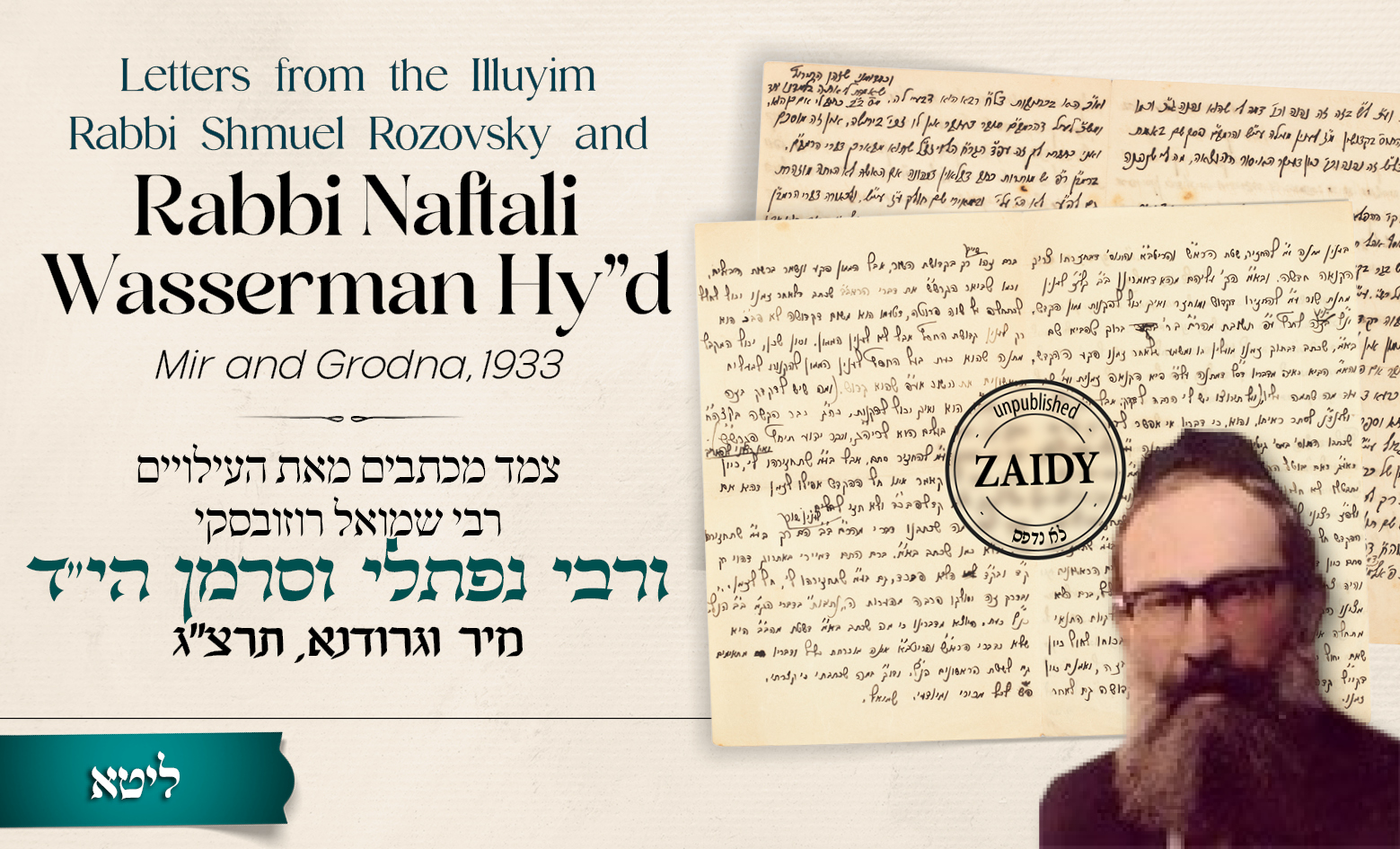
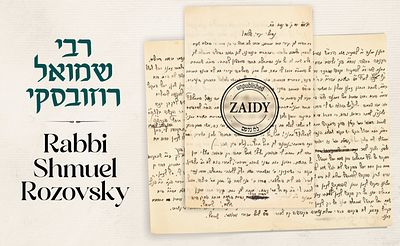
Two rare, remarkable letters exchanged between two extraordinary young scholars — Rabbi Naftali Wasserman Hy”d, son of Rabbi Elchonon Wasserman of Baranovich, and his beloved friend and chavrusa, Rabbi Shmuel Rozovsky, who would later become a great rosh yeshiva and the author of Shiurei Rebbi Shmuel.


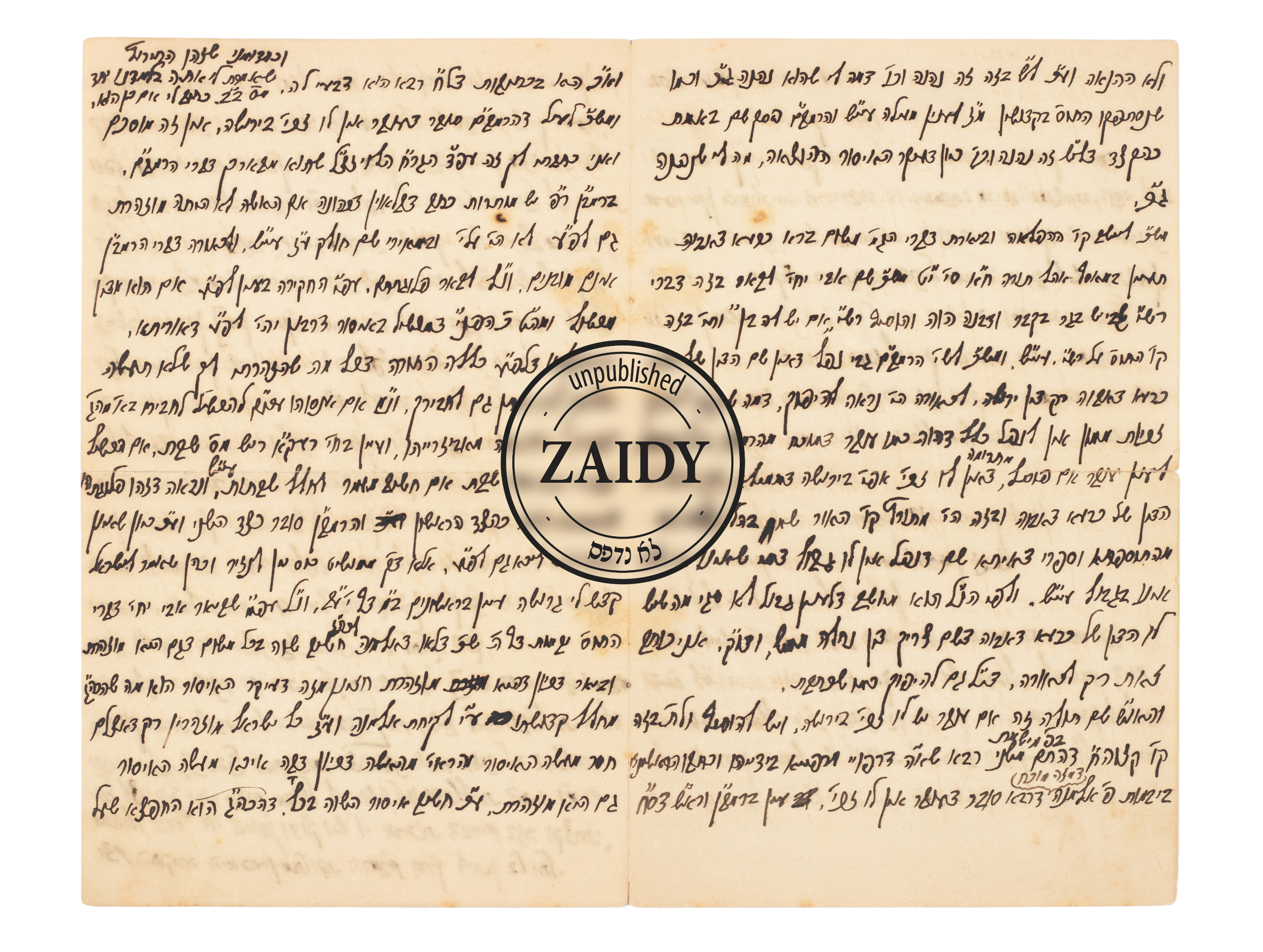
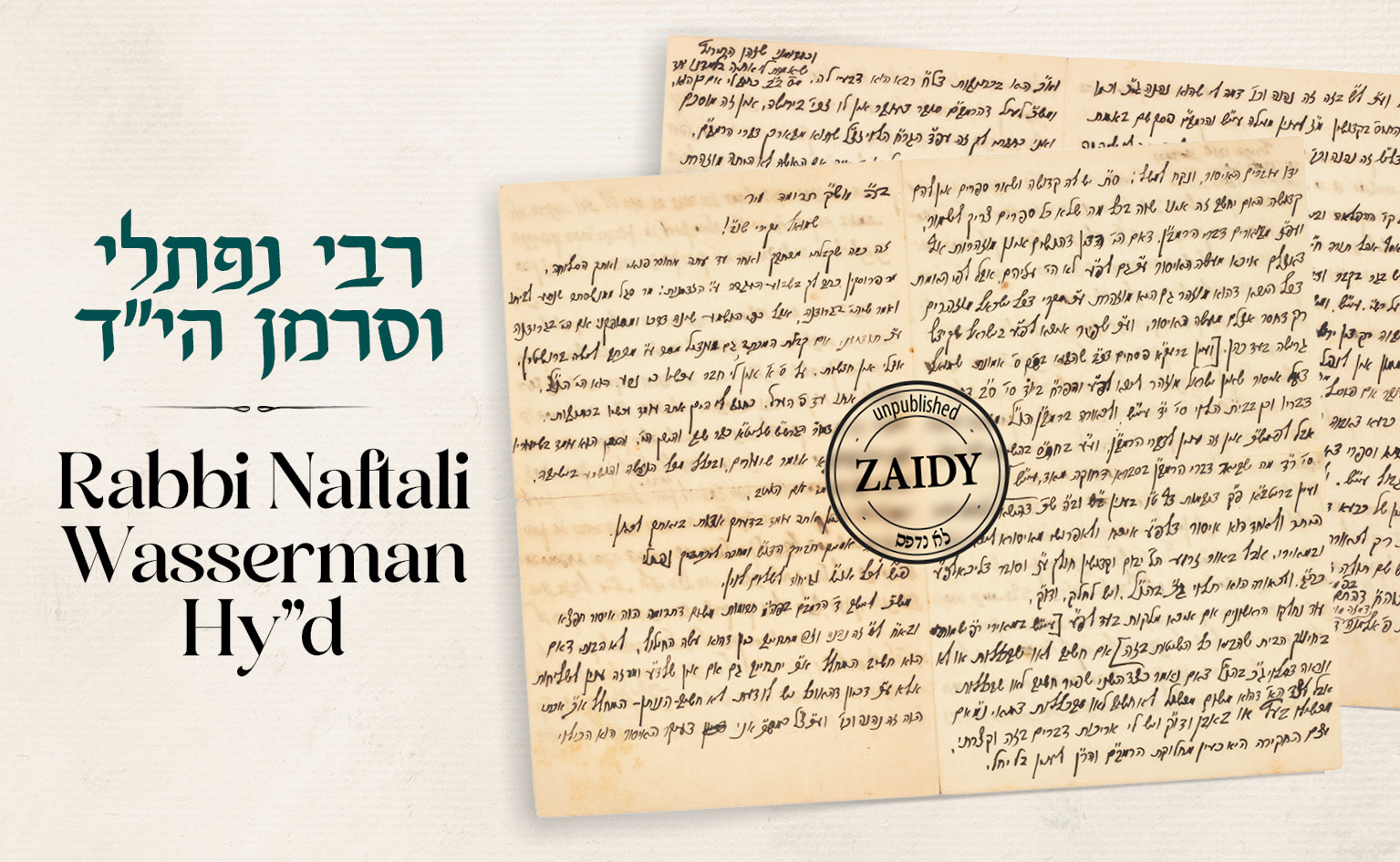
One is a rare and remarkable four-page letter written at the age of twenty by the brilliant illuy Rabbi Naftali Beinush Wasserman, son of Rabbi Elchonon Wasserman, Rosh Yeshiva of Baranovich, and nephew of Rabbi Chaim Ozer Grodzinsky.

Rabbi Naftali was an illuy in the fullest sense; his father, Rabbi Elchonon, called him “my friend and my teacher, ” and both the Rogatchover Gaon and his uncle Rabbi Chaim Ozer predicted that he was destined to become one of the Gedolei Hador. However, he was murdered in Kovno at only twenty-eight, after receiving from his father the awe-inspiring nusach of the Birkas Kiddush Hashem, following the tradition his father received from the Chofetz Chaim.

Most of the letter (three and a half pages) consists of chiddushim on several sugyos produced by this young gaon. Twice he references the chiddushim of his father Rabbi Elchonon: “See in the Ma’asaf Ohel Torah what my father wrote there…” (pg. 2) and “It seems according to what my father explained in Tosafos…” (pg. 3).

Within his words, Rabbi Naftali also quotes a chiddush from Rabbi Chaim HaLevi Soloveitchik of Brisk, who had been his sandek. He also writes to Rabbi Shmuel about one chiddush: “And it seems to me that this is the answer you told me when we learned together Maseches Bava Basra.”

The letter is from 1933, when Rabbi Naftali was only about twenty years old. That year, he moved from Grodna to Mir, where this letter was written. Half of the first page contains scholarly conversation, including mention of Rabbi Shimon Shkop’s return to his yeshiva in Grodna and of Rabbi Shmuel’s desire to move from Grodna to Mir.

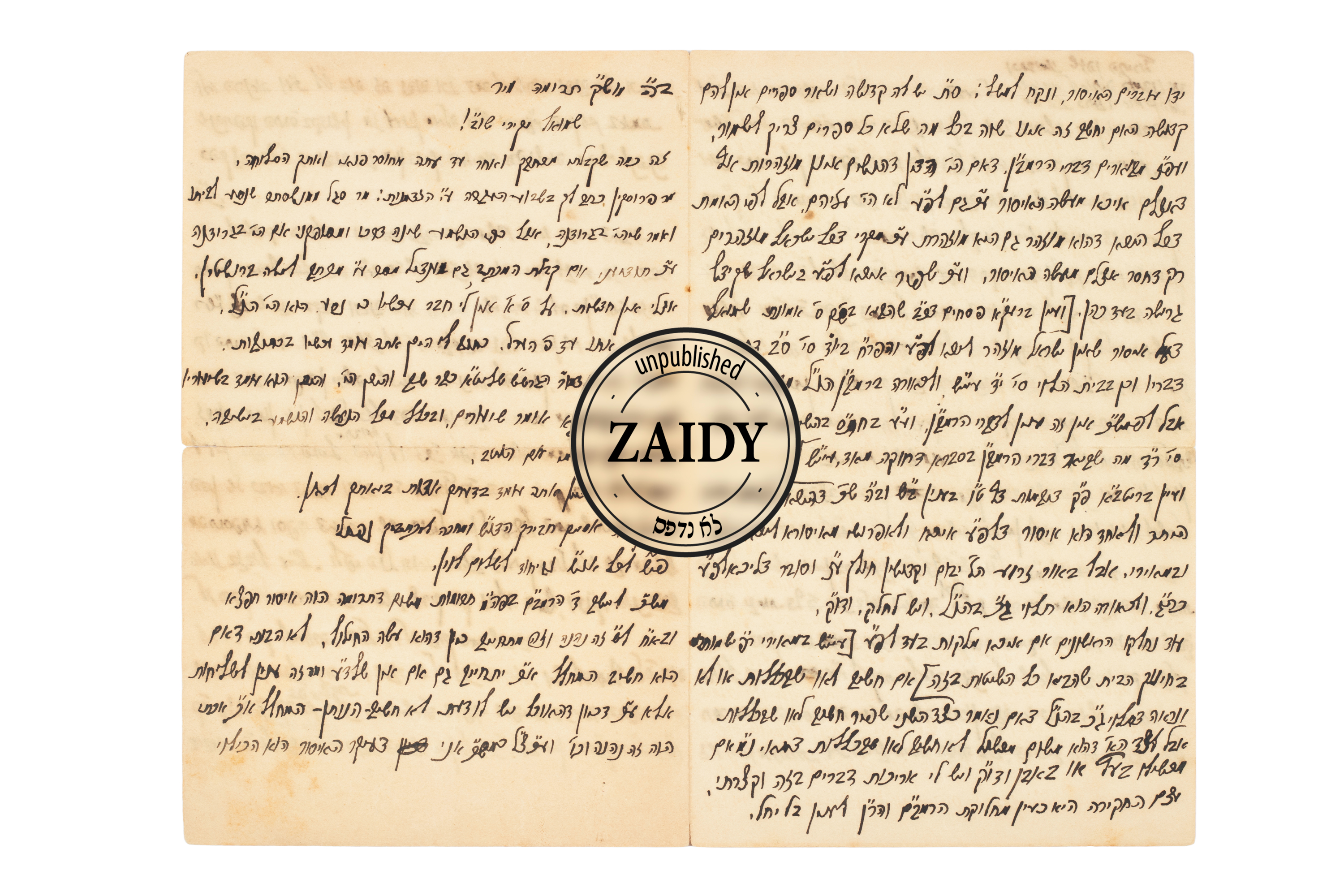
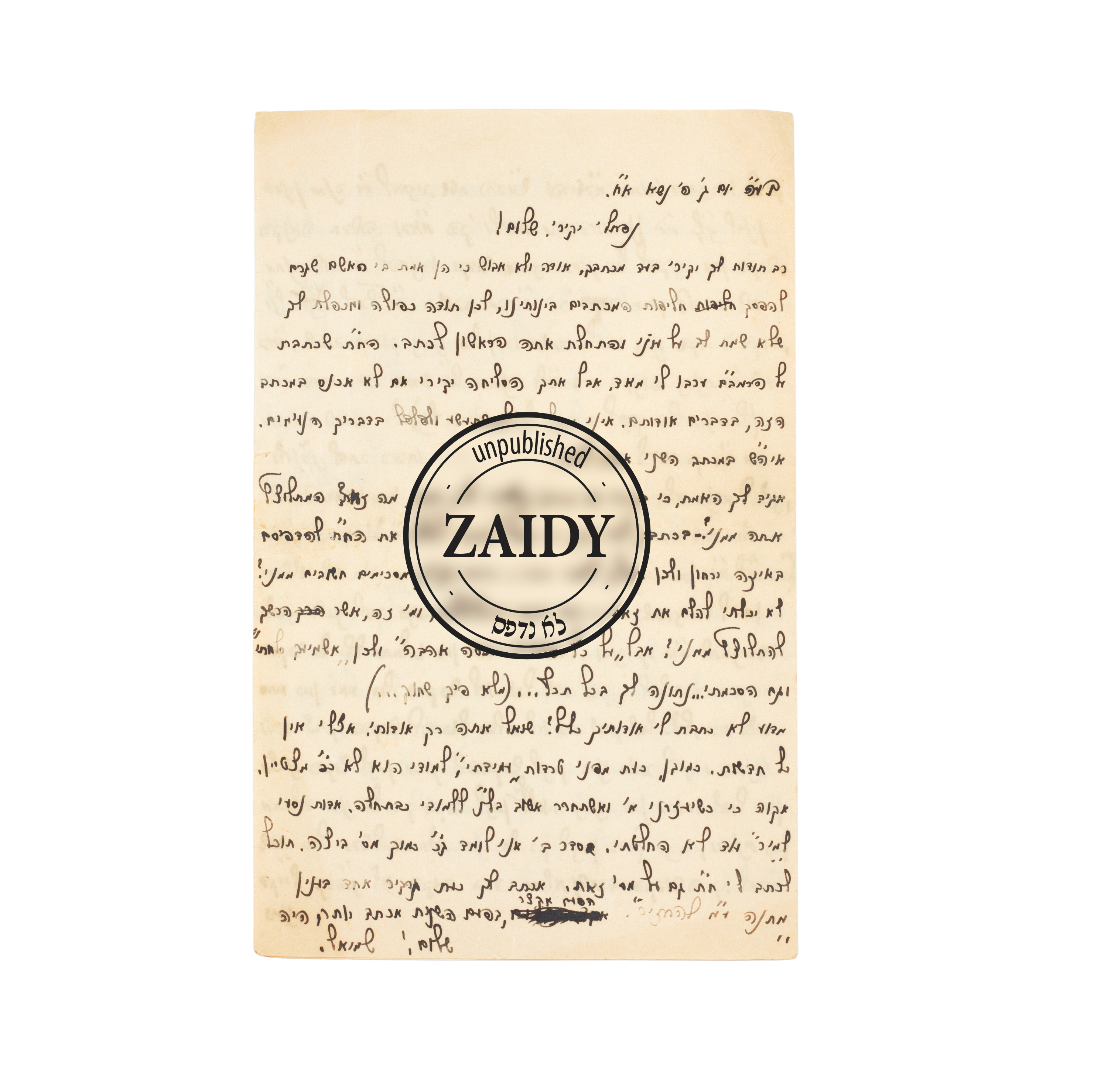
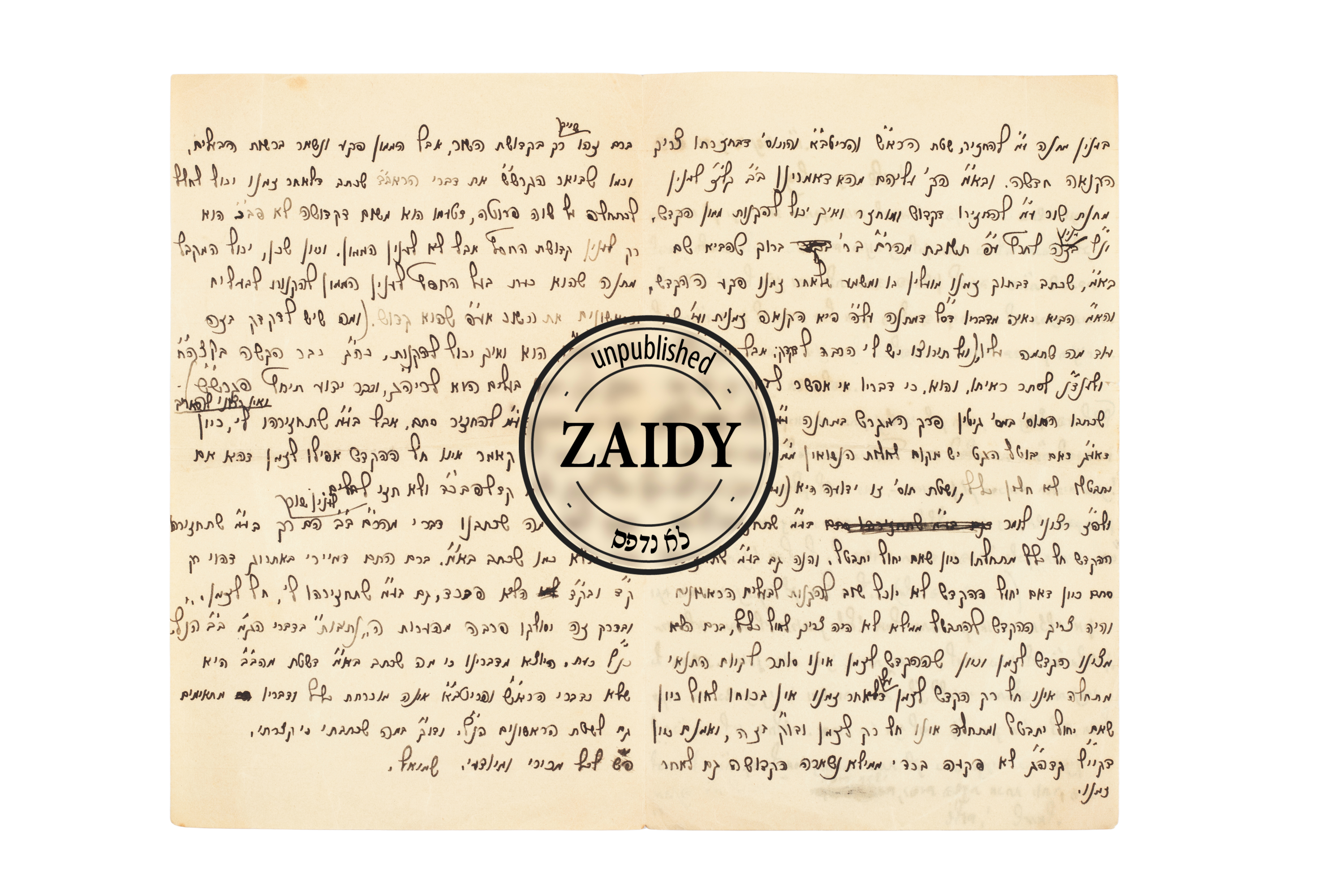
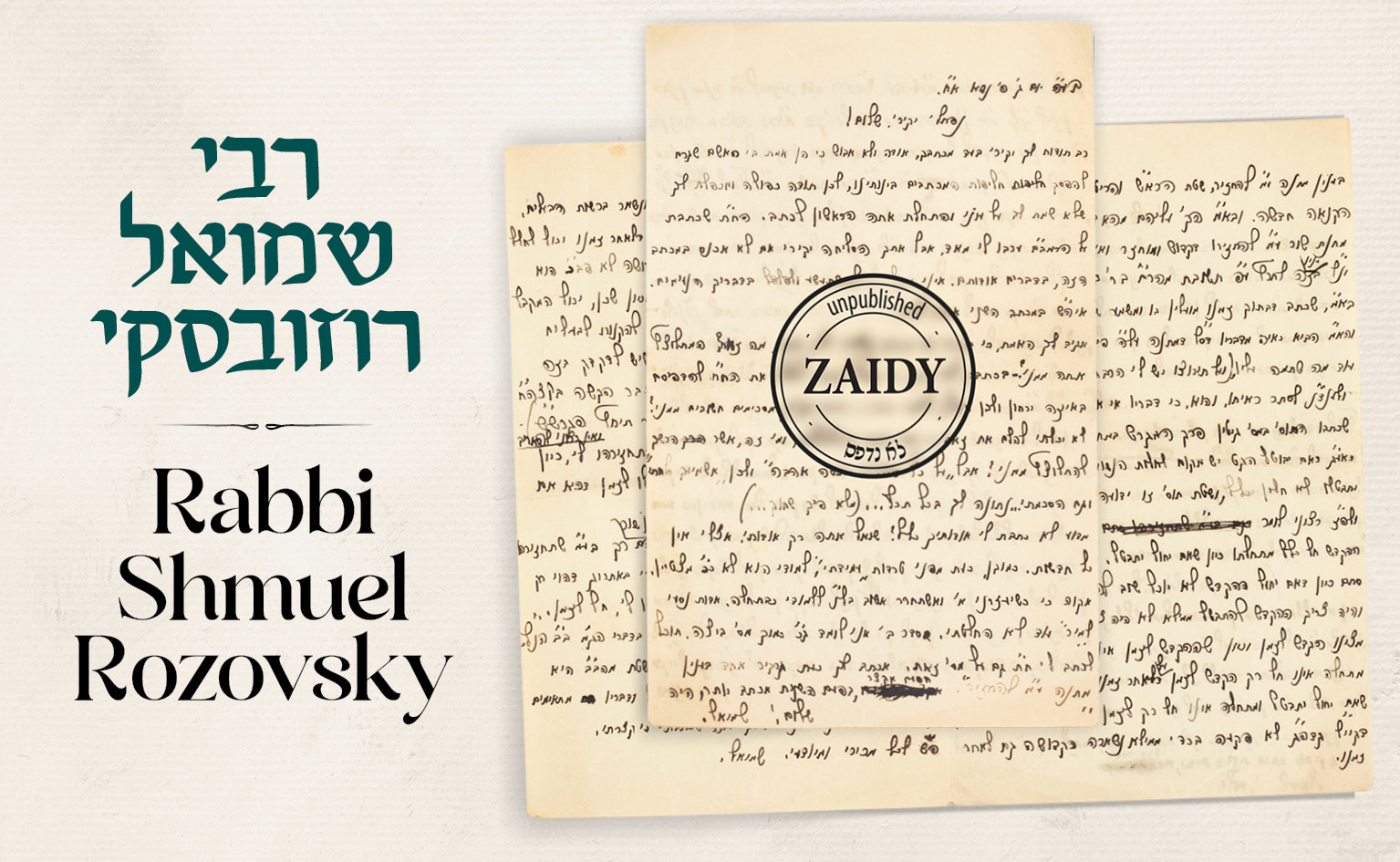
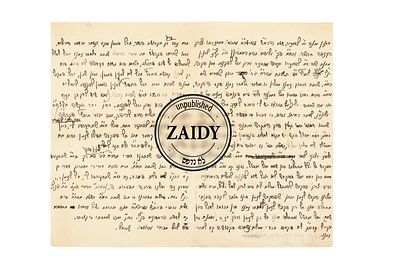
The second item is a three-page letter in the handwriting of Rabbi Shmuel Rozovsky, with two of his signatures, written when he was a young bochur in the Grodna yeshiva at about twenty-one or twenty-two years of age (Grodna, c. 1933).

Two pages of the letter contain an analytical discussion of the sugya of “matanah al menas lehachzir” — one of Rabbi Shmuel’s earliest chaburos, and one of the first in the world!

The first page contains warm personal words and Rabbi Shmuel’s deliberations regarding whether he should follow Rabbi Naftali and move to Mir— hence the date of 1933/1934, as Rabbi Shmuel indeed moved to Mir at the beginning of 1935.

In 1935, Rabbi Shmuel had to flee to Eretz Yisrael because of the army draft, and Rabbi Chaim Ozer wrote for him a recommendation letter for a certificate, describing him: “In truth, he is outstanding — greater than most individuals.”


Rabbi Naftali Beinush Wasserman Hy”d (1914–1942) was an outstanding gaon and a widely recognized genius, a student of his father, Rabbi Shimon Shkop and the Brisker Rav. One time, his father, Rabbi Elchonon, was not able to deliver his regular shiur, and he appointed his son Rabbi Naftali, then only about twenty-one, to deliver it instead. Shortly afterward, he received a letter reporting that the talmidim greatly enjoyed Rabbi Naftali’s shiurim. Rabbi Elchonon responded, “The strength of the son surpasses that of the father, Boruch Hashem.”

Rabbi Yisrael Zev Gustman said of him: “He was a true illuy — it was a heavenly delight to learn with him.”

When the war began, he fled with his father and married in the summer of 1940, but in 1942 he was taken and murdered. Small remnants of his Torah were printed at the end of Kovetz Shiurim that his brother published, and in several other sefarim.


Rabbi Shmuel Rozovsky (1913-1979)
was the Rosh Yeshiva of Ponovezh and a prominent Torah leader in the last generation, serving as a bridge between the Torah world of prewar Lithuania and the new generation. He first learned in Grodna under Rabbi Shimon Shkop, where he learned in chavrusa with Rabbi Naftali. In 1935, he moved to Mir and resumed his chavrusa with Rabbi Naftali in Seder Alef, while in Seder Beis he learned with Rabbi Yonah Karpilov Hy”d, author of Yonah Aleim. The following year he immigrated to Eretz Yisrael, where the Ponovezher Rav appointed him rosh yeshiva, a position he held until his passing. The Chazon Ish said of him that he was “the rosh yeshiva of the generation, ” and his father-in-law Rabbi Tzvi Pesach Frank called him “a living Sefer Torah.”

Description of the Letters:

 — Rabbi Shmuel’s letter: Grodna? c. 1933/1934. Three pages in Rabbi Shmuel’s handwriting with two of his signatures.
Size: 12.5×20 cm.


Condition: Good. Tiny hole at the fold.
 —
Rabbi Naftali’s letter: Mir, 1933. Four pages in Rabbi Naftali’s handwriting, with his signature on two-thirds of the first page.
Size: 12.4×19.7 cm.
Condition: Good. Tears along the folds.
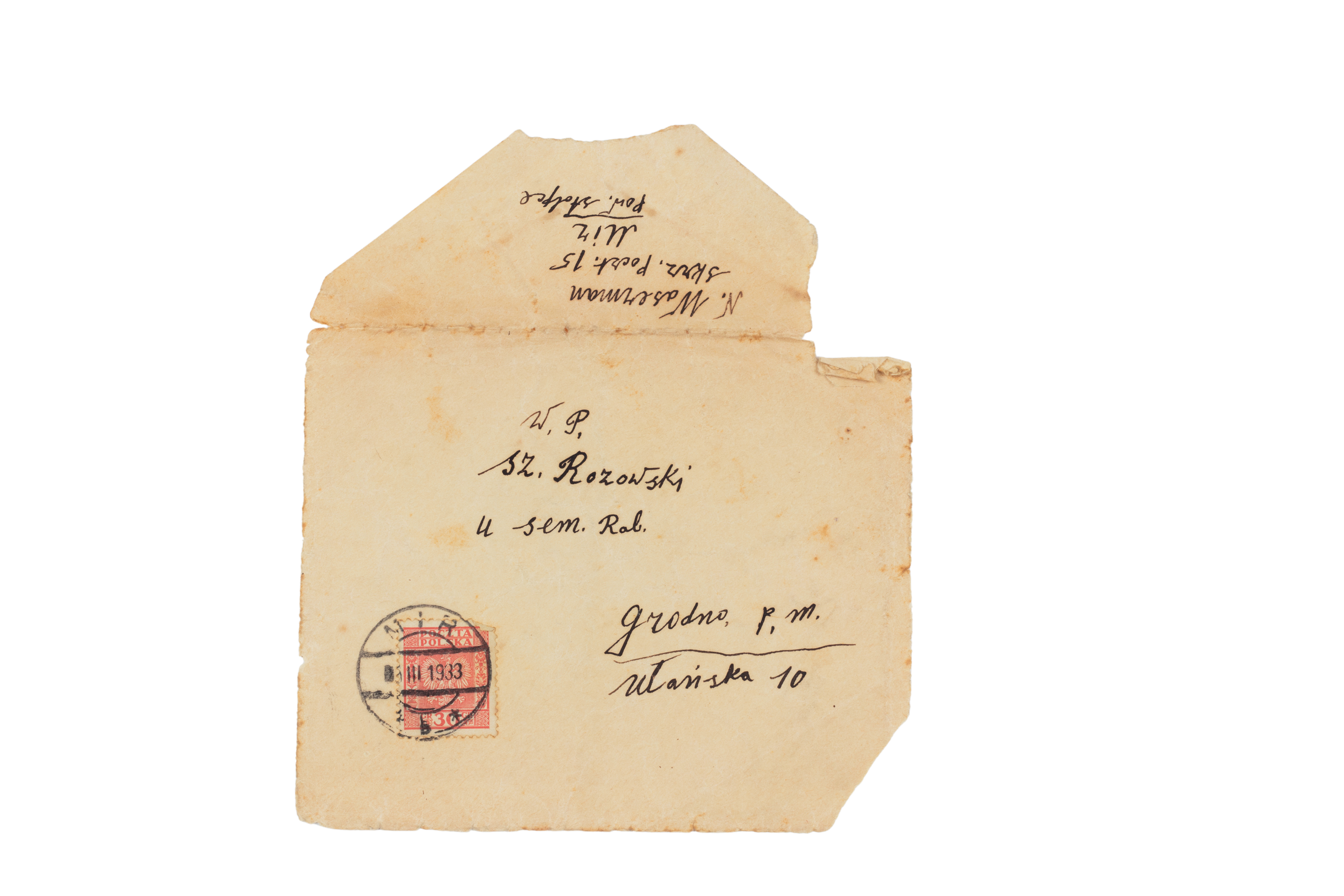
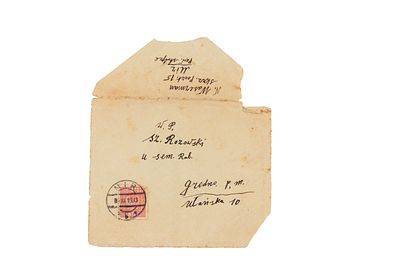
Included is part of the original envelope in which Rabbi Naftali sent his letter, bearing his Latin-letter signature and the name of the recipient — Rabbi Shmuel Rozovsky in Grodna.

– – – – – – – – – – – – – – – – –

Rabbi Shmuel’s “Humorous Anger”
A fascinating passage in Rabbi Shmuel’s letter reflects his great humility. He writes to Rabbi Naftali: “When I read your letter, I became angry with you — what is this? Are you mocking me?” He immediately explained: Rabbi Naftali wished to publish some of his chiddushim in a journal and asked Rabbi Shmuel to provide a haskamah. Rabbi Shmuel, in his modesty, felt unworthy to give such a haskamah and wrote: “Do you not have more important signatories than me? I could understand this only as a form of jesting — and who permitted you to jest with me? But ‘love covers all offenses, ’ and therefore ‘I inform you that I forgive, ’ and my haskamah… it is yours immediately…”



Two Early Letters from the Illuyim Rabbi Naftali Wasserman Hy”d and Rabbi Shmuel Rozovsky

Mir and Grodna? c. 1933


Two rare, remarkable letters exchanged between two extraordinary young scholars — Rabbi Naftali Wasserman Hy”d, son of Rabbi Elchonon Wasserman of Baranovich, and his beloved friend and chavrusa, Rabbi Shmuel Rozovsky, who would later become a great rosh yeshiva and the author of Shiurei Rebbi Shmuel.


One is a rare and remarkable four-page letter written at the age of twenty by the brilliant illuy Rabbi Naftali Beinush Wasserman, son of Rabbi Elchonon Wasserman, Rosh Yeshiva of Baranovich, and nephew of Rabbi Chaim Ozer Grodzinsky.

Rabbi Naftali was an illuy in the fullest sense; his father, Rabbi Elchonon, called him “my friend and my teacher, ” and both the Rogatchover Gaon and his uncle Rabbi Chaim Ozer predicted that he was destined to become one of the Gedolei Hador. However, he was murdered in Kovno at only twenty-eight, after receiving from his father the awe-inspiring nusach of the Birkas Kiddush Hashem, following the tradition his father received from the Chofetz Chaim.

Most of the letter (three and a half pages) consists of chiddushim on several sugyos produced by this young gaon. Twice he references the chiddushim of his father Rabbi Elchonon: “See in the Ma’asaf Ohel Torah what my father wrote there…” (pg. 2) and “It seems according to what my father explained in Tosafos…” (pg. 3).

Within his words, Rabbi Naftali also quotes a chiddush from Rabbi Chaim HaLevi Soloveitchik of Brisk, who had been his sandek. He also writes to Rabbi Shmuel about one chiddush: “And it seems to me that this is the answer you told me when we learned together Maseches Bava Basra.”

The letter is from 1933, when Rabbi Naftali was only about twenty years old. That year, he moved from Grodna to Mir, where this letter was written. Half of the first page contains scholarly conversation, including mention of Rabbi Shimon Shkop’s return to his yeshiva in Grodna and of Rabbi Shmuel’s desire to move from Grodna to Mir.

The second item is a three-page letter in the handwriting of Rabbi Shmuel Rozovsky, with two of his signatures, written when he was a young bochur in the Grodna yeshiva at about twenty-one or twenty-two years of age (Grodna, c. 1933).

Two pages of the letter contain an analytical discussion of the sugya of “matanah al menas lehachzir” — one of Rabbi Shmuel’s earliest chaburos, and one of the first in the world!

The first page contains warm personal words and Rabbi Shmuel’s deliberations regarding whether he should follow Rabbi Naftali and move to Mir— hence the date of 1933/1934, as Rabbi Shmuel indeed moved to Mir at the beginning of 1935.

In 1935, Rabbi Shmuel had to flee to Eretz Yisrael because of the army draft, and Rabbi Chaim Ozer wrote for him a recommendation letter for a certificate, describing him: “In truth, he is outstanding — greater than most individuals.”


Rabbi Naftali Beinush Wasserman Hy”d (1914–1942) was an outstanding gaon and a widely recognized genius, a student of his father, Rabbi Shimon Shkop and the Brisker Rav. One time, his father, Rabbi Elchonon, was not able to deliver his regular shiur, and he appointed his son Rabbi Naftali, then only about twenty-one, to deliver it instead. Shortly afterward, he received a letter reporting that the talmidim greatly enjoyed Rabbi Naftali’s shiurim. Rabbi Elchonon responded, “The strength of the son surpasses that of the father, Boruch Hashem.”

Rabbi Yisrael Zev Gustman said of him: “He was a true illuy — it was a heavenly delight to learn with him.”

When the war began, he fled with his father and married in the summer of 1940, but in 1942 he was taken and murdered. Small remnants of his Torah were printed at the end of Kovetz Shiurim that his brother published, and in several other sefarim.


Rabbi Shmuel Rozovsky (1913-1979)
was the Rosh Yeshiva of Ponovezh and a prominent Torah leader in the last generation, serving as a bridge between the Torah world of prewar Lithuania and the new generation. He first learned in Grodna under Rabbi Shimon Shkop, where he learned in chavrusa with Rabbi Naftali. In 1935, he moved to Mir and resumed his chavrusa with Rabbi Naftali in Seder Alef, while in Seder Beis he learned with Rabbi Yonah Karpilov Hy”d, author of Yonah Aleim. The following year he immigrated to Eretz Yisrael, where the Ponovezher Rav appointed him rosh yeshiva, a position he held until his passing. The Chazon Ish said of him that he was “the rosh yeshiva of the generation, ” and his father-in-law Rabbi Tzvi Pesach Frank called him “a living Sefer Torah.”

Description of the Letters:

 — Rabbi Shmuel’s letter: Grodna? c. 1933/1934. Three pages in Rabbi Shmuel’s handwriting with two of his signatures.
Size: 12.5×20 cm.


Condition: Good. Tiny hole at the fold.
 —
Rabbi Naftali’s letter: Mir, 1933. Four pages in Rabbi Naftali’s handwriting, with his signature on two-thirds of the first page.
Size: 12.4×19.7 cm.
Condition: Good. Tears along the folds.
Included is part of the original envelope in which Rabbi Naftali sent his letter, bearing his Latin-letter signature and the name of the recipient — Rabbi Shmuel Rozovsky in Grodna.

– – – – – – – – – – – – – – – – –

Rabbi Shmuel’s “Humorous Anger”
A fascinating passage in Rabbi Shmuel’s letter reflects his great humility. He writes to Rabbi Naftali: “When I read your letter, I became angry with you — what is this? Are you mocking me?” He immediately explained: Rabbi Naftali wished to publish some of his chiddushim in a journal and asked Rabbi Shmuel to provide a haskamah. Rabbi Shmuel, in his modesty, felt unworthy to give such a haskamah and wrote: “Do you not have more important signatories than me? I could understand this only as a form of jesting — and who permitted you to jest with me? But ‘love covers all offenses, ’ and therefore ‘I inform you that I forgive, ’ and my haskamah… it is yours immediately…”